Why Walking Beats Running for Lasting Weight Loss: Our Take
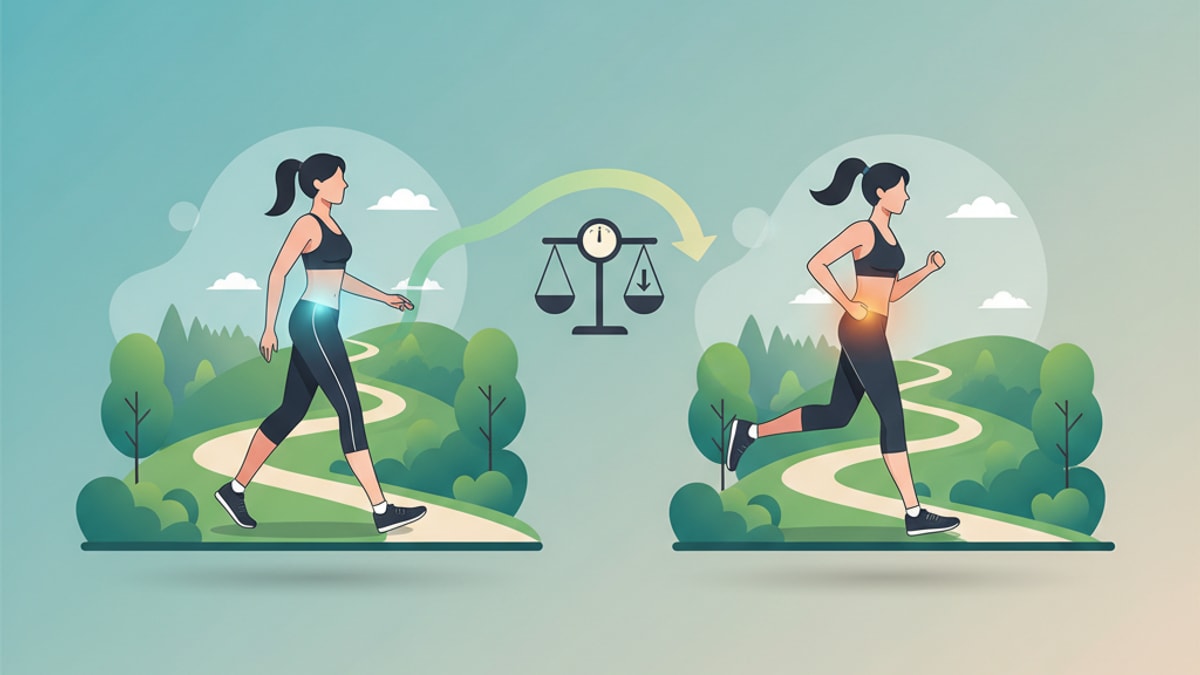
For decades, the fitness world has hammered home a single, relentless message: no pain, no gain. We've been taught that effective weight loss has to be punishing. It has to involve gasping for air, dripping with sweat, and pushing your body to its absolute limit. Running, with its high-impact, heart-pounding intensity, has long been crowned the king of cardio for shedding pounds. But what if that conventional wisdom is not just outdated, but actively working against your goals?
Our team has spent years analyzing metabolic health and the intricate science of weight management, both in clinical settings and through observing real patient journeys. And we've found that for many people, the answer to the question 'why is walking better than running for weight loss?' is surprisingly complex and scientifically robust. It’s a significant, sometimes dramatic shift in perspective, but it's one grounded in physiology, hormonal balance, and the psychology of sustainable habits. This isn't about finding an 'easier' way out; it's about finding a smarter, more effective path to lasting results.
The High-Intensity Trap
Let's be honest. The image of a runner, drenched in sweat and determination, is a powerful one. It screams effort and discipline. It feels like what weight loss should look like. This perception is so ingrained that suggesting a brisk walk could be more beneficial often feels counterintuitive. But our experience shows that the 'go hard or go home' mentality is a primary driver of fitness burnout and, ironically, stalled weight loss progress.
High-intensity interval training (HIIT) and long, grueling runs place an immense amount of stress on the body. We're not just talking about the strain on your joints, ligaments, and muscles—which is substantial—but also the systemic, physiological stress. When you push your body into that breathless, anaerobic state, you trigger a cascade of emergency responses. Your body doesn't know you're just trying to fit into your old jeans; it thinks you're running from a legitimate threat. This is a critical distinction.
This repeated, high-level stress can lead to a host of problems. We've seen it time and again. Clients come to us frustrated, doing everything 'right'—running miles every week, restricting calories—yet the scale won't budge, or worse, it's creeping up. They're exhausted, often plagued by nagging injuries, and their motivation is in the gutter. They're stuck in the high-intensity trap, believing the only solution is to push even harder, which only digs the hole deeper. It's a brutal, disheartening cycle.
And that's the core issue. An exercise regimen that you can't maintain consistently for months or years is, by definition, a failed one. Intensity is fleeting. Consistency is what drives real, lasting change.
The Cortisol Connection: How Running Can Sabotage Your Goals
Now, this is where it gets interesting. The single most overlooked factor in the walking vs. running debate is hormonal impact. Specifically, the impact on cortisol.
Cortisol is your body's primary stress hormone. It’s released by the adrenal glands in response to stress, whether it's a looming work deadline, a heated argument, or a punishing five-mile run. In short bursts, cortisol is essential. It helps manage inflammation, regulate blood pressure, and control your sleep-wake cycle. But when it's chronically elevated, it becomes a formidable enemy of weight loss.
Here’s what our team can't stress enough: intense, prolonged cardiovascular exercise, like running, can significantly spike and sustain high cortisol levels. When cortisol is chronically high, it sends a powerful signal to your body to store energy. And what's the most efficient form of stored energy? Fat. Even worse, elevated cortisol has a particular affinity for promoting visceral fat—the dangerous, inflammatory fat that wraps around your abdominal organs. So, your daily run, which you're doing to lose belly fat, could be contributing to the very problem you're trying to solve.
This hormonal disruption doesn't stop there. Chronically high cortisol can:
- Increase Appetite and Cravings: It messes with the hunger hormones ghrelin and leptin, making you crave high-sugar, high-fat, 'comfort' foods. It's your body's primitive way of trying to stockpile calories for the perceived ongoing emergency.
- Break Down Muscle Tissue: In a catabolic state, the body can start breaking down metabolically active muscle tissue for energy, which lowers your overall metabolic rate. You're losing the very engine that helps you burn calories at rest.
- Impair Recovery: It interferes with sleep quality and the body's ability to repair itself, leading to fatigue, increased injury risk, and a diminished will to exercise at all.
Walking, on the other hand, is a different beast entirely. A brisk walk is considered a low-to-moderate intensity exercise. It can actually lower cortisol levels. It's a restorative activity that reduces physiological stress, calms the nervous system, and helps bring your body back into a state of balance. Instead of triggering a fight-or-flight panic, it promotes a state conducive to healing, recovery, and—you guessed it—fat burning.
Fat Burning Zones: The Unsung Hero of Low-Impact Cardio
This might be the most powerful piece of the puzzle. It’s a concept we spend a lot of time explaining because it fundamentally changes how people view exercise. Your body has different ways of fueling its activity, primarily by burning stored carbohydrates (glycogen) or stored fat.
The intensity of your workout determines which fuel source your body prefers.
- High-Intensity Exercise (Running): During a hard run, your body needs energy fast. The quickest and most accessible fuel source is glycogen, which is stored in your muscles and liver. While you'll burn more total calories per minute, a smaller percentage of those calories will come directly from your fat stores.
- Low-to-Moderate Intensity Exercise (Walking): During a brisk walk, your body isn't in a state of emergency. It has time to go through the more complex process of breaking down and mobilizing stored fat for energy. As a result, you burn a much higher percentage of calories from fat.
Think of it like this: running is like throwing gasoline on a fire. It's a huge, intense burn that uses up fuel quickly. Walking is like a slow-burning log. It's less dramatic, but it provides a steady, sustained energy output by tapping into a much larger fuel reserve (your body fat).
Of course, total calorie deficit is what ultimately drives weight loss. A 30-minute run will burn more total calories than a 30-minute walk. But that's a deceptively simple comparison. A 30-minute run might leave you ravenous and exhausted, leading you to overeat later and skip your workout the next day. A 60-minute walk, which is far more achievable for most people, can burn a similar number of calories, primarily from fat, while leaving you feeling energized and mentally clear.
Here’s a simple breakdown we often use to illustrate the point:
| Feature | Brisk Walking | High-Intensity Running |
|---|---|---|
| Primary Fuel Source | Stored Body Fat | Stored Glycogen (Carbs) |
| Cortisol Impact | Neutral to Lowering | Significantly Increases |
| Joint Impact | Low | High |
| Injury Risk | Very Low | High |
| Sustainability | Very High (Daily) | Moderate to Low (Burnout) |
| Mental Barrier to Start | Minimal | Often High |
This isn't to say running is 'bad.' It has incredible cardiovascular benefits. But when the specific, often moving-target objective is sustainable fat loss, walking's physiological profile makes it a superior strategic choice for a much broader group of people.
Sustainability is the Secret Weapon for Weight Loss
We've seen it countless times. A new client starts a weight loss journey with incredible zeal. They buy new running shoes, map out a demanding training schedule, and hit the pavement with everything they've got. For a week, maybe two, they're on top of the world. Then, reality hits. Shin splints flare up. Their knees start to ache. They're perpetually tired and sore. The sheer mental effort required to lace up their shoes for another punishing session becomes a formidable wall.
Soon, they miss one day. Then two. Within a month, the running shoes are gathering dust in the closet. The initial burst of motivation has been completely extinguished by physical and mental burnout.
This is the catastrophic failure of the high-intensity approach. It ignores the single most critical, non-negotiable element of long-term success: consistency.
Walking is the undisputed champion of consistency. It's accessible. The risk of injury is infinitesimally small compared to running. You don't need special equipment, a warm-up routine, or a post-workout recovery plan. You just need a pair of comfortable shoes and a door. You can do it anywhere, anytime. You can listen to a podcast, take a work call, or walk with a friend. The barrier to entry is practically non-existent.
This ease of integration means you're infinitely more likely to do it. Day after day. Week after week. And that relentless consistency is what adds up to profound results. A daily 45-minute walk creates a significant caloric deficit over the course of a month, lowers stress, improves insulin sensitivity, and builds a foundation of health without ever feeling like a punishment. It becomes a part of your life, not a battle you have to fight with your body.
Walking as a Pillar of a Modern Weight Loss Strategy
At TrimrX, we're focused on a holistic, science-backed approach to weight management. We utilize cutting-edge medical treatments like GLP-1 medications (Semaglutide and Tirzepatide) that work by regulating appetite and resetting metabolic pathways. These treatments are incredibly effective, but they work best as part of a comprehensive lifestyle strategy. And a cornerstone of that strategy is consistent, low-impact movement.
We don't tell our patients they need to start training for a marathon. That's not the goal. We recommend walking. We mean this sincerely: walking is the perfect complementary activity to a medically-supervised weight loss program. It enhances the effects of the medication by improving insulin sensitivity, building lean muscle mass (especially if you add hills or a weighted vest), and promoting the fat-burning state that the medication helps facilitate.
When you combine a powerful metabolic tool like a GLP-1 with the consistent, stress-reducing, fat-burning power of daily walking, the results are transformative. You're not just fighting a war of attrition against your body; you're working with it. You're addressing the problem from multiple angles: hormonal, metabolic, and behavioral. This integrated approach (which we've refined over years) delivers real, sustainable results where other methods have failed. It's a smarter, not harder, way to achieve your goals. If you're tired of the old cycle and want to see how a modern, medically-guided approach can change everything, you can Take Quiz to see if you're a candidate.
How to Maximize Your Walking Workouts (Our Recommendations)
Simple, right? Just walk. But while the barrier to entry is low, you can absolutely optimize your walks to get even better results. This isn't about turning your relaxing stroll into a grueling march; it's about making small tweaks for a bigger metabolic payoff.
Here's what we recommend to our clients:
-
Focus on Duration and Consistency: Aim for 30-60 minutes of brisk walking on most days of the week. Consistency is far more important than intensity. A 45-minute walk five days a week is vastly superior to two punishing runs that leave you too sore to move.
-
Play with Pace: Don't just plod along. Vary your speed. Try walking at a comfortable pace for three minutes, then push to a power-walk pace (where you can still talk, but not sing) for one minute. Repeating these intervals increases the cardiovascular challenge and calorie burn without adding impact.
-
Incorporate Inclines: This is a game-changer. Walking uphill is one of the best low-impact exercises you can do. It dramatically increases your heart rate and calorie burn while strengthening your glutes, hamstrings, and quads. If you're on a treadmill, use the incline feature. If you're outside, find a hilly route.
-
Add a Little Weight: Once you're comfortable with a regular walking routine, consider adding a weighted vest. Even 10-20 pounds can significantly increase the intensity and calorie expenditure without changing your pace or putting stress on your joints. It's a fantastic way to progress.
-
Walk After Meals: A short, 15-minute walk after your meals, especially dinner, can do wonders for your blood sugar control. It helps your muscles soak up the glucose from your bloodstream, preventing the blood sugar spikes that can lead to fat storage and energy crashes.
These small adjustments transform a simple walk into a potent tool for weight management. You're still getting all the stress-reducing benefits, but you're also getting a more robust physical workout.
The Mental Health Dividend: Beyond the Scale
We can't have this conversation without talking about the profound mental health benefits of walking. In a world of demanding schedules and relentless pressure, a walk can be a moving meditation. It provides a space to clear your head, reduce anxiety, and boost your mood through the release of endorphins.
Running, for some, can be meditative too. But for many who are struggling with their weight and body image, it can become another source of pressure and self-judgment. Every run is a test. Am I fast enough? Can I go far enough? Why am I so out of breath? This performance-based anxiety adds yet another layer of stress to an already stressed system.
Walking is different. It's inherently non-competitive. There's no pressure to perform. It's an act of self-care, not self-punishment. This psychological shift is monumental. When your daily movement becomes a source of pleasure and restoration rather than a chore to be endured, you unlock the key to lifelong fitness. You start to look forward to it. It becomes the best part of your day. That is a feeling that no grueling, high-impact workout can ever hope to replicate.
So, it's time to reframe our thinking. It's time to step off the high-intensity treadmill that leads to burnout and injury. The most effective path to sustainable weight loss isn't about punishing your body. It's about respecting it. It's about choosing the smarter, more consistent, and hormonally balanced approach. It’s about taking that first step, and then another, on a journey that feels good and delivers results that last. If you're ready to combine this powerful habit with a medical plan designed for your unique biology, we're here to help you. It's time to Start Your Treatment and discover a better way forward.
Frequently Asked Questions
How much do I really need to walk every day to lose weight?
▼
Our team recommends aiming for 30-60 minutes of brisk walking on most days of the week. Consistency is more crucial than hitting a specific daily number, as the cumulative effect over time drives results.
Is walking on a treadmill as effective as walking outside?
▼
Yes, treadmill walking can be just as effective, and sometimes more so. It allows you to control variables like speed and incline, which is fantastic for maximizing your workout. We often suggest using a 1-2% incline to better simulate outdoor conditions.
Can I lose belly fat just by walking?
▼
Walking is excellent for reducing overall body fat, including visceral belly fat. It helps by creating a calorie deficit and, crucially, by lowering cortisol levels, a hormone directly linked to abdominal fat storage.
Will I burn more fat walking on an empty stomach?
▼
While you may burn a slightly higher percentage of calories from fat, the overall difference in 24-hour fat loss is minimal. We’ve found that the best time to walk is whenever you can do it consistently, whether that’s fasted or not.
Should I focus on my step count or the duration of my walk?
▼
Both are useful metrics, but we suggest prioritizing duration and intensity first. A continuous 45-minute brisk walk is generally more beneficial for cardiovascular health and fat burning than accumulating 10,000 steps sporadically throughout the day.
How fast is a ‘brisk walk’ for weight loss?
▼
A brisk pace is typically around 3 to 4.5 miles per hour, but it’s personal. A good rule of thumb is that you should be able to hold a conversation, but you wouldn’t be able to comfortably sing a song.
Does walking build any muscle?
▼
While it’s not a primary muscle-building exercise like weightlifting, consistent walking, especially with inclines, strengthens and builds endurance in your leg muscles, glutes, and core. This helps support your metabolism.
I have bad knees. Is walking truly safe?
▼
Absolutely. Walking is a low-impact activity that’s frequently recommended for people with joint issues. Unlike running, it doesn’t place repetitive, high-force stress on your knees, hips, and ankles.
Can I make my walks more challenging without running?
▼
Definitely. You can increase the incline, add a weighted vest, incorporate interval walking with faster paces, or find routes with stairs. These are all fantastic ways to boost intensity without the high impact of running.
How does walking complement a GLP-1 medication plan from TrimrX?
▼
Walking is the perfect partner for GLP-1 treatments. It improves insulin sensitivity, helps preserve lean muscle mass during weight loss, and reduces stress, all of which enhance the metabolic benefits of medications like Semaglutide and Tirzepatide.
What’s more important: walking faster or walking longer?
▼
For fat loss, walking longer at a moderate, brisk pace is often more effective than walking for a shorter duration at a very fast pace. This helps keep you in the optimal fat-burning heart rate zone for a sustained period.
Will I get bored just walking every day?
▼
Variety is key! We recommend exploring new routes, listening to engaging podcasts or audiobooks, walking with a friend, or using your walk as a time for mindful reflection to keep it fresh and enjoyable.

Transforming Lives, One Step at a Time
Keep reading

What to Do With a Full Pantry You No Longer Eat From
Sort it into three piles rather than clearing it all out: donate, keep, and discard. The mistake most people make is emptying the whole…

How to Handle a Business Dinner When the Client Orders for the Table
This is the one dining situation where your usual tools do not work. You cannot order a starter as your main, cannot ask for…
How to Handle Group Dinners Where Everyone Shares Plates
Shared dining is generally easier than a fixed plate, not harder, and it is worth going in with that framing. When everyone is taking…


