Cardio After Weights: The Real Answer for Fat Loss
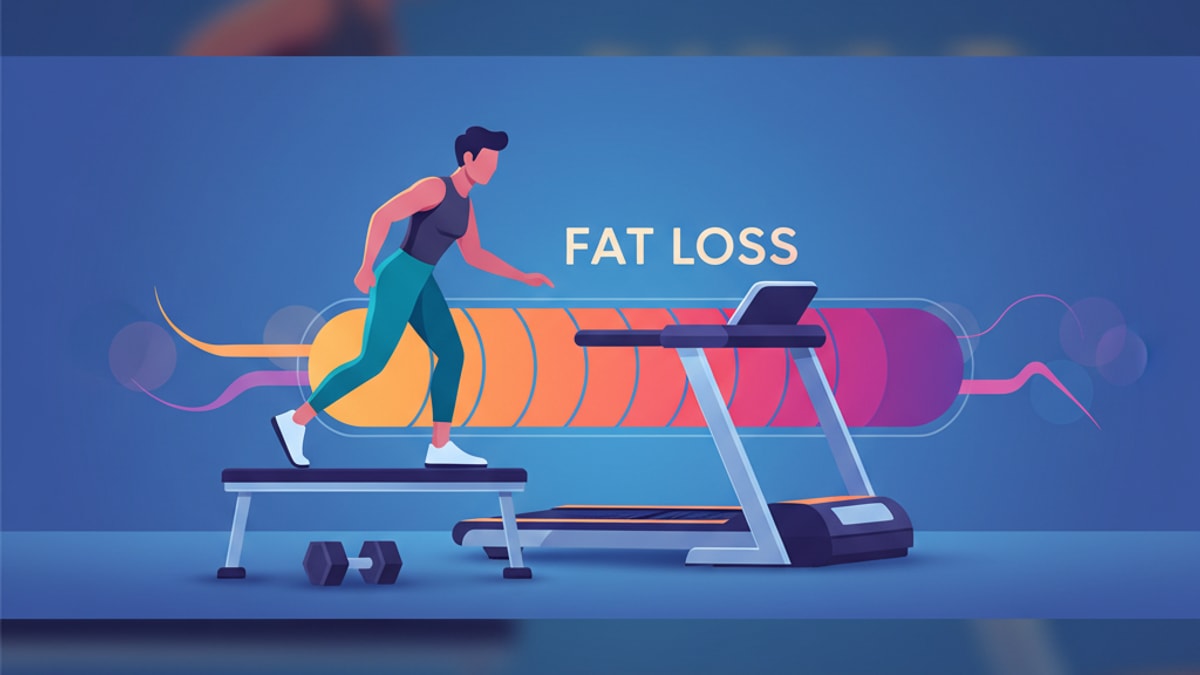
It's one of the most debated questions you'll hear in any gym. You've just finished your last set of squats, your legs feel like jelly, and you glance over at the rows of treadmills and ellipticals. Now what? Do you slog through an hour of cardio? Just a quick ten minutes? Or do you skip it altogether? The sheer volume of conflicting advice is enough to cause paralysis by analysis, and honestly, we've seen it stall progress for countless determined individuals.
At TrimrX, our entire focus is on the science of metabolic health and sustainable weight management. We don't just look at one piece of the puzzle; we see the whole, intricate system. And that system includes how you exercise. The relationship between strength training and cardiovascular work isn't just about burning calories—it's about hormonal signaling, energy utilization, and creating an internal environment that is primed for fat loss. This isn't guesswork. It's physiology. And we're here to give you the definitive, science-backed answer on how to structure your workout for maximum impact.
Why The Timing of Your Cardio Actually Matters
Let's be blunt: just showing up and going through the motions isn't enough if you have a specific, often moving-target objective like fat loss. You want every drop of sweat to count, right? Of course you do. That's why the sequence of your workout—weights then cardio—is a critical, non-negotiable element for optimizing your body's fat-burning potential.
Think of your body's energy stores like a hybrid car. It has two main fuel sources for high-intensity work: a small, easily accessible battery (glycogen) and a massive gas tank (body fat). Glycogen is stored sugar in your muscles and liver, and it's your body's preferred, fast-burning fuel for intense efforts like lifting weights. When you hit the squat rack or bench press first, you're strategically draining that glycogen battery. Each rep, each set, systematically depletes those immediate energy reserves. It's demanding. It's tough. And that's exactly the point.
Once that workout is done, the battery is running low. So, what happens when you then step onto the treadmill? Your body needs fuel to keep going, but its favorite, easy-access source is nearly gone. So, it's forced to switch over to its larger, more abundant fuel tank: your stored body fat. By performing cardio in this glycogen-depleted state, you essentially force your body's hand, compelling it to tap into fat reserves for energy far sooner and more efficiently than if you had done cardio first. It's a profound metabolic shift. We've seen it work time and time again.
The Science: Weights First, Then Cardio for Fat Loss
Digging a bit deeper, the hormonal environment you create is just as important. Strength training is an anabolic activity, meaning it signals the body to build and repair muscle tissue. It spikes crucial hormones like testosterone and human growth hormone (HGH). These are your allies in building a stronger, more metabolically active physique. Performing intense cardio before lifting can blunt this critical anabolic response. You end up going into your strength session fatigued, with less available energy, which compromises your form, your strength, and the very muscle-building signals you're trying to send.
Conversely, when you lift first, you get the full, potent hormonal benefit of the resistance training. Then, when you transition to cardio, you're not only in a glycogen-depleted state but also riding that wave of beneficial hormonal activity. Research has consistently shown that exercise-induced HGH release, which is significant after resistance training, can also help mobilize fatty acids. In other words, your weightlifting session literally helps unlock your fat stores, and the subsequent cardio session is what burns them for fuel. They work synergistically.
This isn't just theory. It's a practical strategy our team recommends because it aligns perfectly with how the human body is designed to manage energy. You're not trying to trick your body; you're working with its natural processes to achieve a desired outcome. Simple, right?
How Much Cardio After Weights for Fat Loss? The Numbers Game
Okay, so we've established the 'why'. Now for the big question: how much? The answer, as you might expect, is nuanced. It's not a one-size-fits-all prescription, but we can provide some incredibly effective guidelines based on your goals and fitness level.
Our professional recommendation is to aim for 20 to 30 minutes of moderate-intensity cardio after your weight training session, three to four times per week. This is the sweet spot. It's enough time to tap into fat stores and burn a significant number of calories without being so excessive that it spikes cortisol (the stress hormone) and puts you at risk of muscle breakdown. What's 'moderate intensity'? A good rule of thumb is working at a level where you can still hold a conversation, but it's a bit breathy and challenging. Think a brisk walk on a steep incline, a steady pace on the elliptical, or a light jog.
But there are other powerful options, too. Let's break down two of the most popular methods: High-Intensity Interval Training (HIIT) and Low-Intensity Steady-State (LISS).
High-Intensity Interval Training (HIIT):
This involves short bursts of all-out effort followed by brief recovery periods. For example, 30 seconds of sprinting on a bike followed by 60 seconds of slow pedaling, repeated for 10-15 minutes. The primary benefit of HIIT is its incredible efficiency and the phenomenon known as EPOC, or Excess Post-exercise Oxygen Consumption. This is the 'afterburn' effect. Your metabolism stays elevated for hours after you've finished exercising as your body works to recover and return to a state of homeostasis. You burn calories long after you've left the gym. The downside? It's incredibly demanding, especially after a tough lifting session, and should be used sparingly—maybe 1-2 times per week at most—to avoid overtraining.
Low-Intensity Steady-State (LISS):
This is the opposite of HIIT. Think a 30-45 minute walk on the treadmill or a casual ride on a stationary bike. The intensity is low, and the primary fuel source during the activity itself is fat. LISS is far less taxing on the central nervous system, aids in recovery by increasing blood flow to tired muscles, and is much easier to perform consistently. While it doesn't have the dramatic EPOC effect of HIIT, its lower stress profile makes it a fantastic tool for fat loss without compromising your recovery and muscle-building efforts. We often recommend this as the default choice for most people.
Here’s a quick comparison to help you decide:
| Feature | HIIT (High-Intensity Interval Training) | LISS (Low-Intensity Steady-State) |
|---|---|---|
| Duration | 10-20 minutes | 30-60 minutes |
| Intensity | Very High (90% Max Heart Rate) | Low to Moderate (50-65% Max Heart Rate) |
| Primary Benefit | EPOC ('Afterburn' effect), Time Efficiency | Direct Fat Utilization, Enhanced Recovery |
| Best For | Breaking plateaus, time-crunched individuals | Sustainable fat loss, active recovery, stress management |
| Frequency | 1-2 times per week (post-weights) | 3-5 times per week (post-weights or on off days) |
| Risk of Overtraining | High | Low |
Ultimately, the best approach is often a mix of both. Use LISS as your go-to for consistent, low-stress fat burning, and sprinkle in a HIIT session once a week to challenge your body and stoke your metabolic fire.
The Type of Cardio Makes a Difference
Does it matter if you're on a treadmill versus an elliptical? Yes and no. The most important factor, by a long shot, is consistency. The best cardio machine is the one you don't hate using. Seriously. If you despise running, forcing yourself onto a treadmill every day is a surefire path to burnout. Pick something you can stick with.
That said, there are some subtle differences. The elliptical and stationary bike are low-impact, which can be a huge benefit after a heavy leg day when your joints are already under stress. The treadmill, especially on an incline, is fantastic for engaging your glutes and hamstrings. The rowing machine is a phenomenal full-body option that challenges your cardiovascular system while also engaging your back, core, and legs. Our advice? Mix it up. Variety not only prevents boredom but also challenges your body in new ways, preventing adaptation and keeping your progress from stalling.
Common Pitfalls We See (And How to Avoid Them)
In our experience helping clients navigate their weight loss journeys, we've identified a few recurring mistakes that can sabotage even the best-laid plans. It's not about a lack of effort; it's about a misapplication of it. Here's what to watch out for.
1. The 'More is Better' Trap: This is the most common and catastrophic error. People assume that if 20 minutes of cardio is good, then 60 must be three times better. It’s not. Excessive cardio, especially after lifting, can elevate cortisol to chronic levels. Cortisol is a catabolic hormone, meaning it breaks down tissue—including the precious muscle you just worked so hard to build. It can also increase water retention and stimulate cravings for high-sugar foods. The goal is to be strategic, not to run yourself into the ground. Stick to the recommended durations.
2. Forgetting That Nutrition is King: We can't stress this enough. You cannot out-train a poor diet. Ever. All the perfectly timed cardio in the world won't make a dent if you're in a massive calorie surplus or eating nutrient-poor foods. Your workout routine is a powerful tool to accelerate fat loss, but the foundation is, and always will be, what you eat. Exercise creates the deficit; nutrition determines your body composition. They must work together.
3. Inconsistency and the All-or-Nothing Mindset: Life happens. Some weeks you'll hit every planned session perfectly. Other weeks will be a chaotic mess. The key is to avoid the all-or-nothing mindset where one missed workout makes you throw in the towel for the entire week. A 15-minute walk after your weights is infinitely better than zero minutes. Consistency over perfection is the mantra for long-term success. Don't let the perfect be the enemy of the good.
Beyond the Gym: When Diet and Exercise Aren't Enough
Here’s the unflinching reality we see every day at TrimrX: sometimes, you can do everything right—perfect workouts, impeccable diet, consistent effort—and still face a formidable wall. You hit a plateau that feels impossible to break. This is often where the battle moves from the gym to your internal biology. Hormonal imbalances, metabolic slowdown, and powerful hunger signals can work against your best efforts, making fat loss feel like an uphill, unwinnable fight.
This is precisely where modern medicine can play a transformative role. It’s not about replacing hard work; it’s about making that hard work finally pay off. Our medically-supervised weight loss programs utilize FDA-registered GLP-1 medications like Semaglutide and Tirzepatide. These aren't magic pills; they are sophisticated biotechnological tools that work with your body's natural systems. They help regulate blood sugar, improve insulin sensitivity, and—most critically—tackle the relentless hunger and cravings that so often derail progress. They address the root biological drivers that keep you stuck.
When you combine a smart exercise protocol (like the weights-then-cardio strategy we've outlined) with a medical approach that quiets the biological noise, the results can be a dramatic shift. Your efforts in the gym are amplified because your body is no longer fighting you every step of the way. If you feel like you've been spinning your wheels and are ready to explore a more comprehensive, science-backed solution, we invite you to Take Quiz to see if our program is the right fit for you. It’s the next logical step when sheer willpower isn't enough.
Building a Sustainable Plan That Actually Works
So, let's bring this all together into a tangible plan. You're not a professional athlete; you have a life, a job, and finite energy. Your plan needs to reflect that reality.
Start with a foundation of 3-4 full-body or split-routine strength training sessions per week. After each of these sessions, add 20-30 minutes of low-to-moderate intensity cardio. That's your baseline. On one of those days, if you're feeling energetic, swap the steady-state cardio for a 15-minute HIIT session. On your 'off' days from lifting, feel free to go for a walk or do some light activity, but prioritize recovery. Listen to your body. If you're feeling worn down and exhausted, an extra rest day is far more productive than forcing a mediocre workout.
Remember, this is a long game. The goal isn't just to lose fat; it's to build a healthier, stronger body and habits that last a lifetime. The scale will fluctuate. You'll have good days and bad days. The key is to trust the process, stay consistent, and be willing to adjust your approach as you learn what works best for you. And when you're ready to supercharge that process and align your biology with your goals, our team is here to help. You can Start Your Treatment and begin a new chapter in your health journey.
Ultimately, the question of 'how much cardio after weights for fat loss' has a clear answer: enough to stimulate fat burning, but not so much that it compromises recovery and muscle. It’s a calculated balance. By pairing this intelligent training strategy with sound nutrition and, when needed, powerful medical support, you create an unstoppable formula for success. You put yourself back in the driver's seat of your own health.
Frequently Asked Questions
Will doing cardio after weights ‘kill my gains’ or burn muscle?
▼
If done correctly, no. Sticking to 20-30 minutes of moderate-intensity cardio is unlikely to cause muscle loss (catabolism). The risk comes from excessive, high-intensity cardio, which can elevate stress hormones and put your body in a catabolic state.
What’s better for fat loss after lifting: HIIT or LISS?
▼
Both are effective tools. LISS (Low-Intensity Steady-State) is great for consistent, low-stress fat burning and recovery. HIIT (High-Intensity Interval Training) is more time-efficient and creates a powerful ‘afterburn’ effect, but it’s also more stressful on the body. We recommend a mix, using LISS as your primary method and adding one HIIT session per week.
How soon after my last set of weights should I start cardio?
▼
Ideally, you should transition to cardio within 5-10 minutes of finishing your weightlifting session. This ensures you’re still in a prime metabolic state with depleted glycogen stores. A quick water break and stretch is all you need.
Can I do cardio on my off days from lifting?
▼
Absolutely. Performing LISS on your off days is an excellent strategy for active recovery and additional calorie expenditure. It helps increase blood flow to sore muscles without adding significant training stress, aiding your overall progress.
Is it ever okay to do cardio before weights?
▼
A light 5-10 minute warm-up on a cardio machine before lifting is always recommended to get your blood flowing. However, performing a full, intense cardio session before weights is generally not advised for fat loss, as it depletes the energy you need for an effective strength workout.
How many days a week should I do cardio after weights?
▼
Our team recommends aiming for 3 to 4 sessions per week. This provides a consistent stimulus for fat loss without leading to overtraining. It’s crucial to have rest days to allow your body to recover and adapt.
Does the type of cardio machine matter?
▼
The most important factor is consistency, so choose a machine you enjoy using. However, low-impact options like the elliptical or stationary bike can be beneficial after a heavy leg day to reduce stress on your joints.
Should I eat something between my weight session and cardio session?
▼
No, it’s best not to. Eating between sessions would replenish your glycogen stores, which defeats the purpose of doing cardio in a glycogen-depleted state for optimal fat burning. Save your post-workout meal for after you’ve completed both activities.
What if I only have time for weights or cardio, but not both?
▼
If you’re forced to choose, prioritize strength training. Building and maintaining muscle is more metabolically beneficial in the long term, as muscle tissue burns more calories at rest. You can always fit in cardio on other days.
How do GLP-1 medications like Semaglutide help with fat loss?
▼
GLP-1 medications work by targeting the body’s natural hormonal systems. They help regulate appetite and reduce cravings, making it easier to maintain a calorie deficit. They also improve insulin sensitivity, which helps your body manage energy more effectively and can make your workouts more impactful.
Is fasted cardio in the morning better than cardio after weights?
▼
While both methods aim to burn fat by exercising in a low-glycogen state, cardio after weights offers the added benefit of capitalizing on the muscle-building hormones released during your lifting session. For overall body composition, the weights-then-cardio approach is generally superior.

Transforming Lives, One Step at a Time
Keep reading

Obesity and Low Testosterone
**Can obesity cause low testosterone?** Yes. Obesity can lower testosterone, and the relationship often runs in both directions.

Top 6 Best Weight Loss Medications in 2026
Prescription weight loss medication has gone mainstream. What was once a quiet corner of obesity medicine is now one of the most talked-about categories…

Top 8 Best Telehealth for Weight Loss in 2026
Finding the best telehealth for weight loss used to be a time-consuming process that involved hours of research, murky pricing pages, and a fair…


