Is Rotisserie Chicken a Secret Weapon for Weight Loss? Our Take
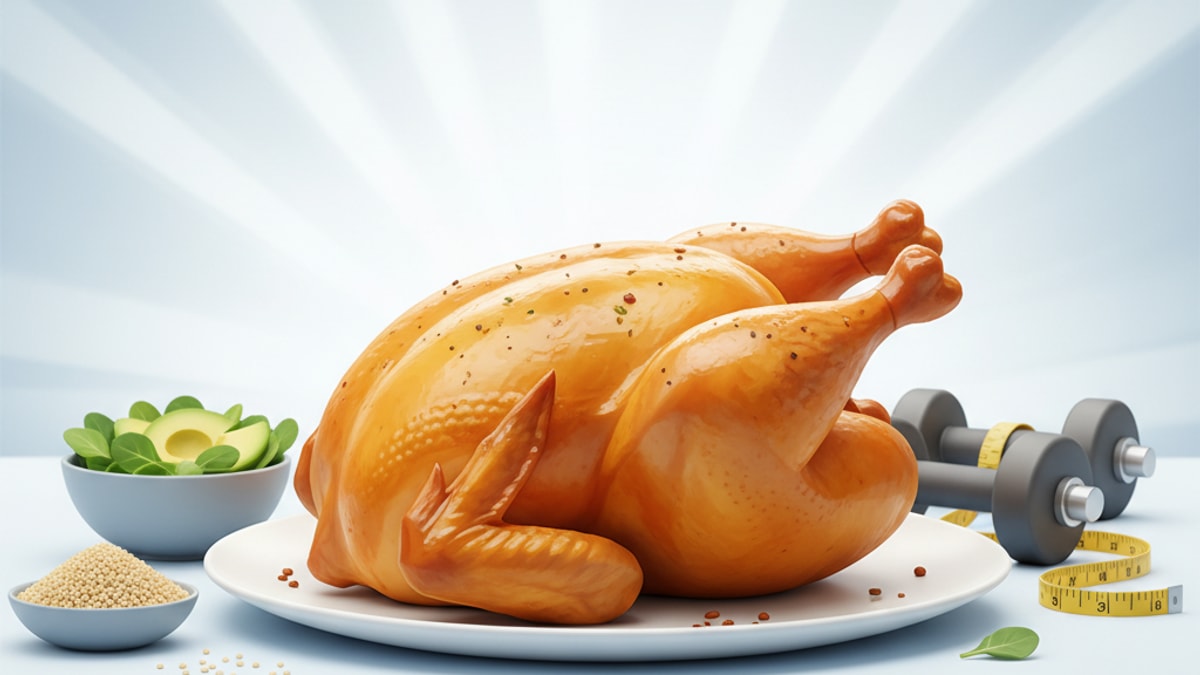
You know the feeling. You’re walking into the grocery store, tired after a long day, with a list of things you should cook. And then it hits you. That unmistakable, savory aroma of roasting chicken wafting from the front of the store. It’s a siren song of convenience, promising a hot, satisfying meal without any of the work.
It’s a temptation we’ve all given into. But as you place that warm, golden-brown bird into your cart, a question often follows: is rotisserie chicken actually good for weight loss? It feels like it should be. It’s chicken, after all. But is it a smart choice or a hidden dietary trap? Here at TrimrX, our entire focus is on the science of sustainable weight loss. We guide patients through the complexities of nutrition every single day, especially as they navigate their journeys with powerful tools like GLP-1 medications. So, let's break this down with the expert, unflinching perspective our patients rely on.
The Magnetic Pull of a Ready-Made Meal
Let’s be honest, the primary appeal of a rotisserie chicken isn't its nutritional profile. It's the sheer, unadulterated convenience. In a world of demanding schedules and the relentless pressure to 'do it all,' the idea of having a main course ready to go is incredibly powerful. It feels like a healthier alternative to the drive-thru, a responsible shortcut.
And in many ways, it can be. It’s a whole food. It’s not deep-fried. It provides a sense of a traditional home-cooked meal. This psychological comfort is a real factor, and it’s something we acknowledge when building sustainable plans for our patients. A weight loss journey that feels like a constant state of deprivation is one that’s doomed to fail. Finding smart, satisfying shortcuts is a critical, non-negotiable element of long-term success. The rotisserie chicken fits that bill perfectly. At first glance.
But convenience can sometimes mask complexity. The real question isn't whether it's convenient—we know it is. The real question is whether its nutritional makeup supports or sabotages your metabolic goals. And that, we've found, depends entirely on how you approach it.
Protein: The Cornerstone of Effective Weight Loss
Before we get into the nitty-gritty of the chicken itself, we need to establish a foundational truth. Protein is the undisputed MVP of weight management. We can't stress this enough. For our patients, particularly those on Semaglutide or Tirzepatide treatments that reduce appetite, getting adequate protein is paramount. It’s not just a suggestion; it’s a core strategy.
Why? Three main reasons.
First, satiety. Protein is significantly more filling than carbohydrates or fats. When you eat a protein-rich meal, it sends powerful signals to your brain that you're full and satisfied. This dramatically reduces the likelihood of snacking on calorie-dense, nutrient-poor foods later on. For someone whose appetite is already modulated by a GLP-1 medication, this effect is amplified, making it easier to stay within a calorie deficit without feeling gnawing hunger.
Second is the Thermic Effect of Food (TEF). Your body actually burns calories to digest and process the food you eat. Protein has the highest TEF of all macronutrients. Roughly 20-30% of the calories from protein are expended during digestion. For carbs, it's about 5-10%, and for fats, it’s a mere 0-3%. This means that a high-protein diet gives your metabolism a small but consistent boost all day long. It's free calorie burning, and it adds up.
Finally, and this is crucial, is muscle preservation. When you're in a calorie deficit to lose weight, your body can pull energy from two places: fat stores (what you want) and muscle tissue (what you definitely don't want). Losing muscle is metabolically catastrophic. It lowers your resting metabolic rate, making it harder to continue losing weight and easier to regain it later. A sufficient protein intake provides your body with the building blocks (amino acids) it needs to preserve, and even build, lean muscle mass while it sheds fat. This is the key to changing your body composition, not just making the number on the scale go down.
This is where rotisserie chicken enters the picture as a potential hero. Chicken, especially the breast meat, is an impeccable source of high-quality, complete protein. A single 4-ounce serving of roasted chicken breast can pack around 35 grams of protein. That's a massive contribution to your daily goal. So, from a pure protein perspective, the answer seems simple. Yes, it’s great for weight loss.
But it’s never that simple.
The Hidden Saboteurs: Sodium, Fats, and Glazes
Here’s where that convenient shortcut can take a wrong turn. The delicious flavor of a store-bought rotisserie chicken doesn't just come from roasting. It comes from what's done to it before it even enters the oven. And this is where you need to become a bit of a detective.
The most significant offender is sodium. To make the chicken juicy and flavorful, most commercial operations inject it with or soak it in a brine—a solution of salt, water, and various seasonings. The result can be a sodium payload that is genuinely shocking. Some popular grocery store chickens can contain over 600mg of sodium in a single 3-ounce serving. That’s more than a quarter of the recommended daily intake for an entire day, packed into a small portion of one meal.
Why does this matter for weight loss? Excessive sodium causes your body to retain water. You might be sticking to your calorie goals perfectly, but the scale won't budge—or might even go up—because you're holding onto several pounds of excess water. This is incredibly demoralizing and can make people give up, thinking their plan isn't working. Beyond the scale, high sodium intake is linked to high blood pressure and other cardiovascular issues. It’s a genuine health concern.
Next up are the additives and glazes. That beautiful, glossy sheen on the skin isn't always natural. It can come from glazes made with sugar, corn syrup, or other sweeteners. While the amount might seem small, these hidden sugars can add unnecessary calories and spike your blood sugar, potentially leading to more cravings. Other ingredients like modified corn starch, maltodextrin, and even MSG can be found in the seasoning rubs, none of which contribute positively to your health goals.
And then there's the skin. Ah, the crispy, savory skin. It's arguably the best part for many people. It's also where a huge concentration of the chicken's fat resides. Eating the skin can easily double the fat content and add a significant number of calories to your serving, turning a lean protein source into a high-fat indulgence. We're not saying you can never enjoy it, but for the purpose of a consistent weight loss plan, it's a major liability.
A Tale of Two Meats: Breast vs. Thigh
Even on the same bird, the nutritional value varies dramatically. The distinction between white meat (the breast and wings) and dark meat (the thighs and drumsticks) is significant for anyone focused on weight loss. Our experience shows that making the right choice here can be a game-changer.
Let’s compare them side-by-side.
| Nutrient (per 3.5 oz / 100g, skinless) | White Meat (Breast) | Dark Meat (Thigh) | Our Professional Recommendation |
|---|---|---|---|
| Calories | ~165 kcal | ~209 kcal | For a calorie-controlled plan, the breast meat offers a significant advantage, allowing for larger, more satisfying portions. |
| Protein | ~31 g | ~26 g | While both are good sources, the breast meat provides a higher protein-to-calorie ratio, making it more efficient for muscle preservation. |
| Total Fat | ~3.6 g | ~10.9 g | This is the most dramatic difference. The dark meat contains triple the amount of fat, a critical factor in a weight loss diet. |
| Saturated Fat | ~1 g | ~3 g | Again, a threefold increase in saturated fat makes dark meat a less heart-healthy choice when consumed regularly. |
As the data clearly shows, the breast meat is the unequivocal winner for weight loss. It delivers more protein for fewer calories and significantly less fat. Dark meat contains more myoglobin (which makes it dark) and fat, which gives it a richer flavor and juicier texture, but those benefits come at a steep metabolic cost. When we advise our patients, the guidance is always to prioritize the breast meat. Simple as that.
The TrimrX Playbook: Making Rotisserie Chicken Work For You
So, can you make it work? Absolutely. A rotisserie chicken can be a fantastic tool in your nutritional arsenal, provided you use it strategically. It requires a mindful approach, not a grab-and-go mentality. Here is the exact playbook we share with our patients to turn this convenience food into a weight loss asset.
Rule #1: The Skin Must Go. We have to be blunt about this. It’s non-negotiable. The first thing you should do when you get the chicken home is to remove all the skin. Yes, all of it. This single action is the most effective way to slash the fat, calories, and sodium. Think of the skin as the flavor delivery system for the cooking process; you don't need to consume it.
Rule #2: Become a Breast Meat Specialist. Carve the chicken and separate the white meat from the dark meat. Prioritize eating the breast meat for your primary meals. You can save the dark meat for another family member or use it sparingly in a dish where its richer flavor can go a long way (like a small amount shredded into a soup).
Rule #3: Portion Control is Everything. This is a universal truth in weight management, and it applies here with force. A 'serving' is not half the chicken. We recommend using a food scale—it’s an invaluable tool for accuracy. A typical portion for weight loss is 3 to 5 ounces (weighed after cooking and removing bones/skin). This amount provides an excellent dose of protein without excessive calories.
Rule #4: Build a Balanced, High-Fiber Plate. The chicken is your protein source. It is not the entire meal. This is a mistake we see all the time. To create a truly satisfying and nutritionally complete meal, you must pair it with the right components. Fill at least half of your plate with non-starchy, fiber-rich vegetables. Think steamed broccoli, a large spinach salad, roasted asparagus, or sautéed green beans. Fiber works synergistically with protein to enhance feelings of fullness and aids in digestive health. You can add a small portion of a complex carbohydrate, like a quarter-cup of quinoa or a small sweet potato, to provide sustained energy.
Rule #5: Hydrate, Hydrate, Hydrate. Because of the high sodium content, even in the meat itself, it’s critical to drink plenty of water. This helps your body flush out the excess sodium and reduces water retention, giving you a more accurate picture of your progress on the scale.
Following these five rules transforms the rotisserie chicken from a potential dietary landmine into a reliable, high-protein component of a healthy eating plan. It takes a few extra minutes of prep, but the payoff is immense.
Beyond the Bird: A Holistic Approach to Lasting Results
Mastering how to incorporate foods like rotisserie chicken into your diet is a fantastic step. It’s about making smart, informed choices in your day-to-day life. But for many people struggling with significant weight to lose, these individual choices can feel like an uphill battle against powerful internal signals like cravings and a relentless appetite.
This is where a comprehensive, medically-supervised approach makes a world of difference. At TrimrX, we see firsthand how combining nutritional strategies with medical science creates profound and lasting change. Our program utilizes FDA-registered GLP-1 medications like Semaglutide and Tirzepatide, which work by targeting the underlying biology of hunger and satiety. They help quiet the 'food noise' in your brain and enhance your body's natural fullness signals, making it genuinely easier to be satisfied with appropriate portion sizes of healthy foods—like that 4-ounce serving of chicken breast.
It’s not about willpower; it’s about changing the biological playing field. When your body is working with you instead of against you, following a healthy eating plan becomes less of a struggle and more of a natural choice. If you've tried everything and feel like you're constantly fighting your own biology, it might be time to see if a medical approach is right for you. You can find out if you're a potential candidate by taking our simple Take Quiz. Our medical team creates personalized plans that integrate these powerful medications with the exact kind of real-world nutritional guidance we've discussed here.
The goal is not just to lose weight, but to build a new, sustainable relationship with food. It’s about understanding the 'why' behind your choices and having the right tools to make the better choice the easier choice.
So, what's our final verdict? Is rotisserie chicken good for weight loss? Our answer is a qualified, strategic 'yes'.
It can be an absolute game-changer for busy weeknights, a reliable source of high-quality protein, and a satisfying meal that doesn't feel like 'diet food'. But its potential is only unlocked with knowledge. You have to be willing to discard the skin, prioritize the breast meat, control your portions, and balance your plate. It's an excellent tool, but it's not a magic bullet. It's one smart piece in the much larger, more complex puzzle of sustainable weight management.
When you’re ready to solve the whole puzzle with a team of experts guiding you every step of the way, we're here to help you build a plan that truly works. You can Start Your Treatment Now and begin your journey toward lasting change.
Frequently Asked Questions
How many calories are in a typical rotisserie chicken?
▼
This varies widely by size and brand, but a small, 2-pound chicken can contain over 1,500 calories. A 3.5-ounce serving of skinless breast meat is about 165 calories, while the same amount of skin-on dark meat can be well over 250 calories.
Is organic rotisserie chicken better for weight loss?
▼
Not necessarily. ‘Organic’ refers to how the chicken was raised, not its nutritional content or how it’s prepared. An organic rotisserie chicken can still be injected with a high-sodium brine and have fatty skin, so the same rules for weight loss apply.
Can I eat the skin if I’m trying to lose weight?
▼
We strongly advise against it for consistent weight loss. The skin is where most of the fat and a significant amount of sodium are concentrated. Removing it is the single easiest way to make the chicken a leaner, healthier choice.
How much sodium is too much in a rotisserie chicken?
▼
Many brands have 400-600mg of sodium per 3-ounce serving, which is very high. Our team recommends looking for options with under 300mg if possible, though they can be hard to find. The key is to be aware and limit other high-sodium foods on days you eat it.
What are the best side dishes to pair with rotisserie chicken for weight loss?
▼
Focus on high-fiber vegetables. Steamed broccoli, a large salad with vinaigrette, roasted asparagus, or sautéed spinach are all excellent choices. They add volume and nutrients to the meal for very few calories, helping you feel full and satisfied.
How long does rotisserie chicken last in the fridge?
▼
Properly stored in an airtight container, leftover rotisserie chicken is safe to eat for 3 to 4 days. For best results, we recommend removing the meat from the bones before refrigerating.
Can I use rotisserie chicken for meal prep?
▼
Absolutely. It’s one of its best uses. Carve the entire chicken when you get home, portion out the breast meat into containers with steamed vegetables, and you’ll have healthy, high-protein lunches ready for several days.
Is rotisserie chicken from a specific store like Costco or Sam’s Club healthier?
▼
While famous for their size and value, these chickens are also known for being injected with a saline solution for flavor and moisture. Nutritionally, they are very similar to other grocery store chickens and the same rules—remove skin, choose breast meat—apply.
Why is protein so important when you’re on Semaglutide?
▼
GLP-1 medications like Semaglutide reduce appetite, making it easy to undereat. Prioritizing protein is critical to ensure you’re preserving lean muscle mass during weight loss, which keeps your metabolism strong. Protein also enhances the medication’s effect on satiety.
Are there hidden carbs in rotisserie chicken?
▼
Plain, roasted chicken has virtually no carbs. However, some glazes or rubs used on rotisserie chickens can contain sugar, starches, or maltodextrin, which add a small amount of carbohydrates. It’s usually negligible unless a very sweet BBQ-style sauce is used.
What’s a healthy portion size for rotisserie chicken?
▼
For weight loss, a healthy and effective portion size is typically 3 to 5 ounces of skinless breast meat. Our team recommends using a food scale for accuracy, as it’s easy to underestimate portion sizes by eye.
Does eating chicken help with the side effects of GLP-1 medications?
▼
Lean protein sources like skinless chicken breast are often well-tolerated and can help manage common side effects. High-fat or greasy foods can sometimes worsen nausea, so choosing the leanest part of the chicken is a smart strategy.

Transforming Lives, One Step at a Time
Keep reading

What to Do With a Full Pantry You No Longer Eat From
Sort it into three piles rather than clearing it all out: donate, keep, and discard. The mistake most people make is emptying the whole…

How to Handle a Business Dinner When the Client Orders for the Table
This is the one dining situation where your usual tools do not work. You cannot order a starter as your main, cannot ask for…
How to Handle Group Dinners Where Everyone Shares Plates
Shared dining is generally easier than a fixed plate, not harder, and it is worth going in with that framing. When everyone is taking…


