Is Fairlife Milk Good for Weight Loss? Our Team’s Expert Take
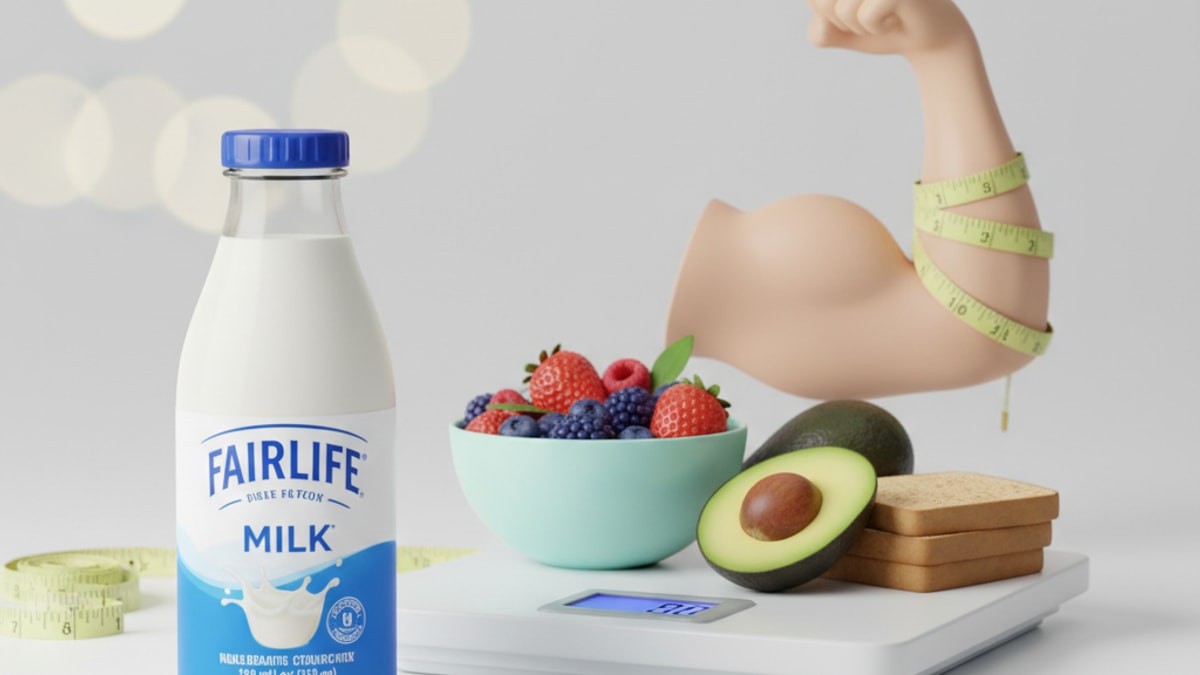
Is Fairlife Milk Good for Weight Loss? Our Team's Expert Take
Walk down any dairy aisle these days, and you're met with a sprawling, almost overwhelming array of options. It's a far cry from the simple whole-or-skim choice of the past. Amidst the oat, almond, and soy alternatives, one brand, Fairlife, has carved out a formidable niche, particularly among the health-conscious. The buzz is undeniable. We hear the questions constantly from clients in our programs: "Is Fairlife milk good for weight loss? Is it really better than regular milk?" It's a valid question, especially when you're meticulously tracking every calorie and macro in pursuit of a significant health goal.
Let's be honest, navigating the world of nutrition during a weight loss journey can feel like a full-time job. You're not just changing what you eat; you're re-engineering your relationship with food, often while your body is adapting to powerful metabolic tools like GLP-1 medications. Our team at TrimrX doesn't just focus on the prescription; we focus on the entire ecosystem of your success. That includes the food you use to fuel your body. So, we're going to break down the Fairlife phenomenon from our clinical perspective. This isn't just about reading a label. It's about understanding the science behind it and how a product like this can either support or sabotage your efforts.
So, What Exactly Is Fairlife Milk?
Before we can talk about its role in weight management, we need to understand what makes Fairlife different from the gallon of milk you grew up with. It’s not just clever marketing. The key is its unique filtration process. Think of it as milk, deconstructed and then intelligently reconstructed.
Fairlife uses a patented cold-filtration system. Essentially, they pass conventional milk through a series of specialized filters. This process separates the milk into its core components: water, fat, protein, vitamins, minerals, and lactose (the natural sugar in milk). After separating them, they can recombine these components in different proportions. They reduce the lactose and some of the water while concentrating the protein and calcium. The result is a beverage that is technically still 100% dairy milk, but with a nutritional profile that's been deliberately re-engineered.
What does this mean for you? You get a milk that has 50% more protein, 30% more calcium, and, crucially, 50% less sugar than its traditionally pasteurized counterpart. And because most of the lactose is filtered out, it's a game-changer for individuals with lactose intolerance who still want the benefits of dairy. It's a prime example of food science being used to optimize a natural product for specific health goals. Simple, right? But that simple change has profound implications for a weight loss strategy.
The Protein Advantage: Why It’s a Game-Changer
When it comes to weight loss, protein is the undisputed heavyweight champion of macronutrients. We can't stress this enough. Its role is so critical that it forms a foundational pillar of the nutritional guidance we provide to every single one of our members.
First, let's talk about satiety. This is the feeling of fullness and satisfaction after a meal. Protein is significantly more satiating than either carbohydrates or fats. When you consume a protein-rich food or beverage, it triggers the release of hormones like peptide YY (PYY) and glucagon-like peptide-1 (GLP-1)—yes, the very same hormone our treatments leverage—that signal to your brain that you're full. A glass of Fairlife skim milk, with its 13 grams of protein per cup, is going to keep you feeling full for much longer than a sugary drink or a carb-heavy snack with the same calorie count. This makes it an incredible tool for managing hunger and cravings, which are often the biggest hurdles to overcome.
Then there's the muscle preservation aspect. This is a critical, non-negotiable element of healthy, sustainable weight loss. When you're in a calorie deficit, your body doesn't just burn fat; it can also start breaking down lean muscle tissue for energy. This is catastrophic for your metabolism. Muscle is metabolically active tissue, meaning it burns calories even at rest. Losing it slows your metabolic rate, making it harder to lose weight and easier to regain it later. We've seen it work time and time again: prioritizing high protein intake helps protect that precious muscle mass, ensuring that the weight you're shedding is primarily fat. For patients on GLP-1 treatments, who are experiencing significant and sometimes rapid weight loss, this becomes even more important. We need to fuel the body to preserve that engine.
Finally, protein has a higher thermic effect of food (TEF) than other macros. This means your body actually burns more calories just to digest, absorb, and metabolize protein compared to fats and carbs. While it's not a massive number, every little bit counts. It’s another small, scientific advantage that tilts the scales in your favor. The concentrated protein in Fairlife directly feeds into all three of these powerful biological mechanisms. It’s not magic; it’s just smart science.
The Sugar Situation: A Win for Metabolic Health
Now, let's talk about the other side of the Fairlife coin: its dramatically lower sugar content. Standard 2% milk contains about 12 grams of sugar (lactose) per cup. Fairlife 2% has just 6 grams. This 50% reduction is a monumental victory for anyone focused on weight loss and metabolic health.
Why does it matter so much? Sugars, even natural ones like lactose, cause a spike in blood glucose levels. Your pancreas responds by releasing insulin to shuttle that glucose into your cells for energy. When this happens frequently, it can lead to a rollercoaster of energy spikes and crashes, triggering more cravings for quick-energy (read: sugary) foods. This cycle is a formidable enemy of weight management. Moreover, when insulin levels are chronically high, it signals your body to store fat rather than burn it.
By cutting the sugar content in half, Fairlife provides a much more stable blood sugar response. You get the nutritional benefits of milk—the protein, calcium, vitamin D—without the significant insulin spike. This is incredibly synergistic with the goals of GLP-1 medications, which work in part by improving insulin sensitivity and regulating blood sugar. Combining a treatment that enhances your body's natural glucose regulation with a diet that doesn't challenge it unnecessarily is how you create an environment for optimal, lasting results. It’s about making your body work for you, not against you. Choosing a lower-sugar option like Fairlife over its conventional counterpart is a simple, effective step in that direction.
It makes your daily calorie budget more efficient. You're not 'spending' calories on sugar that provides little nutritional value or satiety. Instead, those calories are packed with high-quality, muscle-preserving, hunger-fighting protein. That’s a trade we’d recommend anyone make.
Fairlife vs. The Alternatives: A Head-to-Head Look
Seeing the numbers side-by-side often provides the clearest picture. Our team put together a simple comparison to illustrate where Fairlife stands against traditional dairy and other popular alternatives. The data is based on a standard 1-cup (8 oz) serving.
| Beverage Type | Calories | Protein (g) | Sugar (g) | Carbs (g) |
|---|---|---|---|---|
| Fairlife 2% Milk | 120 | 13 | 6 | 6 |
| Fairlife Skim Milk | 80 | 13 | 6 | 6 |
| Regular 2% Milk | 122 | 8 | 12 | 12 |
| Regular Skim Milk | 83 | 8 | 12 | 13 |
| Unsweetened Almond Milk | 30 | 1 | 0 | 1 |
| Typical Vanilla Whey Protein Shake | 140 | 25 | 3 | 5 |
What do we see here? Fairlife Skim Milk is an absolute powerhouse. At just 80 calories, you're getting a massive 13 grams of protein, tying its higher-calorie 2% version. That is an incredible protein-to-calorie ratio. Compared to regular skim milk, you're getting over 60% more protein for virtually the same calorie count, with half the sugar. That's efficiency.
Now, look at almond milk. It’s fantastic for being low-calorie, but from a protein standpoint, it barely registers. It won't offer any of the satiety or muscle-sparing benefits we've discussed. It's a fine choice for a low-calorie liquid base, but it’s not a nutritional equivalent to dairy milk.
And what about a dedicated protein shake? Yes, the shake wins on pure protein content. No question. But it's also a more processed product and often comes with a longer list of ingredients, including artificial sweeteners or flavors. Fairlife offers a simpler, whole-food-adjacent option that can be more versatile. It's not about one being 'better,' but about understanding their different roles. Fairlife is an excellent food-based protein source for meals and snacks, while a protein shake can be a strategic tool for post-workout recovery or when you need a very high dose of protein quickly.
How to Weave Fairlife Into Your Weight Loss Plan
Knowing a food is 'good' is one thing. Knowing how to use it effectively is another. We're not advocates for any single 'miracle' product. Instead, we believe in building a toolbox of high-quality options that make sticking to your plan easier and more enjoyable. Fairlife can be a fantastic tool in that box.
Our team has found that its versatility is one of its greatest strengths. Here’s how we often suggest our members incorporate it:
-
The Morning Smoothie Supercharger: This is the most popular use. Instead of using water or almond milk as your smoothie base, using Fairlife instantly adds 13 grams of high-quality protein before you've even added a scoop of protein powder. A smoothie with Fairlife, a scoop of vanilla whey, a handful of spinach, and some frozen berries becomes a complete, satisfying meal that can keep you full until lunch.
-
The Post-Workout Recovery Drink: After exercise, your muscles are primed for repair. Consuming protein helps this process and minimizes muscle soreness. A cold glass of Fairlife (especially the chocolate version, which has an ideal carb-to-protein ratio for recovery) is a quick, easy, and effective option.
-
The Hunger-Crushing Snack: Feeling that mid-afternoon slump or late-night craving? Instead of reaching for chips or cookies, a simple glass of Fairlife can be surprisingly effective. The protein provides satiety that a carb-based snack just can't match, stabilizing your blood sugar and crushing the craving.
-
In Your Coffee or Tea: Swapping out sugary creamers for a splash of Fairlife in your morning coffee is a small change that adds up. You get the creamy texture plus a little protein boost without the added sugars.
For those on a medically-supervised path, such as our programs that utilize GLP-1 medications, integrating high-protein, low-sugar foods is a critical, non-negotiable element. It supports the metabolic changes your body is undergoing and helps manage the reduced appetite in a nutritionally sound way. You need every calorie to count. If you're ready to explore how a comprehensive medical approach can transform your health, you can Start Your Treatment with our team.
Are There Any Downsides to Consider?
No product is perfect for everyone, and it's our job to provide an unflinching, balanced view. While Fairlife has significant advantages, there are a few considerations to keep in mind.
First, the price. There's no getting around it; Fairlife is more expensive than conventional milk. The advanced filtration process costs more, and that's reflected on the price tag. For some, this may be a prohibitive factor. You have to weigh the enhanced nutritional benefits against your personal budget.
Second, while it's lactose-free, it is still a dairy product. Individuals with a true milk allergy (an immune response to the proteins casein and whey) will still need to avoid it. If you have a general dairy sensitivity that isn't related to lactose, you may or may not tolerate it. It’s always best to listen to your own body.
Finally, it's important to remember that it is, by definition, a more processed food than regular pasteurized milk. While the processing in this case adds nutritional benefits (more protein, less sugar), some people prefer to stick to foods in their most natural state possible. This is a personal dietary philosophy choice, and there’s no single right answer. Our perspective is to focus on the objective nutritional data and its practical impact on your health goals.
The Big Picture: It’s a Tool, Not a Silver Bullet
So, is Fairlife milk good for weight loss? Our team's answer is a resounding yes… with a crucial caveat. It is an excellent tool to support a weight loss journey. Its high-protein, low-sugar profile aligns perfectly with the principles of satiety, muscle preservation, and metabolic health that we champion at TrimrX.
But it is not, and never will be, a magic bullet. No single food is.
Sustainable weight loss, the kind that leads to long-term health transformation, is about the bigger picture. It's about your total daily calorie intake, your overall macronutrient balance, your sleep quality, your stress levels, and consistent physical activity. It’s about building a new lifestyle, not finding a secret product. Powerful medical interventions like Semaglutide and Tirzepatide are designed to work on your underlying biology, resetting your body's metabolic 'set point' and regulating hunger signals at the source. They create a profound opportunity for change.
Your nutritional choices are how you capitalize on that opportunity. Choosing Fairlife over regular milk is a smart, strategic decision that supports the work the medication is doing. It’s like choosing high-octane fuel for a high-performance engine. It helps the whole system run more efficiently. But the fuel alone doesn't make the car go. You still need the engine, the driver, and a map to your destination. We see our role as providing the map and tuning the engine, while empowering you to choose the best fuel along the way.
Ultimately, integrating smarter food choices like this one is a piece of a much larger, more important puzzle. It's a daily vote for the healthier, stronger person you're working to become. And every vote counts.
Frequently Asked Questions
Is Fairlife chocolate milk good for weight loss?
▼
Fairlife chocolate milk can be a good option, particularly for post-workout recovery due to its carb and protein content. However, it does have more sugar and calories than the plain versions, so we recommend using it strategically rather than as a daily staple during active weight loss.
Which Fairlife milk is best for weight loss?
▼
From a purely data-driven perspective, Fairlife Skim Milk is the best choice. It offers the highest protein content (13g) for the lowest number of calories (80), making it incredibly efficient for a weight loss plan.
Can I lose weight just by drinking Fairlife milk?
▼
No, you cannot lose weight just by drinking Fairlife milk. Weight loss is achieved through a sustained calorie deficit. Fairlife is an excellent tool to help you stay full and meet protein goals within that deficit, but it doesn’t cause weight loss on its own.
Is Fairlife better than a protein shake?
▼
It depends on the goal. Fairlife is a less processed, food-based source of protein that’s very versatile. A protein shake typically delivers a higher dose of protein per serving and can be better for specific, high-demand situations like intense post-workout recovery. Both can have a place in a balanced diet.
Does Fairlife milk cause bloating or gas?
▼
Because Fairlife is lactose-free, it’s much less likely to cause the bloating and gas commonly associated with regular milk. However, some individuals may have a non-lactose sensitivity to other dairy components, though this is less common.
How does the protein in Fairlife compare to Greek yogurt?
▼
Both are excellent protein sources. A cup of Fairlife has 13g of protein, while a typical 7oz container of plain Greek yogurt can have 18-20g. Greek yogurt often has the added benefit of probiotics, but Fairlife is a more versatile liquid for smoothies or drinking.
Is Fairlife milk good for people on GLP-1 medications like Semaglutide?
▼
Yes, our team finds it to be an excellent choice. GLP-1 medications reduce appetite, so making every calorie count with nutrient-dense foods is crucial. The high protein in Fairlife supports muscle preservation and satiety, which is perfectly aligned with the goals of these treatments.
Why is Fairlife more expensive than regular milk?
▼
The higher cost is due to the patented cold-filtration process used to separate and rebalance the milk’s components. This advanced technology and extra step in production make it more expensive to produce than standard pasteurized milk.
Can I use Fairlife for cooking and baking?
▼
Absolutely. You can use Fairlife in cooking and baking just as you would with regular milk. Its lower sugar content might slightly alter the taste of some sweet recipes, but for most applications, it’s a one-to-one substitute.
Is the Core Power protein shake from Fairlife good for weight loss?
▼
Core Power shakes are fantastic for high-protein needs, offering 26-42g per bottle. They can be a great meal replacement or recovery tool, but be mindful of the calories. We advise clients to ensure they fit within their daily caloric budget for weight loss.
Does Fairlife milk have artificial growth hormones?
▼
No, the company states that all of its milk comes from farms that have pledged not to use artificial growth hormones like rBST.
Is Fairlife considered a ‘processed food’?
▼
Yes, because it goes through a filtration process that alters it from its original state, it is considered a processed food. However, in this case, the processing enhances its nutritional profile for specific goals like increasing protein and reducing sugar.

Transforming Lives, One Step at a Time
Keep reading

Obesity and Low Testosterone
**Can obesity cause low testosterone?** Yes. Obesity can lower testosterone, and the relationship often runs in both directions.

Top 6 Best Weight Loss Medications in 2026
Prescription weight loss medication has gone mainstream. What was once a quiet corner of obesity medicine is now one of the most talked-about categories…

Top 8 Best Telehealth for Weight Loss in 2026
Finding the best telehealth for weight loss used to be a time-consuming process that involved hours of research, murky pricing pages, and a fair…


