Which Milk is Best for Weight Loss? The Real Answer
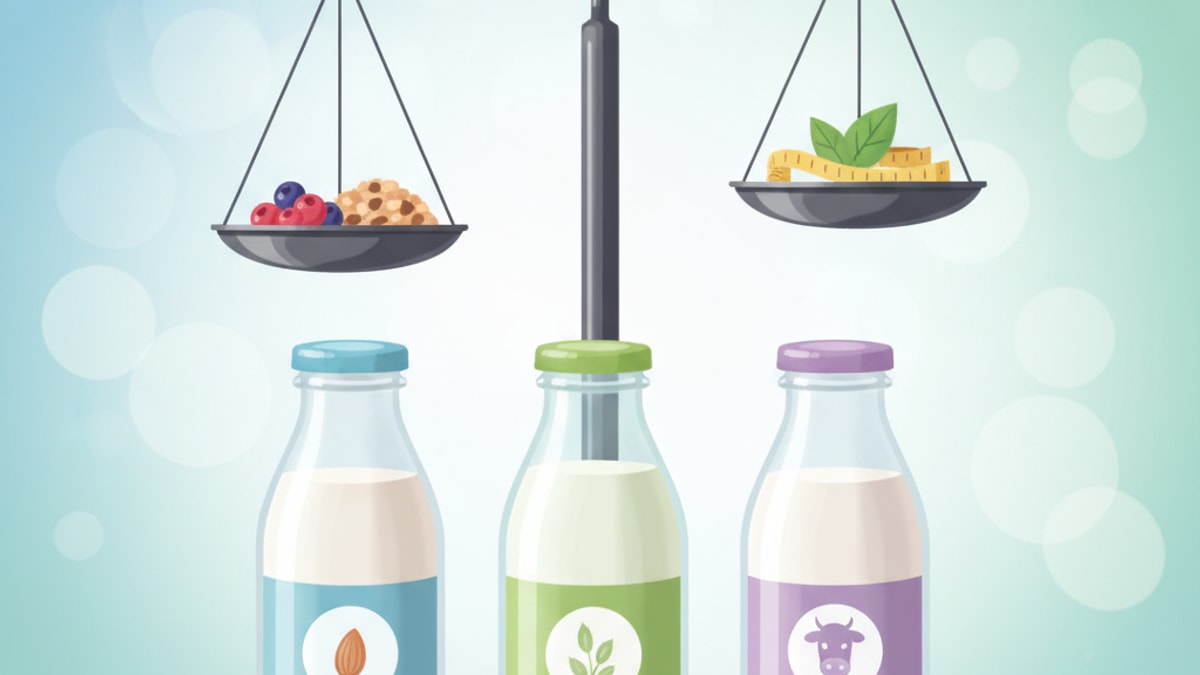
Let's Talk About the Milk in Your Fridge
Walk down the dairy aisle of any grocery store and you're met with a sprawling, almost overwhelming, wall of choices. It wasn't always this complicated. A few decades ago, your options were pretty much whole, 2%, or skim. Now? Now you've got almond, soy, oat, coconut, cashew, pea, rice, and even hemp milk all vying for a spot in your cart. It's becoming increasingly challenging to make a simple choice.
For anyone on a weight loss journey, this choice feels even more significant. You're carefully tracking calories, prioritizing protein, and trying to avoid hidden sugars. So, the question—which milk is best for weight loss?—isn't just a casual query. It's a strategic one. Here at TrimrX, our team works every day with individuals navigating the complexities of metabolic health and sustainable weight management. We've seen firsthand how small, consistent dietary choices can collectively create a significant, sometimes dramatic, shift. And yes, that includes the milk you choose for your coffee, protein shake, or morning cereal.
Why Does Milk Choice Even Matter for Weight Loss?
Before we dive into a head-to-head comparison, let's establish why this is a conversation worth having. It's not just about the calories. The right milk can be a powerful ally in your weight loss efforts, while the wrong one can be a quiet saboteur, adding empty calories and sugar without you even realizing it.
Here’s what our experience shows are the critical factors:
- Protein for Satiety: This is huge. Protein is the most satiating macronutrient, meaning it helps you feel fuller for longer. When you feel full, you're less likely to overeat or reach for unhealthy snacks between meals. A milk choice that delivers a solid dose of protein can be a game-changer for appetite control. This is a non-negotiable element for success.
- Calorie Density: This one's obvious, but crucial. Weight loss fundamentally requires a calorie deficit. Some milks are incredibly light on calories, allowing you to enjoy them without making a big dent in your daily budget. Others, especially flavored or creamy varieties, can pack the caloric punch of a dessert. It's that simple.
- Sugar Content: We're talking about both naturally occurring sugars (like lactose in cow's milk) and, more importantly, added sugars. Many plant-based milks, particularly the flavored ones, are loaded with cane sugar or syrups to improve their taste. These added sugars contribute empty calories and can spike your blood sugar, leading to cravings later on. We can't stress this enough: always read the label for added sugars.
- Healthy Fats: Fat isn't the enemy it was once made out to be. Healthy fats can also contribute to satiety and are essential for hormone function. The type and amount of fat, however, vary wildly between milk options. Some offer beneficial unsaturated fats, while others contain higher levels of saturated fat.
So, the 'best' milk isn't just the one with the fewest calories. It's the one that best aligns with your overall nutritional strategy, helping you stay full, energized, and on track.
The Classic Contender: Cow's Milk
Let's start with the original. For generations, cow's milk has been a dietary staple, praised for its calcium and vitamin D content. But how does it stack up specifically for weight loss? The answer depends entirely on which type you choose.
Skim Milk (Fat-Free): This is often the go-to for calorie-conscious individuals. At around 80-90 calories per cup, it's a lean option. It retains all the protein of its fattier counterparts—about 8 grams per cup—which is a significant advantage for satiety. The downside? Some people find it thin and watery, lacking the satisfying creaminess of other milks. But from a pure protein-to-calorie ratio, it's a formidable contender.
1% and 2% Milk (Low-Fat & Reduced-Fat): These are the middle ground. You get a little more fat, which adds some creaminess and a few more calories (around 100-120 per cup). The protein content remains the same high 8 grams. For many of our clients, these options represent a great balance. They feel more satisfying than skim milk without adding a significant number of extra calories or fat, making them easier to stick with long-term.
Whole Milk: With about 150 calories and 8 grams of fat per cup, whole milk is the richest of the bunch. While it's very satisfying, the higher calorie count means you need to be more mindful of portion sizes if you're in a calorie deficit. However, some studies suggest that the fat in dairy may help with the absorption of fat-soluble vitamins like D. Our team generally recommends that for a weight loss phase, sticking to skim or 1% is a more efficient use of your daily calorie budget. You get the same protein punch for fewer calories.
One important note on cow's milk is lactose, its natural sugar. While it's not an 'added' sugar, it does contribute to the carbohydrate count. For most people, this isn't an issue, but for those with lactose intolerance, it's a non-starter.
The Plant-Based Revolution: Aisle of Alternatives
This is where the choices explode. Plant-based milks have surged in popularity, and for good reason. They're great for those with dairy allergies, lactose intolerance, or who follow a vegan lifestyle. But from a pure weight-loss perspective, they are a mixed bag. You have to be a savvy shopper.
Unsweetened Almond Milk: This is the undisputed king of low-calorie options. With as few as 30-40 calories per cup, it's incredibly light. You can use it generously in smoothies or with cereal without derailing your day. But here's the catch, and it's a big one: it has almost no protein. We're talking 1 gram per cup, sometimes less. So while it saves you calories, it does next to nothing for satiety. Our recommendation? It’s a fantastic choice if you're getting ample protein from other sources in your meal (like protein powder in a smoothie or eggs on the side), but don't rely on it to keep you full.
Soy Milk: Soy milk is the nutritional powerhouse of the plant-based world and the closest direct comparison to cow's milk. A cup of unsweetened soy milk typically contains around 80-100 calories and packs a solid 7-8 grams of complete protein. This makes it an excellent choice for weight loss, as it delivers that crucial satiety factor that almond milk lacks. It's also typically fortified with calcium and vitamin D. For those who can't or don't consume dairy, unsweetened soy milk is often what our team suggests as the best all-around alternative.
Oat Milk: This one's the trendy favorite, known for its creamy, rich texture that's fantastic in lattes. But honestly, though, you need to be careful with oat milk. It's significantly higher in calories and carbohydrates than most other plant milks. A standard cup can have 120-160 calories and 15-25 grams of carbs. That's nearly double the carbs of cow's milk. Why? It's made from oats, a grain. While it does offer a couple of grams of fiber, the higher calorie and carb load make it a less-than-ideal choice for daily consumption during a focused weight loss phase. It’s more of a treat than a staple. We've seen many clients unknowingly stall their progress because they switched to 'healthy' oat milk lattes, not realizing the caloric impact.
Coconut Milk (Beverage, not Canned): The kind you find in a carton is much more diluted than the canned version used for cooking. It has a pleasant, subtle coconut flavor and is relatively low in calories (around 45-60 per cup). However, like almond milk, it's very low in protein. Most of its calories come from fat, specifically medium-chain triglycerides (MCTs), which some research suggests may have metabolic benefits. Still, without the protein, it's not a top-tier choice for appetite control.
Milk Comparison: Just the Facts
It helps to see the numbers side-by-side. These are typical values for one-cup (8 oz) servings of unsweetened varieties. Always check the nutrition label on the specific brand you buy, as these can vary.
| Milk Type | Calories (Approx.) | Protein (g) | Fat (g) | Carbs (g) | Key Takeaway |
|---|---|---|---|---|---|
| Skim Cow's Milk | 90 | 8 | 0 | 12 | High protein, low calorie. Great for satiety. |
| 1% Cow's Milk | 100 | 8 | 2.5 | 12 | A balanced choice with good protein and some fat. |
| Unsweetened Almond Milk | 35 | 1 | 2.5 | 1 | Lowest calorie, but offers no satiety from protein. |
| Unsweetened Soy Milk | 80 | 7 | 4 | 4 | Best plant-based protein source. A dairy-free star. |
| Unsweetened Oat Milk | 120 | 3 | 5 | 16 | Creamy but high in calories and carbs. Use sparingly. |
| Unsweetened Coconut Milk | 50 | 0 | 5 | 1 | Low calorie, no protein. Fat source is MCTs. |
The Hidden Traps: What to Watch For on the Label
This is where so many well-intentioned efforts go wrong. The front of the carton might scream 'healthy,' 'dairy-free,' or 'natural,' but the nutrition label on the back tells the real story. Here's what we tell our clients to look out for—the real saboteurs of your weight loss goals.
First and foremost: added sugars. This is the number one offender. 'Original' or 'Vanilla' flavored plant-based milks can contain anywhere from 5 to 15 grams of added sugar per serving. That's like dumping two to four teaspoons of sugar directly into your glass. It adds nothing but empty calories and can throw your blood sugar and appetite regulation completely out of whack. The rule is simple: always, always choose the 'unsweetened' version. No exceptions.
Second, look out for oils and emulsifiers. To create a creamy, milk-like texture, many manufacturers add oils (like sunflower or canola oil) and gums (like gellan gum or locust bean gum). While these aren't necessarily harmful in small amounts, they are processed ingredients that add calories and fat without providing significant nutritional value. A shorter, simpler ingredient list is almost always better.
Let's be honest, this is crucial. You could be making a fantastic choice by switching to almond milk to save calories, but if you grab the 'Vanilla' version, you might be consuming more sugar than you were with your old 1% milk. Vigilance is key.
So, What's the Verdict?
After all this, which milk is actually best for weight loss? The unsatisfying but honest answer is: it depends entirely on you and your overall diet.
There isn't one single 'best' milk. There is only the 'best' milk for a specific purpose.
-
If your top priority is maximizing protein for satiety to control hunger, your best bets are skim cow's milk or unsweetened soy milk. They deliver the most protein for a very reasonable calorie cost.
-
If your top priority is the absolute lowest calorie count to use as a base for a protein-packed smoothie or just to lighten up your coffee, unsweetened almond milk is the clear winner.
-
The one we generally recommend avoiding as a daily staple for weight loss is oat milk (and most flavored milks). Its high calorie and carbohydrate content make it a less efficient choice compared to the others.
Think of it as a tool. You need to pick the right tool for the job. Are you having a bowl of oatmeal that's already carb-heavy? Adding oat milk on top is probably not the best move. Are you making a post-workout smoothie with a big scoop of protein powder? Using low-calorie almond milk as the base makes perfect sense.
Milk Is Just One Piece of a Much Bigger Puzzle
We've spent a lot of time dissecting the milk aisle. And making an informed choice here is a fantastic, positive step. It's a daily habit that can absolutely support your goals. But we need to be realistic. The success of a weight loss journey, especially for those who have struggled to see lasting results, rarely hinges on the type of milk you drink.
True, sustainable weight loss is about addressing the complex, underlying biology of metabolism, hormones, and appetite. It's about a holistic strategy that combines smart nutrition with a plan that works with your body, not against it. That's the reality. For many, diet and exercise alone aren't enough to overcome the formidable biological factors that drive weight gain. It’s not a failure of willpower; it’s a matter of physiology.
This is precisely where modern medicine can make a profound difference. At TrimrX, we focus on medically-supervised programs utilizing advanced treatments like GLP-1 medications (such as Semaglutide and Tirzepatide). These therapies work by targeting the very systems in your body that regulate hunger and blood sugar. They help you feel fuller faster and stay full longer, making it fundamentally easier to stick to a lower-calorie diet without the constant, grueling battle against cravings. When you combine this powerful tool with expert nutritional guidance—yes, including choosing the right milk—the path to your goals becomes clearer and more attainable.
So while you're optimizing the small choices, don't lose sight of the big picture. If you feel like you're doing everything right but the scale isn't moving, it might be time to explore a more powerful, science-backed approach. You can see if you're a candidate by taking our simple quiz. When you're ready to stop struggling and begin a truly transformative journey, we're here to help you Start Your Treatment.
Choosing between skim and almond milk is a great start. But understanding that you have options that can fundamentally change your relationship with food? That's the real breakthrough. It's about having the right strategy and the most effective tools in your corner, turning a difficult objective into a manageable reality.
Frequently Asked Questions
Is oat milk really bad for weight loss?
▼
It’s not ‘bad,’ but it’s not optimal. Oat milk is significantly higher in calories and carbohydrates than most other milks. We recommend using it sparingly, like a treat in a latte, rather than as your daily go-to milk during a weight loss phase.
Which plant-based milk has the most protein?
▼
Soy milk is the clear winner. Unsweetened soy milk provides about 7 grams of complete protein per cup, which is very comparable to dairy milk and excellent for helping you feel full.
Does chocolate milk make you gain weight?
▼
Chocolate milk contains a lot of added sugar, which means extra calories without much nutritional benefit. While an occasional glass won’t ruin your progress, it’s definitely not a good choice for regular consumption when you’re trying to lose weight.
What should I look for on a milk’s nutrition label?
▼
Always look for the ‘unsweetened’ label first. Then, check the calories, protein content, and the ingredient list. A shorter ingredient list without added oils or a long list of gums is generally a better sign.
Is whole milk okay for weight loss?
▼
While the fat in whole milk can be satisfying, it also contains nearly double the calories of skim milk for the same amount of protein. For a more calorie-efficient choice, our team typically recommends skim or 1% milk.
Can I drink milk while taking a GLP-1 medication like Semaglutide?
▼
Yes, absolutely. Choosing a high-protein, low-sugar milk like skim or unsweetened soy milk can complement the effects of GLP-1 medications by further promoting satiety and helping you meet your protein goals.
What’s the lowest calorie milk available?
▼
Unsweetened almond milk is typically the lowest-calorie option on the market, often containing just 30-40 calories per cup. Just remember that it offers virtually no protein, so it won’t help with hunger.
Does lactose-free milk have fewer calories?
▼
No, lactose-free milk has the same nutritional profile as regular milk. The lactose (milk sugar) is simply broken down by an added enzyme, making it digestible for those with intolerance. The calorie and protein counts remain the same.
Is organic milk better for weight loss?
▼
The term ‘organic’ refers to the farming practices used to produce the milk. It doesn’t change the milk’s nutritional content, so organic milk has the same number of calories, protein, and fat as its non-organic counterpart.
What about A2 milk for weight loss?
▼
A2 milk contains a different type of beta-casein protein that some people find easier to digest. However, its nutritional profile for weight loss (calories, fat, protein) is identical to regular cow’s milk.
Is pea milk a good option for weight loss?
▼
Unsweetened pea milk can be a fantastic option. It’s often compared to soy milk because it’s high in protein (around 8 grams per cup) and relatively low in calories, making it excellent for satiety.

Transforming Lives, One Step at a Time
Keep reading

Obesity and Low Testosterone
**Can obesity cause low testosterone?** Yes. Obesity can lower testosterone, and the relationship often runs in both directions.

Top 6 Best Weight Loss Medications in 2026
Prescription weight loss medication has gone mainstream. What was once a quiet corner of obesity medicine is now one of the most talked-about categories…

Top 8 Best Telehealth for Weight Loss in 2026
Finding the best telehealth for weight loss used to be a time-consuming process that involved hours of research, murky pricing pages, and a fair…


