Ozempic Before and After: Real Results Gallery

Ozempic (semaglutide) helps most people lose between 10% and 15% of their body weight when combined with diet and exercise. For someone weighing 200 pounds, that translates to roughly 20 to 30 pounds over several months of treatment. The STEP 1 clinical trial found that 86% of participants taking semaglutide lost at least 5% of their body weight, with average losses reaching 14.9% after 68 weeks. These results far exceed what most people achieve through lifestyle changes alone.
If you’re researching Ozempic and wondering what kind of transformation is actually possible, you’re not alone. “Before and after” searches are among the most common for people considering GLP-1 medications. Let’s look at what the research shows and what you can realistically expect.
What Clinical Trials Tell Us About Ozempic Results
The most comprehensive data on semaglutide weight loss comes from the STEP (Semaglutide Treatment Effect in People with Obesity) clinical trial program. The STEP 1 trial, published in the New England Journal of Medicine, enrolled nearly 2,000 adults with obesity or overweight and tracked their progress over 68 weeks.
Here’s what researchers found:
Participants taking semaglutide 2.4 mg weekly lost an average of 14.9% of their body weight. Those on placebo lost just 2.4%. The difference of 12.4 percentage points is significant because it shows the medication’s effect beyond what lifestyle changes alone produce.
Perhaps more telling than averages is the percentage of people who hit meaningful milestones. In the semaglutide group, 86% lost at least 5% of their starting weight. More than two thirds lost at least 10%. And roughly one third achieved weight loss of 15% or more.
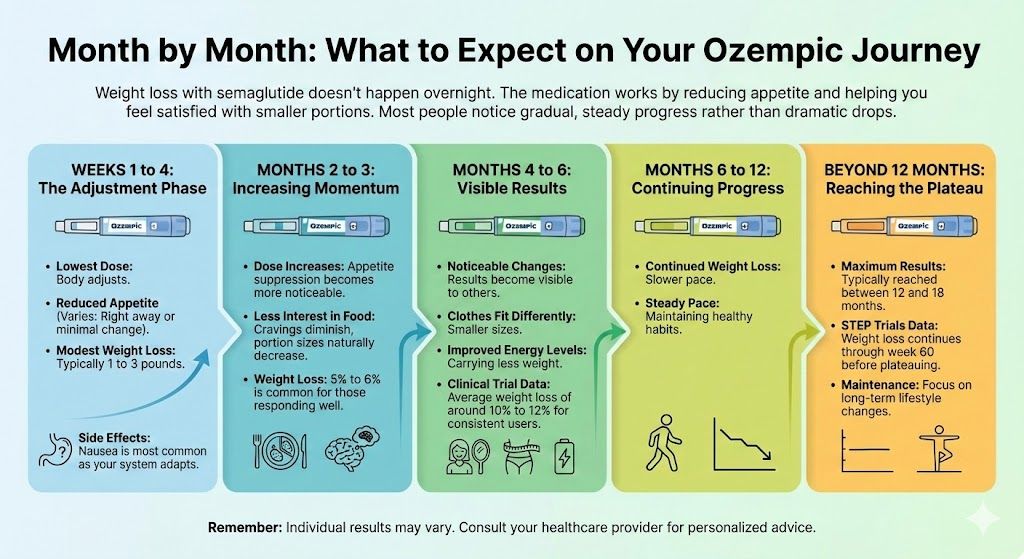
Month by Month: What to Expect on Your Ozempic Journey
Weight loss with semaglutide doesn’t happen overnight. The medication works by reducing appetite and helping you feel satisfied with smaller portions. Most people notice gradual, steady progress rather than dramatic drops.
Weeks 1 to 4
During the first month, you’re on the lowest dose as your body adjusts. Some people notice reduced appetite right away, while others feel minimal change. Weight loss during this period is typically modest, often 1 to 3 pounds. This is also when side effects like nausea are most common as your system adapts.
Months 2 to 3
As your dose increases, appetite suppression usually becomes more noticeable. Many people report that food simply becomes less interesting. Cravings diminish, and portion sizes naturally decrease. By the three month mark, weight loss of 5% to 6% is common for those responding well to the medication.
Months 4 to 6
This is often when results become visibly noticeable to others. Clothes fit differently. Energy levels may improve as you’re carrying less weight. Clinical trial data shows average weight loss of around 10% to 12% by this point for consistent users.
Months 6 to 12 and Beyond
Weight loss typically continues but at a slower pace. Most people reach their maximum results somewhere between 12 and 18 months. The STEP trials showed weight loss continuing through week 60 before reaching a plateau.
Real World Results vs. Clinical Trial Data
Here’s the thing: clinical trial participants receive intensive support, regular monitoring, and structured lifestyle counseling. Real world results can differ.
A study published in JAMA Network Open looked at semaglutide outcomes in regular clinical practice rather than controlled trial settings. Patients achieved 5.9% weight loss at 3 months and 10.9% at 6 months. These numbers are slightly lower than clinical trial results but still represent meaningful progress.
Several factors influence individual results:
Starting weight matters. People with more weight to lose often see larger absolute losses, though percentage losses tend to be similar across weight categories.
Consistency is key. Missing doses or not titrating up to effective doses limits results. The medication works best when taken as prescribed.
Lifestyle still counts. Ozempic isn’t magic. People who combine the medication with improved eating habits and physical activity see better outcomes than those who change nothing else.
Time on medication affects results. The longer you stay on treatment, the more weight you’re likely to lose, up to a point. Most people see continued progress for 12 to 18 months.
What Does 15% Weight Loss Actually Look Like?
Percentages can feel abstract. Let’s put some real numbers to common starting weights:
| Starting Weight | 10% Loss | 15% Loss |
|---|---|---|
| 180 lbs | 18 lbs | 27 lbs |
| 200 lbs | 20 lbs | 30 lbs |
| 225 lbs | 22.5 lbs | 33.75 lbs |
| 250 lbs | 25 lbs | 37.5 lbs |
| 275 lbs | 27.5 lbs | 41.25 lbs |
| 300 lbs | 30 lbs | 45 lbs |
For most people, losing 10% to 15% of body weight produces noticeable changes in how clothes fit, how they feel, and often in health markers like blood pressure and blood sugar levels.
Managing Expectations: Not Everyone Responds the Same Way
While the average results are encouraging, individual responses vary. Some people lose significantly more than average. Others respond less dramatically. Research suggests that if you haven’t lost at least 5% of your body weight after 12 to 16 weeks on the full dose, you may be a non-responder.
If you’re not seeing results, several options exist. Your provider might recommend checking your dose, evaluating your eating patterns, or considering whether a different medication like tirzepatide might work better for you.
Beyond the Scale: Other Changes People Notice
Weight loss is the most measurable outcome, but people on Ozempic often report other changes:
Reduced hunger and fewer cravings make it easier to pass on foods that previously felt irresistible. Many people describe a quieter relationship with food, where eating becomes less emotionally driven.
Energy improvements often follow weight loss. Carrying less weight means less strain on joints and cardiovascular system. Some people find they’re more active simply because movement feels easier.
Better sleep is another common report, particularly for those whose excess weight contributed to sleep apnea or general discomfort at night.
Some people also experience what they describe as “food noise” quieting down. That constant mental chatter about what to eat, when to eat, and whether to have another serving simply gets quieter.
Side Effects to Be Aware Of
Ozempic’s benefits come with potential side effects, mostly gastrointestinal. Nausea is the most common, affecting roughly 20% of users, though it typically improves over time. Other digestive issues include constipation, diarrhea, and occasionally sulfur burps.
Starting at a low dose and increasing gradually helps minimize these effects. Eating smaller meals, staying hydrated, and avoiding fatty foods can also help.
Getting Started With GLP-1 Treatment
If you’re considering Ozempic or other semaglutide options for weight loss, the first step is determining whether you’re a candidate. Generally, GLP-1 medications are appropriate for adults with a BMI of 30 or higher, or 27 or higher with weight related health conditions.
TrimRx offers telehealth consultations where you can discuss your health history, goals, and whether GLP-1 treatment makes sense for you. Compounded semaglutide provides an affordable alternative to brand name medications, making treatment accessible to more people.
You can take the intake quiz to see if you qualify and learn more about your options.
The Bottom Line
Ozempic produces meaningful weight loss for most people who take it consistently. Clinical trials show average losses of nearly 15% of body weight, with the majority of users losing at least 5%. Real world results are slightly more modest but still significant.
Results take time. Expect gradual progress over months, not weeks. The medication works best as part of an overall approach that includes attention to nutrition and movement.
Individual results vary, and the transformation you see will depend on factors including your starting point, consistency with treatment, and lifestyle choices. But for many people, GLP-1 medications like semaglutide represent the most effective weight loss tool available outside of surgery.
This information is for educational purposes and is not medical advice. Consult with a healthcare provider before starting any medication. Individual results may vary.

Transforming Lives, One Step at a Time
Keep reading

Why Does My Tongue Feel Coated on Ozempic?
Usually because there is less saliva washing your tongue clean, and less food passing over it to do the same job mechanically. Your tongue…

Starting a New Job With No Insurance While on Ozempic
The problem is usually a waiting period rather than a permanent loss, and waiting periods are plannable in a way that job loss is…

Does Collagen Help With Loose Skin on Ozempic?
Probably not for the thing you are hoping it will fix, and it is unlikely to do harm. Collagen supplements have been studied mainly…


