Wegovy to Zepbound: Is It Worth Switching?

Switching from Wegovy to Zepbound means moving from semaglutide (a GLP-1 receptor agonist) to tirzepatide (a dual GIP/GLP-1 receptor agonist). These are different medications with different mechanisms, and the clinical data shows that tirzepatide produces greater average weight loss. In the SURMOUNT-1 trial, tirzepatide at its highest dose produced over 22% average body weight loss, compared to roughly 15% for semaglutide 2.4 mg in the STEP 1 trial. So yes, for many patients, the switch is worth it, particularly if you’ve plateaued on Wegovy, want stronger results, or are looking for a medication with a higher efficacy ceiling.
But the answer isn’t the same for everyone. Let’s walk through who benefits most, how the transition works, and what to realistically expect.
Why People Consider Switching
There are four main scenarios that drive this decision.
The first and most common is a Wegovy plateau. You’ve titrated up to 2.4 mg, lost a meaningful amount of weight, and then stalled. You’ve addressed diet, exercise, sleep, and medical factors, and the scale still won’t budge. At that point, you’ve exhausted semaglutide’s dose range, and switching to a medication with additional mechanisms of action is the most logical clinical move. The Wegovy weight loss results article covers what typical semaglutide outcomes look like and when a plateau signals it’s time to consider alternatives.
The second scenario is wanting stronger results from the start. Some patients research both medications before starting treatment and decide they’d rather begin with the one that has the stronger clinical track record. If you started Wegovy but now want to try tirzepatide’s dual-receptor approach, switching early in treatment is straightforward.
The third is fading appetite suppression. Some patients find that Wegovy’s appetite control weakens over time, even at maximum dose. Because tirzepatide works through an additional receptor pathway (GIP), it often restores strong appetite suppression in patients whose response to semaglutide alone has diminished.
The fourth is cost or insurance. Depending on your plan, one medication may be significantly more affordable or easier to get covered. If Zepbound is more accessible for you than Wegovy, switching makes practical sense regardless of clinical considerations.
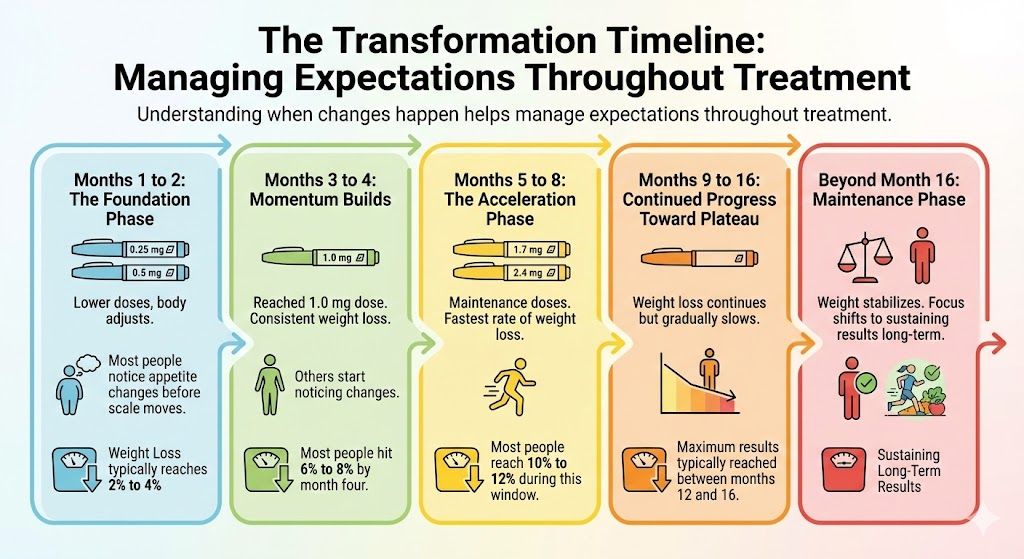
How Wegovy and Zepbound Compare
These are genuinely different medications, not just different brands of the same drug. Understanding the differences helps set expectations for the switch.
Wegovy contains semaglutide, which activates GLP-1 receptors. It slows gastric emptying, reduces appetite through brain signaling, and improves insulin sensitivity. Maximum dose is 2.4 mg weekly.
Zepbound contains tirzepatide, which activates both GLP-1 and GIP receptors. It does everything semaglutide does through the GLP-1 pathway, plus adds GIP-mediated effects on fat metabolism, glucose regulation, and appetite control. Maximum dose is 15 mg weekly.
The clinical data favors tirzepatide on average. A head-to-head comparison hasn’t been published for the weight loss indications specifically, but cross-trial comparisons consistently show tirzepatide producing roughly 5 to 7 percentage points more body weight loss than semaglutide at their respective maximum doses. Individual results vary, but the population-level data is clear.
Side effect profiles are similar. Both medications cause nausea, diarrhea or constipation, decreased appetite, and occasional injection site reactions. Neither has a clear advantage in tolerability across populations, though individual patients may tolerate one better than the other.
Both are once-weekly subcutaneous injections. Both require titration from a low starting dose. Both use prefilled, single-dose pens.
How the Transition Works
Since these are different molecules, your provider needs to determine the appropriate Zepbound starting dose based on your current Wegovy dose and treatment history. There’s no washout period required. You take your last Wegovy injection and start Zepbound the following week.
Here’s how the dosing typically translates:
If you’re on Wegovy 0.25 mg or 0.5 mg, you’ll likely start Zepbound at 2.5 mg. Your GLP-1 exposure has been relatively low, so the standard onboarding dose is appropriate.
If you’re on Wegovy 1 mg, most providers start Zepbound at 2.5 mg or 5 mg. Starting at 5 mg is reasonable since your body has established GLP-1 tolerance, and 2.5 mg might feel like a noticeable step back in appetite control.
If you’re on Wegovy 1.7 mg or 2.4 mg, starting Zepbound at 5 mg is the most common approach. Some providers may consider 7.5 mg for patients who were on maximum-dose Wegovy with excellent tolerability and no significant GI side effects. However, starting at 5 mg is the more conservative and widely practiced strategy.
There’s no official conversion chart between semaglutide and tirzepatide doses because they’re different drugs with different potencies. Your provider makes this judgment call based on your history, side effect tolerance, and goals.
What to Expect During the First Few Weeks
The transition period is where you’ll notice that this is a genuine medication change, not just a brand swap.
Appetite suppression will feel different. Patients commonly describe the quality of appetite control on tirzepatide as broader. On Wegovy, the dominant sensation is often early fullness during meals (from slowed gastric emptying). On Zepbound, many patients also notice reduced food interest between meals and diminished cravings, which may reflect the added GIP receptor activity. Some patients describe it as feeling less preoccupied with food overall, not just feeling full faster.
GI side effects may temporarily return. Even though your body is accustomed to GLP-1 stimulation from Wegovy, the GIP component is new. Mild nausea during the first few days, a brief change in bowel habits, or slight bloating is common. For most people, these effects are milder than what they experienced when first starting Wegovy, because one receptor pathway is already familiar.
Consider this scenario: a patient switches from Wegovy 2.4 mg to Zepbound 5 mg. During the first week, they notice slightly different hunger patterns, one day of mild nausea, and a bit less interest in their usual snacks. By week two, GI symptoms have resolved and appetite suppression feels comparable to or slightly different from what they experienced on Wegovy. By the time they titrate up to 7.5 mg or 10 mg, appetite suppression feels noticeably stronger than their peak experience on Wegovy.
Energy levels typically remain stable. Some patients report improved energy, possibly related to tirzepatide’s more pronounced effect on glucose regulation.
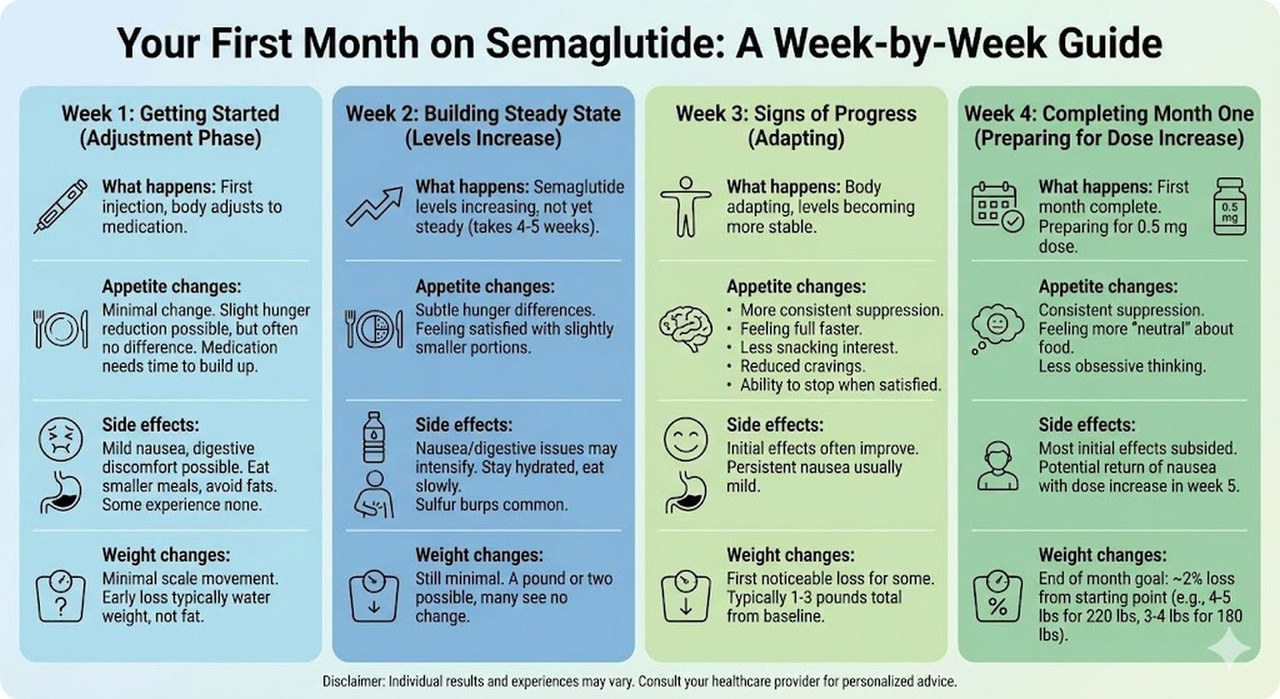
When to Expect Results
If you’re switching because of a Wegovy plateau, don’t expect immediate breakthroughs. You’re likely starting Zepbound at a lower effective dose than where you left off on Wegovy, so your body needs time to titrate up.
The typical timeline for renewed weight loss after switching is four to eight weeks, usually coinciding with reaching 7.5 mg or 10 mg. The tirzepatide results timeline provides week-by-week benchmarks, though patients switching from another GLP-1 may have a slightly different trajectory than first-time users.
By three months on Zepbound, most patients who switched from Wegovy are seeing consistent, measurable progress. The Zepbound 3-month results data gives you a sense of what’s achievable, keeping in mind that your starting point is different from someone beginning GLP-1 treatment for the first time.
Patience during the titration phase is important. The lower doses may feel underwhelming compared to where you were on Wegovy, but the payoff at higher tirzepatide doses is supported by strong clinical evidence.
Managing Side Effects
The strategies for managing side effects on Zepbound are the same ones that work for any GLP-1 medication.
Eat smaller, more frequent meals during the first two weeks at each new dose. Avoid high-fat and greasy foods, which tend to amplify nausea when gastric emptying is slowed. Stay well hydrated to prevent constipation and reduce nausea. Time your injection for when mild side effects would be least disruptive. Many patients prefer evening injections so any first-day queasiness occurs during sleep.
If you experienced specific side effects on Wegovy (like sulfur burps or significant constipation), those may or may not carry over to Zepbound. Different molecule, different individual response. Some patients find that a side effect that bothered them on semaglutide doesn’t occur on tirzepatide, and occasionally the reverse happens. It’s genuinely unpredictable at the individual level.
If side effects are interfering with daily life at any point, contact your provider. Extending the time at a given dose before the next increase usually resolves the issue.
Cost and Insurance Comparison
Both Wegovy and Zepbound are expensive at list price, generally exceeding $1,000 monthly without insurance. Coverage depends on your specific plan.
Wegovy is more likely to be covered for weight management by plans that include anti-obesity medications in their formulary, since it’s been on the market longer and has more established coverage pathways. Zepbound, being newer, is still being added to formularies and may require more prior authorization effort.
Some plans cover one but not the other. Some cover neither. It’s worth having your provider’s office check benefits for both before deciding, especially if cost is a factor in your decision to switch.
If insurance is a barrier for either medication, compounded options exist. TrimRx offers compounded tirzepatide at significantly lower price points than brand Zepbound, with no insurance requirements. This can make the switch financially viable even when brand coverage isn’t available.
Who Should Switch and Who Should Stay
Switching from Wegovy to Zepbound makes the most sense if you’ve plateaued on Wegovy 2.4 mg after addressing lifestyle and medical factors, if your appetite suppression has faded meaningfully and can’t be restored through dose adjustment (since you’re already at maximum), if you want access to a higher efficacy ceiling for additional weight loss, or if Zepbound is more affordable or better covered by your insurance.
Staying on Wegovy makes more sense if you’re still losing weight consistently, if you still have dose increases available (you haven’t reached 2.4 mg yet), if your insurance covers Wegovy well but doesn’t cover Zepbound, or if you’re tolerating Wegovy without significant issues and don’t want to risk a medication change.
The Wegovy first month results article can help you gauge whether you’re on track with your current treatment or whether a change might be warranted.
Making the Decision
If you’re leaning toward the switch, have a direct conversation with your provider about your goals, your current results, and your insurance situation. The clinical case for tirzepatide over semaglutide is strong on a population level, but your individual response is what ultimately matters.
A meta-analysis published in JAMA Internal Medicine (Shi et al., 2024) confirmed that tirzepatide produced statistically greater weight loss than semaglutide across available trial data, supporting the rationale for switching when semaglutide results have plateaued.
If you need a provider experienced in GLP-1 medication management and transitions, TrimRx’s intake quiz can match you with a clinician who can evaluate whether Zepbound is the right next step for your situation.
This information is for educational purposes and is not medical advice. Consult with a healthcare provider before starting any medication. Individual results may vary.

Transforming Lives, One Step at a Time
Keep reading

Should You Suggest Wegovy to a Family Member?
When a treatment changes your life, you want the people you love to have the same chance. Maybe your sister has struggled with her…

Injecting Wegovy With Stiff or Shaky Hands
A weekly injection takes a minute for most people. If you have arthritis in your hands, a tremor, weak grip strength, or numb fingers,…

Doing a Polar Plunge on Wegovy
Running into freezing water on New Year’s Day has become a tradition in towns and beaches across the country, often for charity and almost…


