Mounjaro Maintenance Dose: What Works Long-Term

Your Mounjaro maintenance dose is the dosage you stay on after reaching your weight loss goal, and it’s not always the same dose you used to get there. Some people maintain results on a lower dose, while others need to stay at their peak level. The right answer depends on your body’s response, your side effect profile, and how your appetite regulation holds up over time.
This is the part of the GLP-1 conversation that doesn’t get enough attention. Most of the focus lands on the early weeks, the dose escalation, the dramatic before-and-after photos. But maintenance dosing is where the real long-term strategy lives. Getting it wrong can mean regaining weight you worked hard to lose. Getting it right can mean years of sustained results with manageable side effects.
How Mounjaro Dosing Works in the First Place
Mounjaro (tirzepatide) follows a structured dose escalation schedule. You start at 2.5 mg weekly for at least four weeks, then move to 5 mg. From there, your provider can increase to 7.5 mg, 10 mg, 12.5 mg, and eventually 15 mg, depending on how you respond.
Not everyone climbs to the top. Some people hit their stride at 7.5 mg or 10 mg and never need to go higher. Others need the full 15 mg to see meaningful appetite suppression and weight loss. The escalation phase is about finding the dose where your body responds well without side effects becoming unmanageable.
Once you’ve reached your target weight or your weight loss has stabilized, you and your provider shift the conversation from “how do we lose more” to “how do we keep this off.” That’s where maintenance dosing begins.
What a Maintenance Dose Actually Looks Like
There’s no single maintenance dose that works for everyone. Clinical trial data from the SURMOUNT program showed that participants who stopped tirzepatide after 36 weeks regained a significant portion of their lost weight within the following year. That finding changed how many providers think about long-term prescribing.
The practical reality is that most people need to stay on some dose of tirzepatide to maintain their results. The question is whether that dose can be lower than what they used during active weight loss.
Here’s what providers typically consider. If you lost weight on 10 mg with tolerable side effects, your provider might try stepping you down to 7.5 mg or even 5 mg to see if your appetite stays controlled and your weight remains stable. If it does, that lower dose becomes your maintenance level. If your hunger returns or the scale starts creeping up, you move back to the dose that was working.
Some people find that they can maintain on a dose two steps below their peak. Others discover they need to stay right where they are. Neither outcome is a failure. It’s simply how your biology responds to the medication.
The Science Behind Staying on Medication
A 2023 study published in the journal Obesity examined weight regain after tirzepatide discontinuation in SURMOUNT-1 trial participants. Researchers found that participants who stopped the medication after 36 weeks regained approximately two-thirds of the weight they had lost by week 88. This data point is one of the strongest arguments for continued maintenance therapy rather than treating tirzepatide as a short-term intervention.
The reason for this regain comes down to biology, not willpower. Obesity involves changes in hormones like leptin, ghrelin, and GLP-1 that persist even after weight loss. When medication support is removed, those hormonal signals push the body back toward its previous weight. Maintenance dosing keeps those signals in check.
This is similar to how blood pressure medication works. You wouldn’t stop taking your antihypertensive just because your blood pressure normalized. The medication is what’s keeping it normal. The same logic applies to tirzepatide for weight management.
Finding Your Personal Maintenance Dose
The process of finding the right maintenance dose is more art than formula. Your provider will typically use a step-down approach once your weight has been stable for a few months.
Let’s say a patient reached their goal weight on 12.5 mg of Mounjaro. Their provider might reduce to 10 mg and monitor for eight to twelve weeks. During that time, they’re watching for increased hunger, changes in eating patterns, and any upward movement on the scale. If everything stays stable, the provider might try 7.5 mg. If hunger creeps back at 10 mg, that becomes the maintenance dose.
The monitoring period matters. Weight regain after a dose reduction doesn’t always show up immediately. It can take several weeks for appetite changes to translate into actual weight gain. That’s why providers typically wait at least two months before concluding that a lower dose is working.
Your maintenance dose might also shift over time. Stress, hormonal changes, aging, and lifestyle shifts can all affect how your body responds to a given dose. A dose that works perfectly at 45 might need adjustment at 55. Regular check-ins with your provider keep your dosing aligned with your current needs.
Maintenance Dose vs. Active Weight Loss Dose
There are some real differences between how the medication functions during these two phases. During active weight loss, you’re running a caloric deficit. The medication is suppressing appetite aggressively, slowing gastric emptying, and helping your body tap into fat stores. The goal is change.
During maintenance, the goal is stability. You’re eating at or near your maintenance calories. The medication is still suppressing appetite, but ideally in a way that feels less restrictive. Many people report that their maintenance dose feels “lighter,” with fewer GI side effects and a more natural relationship with food.
This is actually one of the benefits of stepping down. Side effects like nausea, constipation, and sulfur burps tend to be dose-dependent. A lower maintenance dose can mean fewer of these issues while still providing enough appetite control to keep weight stable.
That said, some people feel best staying at their highest tolerated dose. If your side effects were always mild and your quality of life is good, there may be no reason to reduce. The decision should be based on your experience, not on an assumption that lower is always better.
What Happens If You Stop Entirely
The research is clear on this, and the tirzepatide weight loss results literature backs it up. Most people who discontinue tirzepatide completely will regain a substantial portion of their lost weight. The timeline varies, but regain typically begins within a few weeks of stopping and continues over the following months.
This doesn’t mean you’re dependent on the medication in a problematic way. It means the medication is treating an ongoing condition. Obesity is a chronic disease with biological drivers that don’t disappear when you reach a goal weight. Maintenance dosing is ongoing treatment, not a crutch.
If cost or access becomes an issue, talk to your provider before stopping cold turkey. A gradual taper or a switch to a more affordable option like compounded semaglutide might be a better path than abrupt discontinuation.
Cost Considerations for Long-Term Use
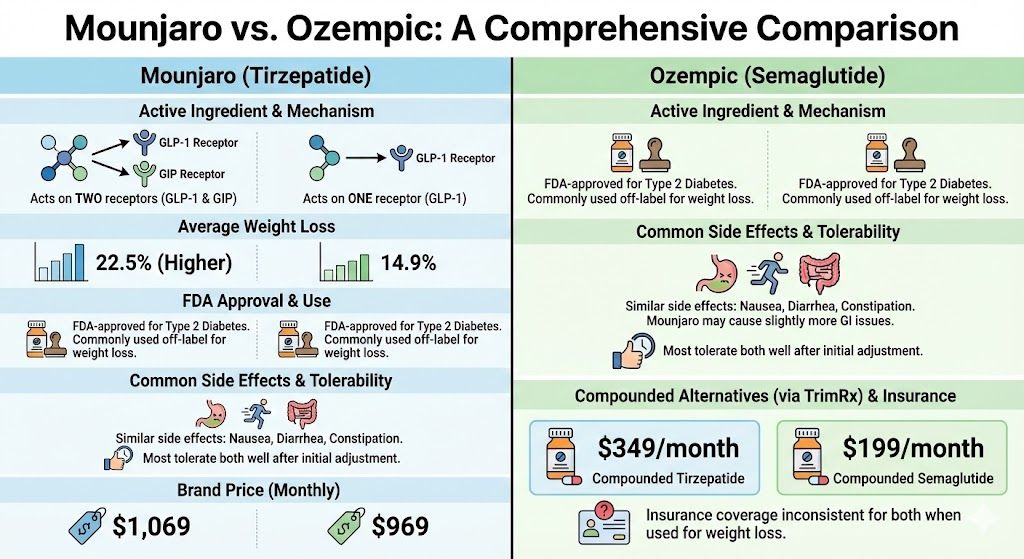
Maintenance dosing is a long-term financial commitment, and that’s worth planning for. Brand-name Mounjaro can cost over $1,000 per month without insurance. If your insurance covers it, maintenance dosing may be sustainable. If it doesn’t, you’ll want to explore alternatives.
Compounded tirzepatide through telehealth services like TrimRx offers a more accessible price point for patients paying out of pocket. Because maintenance doses are often lower than peak doses, your monthly cost may decrease as well, depending on the pricing structure.
The key is not letting cost force you into stopping entirely. Even a reduced dose of a GLP-1 medication provides more weight maintenance support than no medication at all. Work with your provider to find a plan that fits both your health needs and your budget.
Making Maintenance Work
Long-term success on a Mounjaro maintenance dose isn’t just about the medication. It’s about building the habits that support your new weight. Regular physical activity, adequate protein intake, good sleep, and stress management all play supporting roles.
The medication handles the hardest part, which is appetite regulation. But it works best when paired with a lifestyle that reinforces healthy patterns. Think of it as a partnership. The medication keeps your hunger signals in check. You keep showing up with the habits that make maintenance sustainable.
If you’re approaching your weight loss goal or wondering whether your current dose is right for long-term use, a provider can help you build a maintenance plan that fits your body and your life. Take the intake quiz to connect with a TrimRx provider who can help you find your maintenance dose.
This information is for educational purposes and is not medical advice. Consult with a healthcare provider before starting any medication. Individual results may vary.

Transforming Lives, One Step at a Time
Keep reading

Mounjaro Alternatives: What Else to Consider
If Mounjaro isn’t the right fit, the closest alternatives are other GLP-1 medications, chiefly semaglutide (Ozempic for diabetes, Wegovy for weight), along with a…

Mounjaro vs Zepbound: Same Drug, Two Brands
Like their semaglutide counterparts, Mounjaro and Zepbound are the same medication (tirzepatide) sold under two names for two purposes: Mounjaro is approved for type…

Retatrutide vs Mounjaro: Triple Agonist vs Dual Agonist
The core difference between retatrutide and Mounjaro comes down to how many hormone targets each hits: retatrutide activates three receptors, while Mounjaro (tirzepatide) activates…


