Mounjaro Starting Dose for Weight Loss: What You Need to Know
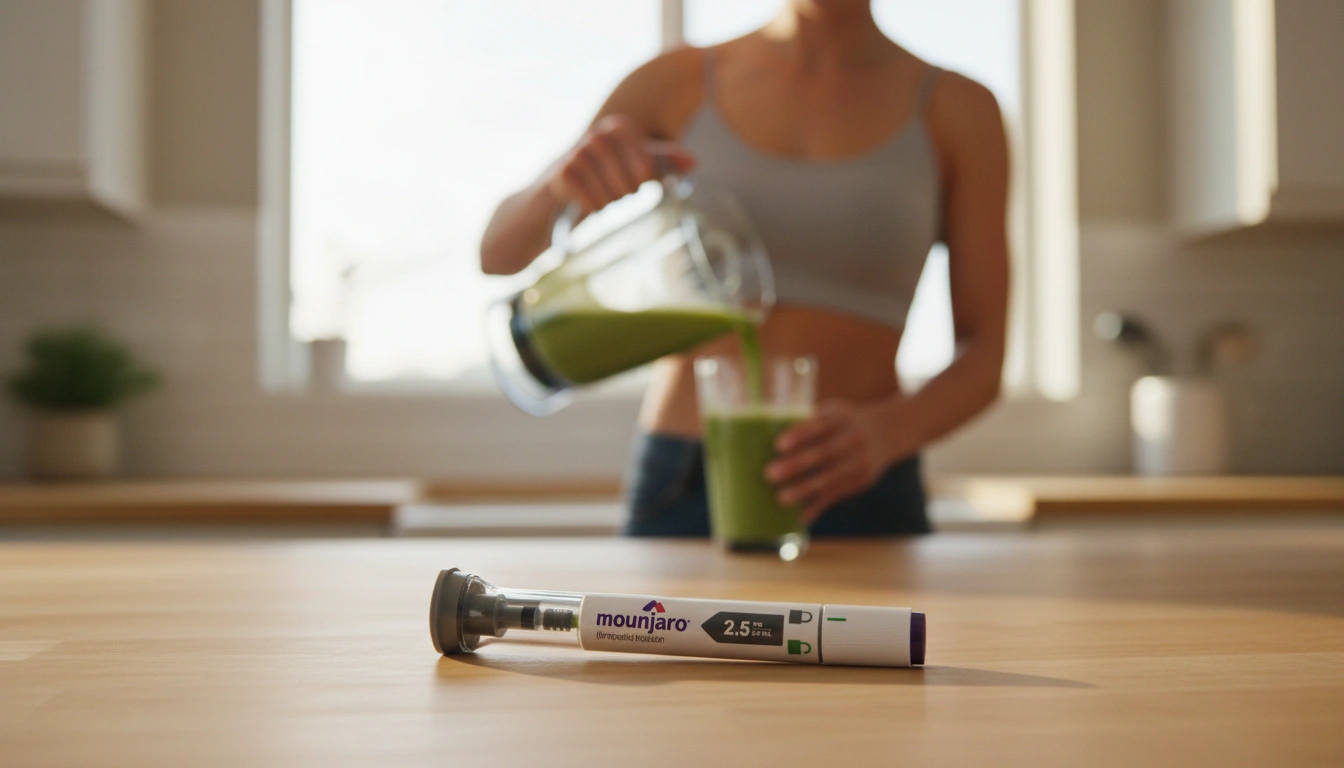
The starting dose of Mounjaro for weight loss is 2.5 mg injected once weekly for the first four weeks. This is the same starting dose whether you’re using Mounjaro for type 2 diabetes or for weight management. At 2.5 mg, you shouldn’t expect dramatic changes on the scale. This introductory phase exists to let your body adjust to tirzepatide, the active ingredient, before your provider increases the dose to levels where meaningful weight loss begins. Getting through this phase smoothly sets the tone for everything that follows.
How Mounjaro’s Dosing Schedule Works
Mounjaro (tirzepatide) uses a step-wise escalation with 2.5 mg increments:
- Weeks 1 through 4: 2.5 mg weekly (starting dose)
- Weeks 5 through 8: 5 mg weekly
- Weeks 9 through 12: 7.5 mg weekly
- Weeks 13 through 16: 10 mg weekly
- Weeks 17 through 20: 12.5 mg weekly
- Week 21 and beyond: 15 mg weekly (maximum dose)
Each step lasts a minimum of four weeks. Your provider may hold you at any dose level longer if side effects need more time to resolve or if you’re getting good results at a lower dose. Not everyone needs to reach 15 mg. Some people hit their stride at 7.5 mg or 10 mg and stay there.
An important distinction: Mounjaro is FDA-approved for type 2 diabetes, not specifically for weight loss. Its weight-loss-specific sibling is Zepbound, which contains the same tirzepatide at the same doses but carries the obesity indication. Many providers prescribe Mounjaro off-label for weight management, and the clinical evidence supporting its effectiveness for that purpose is strong. The dosing schedule is identical regardless of which condition is being treated.
What Makes the 2.5 mg Phase Different From Higher Doses
Tirzepatide is a dual-action medication. It activates both GIP and GLP-1 receptors simultaneously, which is what makes it so effective but also why your body needs a gentle introduction. At 2.5 mg, the medication is working, just at a level that prioritizes adaptation over results.
Here’s what’s happening at this dose. Gastric emptying begins to slow, though not as dramatically as it will at higher doses. Your pancreas starts responding to tirzepatide’s influence on insulin signaling. The appetite centers in your brain are being introduced to new signals from both the GIP and GLP-1 pathways. All of this is happening quietly in the background while your conscious experience might be as subtle as “I wasn’t quite as hungry at dinner tonight.”
The clinical trials tell a clear story about why this phase matters. In the SURMOUNT-1 trial, researchers used the gradual escalation protocol and found that the majority of participants tolerated the medication well enough to continue treatment. When the ramp-up is rushed, dropout rates climb because side effects become intolerable. The four weeks at 2.5 mg are buying you a much smoother experience at every dose that follows.
Realistic Expectations for Month One
Let’s set expectations plainly so you’re not second-guessing yourself during the first four weeks.
Weight loss will be modest or nonexistent. Most people lose between zero and three pounds during the 2.5 mg phase. Some people actually see a slight increase due to constipation or water retention. This is not a sign that the medication isn’t working. It’s a sign that you’re at a sub-therapeutic dose designed for adjustment, not results. The first month on Mounjaro is about building tolerance.
Appetite changes may be subtle. You might notice that you’re slightly less interested in snacking, or that you feel satisfied a bit sooner during meals. Or you might not notice anything at all. Both are fine. The appetite suppression ramps up significantly at 5 mg and continues strengthening through 7.5 mg and 10 mg.
Side effects are usually mild. Nausea is the most common side effect at 2.5 mg, but it’s typically low-grade. Think mild queasiness that comes and goes, not the kind that keeps you in bed. Some people experience mild constipation, bloating, or a slight decrease in energy. Serious side effects at this dose are uncommon.
Your injection routine becomes second nature. By the end of four weeks, you’ll have done four injections. Most people report that the anxiety around self-injecting fades quickly. The needle is thin, the injection is subcutaneous (just under the skin), and the process takes less than a minute.
The Jump to 5 mg: Where Things Start Happening
After four weeks at 2.5 mg, your provider will typically advance you to 5 mg. This is where many people start to feel like Mounjaro is “kicking in.”
The appetite suppression becomes more noticeable at 5 mg. Portions that once felt normal may start feeling too large. The mental chatter about food, what some people call “food noise,” often starts quieting. You might find yourself naturally gravitating toward lighter meals without making a conscious effort.
Weight loss typically begins in earnest during the 5 mg phase. Clinical trial data shows that most participants started seeing consistent weekly losses once they moved beyond the starting dose. By the end of eight weeks (four weeks at 2.5 mg plus four weeks at 5 mg), average weight loss in the trials was in the range of three to five percent of body weight.
Expect a brief return of GI side effects when you step up. Each dose increase triggers a mini-adjustment period. The nausea or digestive changes you experienced (or didn’t) at 2.5 mg may reappear for a few days after your first 5 mg injection. This is temporary and usually less intense than what people fear.
Managing Side Effects From Day One
Starting side effect management strategies during the 2.5 mg phase gives you a foundation that carries through every subsequent dose increase.
Restructure your meals. Tirzepatide slows gastric emptying, which means large meals sit in your stomach longer and are more likely to cause discomfort. Shifting to four or five smaller meals throughout the day works with the medication rather than against it. This is a habit worth building now, before the gastric effects intensify at higher doses.
Front-load your protein. Protein is the most satiating macronutrient, and it helps preserve muscle mass during weight loss. Getting 25 to 30 grams of protein at breakfast and lunch helps maintain your energy and keeps you from losing lean tissue as the weight comes off. Starting this pattern early is easier than trying to overhaul your diet while also adjusting to a higher dose.
Hydrate deliberately. Constipation is one of the more persistent side effects across all tirzepatide doses. Drinking at least 64 ounces of water daily (more if you’re active) helps keep things moving. Don’t wait until constipation becomes a problem to start paying attention to your fluid intake.
Move your body. Exercise during the starting dose phase doesn’t need to be intense. Walking, light resistance training, or whatever activity you enjoy is enough. The goal is to establish a consistent habit now. Physical activity supports weight loss, preserves muscle, and can actually help with GI symptoms by promoting normal digestive motility.
Track your symptoms briefly. Spending 30 seconds each day jotting down how you feel (nausea level, appetite, energy, any digestive changes) gives your provider useful data when it’s time to discuss your next dose increase. It also helps you see patterns you might not notice otherwise.
Mounjaro vs. Compounded Tirzepatide: Starting Dose Considerations
Brand-name Mounjaro comes in single-dose auto-injector pens at fixed strengths (2.5 mg, 5 mg, 7.5 mg, 10 mg, 12.5 mg, and 15 mg). The pen design is convenient but limits your dosing to those specific increments.
Compounded tirzepatide is typically supplied in multi-dose vials, allowing you to draw exact amounts with a syringe. This opens up options that brand-name pens don’t offer. A provider could start you at a dose below 2.5 mg if you’re particularly GI-sensitive, or create intermediate steps like 3.75 mg between the 2.5 mg and 5 mg levels. For people who find that each 2.5 mg jump triggers difficult side effects, these smaller increments can make escalation significantly more comfortable.
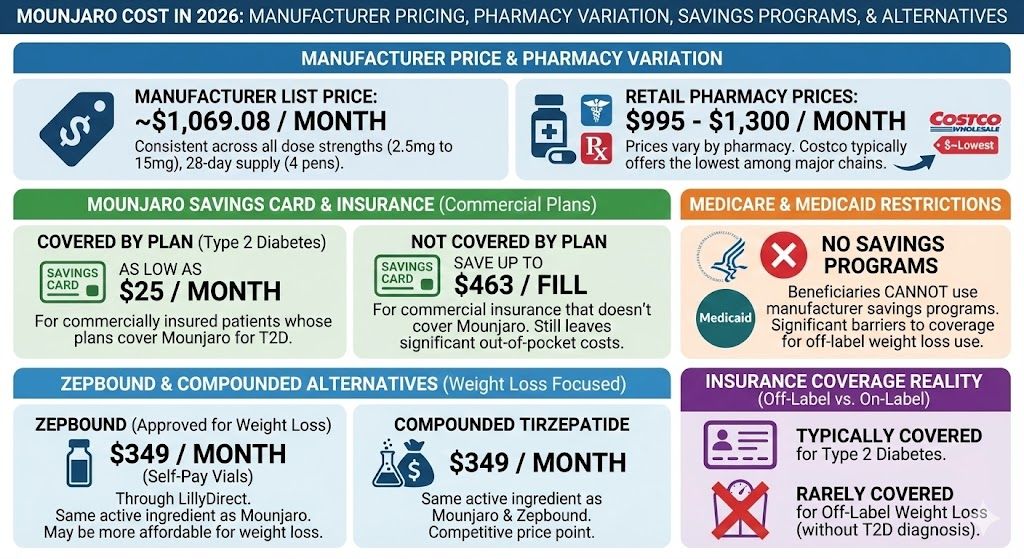
The cost difference is also substantial. Brand-name Mounjaro without insurance often runs over $1,000 per month. Compounded tirzepatide through services like TrimRx is considerably more affordable, making it accessible to people who couldn’t otherwise afford treatment.
When to Talk to Your Provider About Dose Adjustments
Most people move through the 2.5 mg phase without any issues. But there are situations where you should reach out to your provider before your scheduled follow-up.
If nausea is severe enough that you can’t eat or drink adequately, that needs attention. Mild queasiness is expected; not being able to keep fluids down is not. If you experience severe abdominal pain, especially pain that radiates to your back, contact your provider promptly as this could indicate pancreatitis. If you develop signs of an allergic reaction (swelling, difficulty breathing, severe rash), seek medical attention immediately.
On the flip side, if you’re tolerating 2.5 mg with zero side effects and want to discuss moving up sooner than four weeks, that’s a conversation worth having. Some providers will shorten the 2.5 mg phase to three weeks for patients with excellent tolerance, though most prefer to stick with the full four weeks for the first step.
Starting Your Mounjaro Journey
Getting started comes down to a conversation with a provider who can evaluate your health history, current medications, and weight loss goals. If you’re curious whether Mounjaro or compounded tirzepatide is right for you, a quick eligibility check can get the process moving.
The 2.5 mg starting dose won’t deliver the results you’re ultimately after. But it’s doing something far more valuable than what shows up on the scale. It’s preparing your body to handle the doses that will change your trajectory. Trust that process, build good habits early, and know that the results are coming.
This information is for educational purposes and is not medical advice. Consult with a healthcare provider before starting any medication. Individual results may vary.

Transforming Lives, One Step at a Time
Keep reading

Mounjaro Alternatives: What Else to Consider
If Mounjaro isn’t the right fit, the closest alternatives are other GLP-1 medications, chiefly semaglutide (Ozempic for diabetes, Wegovy for weight), along with a…

Mounjaro vs Zepbound: Same Drug, Two Brands
Like their semaglutide counterparts, Mounjaro and Zepbound are the same medication (tirzepatide) sold under two names for two purposes: Mounjaro is approved for type…

Retatrutide vs Mounjaro: Triple Agonist vs Dual Agonist
The core difference between retatrutide and Mounjaro comes down to how many hormone targets each hits: retatrutide activates three receptors, while Mounjaro (tirzepatide) activates…


