The Truth About Compounded GLP-1s: Are They Safe in 2026?

The world of weight loss has seen a seismic shift since the rise of GLP-1 receptor agonists. It’s a conversation happening everywhere, from family dinners to boardroom meetings. By 2026, medications like Semaglutide and Tirzepatide aren't just household names; they're powerful tools that have genuinely changed lives. But with this sprawling popularity comes a formidable challenge: access. High demand, persistent supply chain hiccups, and steep costs have created a sprawling gray market for these drugs, thrusting a critical question into the spotlight: are compounded GLP-1 safe?
Let’s be honest, this is a crucial and complex question. The allure of a more accessible, less expensive version of a revolutionary medication is undeniably strong. We get it. But as a medical team that has built its entire practice around patient safety and verifiable results, we believe this conversation requires an unflinching look at the facts. It’s not about fear-mongering; it's about empowerment through knowledge. Our goal at TrimrX is to ensure your weight loss journey is not only successful but fundamentally safe, and that starts with understanding exactly what you're putting into your body.
What Exactly Are Compounded GLP-1 Medications?
Before we can dissect the safety, we need to be on the same page about what “compounded” even means. It sounds official, maybe even a little bespoke. And sometimes, it is.
Drug compounding is the process where a licensed pharmacist combines, mixes, or alters ingredients to create a medication tailored to the specific needs of an individual patient. In its intended, legitimate form, it’s a vital part of pharmacy. Think about a patient who is allergic to a specific dye in a commercially available pill or a child who needs a liquid version of a medication that only comes in adult-strength tablets. That’s traditional, necessary compounding.
However, what we’re seeing in 2026 with GLP-1s is often a different beast entirely. When a drug is listed on the FDA’s drug shortages list, compounding pharmacies are legally permitted to prepare a compounded version to meet patient needs. This loophole was designed to prevent care disruptions. But it has also opened the door for some entities to produce these drugs on a massive scale, often marketing them as direct, cheaper alternatives to the brand-name, FDA-approved products. This is where the lines get blurry, and the risks begin to mount.
The Core of the Safety Debate: FDA-Approved vs. Compounded
Here’s the absolute crux of the issue, and we can’t stress this enough: there is a world of difference between a medication that is FDA-approved and one that is compounded. They are not the same.
An FDA-approved medication, like the Semaglutide and Tirzepatide we use in our medically-supervised programs at TrimrX, has gone through a relentless, multi-year gantlet of scrutiny. This includes:
- Rigorous Clinical Trials: Years of testing on thousands of human participants to prove both safety and efficacy for its intended use.
- Manufacturing Oversight: Production must occur in FDA-inspected facilities that adhere to Current Good Manufacturing Practices (CGMPs). This ensures every batch is sterile, stable, and has the correct potency.
- Purity and Potency Guarantees: The final product is tested to confirm it contains the exact active pharmaceutical ingredient (API) in the exact dose stated on the label. No more, no less.
- Proven Formulation: The entire formula, including active and inactive ingredients, has been studied and approved.
It’s a long, expensive, but critical, non-negotiable element of modern medicine. It's the system that ensures the medication you take is what it claims to be.
Compounded drugs, on the other hand, do not undergo any of this. They are not FDA-approved. The FDA does not verify their safety, effectiveness, or quality before they reach patients. The responsibility falls entirely on the compounding pharmacy, and the level of quality control can vary dramatically. You are placing your trust in that specific pharmacy's processes, which are not held to the same national standard as a major pharmaceutical manufacturer. It’s a leap of faith, and our experience shows that when it comes to your health, leaps of faith are a risky proposition.
The Unseen Risks: What Could Go Wrong with Compounded GLP-1s?
When you bypass the FDA-approval process, you introduce a host of potential dangers. These aren't just theoretical concerns; they are real-world risks that our medical team sees as unacceptable for our patients. The question isn't just 'are compounded GLP-1s safe?', but rather 'what specific dangers am I exposing myself to?'
1. Contamination and Sterility Issues
Injectable medications must be sterile. Period. If they are prepared in an environment that isn't perfectly clean, they can become contaminated with bacteria or fungi. This can lead to skin infections at the injection site, abscesses, or even life-threatening systemic infections (sepsis). FDA-approved drugs are manufactured in stringently controlled sterile environments. A compounding pharmacy might be clean, but it's rarely held to the same industrial standard, increasing the risk of a catastrophic failure in sterility.
2. Potency Problems: The Wild West of Dosing
This is a huge one. Our team has seen reports of compounded GLP-1s that are either sub-potent (too weak) or super-potent (too strong).
- Sub-potent: You don’t get the therapeutic effect you're paying for. The medication doesn't work, you don't lose weight, and you become frustrated, thinking the drug itself is a failure when, in reality, you received a diluted product.
- Super-potent: This is far more dangerous. An overdose of a GLP-1 agonist can lead to severe and debilitating gastrointestinal side effects—uncontrollable nausea, vomiting, and diarrhea that can cause dehydration and electrolyte imbalances requiring hospitalization.
With FDA-approved medications, the dosage is precise. With compounded versions, it's a gamble.
3. Different, Untested Active Ingredients
This is where it gets technically nuanced but critically important. To get around patent laws, some compounding pharmacies are not using the base form of the drug (e.g., semaglutide). Instead, they are using different salt forms, like semaglutide sodium or semaglutide acetate.
The problem? These salt forms are not the same ingredient that was studied in the clinical trials for Ozempic® or Wegovy®. They have different chemical structures and properties. Their safety, efficacy, and stability when injected into the human body have not been established. The FDA has explicitly warned against using these unapproved salt forms, as their clinical effects are unknown. You could be injecting a substance with a completely different and potentially harmful profile.
4. Lack of Data and Recourse
If you experience a severe adverse reaction to an FDA-approved drug, there is a clear system for reporting (the FDA Adverse Event Reporting System, or FAERS) and investigation. With a compounded drug, your recourse is far more limited. Furthermore, there are no long-term studies on these specific compounded formulations. You are, in effect, a participant in an unregulated, unmonitored clinical experiment.
That's the reality. It all comes down to a simple question of verified trust versus unverified hope.
Comparison: FDA-Approved vs. Compounded GLP-1s
To make this crystal clear, our team put together a straightforward comparison. Here’s what you need to know when weighing your options in 2026.
| Feature | FDA-Approved GLP-1s (Used by TrimrX) | Compounded GLP-1s |
|---|---|---|
| FDA Oversight | Approved. Rigorously reviewed for safety and efficacy. | Not Approved. FDA does not verify safety, quality, or efficacy. |
| Clinical Trials | Yes. Extensive human trials with thousands of participants. | No. Formulations have not undergone clinical trials. |
| Purity Guarantee | Guaranteed. Produced under strict sterility and quality controls. | Variable. Risk of contamination or impurities is higher. |
| Potency Consistency | Guaranteed. Each dose contains the precise amount of medication. | Inconsistent. Risk of being too strong or too weak. |
| Active Ingredient | The exact, studied, and approved base drug (e.g., Semaglutide). | Often use unstudied salt forms (e.g., semaglutide sodium). |
| Source Verification | Sourced from FDA-registered and inspected manufacturing facilities. | Source of raw ingredients may be unverified or from overseas. |
| Medical Supervision | Prescribed as part of a comprehensive, medically-supervised plan. | Often sold with little to no genuine medical oversight. |
This table isn't meant to scare you; it's meant to provide clarity. The column on the left represents the standard of care we believe every patient deserves. It's the standard we uphold at TrimrX.
Why Do People Still Choose Compounded Options?
If the risks are so significant, why is this market thriving? It’s important to address the reasons with empathy, because they are powerful motivators.
First and foremost is cost. There's no denying that compounded versions are almost always cheaper than the brand-name drugs, which can run upwards of a thousand dollars a month without good insurance coverage. For many, that price difference makes an otherwise inaccessible treatment seem possible.
Second is accessibility. During the well-documented shortages of brand-name GLP-1s, compounded versions became one of the only ways for some patients to start or continue their treatment. This is the legal gray area where compounding pharmacies operate, and it’s a powerful draw when your local pharmacy has been out of stock for weeks.
Finally, there's misinformation. Some clinics and online providers market their compounded products as being “the same” as the real thing. They downplay the risks and emphasize the savings, creating a compelling but dangerously incomplete picture. They blur the lines between a bespoke prescription for a unique need and the mass production of a copycat drug.
Our Professional Stance at TrimrX: Patient Safety is Non-Negotiable
Now, this is where we draw a firm line. At TrimrX, our entire program is built on a foundation of medical ethics and patient safety. It’s our north star. For that reason, we exclusively use FDA-registered Semaglutide and Tirzepatide sourced from licensed facilities.
We've had countless internal discussions about this as the market has evolved, and our conclusion is always the same: the potential for patient harm from unregulated, unverified compounded products is a risk we are absolutely unwilling to take. It's that simple.
Your health journey is too important to gamble on. A successful weight loss program isn’t just about shedding pounds; it’s about building sustainable, healthy habits and improving your overall well-being for the long term. That requires a partnership with a medical team you can trust implicitly. Our physicians design personalized treatment plans where a powerful, proven medication is one tool in a much larger toolbox. It’s combined with ongoing medical guidance, support, and adjustments to ensure your journey is not just effective, but fundamentally safe from start to finish. This comprehensive approach is what truly drives lasting results. If you’re ready to explore a medically-supervised path with proven medications, it's easy to Start Your Treatment Now.
How to Protect Yourself in 2026
So, how do you navigate this complex landscape and make the safest choice for yourself? It comes down to asking the right questions and looking for red flags.
Ask Your Provider Directly:
- "Is the medication you are prescribing FDA-approved?"
- "Is this a compounded drug?"
- "What is the exact active ingredient in this formulation? Is it a salt form?"
- "Where does your pharmacy source its raw pharmaceutical ingredients?"
- "Are you a 503A or 503B compounding pharmacy?" (A 503B pharmacy is held to higher quality standards and is subject to more FDA oversight, though their products are still not technically 'FDA-approved').
A legitimate medical provider will welcome these questions and provide clear, transparent answers. Hesitation or vague responses are a major red flag.
Watch for Warning Signs:
- Too-Good-To-Be-True Pricing: Extremely low prices can be a sign of low-quality or questionably sourced ingredients.
- Lack of Medical Supervision: Any provider offering GLP-1s without a thorough medical consultation, lab work, and ongoing follow-up is not prioritizing your health.
- Selling 'Research Grade' Chemicals: Never, ever purchase or use products labeled “for research use only.” These are not intended for human consumption and can be incredibly dangerous.
- Vague Marketing Language: Be wary of terms like “bioidentical” or “pharma-grade” without clear documentation to back them up.
Ultimately, the safest path forward is to work with a medical provider who prioritizes FDA-approved medications as part of a comprehensive, supervised weight management program. The peace of mind that comes from knowing your medication is pure, potent, and proven is invaluable.
The conversation around compounded GLP-1s isn't going away anytime soon. The economic and access pressures are real. But while you can't control the market, you can control your choices. Choosing a path grounded in medical science, transparency, and an unwavering commitment to safety is the surest way to achieve the health outcomes you deserve. It’s not just about losing weight; it’s about gaining a healthier future, and that's a journey worth doing right.
Frequently Asked Questions
Are all compounding pharmacies bad?
▼
Absolutely not. Legitimate compounding pharmacies play a crucial role in medicine, creating customized medications for patients with specific needs, like allergies to dyes or the need for a liquid formulation. The current safety concerns are specific to the large-scale production of GLP-1 analogues without individual prescriptions and outside of strict regulatory oversight.
Is it illegal to buy compounded semaglutide?
▼
It exists in a legal gray area. Compounding is permitted when a drug is on the official FDA shortage list. However, the FDA does not approve these compounded versions for safety or efficacy, and has warned against the use of unapproved salt-form ingredients, which may violate federal law.
How can I tell if my GLP-1 is compounded?
▼
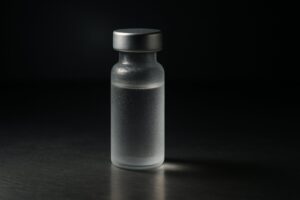
The easiest way is to ask your provider directly. Additionally, FDA-approved medications come in pre-filled, branded pens (like Ozempic® or Wegovy®). Compounded versions typically come in vials from which you must draw the medication into a syringe yourself.
What are the FDA warnings about compounded GLP-1s in 2026?
▼
As of 2026, the FDA continues to issue warnings about the potential risks of compounded GLP-1s. They have specifically received adverse event reports after patients used compounded semaglutide and have cautioned against using formulations made with semaglutide salts (sodium and acetate), as their safety and effectiveness are unknown.
Why does TrimrX not use compounded medications?
▼
Our policy at TrimrX is unwavering: patient safety is non-negotiable. We only use FDA-registered medications because they have been rigorously tested for safety, purity, and potency. The risks of contamination, incorrect dosing, and unknown ingredients in compounded versions are unacceptable to our medical team.
Are compounded GLP-1s really that much cheaper?
▼
Yes, they are often significantly cheaper than the brand-name, FDA-approved drugs, which is their primary appeal. However, our professional view is that the potential health risks and lack of guaranteed effectiveness far outweigh the monetary savings.
What’s the difference between semaglutide and semaglutide sodium?
▼
They are chemically different compounds. Semaglutide is the active pharmaceutical ingredient (API) that was proven safe and effective in extensive clinical trials. Semaglutide sodium is a salt form of the molecule that has not undergone the same testing and is not approved by the FDA for human use in this capacity.
Can I get the same results with compounded GLP-1s?
▼
It’s impossible to guarantee. Due to the lack of regulation, the potency of compounded drugs can vary wildly. You may get a product that is too weak to be effective, or one that is dangerously strong, leading to severe side effects without better results.
What side effects are unique to compounded drugs?
▼
Beyond the standard GLP-1 side effects, compounded drugs carry unique risks. These include infections or abscesses from non-sterile products, and unpredictable reactions due to impurities or the use of unstudied ingredients like semaglutide salts.
Does insurance cover compounded GLP-1s?
▼
Generally, no. Most insurance plans do not cover compounded medications, especially when an FDA-approved commercial alternative is available. Coverage is typically reserved for FDA-approved prescription drugs.
How does medical supervision at TrimrX improve safety?
▼
Medical supervision is critical for safety. At TrimrX, our doctors conduct a thorough evaluation before prescribing, monitor your progress and any side effects, and adjust your treatment plan as needed. This ensures you’re using a proven medication safely and effectively as part of a comprehensive health plan.
Is ‘research grade’ semaglutide safe for human use?
▼
No, absolutely not. Products labeled ‘for research use only’ are not intended for human consumption. They are not produced in sterile, regulated facilities and can contain dangerous impurities. Using them is extremely risky.
What are the latest 2026 updates on GLP-1 shortages?
▼
In 2026, while production has increased, intermittent shortages of popular GLP-1 medications still occur due to incredibly high global demand. This continues to fuel the market for compounded alternatives, making it more important than ever for patients to be vigilant about the source and safety of their medication.

Transforming Lives, One Step at a Time
Keep reading
Does Dramamine Help With GLP-1 Nausea?
Probably not very well, and it is worth asking your provider or pharmacist before trying it. Dramamine contains dimenhydrinate, an antihistamine that works primarily…

I Can’t Remember If I Already Injected This Week
If you cannot confirm that you did not inject, do not inject. That is the safe default and it is not a close call….

How to Figure Out Your Next Injection Day After Skipping a Week
The default is simple: resume on your normal weekly day at your normal dose, and do not take anything extra to make up for…


