Foods That Increase GLP-1: Our 2026 Expert Breakdown

The conversation around GLP-1 has absolutely exploded over the past few years, and here in 2026, it's more relevant than ever. You’ve likely heard about it in the context of powerful weight loss medications, and for good reason. These treatments have been game-changing for so many people. But there's a parallel conversation happening that we, as a team of medical professionals, find just as fascinating: the powerful connection between GLP-1 and the food you eat every single day.
It's a question we get all the time: "Besides medication, what can I do?" People want to feel empowered. They want to know how their daily choices can support their health goals, whether they're on a treatment plan like the ones we offer at TrimrX or simply looking to optimize their metabolic health. And that's exactly what we're going to dive into. This isn't just a list of foods. We're going to unpack the science behind how certain nutrients trigger this crucial hormone, giving you the knowledge to build a truly supportive diet. It's about making food work for you, not against you.
So, What Exactly is GLP-1 Anyway?
Before we talk about food, let's get on the same page. GLP-1, or Glucagon-Like Peptide-1, is an incretin hormone. That's a technical term, but its job is wonderfully straightforward. When you eat, specialized cells in your gut (called L-cells) release GLP-1. This hormone then acts like a master regulator for your digestive system and blood sugar.
It does a few critical things:
- Tells your pancreas to release insulin: This is its most famous job. It helps your body use glucose from your meal, which keeps your blood sugar from spiking.
- Slows down gastric emptying: It makes your stomach empty more slowly. This means you feel fuller for a longer period after a meal. Simple, right? But the impact is profound.
- Signals your brain: GLP-1 communicates directly with your brain's appetite centers, essentially telling them, "Hey, we're good down here. No need for more food right now." This is the satiety signal that is so key to managing weight.
We've seen the powerful effects of this mechanism firsthand with the medically-supervised GLP-1 treatments we provide, like Semaglutide and Tirzepatide. These medications work by mimicking or enhancing the action of your body's natural GLP-1. But the foundation for all of this starts in your gut, with the food you choose.
The Science: How Your Meals Trigger GLP-1
This is where it gets really interesting. Your gut isn't just a passive tube; it's an intelligent, responsive organ. The L-cells lining your intestines are covered in receptors that taste and sense the nutrients passing by. When certain nutrients—specifically fats, proteins, and fiber—bind to these receptors, it flips a switch, telling the cells to pump out GLP-1.
It’s not an all-or-nothing response. Different foods trigger this release with varying intensity and duration. Think of it like a dimmer switch, not a simple on/off button. Some foods turn the dimmer up high and keep it there for hours, while others might only provide a brief flicker of GLP-1 release. Our goal is to help you choose the foods that keep that dimmer switch turned up, promoting sustained satiety and stable energy throughout the day.
This is a critical, non-negotiable element of metabolic health that often gets overlooked in the rush for a quick fix. And it’s a conversation our team has with every single person who walks through our doors. Medication is a powerful tool, but it works best when it's part of a comprehensive strategy. Now, let's get to the food.
The Top Foods We Recommend for Boosting GLP-1
Let’s be honest, this is the part you came for. We've organized these by macronutrient because it’s the most practical way to think about building your plate. Our experience shows that focusing on including these specific types of foods in every meal can make a significant, sometimes dramatic shift in appetite and energy levels.
1. Healthy Fats: The Satiety Powerhouses
Fat has been unfairly villainized for decades, but modern science tells a very different story. Certain types of fats are arguably the most potent stimulators of GLP-1 release. The key is choosing the right ones.
- Avocados: This is our number one pick. Avocados are rich in oleic acid, a monounsaturated fat that has a direct and powerful effect on those L-cells in the gut. Adding half an avocado to your salad or morning eggs doesn't just add creaminess; it sends a long-lasting satiety signal to your brain.
- Nuts and Seeds: Almonds, walnuts, chia seeds, and flaxseeds are fantastic. They combine healthy fats with fiber and protein, creating a trifecta of GLP-1 stimulation. A handful of almonds as a snack is far more effective at curbing hunger than a bag of pretzels. We can't stress this enough.
- Extra Virgin Olive Oil: Drizzling this over your vegetables or using it as a salad dressing is an easy win. Like avocados, it's packed with oleic acid and helps your body absorb fat-soluble vitamins.
2. Lean Proteins: The Building Blocks of Fullness
Protein is well-known for its ability to keep you full, and a big reason for that is its effect on GLP-1. The amino acids that make up protein are another key trigger for those L-cells.
- Eggs: The perfect breakfast food for a reason. They provide high-quality protein and healthy fats, setting you up for stable blood sugar and reduced cravings all morning.
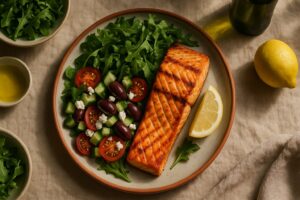
- Fatty Fish: Salmon, mackerel, and sardines are incredible. Not only do they provide lean protein, but they're also packed with omega-3 fatty acids, which have their own anti-inflammatory benefits on top of stimulating GLP-1.
- Greek Yogurt (Plain): A fantastic source of protein. It's also versatile—you can add some berries and nuts for a balanced, GLP-1-boosting meal or snack. Just be sure to choose the plain, unsweetened varieties.
- Legumes: Lentils, chickpeas, and black beans are excellent plant-based options. They deliver a powerful one-two punch of protein and fiber.
3. Fiber-Rich Foods: Fuel for Your Gut
Fiber plays a slightly different, but equally important, role. It’s not directly sensed by L-cells in the same way as fats and proteins. Instead, the magic happens when fiber reaches your large intestine. The beneficial bacteria in your gut ferment the fiber, producing compounds called short-chain fatty acids (SCFAs). These SCFAs are then what directly stimulate your L-cells to release GLP-1.
It’s a beautiful symbiotic relationship. You feed your gut bacteria, and in return, they help you regulate your appetite.
- Oats: A bowl of oatmeal (not the sugary instant kind) is a classic for a reason. The soluble fiber, beta-glucan, is a feast for your gut microbiome.
- Leafy Greens: Spinach, kale, and arugula are low in calories but high in fiber and micronutrients. They are the foundation of any metabolically healthy diet.
- Cruciferous Vegetables: Broccoli, cauliflower, and Brussels sprouts are fiber superstars. Roasting them brings out their natural sweetness and makes them incredibly delicious.
- Berries: Raspberries, blueberries, and blackberries are lower in sugar than other fruits and packed with fiber and antioxidants.
Building Your GLP-1-Friendly Plate: A Practical Approach
Knowing the individual foods is great. But putting them together is where the real change happens. It doesn't have to be complicated. Our team's philosophy is about addition, not subtraction. Instead of thinking, "What can't I eat?" ask, "What can I add to this meal to boost GLP-1?"
Here’s what that might look like:
- Breakfast: Instead of a plain bagel, try two scrambled eggs with spinach and a side of avocado. You've just added protein, fat, and fiber.
- Lunch: Instead of a simple turkey sandwich on white bread, make a large salad with grilled chicken (protein), a handful of walnuts (fat, fiber), chickpeas (protein, fiber), and an olive oil-based vinaigrette (fat).
- Dinner: Instead of pasta with a simple tomato sauce, try a piece of baked salmon (protein, fat) with a side of roasted broccoli (fiber) and a small portion of quinoa (fiber, protein).
See the pattern? Each meal is intentionally built around these three core components. It's comprehensive. It's sustainable. And we've seen it work time and time again.
A Comparison: Natural Food Boost vs. GLP-1 Medications
Now, this is where we need to be unflinchingly honest. While a GLP-1-supportive diet is a powerful tool for overall health, its effect on weight loss is different from that of prescription medications. Food can help optimize your body's natural hormone production. Medications, on the other hand, provide a therapeutic, pharmacological dose that elicits a much stronger and more sustained response. For individuals with significant weight to lose or those with conditions like type 2 diabetes, diet alone may not be enough to achieve their clinical goals. That's the reality.
Here’s a simple breakdown of the differences, based on what we see in our practice every day:
| Feature | GLP-1 Supportive Diet | Medically-Supervised GLP-1 Treatment |
|---|---|---|
| Mechanism | Stimulates the body's natural and limited release of GLP-1 from gut cells. | Delivers a consistent, therapeutic level of a GLP-1 receptor agonist. |
| Potency & Effect | Moderate impact on satiety and blood sugar. Great for general health and modest weight management. | High-potency, clinically-proven impact on appetite reduction, satiety, and significant weight loss. |
| Consistency | Effect varies based on meal composition, timing, and individual gut health. | Provides a steady, predictable hormonal signal 24/7, independent of meals. |
| Best For | Everyone. A foundational element for long-term metabolic health and supporting a healthy weight. | Individuals who need a more powerful tool for clinically significant weight loss or managing related health conditions. |
| Supervision | General nutritional guidance. | Requires professional medical supervision for dosing, monitoring, and managing side effects. Essential for safety. |
We don't see these as competing options. We see them as complementary. The ideal approach, which we've refined over years, combines the power of medical treatment with the sustainable foundation of a nutrient-dense, GLP-1-friendly diet. The medication provides the powerful initial push needed for significant results, while the dietary changes build the lifelong habits needed to maintain them. If you're curious about whether a medical approach is right for you, we encourage you to Start Your Treatment Now and see how our team can help.
Beyond Diet: Other Lifestyle Factors That Influence GLP-1
Food is the star of the show, but it's not the only actor on stage. Your body is a complex, interconnected system. Other lifestyle habits can also influence your GLP-1 levels and overall metabolic health.
- Exercise: Both high-intensity interval training (HIIT) and moderate-intensity endurance exercise have been shown to increase GLP-1 secretion. It’s yet another reason why movement is a non-negotiable part of a healthy life.
- Sleep: Poor sleep and disrupted circadian rhythms can wreak havoc on your hormones, including incretins like GLP-1. Prioritizing 7-9 hours of quality sleep per night is one of the best things you can do for your metabolic health.
- Stress Management: Chronic stress elevates cortisol, a hormone that can counteract the beneficial effects of GLP-1 and promote insulin resistance. Finding healthy ways to manage stress—whether it's through meditation, yoga, or spending time in nature—is crucial.
At TrimrX, our programs are built around this holistic view. We know that lasting success isn't just about a prescription; it's about supporting the whole person. It’s about building a lifestyle that promotes health from every angle. This approach delivers real, sustainable results.
Ultimately, understanding what foods increase GLP-1 gives you a powerful lever to pull in your health journey. It’s a way to actively participate in your own well-being, meal by meal. By focusing on incorporating healthy fats, lean proteins, and high-fiber foods, you're not just eating; you're sending direct, positive signals to your body that regulate hunger, stabilize energy, and support your long-term goals. It's a foundational piece of the puzzle, whether you're just starting to think about your health or you're using advanced medical treatments to help you along the way.
Frequently Asked Questions
How quickly do foods increase GLP-1 levels after eating?
▼
GLP-1 release begins very quickly, within 10-15 minutes of starting a meal. However, the peak and duration of the release depend on the food’s composition, with meals rich in fat, protein, and fiber providing a more sustained response over several hours.
Can I just take a supplement to boost GLP-1?
▼
While some supplements like berberine or certain probiotics may have a modest effect on GLP-1, our team has found they don’t compare to the impact of whole foods or prescription medications. A balanced diet provides a complex synergy of nutrients that supplements can’t replicate.
Do sugary foods or refined carbs affect GLP-1?
▼
Yes, but not in the way you’d hope. While they can trigger a very brief, initial release of GLP-1, they also cause rapid blood sugar spikes. This often leads to a subsequent crash and increased cravings, undermining the hormone’s beneficial effects.
Is a ketogenic or very low-carb diet best for increasing GLP-1?
▼
Not necessarily. While the high fat and moderate protein content of a keto diet can be very effective at stimulating GLP-1, you can achieve similar results with a more balanced approach that includes fiber-rich carbohydrates like legumes and oats. We recommend focusing on food quality over strict carb elimination.
Does the timing of my meals matter for GLP-1 production?
▼
Consistency is key. Eating regular, balanced meals helps maintain stable GLP-1 signaling. Skipping meals can lead to dysregulation and intense hunger later, making it harder to make healthy choices.
Can spicy foods like chili peppers boost GLP-1?
▼
There is some emerging research suggesting that capsaicin, the compound in chili peppers, may stimulate GLP-1 release. While it’s not as potent as fats or proteins, adding spice to your meals can be a complementary strategy and adds great flavor.
How does combining food groups in one meal affect GLP-1?
▼
Combining protein, healthy fats, and fiber in a single meal is the most effective strategy. This creates a powerful, synergistic effect that leads to a more robust and sustained GLP-1 release than eating any single macronutrient alone.
If I’m on a GLP-1 medication from TrimrX, do I still need to eat these foods?
▼
Absolutely. We view a GLP-1 supportive diet as a critical part of your treatment plan. These foods provide essential nutrients and help establish long-term healthy habits for sustainable success even after you’ve completed your treatment.
Are there any drinks that can help increase GLP-1?
▼
While food is the primary driver, some studies suggest that green tea may have a mild positive effect on GLP-1. However, the most important beverage is water, as proper hydration is essential for all metabolic processes.
Will I feel the effects of increased GLP-1 from food immediately?
▼
You will likely notice the effects in terms of increased fullness and satiety during and after the meal. The long-term benefits, like better blood sugar control and easier weight management, build up over time as you consistently eat a GLP-1-supportive diet.
Does gut health play a role in GLP-1 production?
▼
Yes, it’s incredibly important. A healthy gut microbiome is essential for fermenting fiber into short-chain fatty acids (SCFAs), which are potent GLP-1 stimulators. Eating a variety of fiber-rich plant foods is the best way to support your gut health.

Transforming Lives, One Step at a Time
Keep reading
Hosting a Dinner Party on a GLP-1
For people who love to entertain, this is one of the stranger parts of being on these medications. You plan a menu, spend the…

All-Day Licensing Exams on a GLP-1
Bar exams, medical boards, nursing licensure, accounting and engineering exams, and many other professional tests share a format that is unusually hard on anyone…

Youth Sports Weekends on a GLP-1
If your weekends are spent at soccer fields, baseball diamonds, swim meets, or gymnasiums, you already know the pattern: an early start, hours in…


