How to Get GLP-1 Medication Without Insurance: A 2026 Reality Check
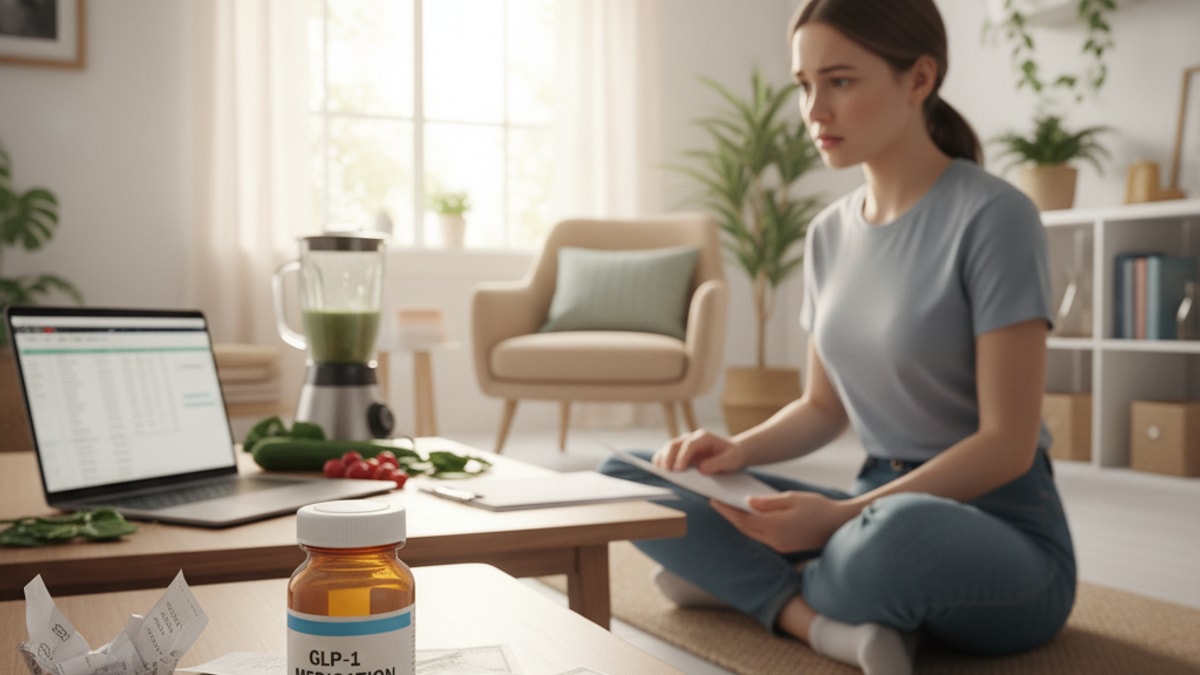
It’s 2026, and the conversation around health and weight management has been completely reshaped by one class of medications: GLP-1 receptor agonists. You know their names—Semaglutide and Tirzepatide. They're not just popular; they're revolutionary, offering results that were once the stuff of science fiction. We've seen firsthand how these treatments can be genuinely life-changing for our patients. But there’s a formidable, often heartbreaking, barrier standing in the way for millions: the price tag. When insurance says no, that retail cost can feel like an insurmountable wall.
Let’s be honest. The frustration is palpable. You’ve done the research, you've talked to your doctor, and you're ready to take control of your health, only to be stopped cold by a pharmacy bill that looks more like a down payment on a car. Our team at TrimrX talks to people in this exact situation every single day. They feel stuck. They feel defeated. That’s why we’re writing this. This isn't just another blog post; it's a strategic roadmap. We're going to break down the legitimate, safe, and realistic ways you can access GLP-1 medications without insurance in 2026, based on our deep industry experience.
The Soaring Cost of GLP-1s: Why Is This So Hard?
First, let's address the elephant in the room. Why are these medications so astronomically expensive? It's a complex mix of factors that has created a perfect storm of high demand and limited access. The demand that began surging in 2024 and 2025 has only intensified through 2026. Everyone has seen the headlines and the dramatic success stories. This isn't just hype; it's a significant medical advancement.
This incredible demand runs headfirst into the realities of the pharmaceutical industry. These are relatively new, brand-name drugs still under strict patent protection. The manufacturers, like Novo Nordisk and Eli Lilly, invested billions in research, development, and clinical trials. They're recouping that investment, and the price reflects that. Furthermore, insurance companies have been notoriously slow—and often outright resistant—to covering these medications specifically for weight management, despite the clear health benefits. They might cover it for Type 2 diabetes, but for weight loss? It’s a completely different, and far more difficult, battle.
This creates a painful gap. Millions of people who could benefit tremendously are left on the outside looking in, caught between a doctor's recommendation and a catastrophic pharmacy bill. Our experience shows this isn't a niche problem. It's a systemic one. But it’s not a hopeless situation. You just need to know where to look.
Pathway 1: Manufacturer Patient Assistance Programs (PAPs)
One of the first places people often look is directly at the source: the drug manufacturers themselves. Companies like Novo Nordisk (Ozempic, Wegovy) and Eli Lilly (Mounjaro, Zepbound) have Patient Assistance Programs, or PAPs. In theory, these programs are designed to provide the medication for free or at a very low cost to uninsured or underinsured individuals who meet specific income requirements.
These programs can be a true lifeline for those who qualify. We mean that sincerely.
However, the reality is that the qualification process is often a grueling, paperwork-intensive marathon with incredibly strict eligibility criteria. Typically, you need to have an income at or below a certain percentage of the Federal Poverty Level. The application requires detailed proof of income, household size, and lack of insurance coverage. It’s not a quick or easy process. Our team has found that a huge portion of the 'missing middle'—people and families who aren't low-income but who absolutely cannot afford to pay thousands of dollars a month out-of-pocket—don't qualify. They're left in the lurch, which is why exploring other avenues becomes a critical, non-negotiable next step.
Pathway 2: Discount Cards and Pharmacy Savings Programs
Next up are the pharmacy discount cards you’ve probably seen advertised. Services like GoodRx, SingleCare, and others operate by negotiating lower prices directly with pharmacies for customers paying with cash. You find a coupon on their app or website, show it to the pharmacist, and get a reduced price. It’s simple, and it’s certainly better than paying the full, undiscounted retail price.
But let’s manage expectations here. A 'discount' on a $1,400 medication might bring the price down to $1,000 or maybe $900. While that's a significant saving, it's still an unsustainable monthly expense for the vast majority of people. It doesn’t solve the core affordability problem. Think of these cards as a tool that can take the edge off, but not as a long-term strategic solution for getting affordable GLP-1 treatment. They are a helpful piece of the puzzle, but rarely the entire answer.
Pathway 3: The Rise of Telehealth and Compounded Medications
Now, this is where the landscape has truly shifted in 2026. This is the pathway that has opened up access for millions who were previously shut out. We’re talking about telehealth platforms combined with compounded medications.
Let’s break this down, because it’s crucial to understand it correctly. Compounding is not about creating a 'generic' version of a drug. Instead, it’s the process where a licensed pharmacist, in a specialized compounding pharmacy, combines or alters ingredients to create a medication tailored to the needs of an individual patient. In the case of GLP-1s, when the brand-name drugs are on the FDA's drug shortage list (which they frequently have been), compounding pharmacies are permitted to prepare formulations containing the same active pharmaceutical ingredient (API)—Semaglutide or Tirzepatide.
This is the key. You're getting the same active ingredient that makes the brand-name drugs so effective, but in a formulation prepared specifically for you under a doctor's prescription. This model works through telehealth providers, like us here at TrimrX. Here’s the process:
- Online Consultation: You start with a comprehensive medical intake and a consultation with a licensed medical provider. This is a non-negotiable step to ensure the treatment is safe and appropriate for you.
- Prescription: If you're a candidate, the provider writes a prescription for a compounded GLP-1 medication.
- Pharmacy Fulfillment: That prescription is sent to a licensed, high-quality compounding pharmacy in the United States. This is a critical detail—the pharmacy's credentials matter immensely.
- Direct Delivery: The medication is then shipped directly and discreetly to your door.
This direct-to-patient model effectively bypasses the traditional, convoluted system of insurance companies and pharmacy benefit managers (PBMs) that drives up costs. By working directly with medical providers and compounding pharmacies, we can make these powerful treatments accessible at a fraction of the retail price. This isn't a loophole; it's a legitimate, established medical practice that is finally bringing affordability to the forefront. If you're ready to explore this path, you can Start Your Treatment Now and see if you qualify.
Comparison Table: Navigating Your GLP-1 Options Without Insurance
To make it even clearer, our team put together a quick comparison of the main pathways we've discussed. Seeing it laid out like this can really help clarify which approach might be the best fit for your situation.
| Feature | Patient Assistance Programs (PAPs) | Pharmacy Discount Cards | Telehealth + Compounding |
|---|---|---|---|
| Typical Cost | Free or very low cost | Significant discount, but still high ($900 – $1,200+) | Much lower monthly cost ($200 – $500+) |
| Who Qualifies? | Uninsured/underinsured with very low income | Anyone paying with cash | Medically qualified patients (via consultation) |
| Pros | The most affordable option if you qualify. | Easy to use, no application needed. Instant savings. | Affordable, convenient, includes medical supervision. |
| Cons | Extremely strict income limits, lengthy application. | Still very expensive for most people. | Requires vetting the provider for safety and quality. |
| Our Take | A lifeline for a very small, specific group. | A good first step to check prices, but not a sustainable solution. | The most accessible and realistic option for most people without insurance in 2026. |
A Critical Word on Safety: Vetting Your Provider Is Everything
We can't stress this enough: the rise of telehealth has been incredible, but it has also opened the door for some questionable operators. The internet can be a bit of a Wild West, and when it comes to your health, you cannot afford to take chances. Sourcing medication from an unvetted online entity is a catastrophic risk.
So, how do you protect yourself? Here’s what our team insists you look for in any telehealth provider before moving forward:
- Licensed Medical Providers: Does the service require a consultation with a real, licensed doctor or nurse practitioner? If they're willing to ship you medication without a proper medical evaluation, run. Don't walk, run. It's a massive red flag for safety and legality.
- US-Based, Credentialed Pharmacies: Ask where the medication is coming from. Reputable providers like TrimrX exclusively partner with US-based compounding pharmacies that are state-licensed and, ideally, PCAB-accredited (Pharmacy Compounding Accreditation Board). This ensures adherence to strict quality and safety standards.
- Transparent Pricing & Process: Is the company upfront about all costs? Do they explain the process clearly? You should never feel like you're in the dark about what you're paying for or what the next steps are.
- Ongoing Support: A good provider doesn't just send you a vial and disappear. They offer ongoing support, check-ins, and access to their medical team to manage side effects and track progress. Your health journey is a process, not a one-time transaction.
This approach to safety and quality is the bedrock of our entire program at TrimrX. We built our system to provide not just access, but safe, medically-supervised access. It’s the only way to do it right.
Are Clinical Trials an Option?
Another potential avenue, though it's more of a long shot, is participating in a clinical trial. Pharmaceutical companies are constantly developing new medications or studying existing ones for new uses. To do this, they need volunteers. Participants in a trial may receive the medication (or a placebo) for free, along with close medical monitoring.
The primary resource for finding these is the official government database, ClinicalTrials.gov. You can search for trials related to weight management or specific GLP-1 drugs.
However, it's important to have realistic expectations. The eligibility criteria for trials are incredibly specific and often narrow. You might not fit the patient profile they're looking for. And, critically, you run the risk of being placed in the placebo group, meaning you won't receive the active medication at all. Our experience shows that for someone seeking immediate and reliable treatment, a clinical trial is usually not the most practical or dependable path.
Looking Ahead: The GLP-1 Landscape Beyond 2026
What does the future hold? We're constantly monitoring the industry, and a few trends are clear. Eventually, the patents on today's leading GLP-1s will expire, opening the door for true, mass-produced generics. But that’s still several years away. Don't expect a generic for Wegovy or Zepbound to hit the market anytime soon.
In the meantime, the pipeline of new weight-loss drugs is robust. We're expecting to see even more effective and potentially more affordable options come to market in the late 2020s. But that doesn't help you today.
For the foreseeable future, we believe the direct-to-patient telehealth model using compounded medications will remain the single most important pathway for uninsured and underinsured individuals. The traditional healthcare and insurance systems are simply too slow and too resistant to change to meet the current, urgent need. The innovation happening in telehealth isn't just about convenience; it's about creating a necessary and vital solution where the old system has failed.
Finding a path to affordable GLP-1 medication can feel daunting, but it’s far from impossible. It requires a bit of knowledge and the right partner. The power of these treatments is undeniable, and our mission is to ensure that power isn't reserved only for those with premium insurance plans. A diagnosis or a desire for better health shouldn't end with a demoralizing price tag. Safe, effective, and accessible options are available right now. We're here to help you navigate them.
Frequently Asked Questions
Is compounded Semaglutide the same thing as Ozempic® or Wegovy®?
▼
Compounded Semaglutide contains the same active pharmaceutical ingredient (API) as Ozempic® and Wegovy®. However, it is prepared by a licensed compounding pharmacy and may use different base ingredients. It is not the identical, FDA-approved brand-name product but is prescribed by a doctor to provide the same active medication.
How much can I realistically expect to pay for compounded GLP-1s without insurance?
▼
While prices vary between providers, you can generally expect to pay a fraction of the retail cost for brand-name versions. As of 2026, many programs, including ours at TrimrX, offer treatments for a few hundred dollars per month, making it a much more sustainable option.
Is it legal and safe to get GLP-1 medications through a telehealth service?
▼
Yes, it is both legal and safe, provided you use a reputable provider. A legitimate service will require a consultation with a licensed medical professional and source its medication from US-based, state-licensed compounding pharmacies. We can’t stress enough the importance of vetting your provider’s credentials.
Do I need a prescription to get compounded Tirzepatide?
▼
Absolutely. Tirzepatide, whether brand-name or compounded, is a prescription-only medication. Any service offering it without a consultation and prescription from a licensed medical provider is operating illegally and unsafely.
Why won’t my insurance cover GLP-1s for weight loss?
▼
Many insurance plans in 2026 still classify weight loss medications as ‘lifestyle’ drugs and exclude them from coverage, despite the proven health benefits. They are more likely to cover them for a diagnosis of Type 2 diabetes, creating a frustrating coverage gap for many patients.
What’s the main difference between Semaglutide and Tirzepatide?
▼
Both are powerful medications for weight management. Semaglutide is a GLP-1 receptor agonist. Tirzepatide is a dual-agonist, targeting both GLP-1 and GIP receptors, which clinical trials have shown can lead to slightly greater weight loss for some individuals.
Can I use a manufacturer’s coupon if I get a compounded medication?
▼
No, manufacturer coupons and savings cards are only valid for their specific, brand-name products purchased at a retail pharmacy. They cannot be applied to compounded medications.
How do I know if a telehealth company is legitimate?
▼
Look for clear signs of legitimacy: they must require a medical consultation, be transparent about pricing, use licensed US-based pharmacies, and provide access to a medical support team. Our team at TrimrX, for example, prioritizes all these elements for patient safety.
Are there side effects with compounded GLP-1s?
▼
Yes, the side effects are the same as with the brand-name versions because the active ingredient is the same. Common side effects are typically gastrointestinal, such as nausea or constipation, and are usually managed by starting with a low dose and titrating up slowly under medical guidance.
What is a PCAB-accredited compounding pharmacy?
▼
PCAB (Pharmacy Compounding Accreditation Board) is a third-party organization that offers a voluntary, rigorous accreditation program for compounding pharmacies. It signifies that the pharmacy meets the highest standards for quality and safety, which is why we believe it’s a critical credential.
Can I get GLP-1 medication from another country to save money?
▼
Our team strongly advises against this. Importing prescription drugs from other countries is often illegal and incredibly risky. You have no way to verify the medication’s authenticity, quality, or safety, and it’s a gamble we believe you should never take with your health.
How long will I need to be on GLP-1 medication?
▼
GLP-1s are designed for long-term management of weight, which is a chronic condition. The duration of treatment is a decision made between you and your medical provider based on your health goals, progress, and tolerance of the medication.

Transforming Lives, One Step at a Time
Keep reading
What Labs Should Your Doctor Run Now That You’re on a GLP-1?
There is no universal panel, and anyone handing you a fixed list is guessing about your situation. What gets checked depends on what conditions…
Can’t Eat Enough Protein on a GLP-1? Why It Matters and What Helps
This is one of the most common difficulties on these medications, and the tension in your question is real: protein is the thing most…
Type 2 Diabetes Medications and a New GLP-1: What to Tell Your Doctor
Tell whoever prescribed the GLP-1 exactly what diabetes medications you take, at what doses, before your first injection. That conversation needs to happen first,…


