Traveling with GLP-1s in 2026: Your Essential Trip-Proof Plan
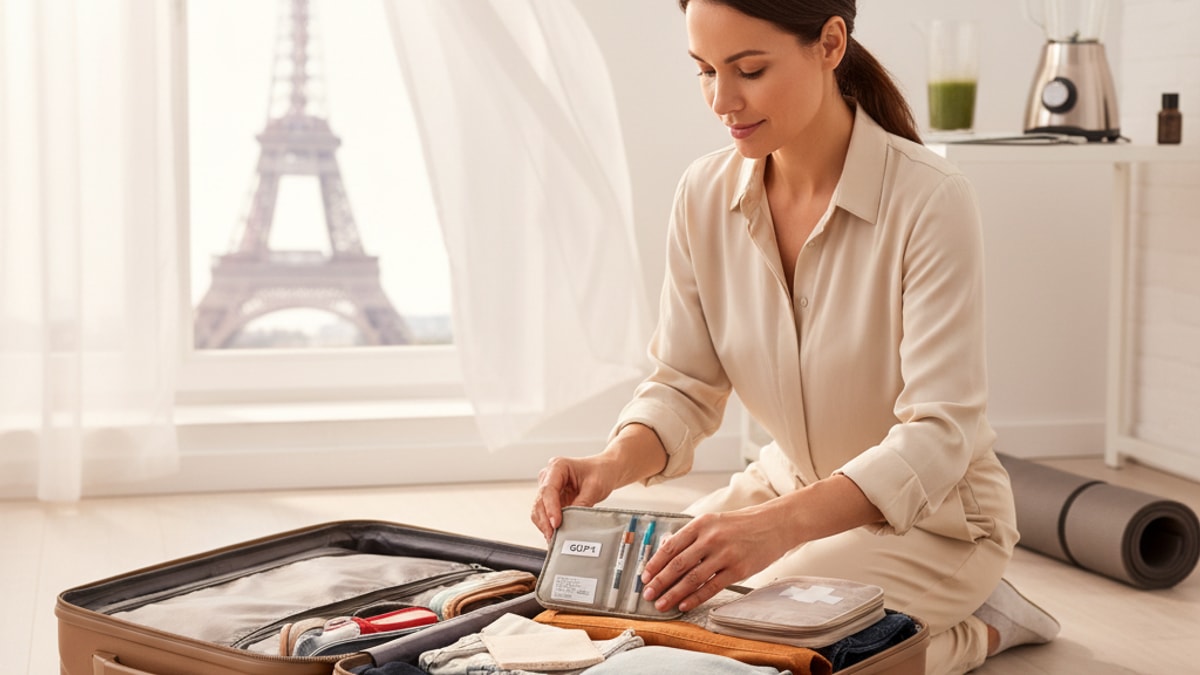
You've embraced a significant, sometimes dramatic shift in your health journey. GLP-1 medications like Semaglutide and Tirzepatide are transforming lives, and you're seeing the results. The energy is back. The confidence is returning. But then, a new challenge appears on the horizon: travel. Whether it's a critical business trip, a long-awaited vacation, or a family visit across the country, the thought of managing your temperature-sensitive medication can spark a unique kind of anxiety. We get it. It’s a legitimate concern.
Here at TrimrX, we've guided thousands of patients through this exact scenario. We've heard every question and helped troubleshoot every potential pitfall. Our experience shows that with the right preparation, traveling with your GLP-1 medication isn't just possible—it can be completely seamless. This isn't about just hoping for the best. It's about having an unflinching, expert-backed plan that removes the stress and lets you focus on the purpose of your trip. Let’s walk through the exact steps our team recommends for 2026 to ensure your treatment continues flawlessly, no matter where you're headed.
Before You Even Pack: The Pre-Travel Checklist
Honestly, the success of your trip hinges on what you do in the week leading up to it. Rushing this part is a recipe for headaches at the security line or, worse, a compromised dose. It’s all about proactive preparation.
First, talk to your provider. This is a critical, non-negotiable element of your prep. If you're a TrimrX patient, this is a quick conversation with our medical team. We can provide a signed doctor's letter that explains your need for the medication, syringes, and any related supplies. This letter is your golden ticket for navigating any questions from airline or security staff. It should clearly state the medication's name (e.g., Semaglutide, Tirzepatide) and the fact that it must be carried with you and kept cool. We can't stress this enough: don't travel without this documentation.
Next, get your prescriptions in order. Always travel with your medication in its original packaging, which includes the pharmacy label with your name and the prescription details. This corroborates your doctor's note and eliminates any ambiguity. Consider taking a photo of the prescription label on your phone as a digital backup. What if you lose everything? That photo could be a lifesaver when trying to coordinate with your provider from afar. It's a simple step that provides a huge layer of security.
And another consideration: supply. Do you have enough medication to last your entire trip, plus a few extra days for potential delays? The year 2026 is seeing more flight disruptions than ever. Murphy's Law loves to strike when you're least prepared. Our team always advises packing at least one extra dose beyond what your trip requires. Running out of your medication while away from home can disrupt your progress and is an entirely avoidable stressor. If you're nearing the end of your supply, connect with your provider well in advance of your departure date to arrange for a refill. For our patients, a simple message to the TrimrX team can get this sorted out quickly. If you're just getting started and want a plan that accounts for your lifestyle, you can Start Your Treatment Now with our team.
Packing Your GLP-1s: More Than Just Tossing It in a Bag
Let’s be honest, this is crucial. How you pack your medication directly impacts its effectiveness. Most GLP-1s need to be refrigerated before their first use and then can be kept at a controlled room temperature for a set period (typically up to 56 days, but always check your specific medication's guidelines). However, 'room temperature' on a plane or in a hot car is vastly different from the 'room temperature' in your home. Protecting it from extreme temperatures is paramount.
Never, ever, under any circumstances, put your medication in your checked luggage. We’ve seen this happen, and the outcome can be catastrophic. Cargo holds are not temperature-controlled; they can freeze or overheat, rendering your expensive and vital medication useless. Your GLP-1 medication, along with all your supplies, must be in your carry-on bag, under your personal control at all times.
So, what's the best way to carry it? You need a reliable medical travel cooler. A simple insulated lunch bag with a commercial cold pack can work for shorter trips, but for longer travel days, you'll want something more robust. The goal is to keep the medication cool, not frozen. Direct contact with a frozen ice pack can be just as damaging as heat. Always create a barrier—a small towel or the medication's original box—between the pen or vial and the cold source.
Our team has seen patients have great success with a few different options, each with its own pros and cons.
Comparison of Medical Travel Coolers
| Cooler Type | How It Works | Best For | Potential Downsides |
|---|---|---|---|
| Insulated Pouch (e.g., Frio) | Uses water-activated crystals to create an evaporative cooling effect. No ice or power needed. | Air travel, backpacking, situations where you can't guarantee access to ice or power. Keeps medication at a safe room temperature. | Doesn't achieve true refrigeration; effectiveness can decrease in very high humidity. Requires re-soaking every 48 hours. |
| Hard-Sided Cooler with Gel Pack | A small, durable cooler that uses a custom-fit, non-liquid frozen gel pack. | Domestic flights, road trips. Offers excellent physical protection and stable cooling for 12-24 hours. | Bulkier than a pouch. Relies on having access to a freezer to re-freeze the pack for the return journey. |
| USB-Powered Mini-Fridge | A tiny, portable refrigerator that plugs into a USB power bank, car adapter, or wall outlet. | Long-haul international travel, extended trips where maintaining refrigeration is critical. | Requires a power source, which means carrying a charged power bank. Can be noisy and is the most expensive option. |
Choosing the right one depends entirely on your itinerary. A quick domestic flight? The hard-sided cooler is probably perfect. A two-week trek through a remote area? The evaporative pouch is your best friend. The key is to think through your entire journey, from leaving your house to arriving at your final destination's refrigerator.
Navigating Airport Security Like a Pro
The security checkpoint is often the most nerve-wracking part of the process. But it doesn't have to be. As of 2026, TSA and other global security agencies are very familiar with travelers carrying injectable medications. The key is transparency and preparation.
When you approach the security belt, take your medical cooler out of your carry-on bag. Place it in a separate bin, just as you would with a laptop. You should calmly and clearly inform the officer, "I have liquid medication that needs to stay cool." That's it. You don't need to over-explain unless they ask questions. Using the word 'liquid' is important as it alerts them to the specific screening protocols.
TSA's 3.4-ounce (100ml) liquid rule does not apply to medically necessary liquids, gels, or aerosols. You are allowed to bring these in reasonable quantities for your trip. Your doctor's note and prescription-labeled packaging are your proof if any questions arise. While you aren't required to show them, having them ready prevents any potential delays or confusion. Our experience shows that 99% of the time, a prepared and confident traveler sails right through.
What about the X-ray scanner? It's perfectly safe for your medication. The scanning process will not harm the medicine's efficacy. Some people worry and ask for a hand inspection, which you are entitled to request. However, this can sometimes take longer and involve more handling of your supplies. In our professional opinion, letting it go through the scanner is efficient and poses zero risk to the medication itself.
Keep your supplies organized. Use a clear bag for your alcohol swabs, pen needles, or syringes. This makes inspection easy and shows the security officers that you're an organized traveler who knows the drill. It's all about making their job easier, which in turn makes your experience smoother.
On the Move: Managing Your Dosing Schedule Across Time Zones
Now, this is where it gets interesting. You’ve successfully packed and passed through security. But your GLP-1 medication works best when taken on the same day each week. So what happens when you fly from New York to Paris and 'lose' six hours? Or from San Francisco to Tokyo and 'jump ahead' a whole day?
The logistical gymnastics of crossing time zones require a bit of planning. The golden rule is to not stress about being perfect down to the hour. A few hours' difference in your injection schedule for one or two doses will not derail your progress. The key is to get back on your regular schedule as soon as it's practical.
For smaller time changes (less than 3-4 hours), most people can simply take their dose at their usual time in the new destination. For example, if you take your shot at 9 AM on Saturday at home, just take it at 9 AM on Saturday wherever you are. It’s simple and effective.
For significant time changes, like those involved in trans-oceanic flights, you have a couple of solid options. Let's say you're traveling east and losing a large chunk of time. You can either take your dose a bit earlier than usual before you leave or a bit later after you arrive to split the difference. Or, you can simply take it on your scheduled day in the new time zone. We mean this sincerely: the most important thing is not skipping the dose entirely. A slightly altered schedule for a week is far better than a missed dose.
This is another area where consulting your provider is invaluable. Our TrimrX team often helps patients map out a specific injection plan based on their exact itinerary. We can look at your flight times and destination and give you a clear, simple recommendation, like, "Take this week's dose on the plane at what would be 10 PM your home time, then next week, resume your normal Saturday morning schedule in the new time zone." This removes all the guesswork and anxiety. It’s part of the comprehensive support we believe is essential for success.
Beyond the Medication: Staying on Track with Nutrition and Lifestyle
Your GLP-1 is a powerful tool, not a magic wand. It works in partnership with your lifestyle choices. And let's face it, travel is designed to wreck routines. Airport food courts, hotel mini-bars, celebratory vacation dinners—it's a minefield of caloric traps and poor choices.
But it doesn't have to be a setback. The same mindfulness you apply at home can be adapted for the road. The appetite-suppressing effects of your medication will still be working, which is a massive advantage. You're less likely to be tempted by the oversized cinnamon bun at the gate if you're not battling ravenous hunger.
Here’s what we’ve learned from our most successful patients: pack your own snacks. This is a non-negotiable. Protein bars, unsalted nuts, individually packaged cheese, or fruit can save you from making a desperate, unhealthy choice when your flight is delayed. Hydration is also key. The relentless hum of the airplane cabin is incredibly dehydrating. Buy a large bottle of water after you pass security and sip it continuously. Dehydration can often be mistaken for hunger.
When you're at your destination, try to maintain some semblance of your normal eating structure. If you know you have a big dinner planned, opt for a lighter lunch with lean protein and vegetables. Scan restaurant menus online before you go. In 2026, nearly every restaurant has its menu available, allowing you to identify healthy options in advance and avoid feeling pressured to make a snap decision. Don't be afraid to make special requests, like asking for a sauce on the side or for a vegetable substitute for fries. Enjoy the local cuisine, but do it mindfully. A few indulgent meals are part of the travel experience; a week of nutritional chaos is a step backward.
What If? Handling Unexpected Travel Scenarios
Even with impeccable planning, things can go wrong. A flight gets canceled, a bag gets lost (though not your carry-on with your meds!), or a hotel fridge malfunctions. Here’s how to handle a few common travel emergencies.
Scenario 1: Your hotel room doesn't have a fridge, or it's not cold enough.
Many unopened GLP-1 pens can be stored at room temperature (under 86°F or 30°C) for several weeks. Check the specific instructions for your medication. If you're within this window, you may not need refrigeration. If you do, call the front desk. Most hotels can provide a mini-fridge for medical needs, often free of charge. You can also ask them to store it in a monitored refrigerator at the front desk or in the hotel kitchen. As a last resort, a well-insulated travel cooler with a steady supply of ice (in sealed bags to prevent water from getting in) can work in a pinch.
Scenario 2: Your medication gets too warm or freezes.
This is a tough one. If you suspect your medication has been exposed to extreme temperatures, the safest bet is to discard it. Do not use medication that looks cloudy, has particles in it, or has been frozen. It's not worth the risk. This is precisely why we recommend packing an extra dose. Contact your provider immediately to strategize. They can help you figure out your next steps and, if necessary, try to call in a prescription to a pharmacy near you, though this can be complicated, especially internationally.
Scenario 3: You lose your medication.
This is a true travel nightmare, but it's manageable. First, don't panic. Second, contact your provider right away. This is where having a supportive team like TrimrX makes all the difference. We can verify your prescription and work with you to find a solution. This might involve calling a prescription into a local pharmacy or, in some cases, arranging for an overnight shipment from a specialty pharmacy. Your travel insurance might also cover the cost of lost prescription medication, so be sure to check your policy and file a claim if needed.
Traveling with GLP-1s in 2026 is a standard part of life for millions of people. It's a solved problem. It just requires a little bit of foresight and a solid plan. By preparing your documents, packing intelligently, understanding the security process, and planning for your dosing schedule, you can eliminate the stress and keep your health journey moving forward. Your life shouldn't shrink because of your treatment; your treatment should expand what's possible in your life. With this plan, you're ready to take on any destination.
Frequently Asked Questions
Can I take my GLP-1 pens and needles through airport security?
▼
Yes, absolutely. Both prescription medications like Semaglutide and the associated supplies (needles, swabs) are permitted through airport security. We recommend keeping them in their original packaging and carrying a doctor’s note to ensure a smooth process.
Do I really need a doctor’s note to travel with my medication?
▼
While not always required, we strongly advise it. A doctor’s letter officially documents your medical need for the medication and supplies, which can prevent any potential delays or questions from security or customs officials. It’s a simple piece of paper that provides significant peace of mind.
What happens if my hotel room doesn’t have a refrigerator?
▼
First, check your medication’s storage guidelines; many GLP-1s are stable at room temperature for several weeks after the first use. If refrigeration is necessary, you can request a medical mini-fridge from the hotel’s front desk, which they often provide free of charge.
How do I adjust my weekly injection time for a long flight?
▼
For time zone changes under four hours, you can generally take it at your usual time on your scheduled day. For larger changes, it’s fine to shift the dose by several hours earlier or later to accommodate the new time zone. The most important thing is to not miss a dose.
Is it safe to use my GLP-1 medication if it accidentally got warm?
▼
You must refer to the manufacturer’s specific temperature guidelines. If the medication was exposed to temperatures above its recommended safe range (usually 86°F or 30°C), it may lose its effectiveness and should be discarded. When in doubt, contact your provider.
Can I get a replacement prescription if I lose my medication while traveling?
▼
This can be challenging but is often possible. Contact your healthcare provider immediately. They can verify your prescription and may be able to send it to a pharmacy near your location, though regulations can vary, especially internationally.
Should I put my GLP-1 pen in my checked bag?
▼
No, never. The cargo hold of an airplane is not temperature-controlled and can experience extreme heat or cold, which can destroy the medication. Always keep your GLP-1 medication and all supplies in your carry-on bag.
What’s the best travel case for my medication?
▼
The best case depends on your trip’s length and nature. For short flights, a small, hard-sided cooler with a gel pack is excellent. For longer trips without access to a freezer, a water-activated evaporative pouch (like a Frio wallet) is a fantastic, power-free option.
How do I manage my diet on vacation while on a GLP-1?
▼
The medication’s appetite suppression will help. We advise packing healthy snacks like protein bars and nuts for travel days. When dining out, try to review menus beforehand to identify lean protein and vegetable options, and enjoy local delicacies in moderation.
My flight is delayed for 10 hours. Will my cooler pack last?
▼
Most quality gel packs are rated to last for 12-24 hours, but this can vary. If you face a long delay, you can ask a restaurant in the airport terminal to store your cooler pack in their freezer for an hour or two to ‘recharge’ it for the remainder of your journey.
Can I store my GLP-1 pen in the hotel mini-bar?
▼
Be cautious with hotel mini-bars. They can have inconsistent temperatures and are sometimes not cold enough, or they can freeze items placed near the cooling element. A dedicated medical fridge from the front desk is a much safer option for reliable temperature control.
Will the airport X-ray machine damage my medication?
▼
No, the X-ray scanners used at airport security checkpoints will not harm your GLP-1 medication or affect its potency. It is perfectly safe to let it pass through the scanner with the rest of your carry-on items.

Transforming Lives, One Step at a Time
Keep reading

Employer Dropping GLP-1 Coverage? Your Options Before the Year Ends
The useful thing about this situation is that you have a date, which means you have time to work through the options in a…

Switching GLP-1 Providers to Save $50 a Month: What You Give Up
Six hundred dollars a year is real money and sometimes switching is clearly right. The question worth answering first is whether you are comparing…
Do You Have to Disclose a GLP-1 for a Medical Certification Job?
Almost certainly yes, and the specific requirements depend entirely on which body certifies you. This article will not tell you what your rule is,…


