What’s the Best Diet for Fatty Liver Disease? Nutrition Strategies
Introduction
The Mediterranean diet is the best-studied dietary pattern for fatty liver disease, with multiple randomized trials showing it reduces liver fat by 20-40% over 6-12 months even without calorie counting. Combined with fructose reduction and moderate coffee intake, dietary changes alone can resolve simple steatosis in many patients. For those with NASH, diet is the foundation of treatment, though it’s often not enough on its own.
At TrimRx, we believe that understanding your options is the first step toward a more manageable health journey, and you can take the free assessment quiz if you’re ready to see whether a personalized program is a fit for you.
What’s the Best Diet for Fatty Liver Disease?
The Mediterranean diet. This isn’t an opinion or a guess. It’s the most evidence-supported dietary pattern for NAFLD, backed by more randomized controlled trials than any alternative.
Quick Answer: The Mediterranean diet reduces liver fat by 20-40% over 6-12 months, even without calorie counting.
A 2019 randomized crossover trial by Properzi et al. published in the Journal of Hepatology compared the Mediterranean diet to a low-fat/high-carb diet over 12 weeks in patients with NAFLD. The Mediterranean diet group had significantly greater reductions in liver fat measured by MRI-PDFF, even without any difference in weight loss between groups. That’s a meaningful finding. It means the composition of your diet matters independently of how much weight you lose.
What does a Mediterranean diet actually look like? Olive oil as the primary fat source. Lots of vegetables, legumes, whole grains, nuts, and fish. Moderate amounts of poultry, eggs, and dairy. Limited red meat. Very little added sugar or processed food.
A 2017 meta-analysis by Zelber-Sagi et al. in the Journal of Hepatology pooled results from multiple NAFLD diet trials and found that the Mediterranean dietary pattern reduced liver fat, improved insulin sensitivity, and decreased inflammatory markers more effectively than other dietary approaches.
The reason is probably multifactorial. The Mediterranean diet is naturally high in monounsaturated fats (from olive oil), omega-3 fatty acids (from fish), polyphenols (from vegetables and olive oil), and fiber. It’s naturally low in added sugars and refined carbohydrates. That combination addresses multiple pathways involved in hepatic fat accumulation.
Does Fructose Actually Cause Fatty Liver?
Fructose is metabolized almost entirely by the liver. Unlike glucose, which is taken up by cells throughout the body, fructose goes straight to the liver after absorption. When fructose intake is high, the liver converts it to fat through a process called de novo lipogenesis.
This isn’t theoretical. A 2009 study by Stanhope et al. in the Journal of Clinical Investigation took healthy volunteers and fed them fructose-sweetened beverages for 10 weeks. They developed increased visceral fat, increased liver fat, worsened lipid profiles, and decreased insulin sensitivity. A glucose-sweetened group gained the same amount of weight but didn’t show the same metabolic deterioration.
A 2020 meta-analysis by Chiu et al. in the European Journal of Clinical Nutrition found that fructose intake above 60g per day significantly increased liver fat. For context, a single 20-ounce bottle of regular soda contains about 35-40g of fructose. Two per day puts you well above the threshold.
The sources of fructose that matter most:
- Sugar-sweetened beverages (sodas, sweet teas, sports drinks, fruit juices)
- High-fructose corn syrup in processed foods
- Table sugar (sucrose is 50% fructose)
- Agave nectar (actually higher in fructose than high-fructose corn syrup)
Fruit is different. Yes, fruit contains fructose, but it comes packaged with fiber, water, vitamins, and phytochemicals that slow absorption and limit total intake. A 2021 study by Zhang et al. in Gut found that whole fruit consumption was actually associated with lower NAFLD risk. Fruit juice, however, was associated with higher risk. The fiber matters.
Practical takeaway: eliminating sugary drinks is probably the single highest-impact dietary change for fatty liver. If you change nothing else, drop the soda.
Does Coffee Protect the Liver?
Yes, and the evidence is surprisingly strong.
A 2016 meta-analysis by Kennedy et al. in the Journal of Hepatology analyzed data from over 430,000 participants across multiple studies. Coffee consumption was associated with a 29% reduced risk of NAFLD and a 27% reduced risk of liver fibrosis. Higher intake (3-4 cups per day) showed stronger protective effects than lower intake.
A 2017 systematic review by Saab et al. in Liver International found that coffee drinkers with NAFLD had lower fibrosis scores than non-coffee-drinkers, even after adjusting for other factors.
The mechanism isn’t fully understood. Coffee contains hundreds of bioactive compounds beyond caffeine. Chlorogenic acid, kahweol, and cafestol have anti-inflammatory and antioxidant properties. Caffeine itself inhibits the activation of hepatic stellate cells, which are the main producers of collagen (scar tissue) in the liver.
Interestingly, the protection seems to come from coffee specifically, not caffeine in general. Tea drinkers don’t show the same liver benefits in most studies, despite comparable caffeine intake.
How much? Most studies show benefits starting at 2-3 cups per day, with maximum benefit around 3-4 cups. Adding lots of sugar or flavored syrups defeats the purpose, obviously. Black coffee or coffee with modest additions is the way to go.
Decaf coffee may still provide some benefit. A study by Molloy et al. in Hepatology (2012) found that decaf coffee was also associated with lower liver enzymes, though the effect was smaller than regular coffee.
What Specific Foods Should You Eat More Of?
Beyond the Mediterranean diet framework, certain foods have specific evidence for liver benefit:
Olive oil. The primary fat in the Mediterranean diet. A 2018 randomized trial by Rezaei et al. in Nutrition found that adding 20ml of extra virgin olive oil daily to the diet for 12 weeks reduced liver fat and improved liver enzymes in NAFLD patients, independent of other dietary changes. The oleic acid and polyphenols in olive oil appear to reduce hepatic inflammation and oxidative stress.
Fatty fish. Salmon, mackerel, sardines, and herring are high in omega-3 fatty acids (EPA and DHA). A 2016 Cochrane review by Parker et al. found that omega-3 supplementation modestly reduced liver fat in NAFLD patients. Whole fish intake is probably better than supplements because of the additional protein and micronutrient content.
Walnuts. A 2020 study by Gioxari et al. in Nutrients found that walnut consumption (about 28g daily) improved liver enzymes and insulin sensitivity in NAFLD patients. Walnuts are the only tree nut high in alpha-linolenic acid, a plant-based omega-3.
Legumes. Beans, lentils, and chickpeas are high in fiber and resistant starch, both of which feed beneficial gut bacteria and improve insulin sensitivity. A 2019 study in the Journal of Nutrition found that higher legume intake was independently associated with lower NAFLD risk in a large cohort.
Oats. High in beta-glucan, a soluble fiber that improves cholesterol levels and insulin sensitivity. No NAFLD-specific trial, but the metabolic effects are well-established and directly relevant.
What Foods Should You Limit or Avoid?
Added sugars and sugar-sweetened beverages. Already covered above. This is the single most important thing to cut. The American Heart Association recommends no more than 25g of added sugar per day for women, 36g for men. Most Americans consume 70-80g.
Ultra-processed foods. A 2022 study by Zhang et al. in Clinical Gastroenterology and Hepatology found that each 10% increase in ultra-processed food consumption was associated with a 12% higher risk of NAFLD. Ultra-processed foods tend to be high in refined carbohydrates, added sugars, and inflammatory fats while being low in fiber and micronutrients.
Refined carbohydrates. White bread, white rice, and pasta made from refined flour convert quickly to glucose, spike insulin, and promote hepatic lipogenesis. Swapping these for whole-grain versions reduces glycemic load without requiring you to eliminate carbohydrates entirely.
Saturated fat. The relationship between saturated fat and liver fat is complicated. A 2018 study by Luukkonen et al. in Diabetes Care overfed participants with saturated fat, unsaturated fat, or simple sugars. Saturated fat overfeeding increased liver fat by 55%, compared to 33% for unsaturated fat and 33% for sugar. This doesn’t mean you need to avoid all saturated fat, but keeping it under 10% of total calories is reasonable.
Red and processed meat. A 2018 study by Zelber-Sagi et al. in the Journal of Hepatology found that high consumption of red and processed meat was independently associated with NAFLD and insulin resistance. The mechanism may involve heme iron, advanced glycation end products from high-heat cooking, and the saturated fat content.
Key Takeaway: Coffee at 3-4 cups per day is linked to a 29% lower risk of NAFLD and 27% lower fibrosis risk.
What About Alcohol When You Have Fatty Liver?
This is a genuinely unsettled question. The diagnosis of NAFLD/MASLD technically requires absence of significant alcohol use (usually defined as less than 20g/day for women, less than 30g/day for men). But the real-world question is: if you already have fatty liver, is any alcohol safe?
Some older observational studies suggested that moderate alcohol intake was associated with lower risk of NASH and fibrosis compared to no alcohol at all. A 2012 study by Dunn et al. in Hepatology found that modest drinkers had lower odds of NASH than abstainers.
But these studies have serious confounding issues. Moderate drinkers tend to be healthier in general. And a 2020 study by Ajmera et al. in Clinical Gastroenterology and Hepatology found that any alcohol consumption was associated with less improvement in liver histology over time in NASH patients, undermining the idea that moderate drinking is protective.
Most hepatologists now recommend minimal or no alcohol for patients with NASH, and zero alcohol for anyone with fibrosis stage F3 or higher. The additive injury from alcohol on top of metabolic inflammation isn’t worth whatever small cardiovascular benefit moderate drinking might provide.
How Should Your Diet Change When Taking a GLP-1 Medication?
GLP-1 medications like semaglutide and tirzepatide suppress appetite and slow gastric emptying. This changes the practical experience of eating in ways that matter for nutritional planning.
Eat protein first. Reduced appetite means smaller meals. You need to make those meals count nutritionally. Prioritize protein (aim for 1.2-1.6g per kg of body weight daily) to preserve lean mass during weight loss. A 2022 study by Heymsfield et al. in the journal Obesity found that about 25-40% of weight lost on GLP-1 medications is lean mass, and adequate protein intake helps minimize this.
Smaller, more frequent meals. Slowed gastric emptying means large meals can cause nausea and bloating. Eating 4-5 smaller meals instead of 2-3 large ones is easier on the GI system and helps maintain steady nutrient intake.
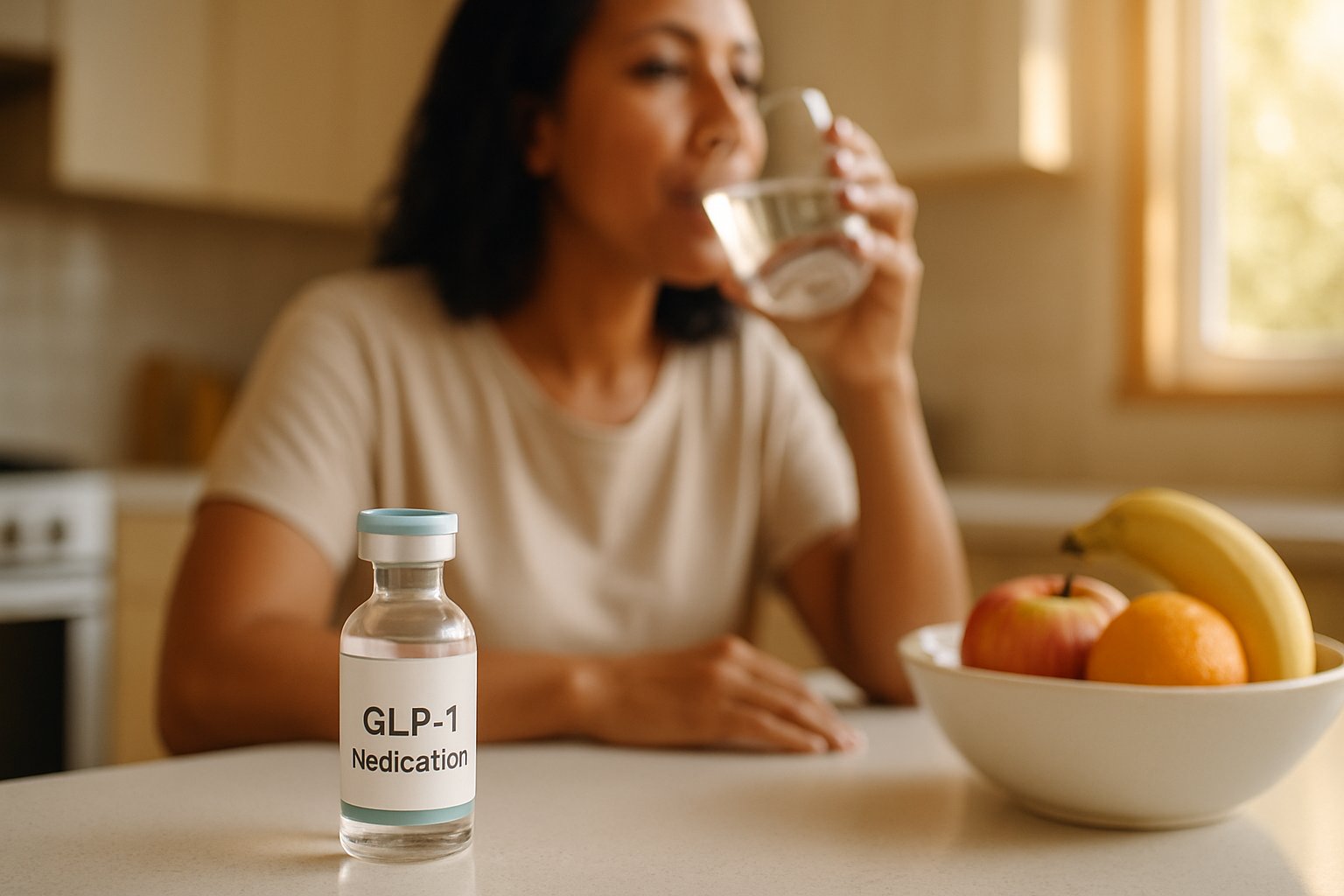
Stay hydrated. Nausea and reduced food intake can lead to dehydration. Aim for at least 64 ounces of water daily. Some patients find that cold or room temperature water is better tolerated than warm water during the first few weeks.
Don’t abandon nutrition quality. The biggest risk with GLP-1-mediated appetite suppression is that people eat less but also eat worse. When you can only manage 1,200-1,500 calories, every calorie needs to deliver nutrients. This is not the time for empty carbohydrates.
Fiber still matters. Constipation is a common GLP-1 side effect. Maintaining fiber intake through vegetables, legumes, and whole grains helps. If whole foods aren’t enough, a psyllium husk supplement can help without adding calories.
What Does a Practical Daily Meal Plan Look Like?
Here’s a sample day that follows Mediterranean diet principles and works for someone with NAFLD, whether or not they’re on GLP-1 medication:
Breakfast. Greek yogurt (plain, full-fat or 2%) with a handful of walnuts, a few berries, and a drizzle of honey. Coffee, black or with a splash of milk. Protein: ~20g.
Mid-morning snack. A small handful of almonds (about 15-20) and a piece of fruit. Or hummus with vegetables.
Lunch. Grilled salmon or chicken over mixed greens. Olive oil and lemon dressing. Chickpeas and cherry tomatoes. A piece of whole-grain bread if you’re hungry for it. Protein: ~30g.
Afternoon snack. A small can of sardines on whole-grain crackers. Or an apple with a tablespoon of almond butter.
Dinner. Lentil soup with vegetables and a side of sauteed greens in olive oil. Or grilled fish with roasted vegetables and quinoa. Protein: ~25g.
This isn’t a strict prescription. The point is the pattern: olive oil as the default fat, protein at every meal, lots of vegetables, minimal added sugar, and whole grains instead of refined.
Bottom line: On GLP-1 medications, prioritize protein at 1.2-1.6g per kg daily to preserve lean mass.
Myth vs. Fact: Setting the Record Straight
Misconceptions about treatment can delay good decisions. Here are three worth correcting before you make any choices about your care.
Myth: Fatty liver only happens to people who drink alcohol. Fact: Non-alcoholic fatty liver disease (now called MASLD) affects about 25 percent of adults globally and is the most common chronic liver disease in the world. Alcohol isn’t required.
Myth: Fatty liver isn’t a serious condition. Fact: Simple steatosis can progress to NASH, fibrosis, cirrhosis, and liver cancer. NASH is now a leading reason for liver transplantation. Each fibrosis stage increase correlates with 40-50 percent higher all-cause mortality.
Myth: There’s no real treatment for fatty liver. Fact: FDA approved resmetirom (Rezdiffra®) in March 2024, the first MASH-specific drug. The semaglutide ESSENCE trial showed both NASH resolution and fibrosis improvement. Weight loss of 7 to 10 percent remains the strongest single intervention.
The Path Forward with TrimRx
Managing your metabolic health shouldn’t be a journey you take alone. The science behind GLP-1 medications offers a new level of hope for people facing fatty liver disease and the related challenges that come with it. By addressing root hormonal and metabolic causes, these treatments provide a path toward more stable energy, better cardiovascular health, and improved quality of life.
At TrimRx, we’re committed to providing an empathetic and transparent experience. We understand the frustrations of traditional healthcare: the long waits, the unclear costs, and the lack of personalized care. Our platform is designed to put you back in control of your health. By combining clinical expertise with modern technology, we help you access the treatments you need while providing the 24/7 support you deserve.
Our program includes:
- Doctor consultations: professional guidance without the in-person waiting room
- Lab work coordination: baseline health markers monitored properly
- Ongoing support: 24/7 access to specialists for dosage changes and side effect management
- Reliable medication access: FDA-registered, inspected compounding pharmacies prepare Compounded Semaglutide or Compounded Tirzepatide when branded medications aren’t the right fit
Sustainable health is about more than a number on a scale or a single lab result. It’s about feeling empowered in your own body. Whether you’re starting to research your options or ready to take the next step with a free assessment, we’re here to guide you with science-backed, personalized care.
Bottom line: TrimRx provides a streamlined, medically supervised path to access the latest advancements in fatty liver disease and weight management, all from the comfort of home.
FAQ
Can Diet Alone Reverse Fatty Liver?
In many cases, yes. Simple steatosis (fat without inflammation) is highly responsive to dietary changes. The Mediterranean diet has been shown to reduce liver fat by 20-40% over 3-6 months, even without weight loss. If weight loss occurs on top of the dietary pattern change, the effect is even larger. NASH (with inflammation and fibrosis) is harder to reverse with diet alone, though the Vilar-Gomez et al. 2015 study showed that 58% of patients who lost 5% or more of body weight through lifestyle changes achieved NASH resolution.
Are There Specific Foods That Are Toxic to the Liver?
Hepatotoxic foods are rare, but some substances in high doses can cause liver injury. Green tea extract in concentrated supplement form (not regular brewed tea) has been linked to acute liver injury in case reports. Kava is another herbal product with documented hepatotoxicity. Among common foods, the concern is more about chronic metabolic effects (excess fructose, excess saturated fat, ultra-processed food) than acute toxicity.
Should I Take Omega-3 Supplements for Fatty Liver?
Maybe, but don’t expect miracles. The 2016 Cochrane review by Parker et al. found that omega-3 supplements modestly reduced liver fat but didn’t consistently resolve NASH or improve fibrosis. If you eat fatty fish 2-3 times per week, you’re likely getting enough omega-3s without supplementation. If you rarely eat fish, a supplement providing 2-4g of combined EPA and DHA daily is reasonable, but it’s a supporting player, not the main treatment.
Is Intermittent Fasting Good for Fatty Liver?
Some evidence suggests it can help. A 2021 randomized trial by Cai et al. in Cell Metabolism found that time-restricted eating (eating within an 8-hour window) reduced liver fat in NAFLD patients over 12 weeks. However, the results weren’t clearly superior to standard caloric restriction when total calorie intake was matched. Intermittent fasting might help some people adhere to calorie reduction more easily, but there doesn’t appear to be a special metabolic advantage for liver fat specifically.
How Long Does It Take for Diet Changes to Reduce Liver Fat?
MRI studies show measurable liver fat reduction within 6-8 weeks of sustained dietary change. The Mediterranean diet intervention by Properzi et al. showed significant improvement at 12 weeks. Liver enzyme improvements can appear even sooner, sometimes within 4-6 weeks. Full NASH resolution, if it occurs with diet alone, typically takes 6-12 months of consistent adherence.
Can I Eat Fruit If I Have Fatty Liver?
Yes. Whole fruit is associated with lower NAFLD risk in epidemiological studies, despite containing fructose. The fiber in whole fruit slows absorption and limits total fructose intake per serving. A medium apple contains about 10g of fructose. You’d need to eat six apples to hit the 60g/day threshold associated with liver fat increase. The problem isn’t fruit. It’s fruit juice, sodas, and processed foods loaded with added sugars.
Disclaimer: This content is for informational purposes only and does not constitute medical advice. It is not intended to diagnose, treat, cure, or prevent any disease or condition. Individual results may vary. Always consult a qualified healthcare professional before starting any weight loss program or medication.

Transforming Lives, One Step at a Time
Keep reading

Why Does My Tongue Feel Coated on Ozempic?
Usually because there is less saliva washing your tongue clean, and less food passing over it to do the same job mechanically. Your tongue…

Starting a New Job With No Insurance While on Ozempic
The problem is usually a waiting period rather than a permanent loss, and waiting periods are plannable in a way that job loss is…

Does Collagen Help With Loose Skin on Ozempic?
Probably not for the thing you are hoping it will fix, and it is unlikely to do harm. Collagen supplements have been studied mainly…


