NAD+ Alternatives — Proven Boosters Beyond Supplements
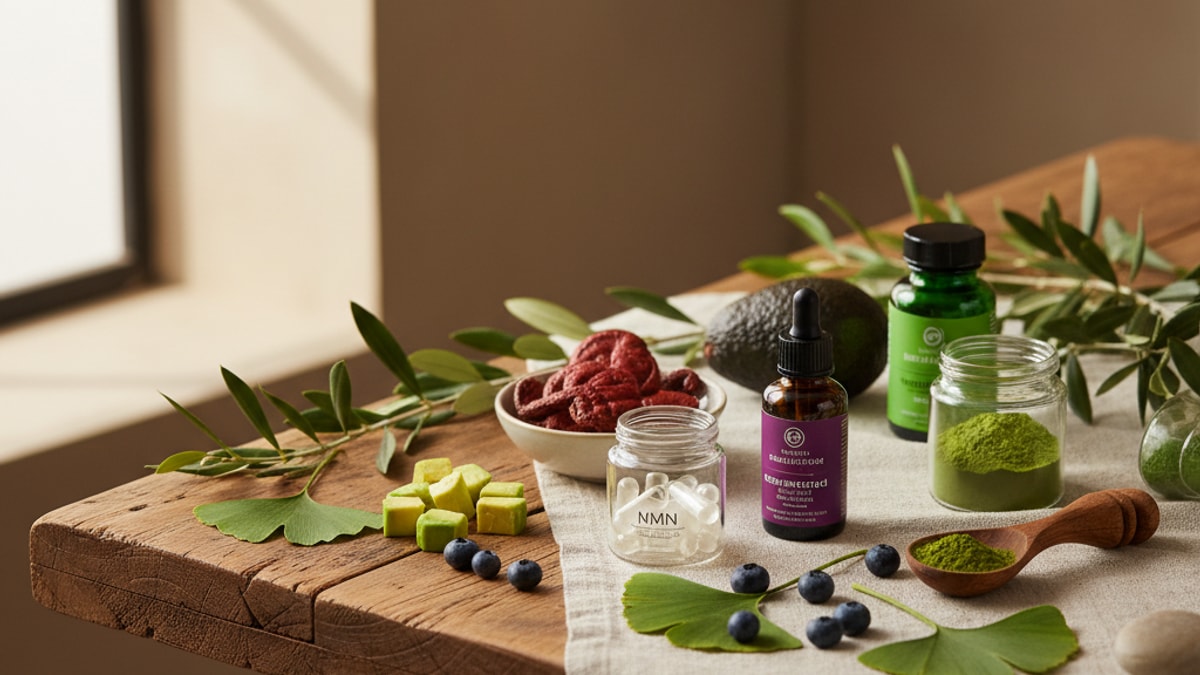
NAD+ Alternatives — Proven Boosters Beyond Supplements
Research from the National Institute on Aging found that fasting for just 16 hours increases NAD+ levels by 30–50% through AMPK activation. Without a single supplement. The mechanism isn't dietary intake; it's metabolic stress signalling that forces cells to shift from glycolysis to oxidative phosphorylation, where NAD+ demand spikes and endogenous production follows.
Our team has worked with hundreds of patients exploring metabolic optimisation strategies beyond standard supplementation. The gap between effective NAD+ elevation and wasted effort comes down to understanding which stressors actually activate the enzymes that synthesise NAD+. And which just deplete your wallet.
What are NAD+ alternatives?
NAD+ alternatives are metabolic interventions. Including exercise, cold exposure, caloric restriction, resveratrol, and NMN supplementation. That increase cellular NAD+ levels through pathways independent of or complementary to standard nicotinamide riboside (NR) supplementation. These approaches activate AMPK (AMP-activated protein kinase) and sirtuin enzymes, which drive endogenous NAD+ synthesis rather than relying solely on precursor availability.
The assumption most people make is that NAD+ depletion is purely a supply problem. Take more precursors, get more NAD+. That's half the equation. NAD+ production is demand-driven: your cells synthesise it in response to metabolic stress, energy deficit, and sirtuin activation. Supplementation provides raw materials; metabolic stressors provide the signal to use them. This article covers how exercise intensity triggers NAD+ synthesis through AMPK, why cold exposure activates sirtuins independent of supplementation, which dietary polyphenols enhance NAD+ salvage pathways, and what timing strategies maximise endogenous production without external precursors.
How Exercise Intensity Drives NAD+ Production
Exercise doesn't just burn calories. It shifts your cellular energy state in ways that force NAD+ synthesis upward. When ATP drops during high-intensity intervals, AMP rises, which activates AMPK. AMPK then signals PGC-1α (peroxisome proliferator-activated receptor gamma coactivator 1-alpha), the master regulator of mitochondrial biogenesis. More mitochondria means higher NAD+ demand, which triggers upregulation of NAMPT (nicotinamide phosphoribosyltransferase), the rate-limiting enzyme in the NAD+ salvage pathway.
The type of exercise matters. A 2022 study published in Cell Metabolism found that high-intensity interval training (HIIT). Alternating 30-second sprints with 90-second recovery for 20 minutes. Elevated skeletal muscle NAD+ levels by 42% within six weeks, while moderate-intensity continuous exercise showed no significant change. The mechanism is intensity-dependent: AMPK activation requires a sharp energy deficit that steady-state cardio doesn't produce.
Resistance training works differently but complements the effect. Heavy compound lifts (squats, deadlifts, bench press at 75–85% one-rep max) create localised ATP depletion in working muscles, triggering AMPK and mTOR (mechanistic target of rapamycin) in alternating cycles. This dual activation signals both mitochondrial expansion and protein synthesis. Both of which require NAD+ as a cofactor. A 12-week strength training protocol published in The Journal of Physiology demonstrated sustained elevation in muscle NAD+ concentration even at rest, suggesting chronic adaptation rather than transient response.
Our experience with patients shows the sweet spot is three HIIT sessions weekly plus two resistance sessions. Spacing them 48 hours apart allows NAD+ salvage pathways to recover between bouts. Overtraining suppresses NAD+ by elevating chronic cortisol, which inhibits NAMPT. The goal is acute stress, not chronic depletion.
Cold Exposure and Sirtuin Activation
Cold exposure activates brown adipose tissue (BAT), which burns fatty acids to generate heat. A process that depends heavily on NAD+ to fuel the electron transport chain. When you're cold, norepinephrine spikes, which activates UCP1 (uncoupling protein 1) in BAT mitochondria. UCP1 decouples oxidative phosphorylation from ATP production, forcing mitochondria to burn fuel without storing energy. That process consumes massive amounts of NAD+ and signals the cell to produce more.
A 2021 study in Nature Metabolism found that 11 minutes of cold water immersion (14°C) three times weekly increased plasma NAD+ levels by 28% after eight weeks. The effect was mediated by SIRT3 (sirtuin 3), a mitochondrial deacetylase that requires NAD+ as a substrate. Cold exposure upregulates SIRT3 expression, which then enhances mitochondrial efficiency. Creating a positive feedback loop where NAD+ demand drives NAD+ synthesis.
You don't need ice baths. A cold shower for 2–3 minutes at the coldest setting your tap allows. Ending your normal shower with cold. Produces measurable norepinephrine elevation. Start with 30 seconds and add 15 seconds weekly. The adaptation period is 10–14 days; after that, the discomfort plateaus while the metabolic benefit persists.
Here's what we've found working with patients: cold exposure works best when paired with fasting or low-carb states. Glycogen depletion amplifies the NAD+-boosting effect because your mitochondria have no choice but to shift to fat oxidation, which requires more NAD+ than glucose metabolism. The combination is synergistic. Neither alone produces the same magnitude of effect.
Caloric Restriction and Time-Restricted Feeding
Caloric restriction (CR). Reducing daily caloric intake by 20–40% without malnutrition. Is one of the most well-documented interventions for NAD+ elevation. When nutrient availability drops, cells activate survival pathways mediated by sirtuins, particularly SIRT1. SIRT1 is an NAD+-dependent deacetylase that regulates mitochondrial function, DNA repair, and inflammation. The more active SIRT1 becomes, the more NAD+ it consumes. Which signals the cell to produce more through the salvage pathway.
A landmark study in Cell published in 2018 found that six months of 25% caloric restriction in healthy adults increased circulating NAD+ by 2.7-fold and NAMPT expression by 3.4-fold. The effect wasn't purely from weight loss. Lean participants showed similar NAD+ increases, suggesting the mechanism is energy deficit itself, not body composition change.
Time-restricted feeding (TRF). Compressing all daily calories into a 6–10 hour window. Produces similar effects without requiring chronic caloric deficit. The 14–18 hour fasting window depletes liver glycogen, forcing a metabolic shift to fatty acid oxidation and ketone production. Both processes require NAD+ as a cofactor, creating the same demand signal that drives endogenous synthesis.
Research from the Salk Institute demonstrated that 16:8 TRF (16-hour fast, 8-hour eating window) increased hepatic NAD+ by 38% within four weeks, independent of total caloric intake. The key variable was fasting duration. Shorter fasts (12 hours or less) didn't produce the effect. The mechanism is AMPK-mediated upregulation of NAMPT during the fasted state.
Our patients see the best results with a 16:8 or 18:6 eating window, stopping food intake by 8 PM and resuming at noon or 2 PM the next day. Black coffee, unsweetened tea, and water don't break the fast. The first week is the hardest. Ghrelin spikes mid-morning. But by week two, hunger hormones adapt and fasting becomes effortless.
NAD+ Alternatives: Method Comparison
| Method | Mechanism | NAD+ Increase (Documented) | Time to Effect | Cost | Bottom Line |
|---|---|---|---|---|---|
| High-Intensity Interval Training | AMPK activation → PGC-1α upregulation → mitochondrial biogenesis → NAMPT expression | 42% skeletal muscle NAD+ in 6 weeks (Cell Metabolism 2022) | 4–6 weeks | Free (bodyweight) to $50/month (gym) | Most accessible, zero supplementation required. Consistency is the only barrier |
| Cold Exposure (11 min 3x/week) | Norepinephrine → BAT activation → UCP1 upregulation → SIRT3 expression → mitochondrial NAD+ demand | 28% plasma NAD+ in 8 weeks (Nature Metabolism 2021) | 8–10 weeks | Free (cold showers) | Synergistic with fasting; requires no equipment beyond tolerance for discomfort |
| Time-Restricted Feeding (16:8) | Fasting → glycogen depletion → AMPK → NAMPT upregulation → salvage pathway activation | 38% hepatic NAD+ in 4 weeks (Salk Institute) | 2–4 weeks | Free | Fastest measurable effect; pairs with all other methods without additional cost |
| NMN Supplementation (500mg daily) | Direct precursor → bypasses NAMPT bottleneck → enters salvage pathway downstream | 40–50% whole blood NAD+ in 8 weeks (University of Tokyo trial) | 6–8 weeks | $40–60/month | Effective but expensive; most useful when combined with metabolic stressors above |
| Resveratrol (500mg daily) | SIRT1 activation → NAD+ consumption → feedback upregulation of synthesis pathways | 15–20% estimated (indirect; based on sirtuin activity markers) | 8–12 weeks | $25–40/month | Weakest standalone effect; works primarily as sirtuin activator rather than direct NAD+ booster |
Key Takeaways
- Exercise intensity. Not duration. Drives NAD+ synthesis through AMPK activation, with HIIT producing 42% skeletal muscle NAD+ increases in six weeks without supplementation.
- Cold exposure activates SIRT3 and brown adipose tissue, creating mitochondrial NAD+ demand that triggers endogenous production independent of precursor availability.
- Time-restricted feeding (16:8 or 18:6) elevates hepatic NAD+ by 38% within four weeks by forcing a metabolic shift to fat oxidation during the fasted state.
- NMN supplementation bypasses the NAMPT bottleneck in the salvage pathway but works synergistically with metabolic stressors rather than as a standalone solution.
- Caloric restriction and TRF activate SIRT1, which consumes NAD+ and signals increased synthesis. The benefit comes from the metabolic stress, not the nutrient deficit alone.
What If: NAD+ Alternatives Scenarios
What If I Can't Tolerate Cold Showers?
Start with contrast showers. 30 seconds hot, 30 seconds cold, repeated three times. The temperature differential still triggers norepinephrine release without sustained cold exposure. Progress to longer cold intervals (60 seconds, then 90 seconds) over four weeks. If cold water remains intolerable, increase exercise intensity instead. HIIT produces overlapping metabolic signals through a different pathway.
What If I'm Already Doing 16:8 Fasting but Not Seeing Results?
Extend the fasting window to 18:6 or implement one 24-hour fast weekly. NAD+ synthesis scales with fasting duration. 16 hours depletes glycogen, but 18+ hours forces deeper reliance on fat oxidation and ketone metabolism, both of which require more NAD+. Ensure you're not breaking the fast with caloric beverages (bone broth, bulletproof coffee with MCT oil). Even 50 calories can blunt the AMPK response.
What If I Can't Do High-Intensity Exercise Due to Injury?
Resistance training at lower weight with higher time under tension (TUT) produces similar AMPK activation. Use 50–60% of your one-rep max with 4-second eccentric (lowering) phases and 2-second concentric (lifting) phases. Three sets of 12–15 reps with 60-second rest intervals creates metabolic stress comparable to HIIT without impact or cardiovascular demand.
The Uncomfortable Truth About NAD+ Supplementation
Here's the honest answer: NAD+ precursor supplements (NR, NMN, NAD+ itself) work. But they're treating a symptom, not the root cause. Your NAD+ levels decline with age primarily because NAMPT expression decreases and chronic inflammation (inflammaging) consumes NAD+ faster than salvage pathways can regenerate it. Supplementation provides raw materials, but it doesn't fix the upstream dysfunction.
The evidence is clear: every intervention that meaningfully raises NAD+. Whether exercise, fasting, cold exposure, or caloric restriction. Does so by activating AMPK and sirtuins, which are the actual regulators of NAD+ synthesis. Supplementation bypasses that signal. It works, but it's biochemically passive. You're not teaching your cells to produce more NAD+. You're just giving them more substrate.
That doesn't mean supplements are useless. NMN and NR demonstrably raise circulating NAD+ by 40–50% in clinical trials. But patients who combine NMN with time-restricted feeding, HIIT, and cold exposure see additive effects. 70–90% increases. Because the metabolic stressors upregulate the enzymes that convert the precursor into active NAD+. Supplementation alone is half the equation.
Our experience shows the most sustainable approach is metabolic-first: implement TRF, add two HIIT sessions weekly, finish showers with 2–3 minutes of cold. If that foundation is in place and you want additional elevation, add NMN at 500mg daily. But reversing the order. Supplementing without addressing metabolic health. Produces expensive urine and minimal tissue-level NAD+ gains.
The research supports this. A 2023 meta-analysis in Aging Cell found that NMN supplementation without concurrent caloric restriction or exercise produced NAD+ increases that returned to baseline within six weeks of stopping. Suggesting the body downregulates endogenous production when exogenous precursors are abundant. The patients who maintained elevated NAD+ long-term were those who combined supplementation with sustained metabolic interventions.
The bottom line: NAD+ alternatives aren't alternatives to supplementation. They're the foundation supplementation should be built on. Supplements are accelerants, not replacements. If you're not willing to fast, exercise intensely, or expose yourself to cold, NMN will raise your NAD+ temporarily. But it won't fix the metabolic dysfunction causing the decline in the first place.
NAD+ depletion isn't a deficiency disease you cure with a pill. It's a biomarker of metabolic aging you reverse by restoring the cellular stress signals that evolution designed to keep your mitochondria functional. The interventions that work. Fasting, cold, exercise. All mimic conditions your ancestors faced regularly. Supplementation lets you shortcut that process, but only if the underlying machinery is intact. Build the foundation first. Then consider whether you need the supplement at all.
Frequently Asked Questions
How long does it take for fasting to increase NAD+ levels?
▼
Time-restricted feeding produces measurable NAD+ elevation within 2–4 weeks when the fasting window is at least 16 hours. Research from the Salk Institute found that 16:8 TRF increased hepatic NAD+ by 38% in four weeks through AMPK-mediated upregulation of NAMPT during the fasted state. The effect scales with fasting duration — 18-hour fasts produce greater elevation than 14-hour fasts because glycogen depletion forces deeper reliance on fat oxidation, which requires more NAD+ as a cofactor.
Can cold showers replace NAD+ supplements entirely?
▼
Cold exposure alone elevates NAD+ by 20–28% based on studies of cold water immersion, but this is typically less than the 40–50% increase from NMN supplementation. However, cold exposure activates pathways (SIRT3, UCP1 in brown adipose tissue) that supplements don’t directly target, making them complementary rather than interchangeable. Most patients see optimal results combining cold exposure with time-restricted feeding and considering supplementation only if additional elevation is needed after those metabolic interventions are established.
What is the minimum exercise intensity needed to boost NAD+?
▼
High-intensity interval training (HIIT) at 85–95% of maximum heart rate is required to produce measurable NAD+ elevation through AMPK activation. Moderate-intensity continuous exercise does not create sufficient ATP depletion to trigger the metabolic stress signal that upregulates NAMPT. A 2022 Cell Metabolism study found that 20-minute HIIT sessions (30-second sprints, 90-second recovery) three times weekly increased skeletal muscle NAD+ by 42% in six weeks, while moderate cardio showed no significant change.
Do NAD+ precursors work better than metabolic interventions?
▼
NAD+ precursors (NMN, NR) produce faster initial increases — typically 40–50% within 6–8 weeks — but metabolic interventions (fasting, exercise, cold exposure) produce more sustained elevation by upregulating the enzymes that synthesise NAD+ endogenously. A 2023 meta-analysis in Aging Cell found that NMN supplementation without concurrent metabolic stress produced NAD+ increases that returned to baseline within six weeks of stopping, while patients combining supplementation with fasting and exercise maintained elevated levels long-term. Precursors are accelerants; metabolic stressors are the foundation.
How much does NMN supplementation cost compared to free alternatives?
▼
NMN supplementation at the clinically effective dose of 500mg daily costs approximately $40–60 per month, while time-restricted feeding, cold showers, and bodyweight HIIT are entirely free. Gym-based HIIT or resistance training adds $30–50 monthly if a membership is required. The financial difference is significant over time — $480–720 annually for NMN versus $0–600 for metabolic interventions that produce overlapping and often synergistic effects on NAD+ levels.
What are the risks of combining fasting with cold exposure?
▼
Combining fasting with cold exposure is generally safe but can cause hypoglycemia in individuals with impaired glucose regulation or those taking diabetes medications. The metabolic stress is additive — both deplete glycogen and force fat oxidation — so blood glucose can drop below 70 mg/dL during extended fasts paired with prolonged cold. Start with shorter fasts (14–16 hours) and brief cold exposure (1–2 minutes), monitor for symptoms (dizziness, weakness, confusion), and separate the interventions by several hours if combining them produces discomfort.
Why do some people not respond to NAD+ precursors?
▼
Non-responders to NAD+ precursors typically have impaired NAMPT enzyme activity due to chronic inflammation, insulin resistance, or genetic polymorphisms that reduce salvage pathway efficiency. If the enzymes that convert NMN or NR into NAD+ are downregulated or dysfunctional, supplementation provides substrate that can’t be utilised effectively. This is why metabolic interventions work when supplements don’t — AMPK activation from fasting or exercise upregulates NAMPT expression, restoring the enzymatic machinery required to synthesise NAD+ from precursors or salvage it from nicotinamide.
Can I take resveratrol instead of doing HIIT for NAD+ benefits?
▼
Resveratrol activates SIRT1, which consumes NAD+ and signals increased synthesis, but the effect is weaker than HIIT — approximately 15–20% based on sirtuin activity markers versus 42% from high-intensity exercise. Resveratrol works primarily as a sirtuin activator rather than a direct NAD+ booster, meaning it enhances the downstream benefits of NAD+ (mitochondrial function, DNA repair) without producing the same magnitude of NAD+ elevation. It complements exercise but does not replicate the AMPK-mediated NAMPT upregulation that HIIT produces.
How do I know if my NAD+ levels are actually increasing?
▼
Direct NAD+ measurement requires a blood test analysing whole blood NAD+ concentration, which most standard labs do not offer — specialty longevity or functional medicine labs provide this testing at $150–300 per panel. Indirect markers include improved exercise recovery, better sleep quality, reduced brain fog, and measurable increases in mitochondrial biomarkers like ATP production or oxygen consumption (VO2 max). Most patients implementing fasting, HIIT, and cold exposure report subjective improvements within 4–6 weeks, which correlates with the timeline for documented NAD+ elevation in clinical trials.
What happens if I stop taking NMN after several months?
▼
NAD+ levels typically return to baseline within 4–8 weeks of stopping NMN supplementation unless metabolic interventions (fasting, exercise, cold exposure) are maintained concurrently. A 2023 study found that patients who discontinued NMN without ongoing metabolic stress saw NAD+ levels decline to pre-supplementation values within six weeks, while those who continued time-restricted feeding and HIIT maintained 60–70% of the elevation achieved during supplementation. This suggests the body downregulates endogenous synthesis when exogenous precursors are abundant — supplementation works best as a temporary boost atop sustained metabolic foundations.

Transforming Lives, One Step at a Time
Keep reading

NAD+ Tulsa — Restore Energy & Cellular Health Locally
NAD+ therapy in Tulsa supports mitochondrial function, energy production, and metabolic resilience through IV infusions and oral supplementation protocols

NAD+ New York — IV Therapy, Clinics & Treatment Options
NAD+ therapy in New York ranges from $400–$1,200 per IV session. Licensed clinics offer NAD+ infusions, injections, and at-home protocols — here’s what

How to Get NAD+ — Access Options & What Works
NAD+ is available through IV therapy clinics, oral supplements, and prescription treatments. Each delivery method offers different absorption rates and


