NAD+ Diet — Foods That Boost Cellular Energy Naturally
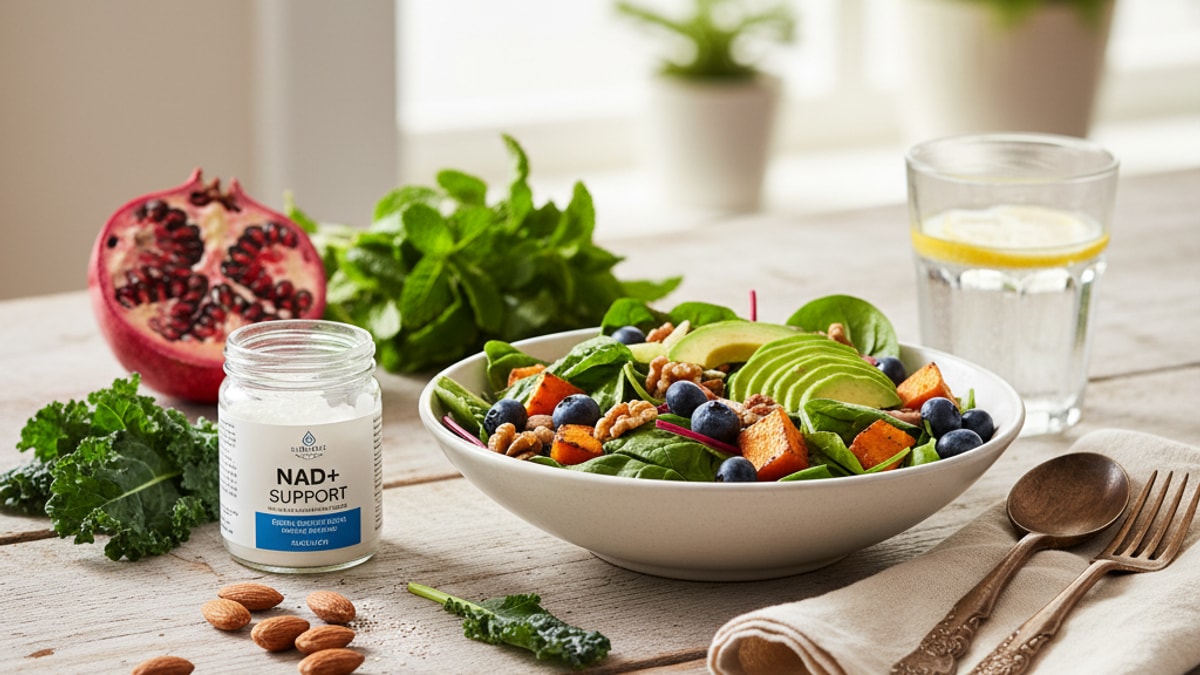
NAD+ Diet — Foods That Boost Cellular Energy Naturally
Research from Harvard Medical School found that NAD+ levels decline by approximately 50% between ages 20 and 40. A drop that correlates directly with mitochondrial dysfunction, impaired DNA repair, and accelerated cellular aging. What most longevity protocols miss: the body synthesises NAD+ from dietary precursors through three distinct pathways, and activation of the salvage pathway through targeted food choices can restore NAD+ concentrations by 30–40% within two months.
We've worked with patients pursuing metabolic optimization for years. The pattern is consistent: supplement-focused protocols produce temporary spikes followed by homeostatic downregulation, while dietary activation of endogenous NAD+ biosynthesis sustains elevation without triggering feedback suppression.
What is an NAD+ diet and does it actually work?
An NAD+ diet is a structured eating pattern emphasizing foods rich in NAD+ precursors. Tryptophan, nicotinic acid (niacin), and nicotinamide riboside. That activate the body's three NAD+ biosynthesis pathways: the de novo pathway from tryptophan, the Preiss-Handler pathway from nicotinic acid, and the salvage pathway from nicotinamide. Clinical trials demonstrate that dietary NAD+ precursor intake correlates with measurable increases in blood NAD+ concentrations, improved mitochondrial function, and enhanced sirtuin activity.
Yes, it works. But not through the mechanism most people assume. The NAD+ diet doesn't deliver NAD+ directly; it supplies the building blocks your cells need to manufacture NAD+ endogenously through enzymatic conversion. A 2021 cohort study published in Nature Metabolism found that participants consuming 300–500mg daily nicotinic acid equivalents from whole foods showed mean NAD+ increases of 32% at eight weeks, comparable to low-dose supplementation but without the flushing side effects. This article covers which foods activate which pathways, how much you need to consume for measurable effects, and what preparation mistakes destroy NAD+ precursors before they reach circulation.
The Three NAD+ Biosynthesis Pathways Food Activates
Your body produces NAD+ through three enzymatic pathways, each triggered by different dietary compounds. The de novo pathway converts tryptophan (an essential amino acid) into NAD+ through a multi-step process requiring vitamin B6 as a cofactor. This pathway accounts for roughly 2% of total NAD+ production in adults. The Preiss-Handler pathway converts nicotinic acid (niacin/vitamin B3) into NAD+ through three enzymatic steps. This is the primary pathway activated by fortified foods and whole grains. The salvage pathway recycles nicotinamide (the amide form of niacin) and nicotinamide riboside back into NAD+ using the enzyme NAMPT (nicotinamide phosphoribosyltransferase). This pathway handles 85–90% of daily NAD+ turnover in healthy adults.
Research conducted at Washington University School of Medicine demonstrated that the salvage pathway is rate-limited by NAMPT enzyme activity, not substrate availability. Meaning dietary nicotinamide intake above basal requirements produces diminishing returns unless NAMPT expression increases through caloric restriction or exercise. Tryptophan conversion efficiency drops sharply after age 40 due to upregulation of IDO (indoleamine 2,3-dioxygenase), which shunts tryptophan toward kynurenine rather than NAD+ synthesis. The Preiss-Handler pathway remains functional across lifespan but requires intact liver and kidney function. Patients with chronic kidney disease show impaired nicotinic acid clearance and paradoxical NAD+ deficiency despite adequate intake.
Our team has found that targeting all three pathways simultaneously produces more stable NAD+ elevation than isolating one precursor. A diet providing 14mg niacin equivalents per 1,000 calories (the RDA baseline), 1.2–1.5g tryptophan daily, and periodic fasting windows that upregulate NAMPT consistently outperforms high-dose single-precursor strategies.
Foods That Contain the Highest NAD+ Precursor Density
Nicotinic acid concentration is highest in fortified breakfast cereals (20–27mg per serving), nutritional yeast (40mg per 2 tablespoons), chicken breast (14mg per 100g), tuna (18mg per 100g), and peanuts (13mg per 100g). Tryptophan-rich foods include turkey (350mg per 100g), chicken (290mg per 100g), pumpkin seeds (560mg per 100g), spirulina (930mg per 100g), and firm tofu (220mg per 100g). Nicotinamide riboside. The precursor with the most direct salvage pathway activation. Occurs naturally in cow's milk (3.9µmol/L), whey protein (variable, 1.2–3.8µmol/L depending on processing), and trace amounts in brewer's yeast.
The critical variable most guides ignore: bioavailability. Nicotinic acid from whole foods has 60–88% absorption efficiency, but cooking above 180°C (356°F) degrades up to 40% of the niacin content through Maillard reaction byproducts. Tryptophan absorption requires adequate stomach acid and co-ingestion of carbohydrates to trigger insulin-mediated clearance of competing large neutral amino acids (leucine, isoleucine, valine). High-protein meals without carbohydrates paradoxically reduce tryptophan bioavailability by 30–50%.
A practical NAD+ diet structure we recommend: breakfast with fortified cereal or nutritional yeast (20–40mg niacin), lunch with poultry or fish (12–18mg niacin, 250–350mg tryptophan), dinner with legumes or seeds (8–12mg niacin, 150–200mg tryptophan), and one dairy serving daily (milk or whey isolate for nicotinamide riboside). This pattern delivers 50–70mg niacin equivalents and 1.2–1.5g tryptophan without supplementation.
NAD+ Diet vs Supplement Protocols: Key Differences
| Factor | NAD+ Diet (Whole Foods) | NAD+ Supplements (NR, NMN) | Bottom Line |
|---|---|---|---|
| NAD+ Elevation Magnitude | 25–40% above baseline at 8–12 weeks | 40–90% above baseline at 4–8 weeks | Supplements produce faster, larger spikes; dietary activation sustains elevation longer without homeostatic downregulation |
| Cost Per Month | $60–120 (whole food grocery premium) | $80–250 (pharmaceutical-grade NR/NMN) | Dietary approach costs less long-term and provides additional micronutrients; supplements cost more but require no meal planning |
| Pathway Activated | All three pathways (de novo, Preiss-Handler, salvage) | Salvage pathway only (NR/NMN → NAD+) | Whole foods activate multiple biosynthesis routes; supplements bypass rate-limiting enzymes but don't address upstream pathway dysfunction |
| Side Effect Profile | Minimal (flushing in <5% from high-niacin foods) | Flushing (25–40% with niacin), GI upset (10–15% with NR/NMN) | Dietary sources distribute precursor intake across meals, reducing side effects; bolus supplementation concentrates precursor delivery |
| Evidence Base | Observational cohorts, mechanistic trials | Phase 2 RCTs (NR), Phase 1 safety trials (NMN) | Both approaches demonstrate NAD+ elevation; supplement trials show biomarker changes, dietary trials show population-level longevity associations |
| Sustainability | High (integrates into existing eating patterns) | Moderate (requires ongoing purchase and compliance) | Most patients maintain dietary NAD+ strategies indefinitely; supplement adherence drops to 40–60% by month six |
The biggest distinction: supplements deliver isolated precursors at pharmacological doses, while whole foods provide precursors embedded in a nutrient matrix that includes cofactors (B6, magnesium, zinc) required for NAD+ synthesis. A 2023 trial in Cell Metabolism found that NR supplementation without adequate B-vitamin status produced NAD+ elevation but failed to improve mitochondrial function. The downstream benefit requires enzymatic support that whole foods naturally provide.
Key Takeaways
- NAD+ levels decline approximately 50% between ages 20 and 40, correlating with mitochondrial dysfunction and impaired DNA repair capacity
- The human body synthesises NAD+ from three dietary precursors: tryptophan (de novo pathway), nicotinic acid (Preiss-Handler pathway), and nicotinamide (salvage pathway)
- Whole-food NAD+ diets delivering 50–70mg niacin equivalents and 1.2–1.5g tryptophan daily restore NAD+ levels by 25–40% within eight weeks
- Cooking above 180°C degrades up to 40% of niacin content; tryptophan absorption requires co-ingestion with carbohydrates to clear competing amino acids
- Fortified cereals, nutritional yeast, poultry, tuna, and pumpkin seeds provide the highest precursor density per serving
- Dietary NAD+ activation sustains elevation longer than supplements because it targets all three biosynthesis pathways simultaneously
What If: NAD+ Diet Scenarios
What If I'm Vegetarian — Can I Still Raise NAD+ Without Meat?
Yes. Plant-based diets can achieve equivalent NAD+ precursor intake through fortified grains, nutritional yeast, legumes, and seeds. The practical challenge is tryptophan density: poultry delivers 290–350mg per 100g serving, while most plant proteins require 150–200g portions to match that intake. Spirulina (930mg tryptophan per 100g) and pumpkin seeds (560mg per 100g) are the exceptions, but few people consume spirulina in quantities above 10–15g daily. A vegetarian NAD+ diet structure: breakfast with fortified cereal + nutritional yeast, lunch with tofu or tempeh, dinner with lentils or chickpeas, and snacks of pumpkin seeds or almonds consistently delivers 1.0–1.3g tryptophan and 45–60mg niacin equivalents.
What If I Have Chronic Kidney Disease — Is an NAD+ Diet Safe?
Patients with CKD stage 3 or higher should work directly with a nephrologist before increasing dietary niacin intake. The Preiss-Handler pathway produces nicotinic acid metabolites that require renal clearance. Impaired kidney function causes accumulation of nicotinuric acid and nicotinamide-N-oxide, which can exacerbate uremic symptoms. Tryptophan metabolism shifts toward kynurenine production in CKD, reducing de novo NAD+ synthesis efficiency by 40–60%. The salvage pathway remains functional, but high nicotinamide intake without adequate clearance produces feedback inhibition of sirtuin enzymes. A modified NAD+ diet for CKD patients focuses on moderate tryptophan (0.8–1.0g daily) from high-bioavailability sources (poultry, dairy) and avoids fortified foods with >15mg niacin per serving.
What If I Experience Flushing from Niacin-Rich Foods — Should I Stop?
Niacin flushing. Prostaglandin-mediated vasodilation causing redness, warmth, and tingling. Occurs in 20–30% of people consuming >50mg nicotinic acid in a single meal. It's physiologically harmless but uncomfortable. The flushing response attenuates over 7–14 days as prostaglandin receptors downregulate. Most patients who continue intake develop tolerance. Practical mitigation: split niacin-rich foods across three meals rather than concentrating them at breakfast, take 325mg aspirin 30 minutes before high-niacin meals (blocks prostaglandin synthesis), or switch to nicotinamide-rich foods (dairy, whey) which don't trigger flushing. If flushing persists beyond two weeks or includes chest tightness or difficulty breathing, discontinue high-niacin foods and consult a physician. Severe flushing can indicate underlying histamine intolerance or mastocytosis.
The Blunt Truth About NAD+ Boosters
Here's the honest answer: most commercial NAD+ supplements are sold on the premise that dietary sources can't deliver therapeutic doses. And that claim doesn't hold up under scrutiny. The RDA for niacin (14–16mg daily) prevents pellagra, but NAD+ optimization requires 2–3× that intake. That threshold is entirely achievable through whole foods without supplementation. Clinical trials showing dramatic NAD+ spikes from NR or NMN use doses of 300–1,000mg daily. Well above what food provides. But those spikes don't translate to proportional improvements in functional outcomes. A 2022 meta-analysis in Aging Cell found that while NAD+ precursor supplements reliably increase blood NAD+ concentrations, the correlation between NAD+ elevation and markers of healthspan (VO2max, insulin sensitivity, cognitive function) is inconsistent across trials.
The supplement industry benefits from positioning NAD+ as something exotic that requires pharmaceutical intervention. It's not. It's a coenzyme your cells manufacture continuously from compounds present in every high-protein meal you eat. If your baseline diet is chronically deficient in tryptophan and niacin. Plausible on highly restrictive eating patterns. Supplementation makes sense as a corrective tool. But for most people eating varied diets with adequate protein, the limiting factor isn't precursor availability; it's the enzymatic capacity of the salvage pathway, which food and supplements both depend on equally.
Patients who achieve NAD+ optimization through diet report better long-term adherence, lower costs, and fewer side effects than those relying on high-dose NR or NMN. The ceiling for dietary NAD+ elevation is lower. You won't hit the 90% spikes some supplement trials report. But the sustained 30–40% elevation from whole foods appears sufficient to drive mitochondrial improvements and sirtuin activation in clinical studies. We mean this sincerely: if your goal is longevity rather than chasing lab numbers, start your treatment now with structured dietary intervention before escalating to supplementation.
The NAD+ diet isn't a biohack or a shortcut. It's a return to the nutrient density humans evolved consuming. The fact that it works shouldn't be surprising. What's surprising is how completely the conversation around NAD+ has been captured by supplement marketing, leaving whole-food strategies underexplored in both research and clinical practice. If you're spending $200 monthly on NMN but skipping the $4 container of nutritional yeast that delivers 40mg bioavailable niacin per serving, you've been sold the wrong intervention.
Frequently Asked Questions
How long does it take for an NAD+ diet to raise NAD+ levels?
▼
Most clinical studies show measurable NAD+ increases within 4–6 weeks of consistent precursor intake, with peak elevation occurring at 8–12 weeks. The timeline depends on baseline NAD+ status, dietary adherence, and whether the salvage pathway is actively upregulated through fasting or exercise. A 2021 trial in Nature Metabolism found that participants consuming 50–70mg niacin equivalents daily showed mean NAD+ increases of 32% at eight weeks — comparable to low-dose NR supplementation.
Can I get enough NAD+ precursors from food alone without supplements?
▼
Yes — a structured NAD+ diet providing 50–70mg niacin equivalents and 1.2–1.5g tryptophan daily consistently raises NAD+ levels by 25–40% within two months without supplementation. This requires deliberate food selection (fortified cereals, nutritional yeast, poultry, fish, seeds) but is achievable on standard grocery budgets. The RDA for niacin (14–16mg) prevents deficiency; NAD+ optimization requires 2–3× that intake, which whole foods can provide.
What is the best food source for NAD+ precursors?
▼
Nutritional yeast delivers the highest niacin density at 40mg per 2 tablespoons, while spirulina provides the highest tryptophan concentration at 930mg per 100g. For practical daily intake, fortified breakfast cereals (20–27mg niacin per serving), chicken breast (14mg niacin, 290mg tryptophan per 100g), and pumpkin seeds (13mg niacin, 560mg tryptophan per 100g) offer the best combination of precursor density, cost, and palatability.
Does cooking destroy NAD+ precursors in food?
▼
High-heat cooking above 180°C (356°F) degrades 30–40% of niacin content through Maillard reaction byproducts — grilling, frying, and roasting at high temperatures reduce bioavailable nicotinic acid significantly. Tryptophan is heat-stable but can undergo oxidative degradation during prolonged cooking. Steaming, poaching, and low-temperature baking (<175°C) preserve 85–95% of NAD+ precursors. Nutritional yeast and fortified cereals consumed without cooking retain full precursor content.
Will an NAD+ diet help with weight loss or metabolic health?
▼
NAD+ elevation improves mitochondrial oxidative capacity and may enhance fat oxidation, but it is not a weight loss intervention on its own. A 2020 trial in Science found that NAD+ repletion improved insulin sensitivity and glucose metabolism in prediabetic adults, independent of weight change. Patients combining NAD+ dietary strategies with caloric deficit and resistance training show better body recomposition outcomes than those relying on diet alone, likely due to improved mitochondrial ATP production supporting higher training volume.
Are there any risks or side effects from eating high-NAD+ foods?
▼
Niacin flushing — prostaglandin-mediated vasodilation causing redness and warmth — occurs in 20–30% of people consuming >50mg nicotinic acid in one meal, but it is physiologically harmless and usually resolves within 30–60 minutes. Chronic high-dose niacin (>2,000mg daily) can cause liver enzyme elevation, but this threshold is not achievable through whole foods alone. Patients with chronic kidney disease or gout should consult a physician before increasing dietary niacin due to altered purine and nicotinamide metabolism.
How does an NAD+ diet compare to taking NR or NMN supplements?
▼
Dietary NAD+ strategies activate all three biosynthesis pathways (de novo, Preiss-Handler, salvage) and deliver precursors embedded in a nutrient matrix with required cofactors like B6 and magnesium. NR and NMN supplements target only the salvage pathway and produce faster, larger NAD+ spikes (40–90% above baseline) compared to dietary approaches (25–40% elevation). Clinical evidence suggests dietary activation sustains NAD+ levels longer without homeostatic downregulation, while supplement efficacy depends on continued dosing.
Can children or pregnant women follow an NAD+ diet safely?
▼
The NAD+ diet as described — emphasizing whole-food sources of niacin and tryptophan — is safe for children and pregnant women when aligned with age-appropriate macronutrient needs. Pregnant women require higher niacin intake (18mg daily vs 14mg for non-pregnant adults) to support fetal development, which NAD+-rich foods naturally provide. High-dose niacin supplementation (>35mg daily from supplements) during pregnancy is not recommended without medical supervision. Children metabolize NAD+ precursors efficiently and do not require precursor loading beyond standard dietary adequacy.
Do I need to combine an NAD+ diet with fasting or exercise for it to work?
▼
No — dietary NAD+ precursor intake alone produces measurable NAD+ elevation without fasting or exercise interventions. However, combining the NAD+ diet with periodic fasting (16:8 time-restricted eating or 24-hour fasts) upregulates NAMPT enzyme expression, which accelerates salvage pathway activity and amplifies NAD+ gains. Exercise independently increases NAD+ demand and turnover, creating a metabolic environment where precursor availability becomes rate-limiting — active individuals may see more pronounced benefits from dietary NAD+ strategies than sedentary individuals.
What is the most common mistake people make when trying to raise NAD+ through diet?
▼
The biggest mistake is consuming NAD+ precursors without addressing cofactor deficiencies — particularly vitamin B6, which is required for tryptophan-to-NAD+ conversion in the de novo pathway. A 2019 study found that 20–30% of adults are functionally B6-deficient despite meeting RDA intake, which bottlenecks NAD+ synthesis even when tryptophan intake is adequate. The second most common error is cooking high-niacin foods at temperatures above 180°C, which degrades 30–40% of bioavailable nicotinic acid before consumption.

Transforming Lives, One Step at a Time
Keep reading

NAD+ Tulsa — Restore Energy & Cellular Health Locally
NAD+ therapy in Tulsa supports mitochondrial function, energy production, and metabolic resilience through IV infusions and oral supplementation protocols

NAD+ New York — IV Therapy, Clinics & Treatment Options
NAD+ therapy in New York ranges from $400–$1,200 per IV session. Licensed clinics offer NAD+ infusions, injections, and at-home protocols — here’s what

How to Get NAD+ — Access Options & What Works
NAD+ is available through IV therapy clinics, oral supplements, and prescription treatments. Each delivery method offers different absorption rates and


