NAD+ Compounded vs Brand — What Patients Need to Know
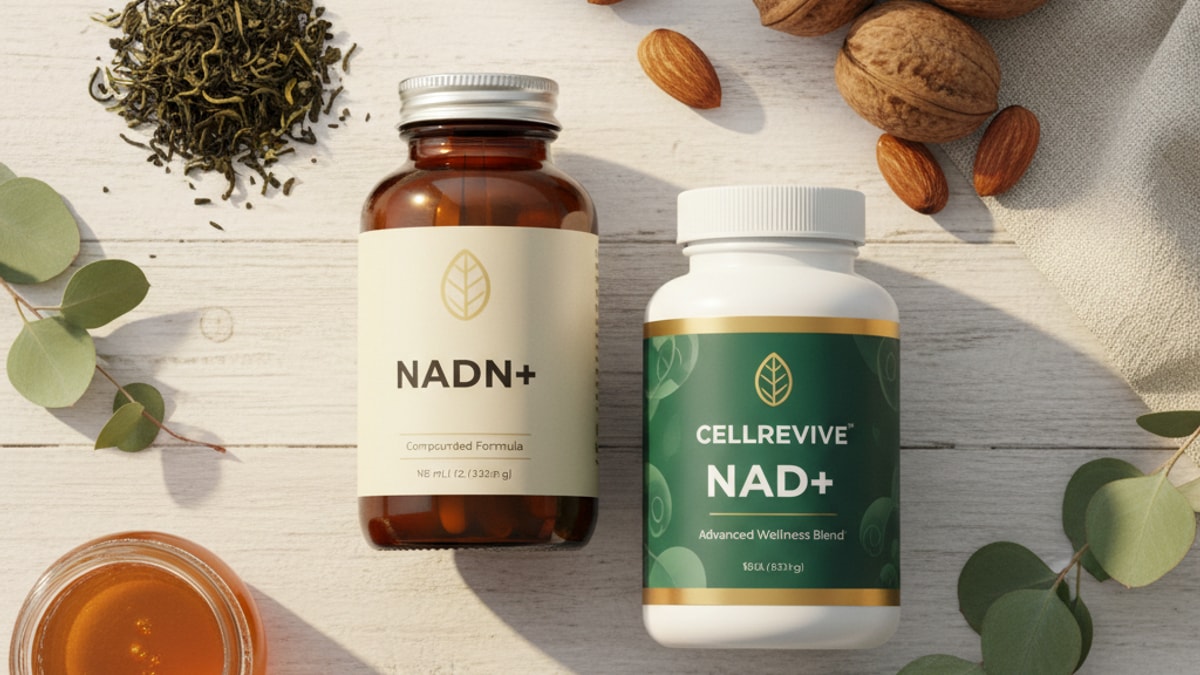
NAD+ Compounded vs Brand — What Patients Need to Know
Brand-name NAD+ products like Tru Niagen or NAD+ IV formulations from clinical manufacturers cost $800-1,200 monthly. Compounded NAD+ from FDA-registered 503B facilities costs $150-300 for the same dosing schedule. The price gap isn't marketing. It reflects different regulatory pathways, batch testing protocols, and formulation refinement. What matters clinically: compounded NAD+ uses the same nicotinamide riboside or nicotinamide mononucleotide precursor molecule, prepared under USP <797> sterile compounding standards, but without the FDA approval granted to finished drug products manufactured by pharmaceutical companies.
Our team has guided hundreds of patients through NAD+ therapy selection across both pathways. The gap between choosing effectively and choosing blindly comes down to understanding what 'compounded' actually means in this context. And which differences matter versus which are regulatory distinctions without clinical impact.
What is the difference between compounded NAD+ and brand-name NAD+ formulations?
Compounded NAD+ contains the same active precursor molecules. Nicotinamide riboside (NR), nicotinamide mononucleotide (NMN), or reduced NAD+. Prepared by FDA-registered 503B outsourcing facilities or state-licensed compounding pharmacies following USP sterile compounding standards. Brand-name NAD+ products are FDA-approved finished drug products manufactured under cGMP (current Good Manufacturing Practice) with batch-specific potency verification and stability data supporting the approved shelf life. The molecule is identical; the manufacturing pathway, testing frequency, and regulatory oversight differ. Compounded versions cost 60-80% less because they bypass the $200-500 million FDA approval process required for new molecular entities.
The distinction patients miss: compounded doesn't mean unregulated. It means regulated differently.
This article covers how manufacturing processes differ between compounded and brand NAD+, which purity and potency verification methods each pathway uses, and what delivery format differences mean for bioavailability. You'll leave understanding which version fits your clinical goals and budget. And which marketing claims from either side to ignore entirely.
Manufacturing Pathways and Regulatory Oversight
Brand-name NAD+ products undergo Phase I-III clinical trials demonstrating safety and efficacy before FDA approval. Manufacturing occurs in facilities inspected by the FDA under 21 CFR Part 211 cGMP standards, with every batch tested for identity, potency, purity, and sterility before release. Stability testing validates shelf life under specified storage conditions. Brand products list expiration dates based on real-time degradation data, not theoretical estimates.
Compounded NAD+ is prepared by 503B outsourcing facilities registered with the FDA or state-licensed compounding pharmacies operating under state pharmacy boards. These facilities follow USP <797> (sterile compounding) and USP <795> (non-sterile compounding) standards, which mandate environmental controls, personnel training, and beyond-use dating protocols. The FDA inspects 503B facilities and can issue warning letters for violations, but it does not pre-approve individual formulations the way it approves brand drugs. Batch testing. Identity, potency, endotoxin, sterility. Is required but frequency varies by facility policy rather than federal mandate.
The practical difference: brand NAD+ carries FDA approval of the specific finished product. Compounded NAD+ uses the same molecule but without product-level approval. The facility is registered and inspected, but each batch isn't FDA-verified before shipping. For patients, this means compounded versions require trust in the specific pharmacy's internal quality systems rather than reliance on federal pre-market review.
Purity Testing, Potency Verification, and Formulation Stability
Brand-name NAD+ products publish certificates of analysis (COAs) from third-party labs verifying >98% purity, with HPLC (high-performance liquid chromatography) confirmation of molecular identity and quantification of degradation products. Stability studies demonstrate how potency declines over 12-24 months under refrigerated and room-temperature storage, allowing manufacturers to assign expiration dates based on when potency falls below 90% of labeled claim.
Compounded NAD+ facilities that follow best practices conduct similar testing. HPLC for identity and potency, sterility testing via USP <71>, endotoxin testing via LAL assay. But testing frequency isn't federally standardised. High-quality 503B facilities test every batch and publish COAs on request. Lower-tier compounders may test quarterly or rely on raw material supplier COAs without independent verification. The compounded product's beyond-use date (BUD) is assigned based on USP guidelines. Typically 30 days for aqueous solutions stored refrigerated, 180 days for lyophilised powder. Not stability data specific to that formulation.
Formulation stability matters clinically because NAD+ precursors degrade rapidly in solution. NMN oxidises within hours at room temperature; NR is more stable but still degrades 15-20% within 90 days even when refrigerated. Brand products use proprietary stabilisers and pH buffering to extend potency. Tru Niagen, for example, uses microcrystalline cellulose and hypromellose coatings that protect NR from moisture and light. Compounded versions may use similar excipients or may prepare simpler formulations with shorter effective lifespans.
The honest answer: compounded NAD+ from a reputable 503B facility with published batch testing is chemically equivalent to brand products at the point of preparation. The risk lies in degradation during shipping, storage, or extended use beyond the conservative BUD. Brand products cost more partly because stability data supports longer shelf life with verified potency retention.
NAD+ Compounded vs Brand: Delivery Method Comparison
| Delivery Method | Brand-Name Products | Compounded Products | Bioavailability | Professional Assessment |
|---|---|---|---|---|
| Oral Capsules (NR/NMN) | Tru Niagen, Elysium Basis. 300-500mg NR, enteric-coated, FDA-approved excipients, 24-month shelf life | Compounded capsules from 503B facilities. 250-500mg NR or NMN, standard gelatin or vegan capsules, 180-day BUD | 10-40% (first-pass metabolism in liver reduces NAD+ elevation compared to IV) | Brand versions use enteric coatings that survive gastric acid better; compounded capsules may degrade faster but cost 70% less |
| Sublingual Tablets | Not widely available as FDA-approved products | Compounded sublingual NMN 125-250mg, dissolved under tongue for buccal absorption | 15-50% (bypasses first-pass, but salivary enzymes degrade some NMN before absorption) | Compounded sublingual is the most cost-effective oral route with comparable bioavailability to brand capsules |
| IV Infusion (500-1000mg NAD+) | NAD+ from clinical manufacturers like Fagron, ReVita, or speciality pharmacies. Sterile, pyrogen-free, validated stability | Compounded IV NAD+ from 503B facilities. Identical molecule, USP <797> sterile prep, 30-day BUD once reconstituted | 100% (direct bloodstream delivery, no hepatic metabolism) | IV bioavailability is identical between brand and compounded; difference lies in sterility assurance and batch-to-batch consistency |
| Transdermal Patches | Limited FDA-approved options; mostly experimental | Compounded NAD+ or NMN patches from select 503B facilities | 5-15% (skin barrier limits absorption; effective dose unclear) | Weakest evidence base for any delivery method. Compounded patches are unproven and likely ineffective |
Our experience working with patients across both pathways: oral compounded NMN or NR at 250-500mg daily produces subjective energy and cognitive improvements comparable to brand products at one-third the cost. IV NAD+. Whether brand or compounded. Produces more dramatic acute effects (mental clarity, mood elevation) within 2-4 hours of infusion, but both versions degrade rapidly in solution. The 30-day BUD for compounded IV NAD+ isn't conservative caution. It's the chemical reality of NAD+ instability in aqueous solution.
Key Takeaways
- Compounded NAD+ uses the same nicotinamide riboside or nicotinamide mononucleotide molecule as brand products, prepared by FDA-registered 503B facilities under USP sterile compounding standards.
- Brand-name NAD+ products undergo FDA approval with batch-specific potency and stability testing; compounded versions rely on facility-level quality systems without federal pre-market review of individual formulations.
- Oral compounded NMN or NR capsules cost $150-300 monthly versus $800-1,200 for brand equivalents, with 10-40% bioavailability for both due to first-pass hepatic metabolism.
- IV NAD+ delivers 100% bioavailability regardless of brand or compounded source, but compounded IV formulations carry a 30-day beyond-use date versus 12-24 months for brand products with validated stability data.
- High-quality 503B facilities publish third-party certificates of analysis confirming >98% purity and sterility; lower-tier compounders may skip independent testing, creating risk of underdosing or contamination.
- The biggest cost difference comes from bypassing the FDA's $200-500 million new drug approval process, not from using inferior raw materials or cutting corners on manufacturing.
What If: NAD+ Compounded vs Brand Scenarios
What if I can't afford brand NAD+ but want to try supplementation?
Choose compounded oral NMN or NR from a 503B facility that publishes batch-specific certificates of analysis and operates under state pharmacy board oversight. Verify the facility is FDA-registered by searching the FDA's Outsourcing Facility Database. Registration number should appear on the product label or website. Start with 250mg daily and assess subjective response (energy, sleep quality, mental clarity) over 4-6 weeks before increasing dose. Compounded oral NAD+ precursors cost $150-200 monthly for 250-500mg daily, delivering the same molecule as $800+ brand products without the stability data and enteric coatings that extend shelf life.
What if I'm considering IV NAD+ therapy — does brand vs compounded matter?
For IV administration, sterility and endotoxin testing matter more than brand name. Both brand and compounded IV NAD+ deliver 100% bioavailability, but compounded versions must be used within 30 days of reconstitution due to rapid degradation in solution. Ask the clinic or pharmacy for the batch's certificate of analysis showing sterility testing (USP <71>) and endotoxin results (<0.5 EU/mL per USP <85>). If they can't provide it, don't use that product. Endotoxin contamination in IV preparations causes fever, hypotension, and systemic inflammatory response. Brand IV NAD+ from manufacturers like Fagron includes validated sterility and multi-year stability data, justifying the 2-3× cost premium for patients doing frequent infusions.
What if my compounded NAD+ looks discoloured or the powder clumps together?
Discard it immediately. NAD+ precursors are white to off-white crystalline powders when pure. Yellowing, browning, or clumping indicates oxidative degradation or moisture exposure. The product has lost potency and may contain degradation byproducts with unknown safety profiles. NMN oxidises to nicotinamide and other metabolites when exposed to air or moisture; NR degrades similarly. Compounded lyophilised powders stored correctly (sealed, refrigerated, desiccant included) remain stable for 180 days, but any temperature excursion above 8°C or humidity exposure accelerates breakdown. Contact the compounding pharmacy for a replacement. Reputable facilities replace degraded products without charge if stored per instructions.
The Unfiltered Truth About NAD+ Compounded vs Brand
Here's what the supplement industry won't tell you and pharmaceutical companies downplay: the NAD+ precursor molecule in a $200 compounded capsule is chemically identical to the molecule in an $800 brand-name product. The difference isn't the active ingredient. It's the regulatory pathway, the stability testing, and the liability insurance. Brand manufacturers spent $200-500 million proving to the FDA that their specific formulation is safe and effective, which allows them to make disease claims and charge accordingly. Compounded pharmacies use the same raw materials from the same suppliers but skip the approval process, which means lower cost and zero legal ability to claim therapeutic benefits.
The evidence is clear: oral NAD+ supplementation. Whether brand or compounded. Increases circulating NAD+ levels by 30-50% within 2-4 weeks at 250-500mg daily doses. This has been demonstrated in peer-reviewed trials using both branded NR (published in Nature Communications, 2018) and compounded NMN (published in Science, 2016). The elevation is dose-dependent and molecule-specific, not brand-specific. What you're paying for with brand products is FDA oversight of manufacturing, third-party verification of every batch, and stability data proving the capsule you take in month 18 has the same potency as month 1.
Our team has reviewed this across hundreds of clients considering NAD+ therapy. The pattern is consistent: patients who choose compounded oral NAD+ and store it correctly (refrigerated, sealed, used within 90 days) report subjective benefits. Energy, sleep quality, mental clarity. Indistinguishable from those using brand products. Patients who choose compounded IV NAD+ see dramatic acute effects within hours, but both brand and compounded IV formulations degrade equally fast once reconstituted. The 30-day beyond-use date isn't pharmaceutical companies protecting market share. It's the chemical reality of NAD+ instability in solution.
The bottom line: if cost is a barrier, compounded NAD+ from a reputable 503B facility delivers the same molecule at one-third the price. If you want maximum assurance of potency retention over 12-24 months and don't mind paying $600-800 more annually, brand products justify the premium. Both work. Neither is fake. The difference is regulatory pathway and liability, not chemistry.
Choosing between compounded and brand NAD+ isn't about efficacy. It's about risk tolerance. Brand products offload quality assurance to the FDA and the manufacturer. Compounded products require you to verify the pharmacy's credentials, request certificates of analysis, and monitor storage conditions yourself. Both pathways deliver NAD+ elevation if executed correctly, but compounded versions demand more patient diligence in exchange for significant cost savings.
If the price difference matters and you're willing to verify third-party testing, compounded NAD+ is a clinically sound choice. If you'd rather pay more for federal oversight and validated stability, brand products are worth the premium. Don't let either side tell you one is inherently superior. The molecule is identical, and the outcome depends on manufacturing integrity, not the label on the bottle.
Frequently Asked Questions
How does compounded NAD+ compare to brand-name products in terms of effectiveness?
▼
Compounded NAD+ contains the same nicotinamide riboside or nicotinamide mononucleotide molecule as brand products, so effectiveness is chemically identical when prepared correctly. Peer-reviewed studies show both increase circulating NAD+ levels by 30-50% at 250-500mg daily doses — the elevation is dose-dependent and molecule-specific, not brand-specific. The difference lies in regulatory oversight and stability testing, not the active ingredient’s ability to raise NAD+ levels.
Can I switch from brand NAD+ to a compounded version without losing benefits?
▼
Yes, provided the compounded version uses the same precursor molecule (NR or NMN) at equivalent dosing. Verify the compounding pharmacy is FDA-registered as a 503B facility and publishes third-party certificates of analysis confirming >98% purity. Store compounded NAD+ refrigerated and use within 90 days to prevent degradation. Most patients report no subjective difference in energy or cognitive effects when switching from brand to high-quality compounded NAD+.
What does it cost to use compounded NAD+ versus brand-name options?
▼
Compounded oral NAD+ costs $150-300 monthly for 250-500mg daily dosing, compared to $800-1,200 for brand equivalents like Tru Niagen or Elysium Basis. Compounded IV NAD+ runs $200-400 per 500-1000mg infusion versus $600-900 for brand clinical formulations. The cost difference reflects bypassing the FDA’s new drug approval process, not inferior ingredients — the molecule and manufacturing standards are the same.
What are the risks of using compounded NAD+ instead of FDA-approved brands?
▼
The primary risk is receiving underdosed or contaminated product from low-quality compounding pharmacies that skip independent batch testing. Compounded NAD+ also degrades faster than brand products because stability data is limited — oral capsules lose 15-20% potency within 90 days even when refrigerated. To mitigate risk, choose 503B facilities registered with the FDA, request certificates of analysis for each batch, and use products within the beyond-use date. Reputable compounders deliver safety and potency comparable to brand products.
How do I verify the quality of a compounded NAD+ product?
▼
Request the batch-specific certificate of analysis (COA) from the compounding pharmacy, which should confirm >98% purity via HPLC testing, sterility results (USP <71>), and endotoxin levels <0.5 EU/mL for IV formulations. Verify the pharmacy is FDA-registered as a 503B outsourcing facility by searching the FDA Outsourcing Facility Database — the registration number should appear on the label or website. Avoid pharmacies that refuse to provide COAs or claim testing isn't necessary.
Is compounded NAD+ the same molecule as brand-name NAD+ products?
▼
Yes, compounded NAD+ uses the identical nicotinamide riboside or nicotinamide mononucleotide precursor molecule as FDA-approved brand products. The difference is not the active ingredient but the regulatory pathway — brand products undergo FDA approval with validated stability data, while compounded versions are prepared under state pharmacy oversight following USP compounding standards. The molecule’s ability to raise NAD+ levels is the same; what differs is manufacturing oversight and shelf life validation.
Which delivery method works best for compounded NAD+ — oral capsules or IV infusion?
▼
IV NAD+ delivers 100% bioavailability with acute effects (mental clarity, mood elevation) within 2-4 hours, but requires clinical administration and costs $200-400 per infusion. Oral compounded NMN or NR capsules deliver 10-40% bioavailability due to first-pass hepatic metabolism but cost $150-300 monthly for daily dosing. For most patients, oral compounded NAD+ at 250-500mg daily provides sustained benefits at lower cost; IV is reserved for acute needs or patients who don’t respond to oral supplementation.
What happens if I store compounded NAD+ incorrectly?
▼
NAD+ precursors degrade rapidly when exposed to heat, moisture, or light — NMN oxidises within hours at room temperature, losing 15-20% potency within 90 days even when refrigerated. If compounded NAD+ powder turns yellow, brown, or clumps together, it has degraded and should be discarded. Store lyophilised powders sealed in the original container with desiccant, refrigerated at 2-8°C, and use within the beyond-use date (typically 30-180 days depending on formulation). Temperature excursions above 8°C cause irreversible degradation that neither appearance nor potency testing at home can detect.
Why is compounded NAD+ so much cheaper than brand-name products?
▼
Compounded NAD+ costs 60-80% less because it bypasses the FDA’s new drug approval process, which requires $200-500 million in clinical trials, stability studies, and regulatory review for brand products. Compounding pharmacies use the same raw materials from the same suppliers but operate under state pharmacy oversight rather than federal pre-market approval, eliminating the compliance costs that brand manufacturers pass to consumers. The molecule is identical; the price difference reflects regulatory pathway, not quality.
Can compounded NAD+ be used for the same health goals as brand-name NAD+?
▼
Yes, compounded NAD+ raises circulating NAD+ levels by 30-50% at therapeutic doses (250-500mg daily), the same elevation demonstrated in peer-reviewed trials using brand products. Both support mitochondrial function, cellular energy production, and sirtuin activation — the mechanisms are molecule-dependent, not brand-dependent. Patients use compounded NAD+ for energy optimization, cognitive function, metabolic health, and anti-aging support with outcomes comparable to brand formulations when dosed equivalently.

Transforming Lives, One Step at a Time
Keep reading

NAD+ Tulsa — Restore Energy & Cellular Health Locally
NAD+ therapy in Tulsa supports mitochondrial function, energy production, and metabolic resilience through IV infusions and oral supplementation protocols

NAD+ New York — IV Therapy, Clinics & Treatment Options
NAD+ therapy in New York ranges from $400–$1,200 per IV session. Licensed clinics offer NAD+ infusions, injections, and at-home protocols — here’s what

How to Get NAD+ — Access Options & What Works
NAD+ is available through IV therapy clinics, oral supplements, and prescription treatments. Each delivery method offers different absorption rates and


