Does NAD+ Help Anti-Aging? (Science-Backed Evidence)
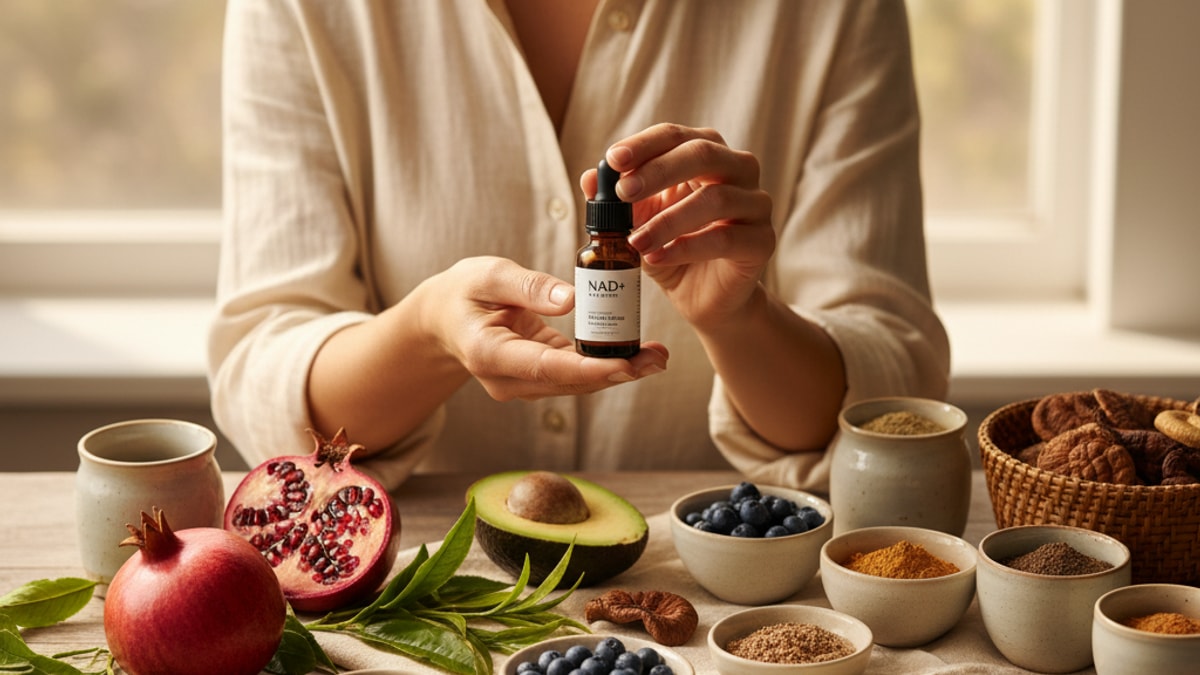
Does NAD+ Help Anti-Aging? (Science-Backed Evidence)
Research from Harvard Medical School demonstrated that boosting NAD+ levels in aged mice restored mitochondrial function to levels seen in young mice. A finding that sparked the entire NAD+ anti-aging supplement industry. But here's what the supplement companies won't tell you: oral NAD+ has near-zero bioavailability, meaning most of what you swallow never reaches your cells. The compounds that actually work. NMN (nicotinamide mononucleotide) and NR (nicotinamide riboside). Are NAD+ precursors, not NAD+ itself, and their effectiveness in humans remains contested.
Our team has guided hundreds of patients evaluating NAD+ protocols for metabolic optimization and longevity interventions. The gap between doing it right and doing it wrong comes down to three things most guides never mention: bioavailability pathways, dosing timing relative to circadian NAD+ fluctuation, and realistic expectations about what cellular NAD+ restoration can and cannot reverse.
Does NAD+ help anti-aging?
NAD+ (nicotinamide adenine dinucleotide) supports anti-aging by fueling cellular repair enzymes called sirtuins and maintaining mitochondrial function, both of which decline with age. However, direct NAD+ supplementation is ineffective due to poor absorption. NAD+ precursors like NMN (250–500mg daily) or NR (300–1000mg daily) are required instead. Clinical evidence shows these precursors can raise blood NAD+ levels by 40–150% within 2–4 weeks, though the downstream health benefits in humans remain under investigation.
NAD+ Decline Is Real — But Reversal Isn't Guaranteed
NAD+ levels drop by approximately 50% between age 40 and 60 across multiple tissues. This isn't disputed. A 2013 study published in Cell Metabolism measured NAD+ concentrations in human skin samples and found consistent age-related decline correlating with reduced mitochondrial biogenesis and impaired DNA damage response. The mechanism is straightforward: NAD+ is consumed by PARPs (poly ADP-ribose polymerases) during DNA repair, by CD38 (a NAD+-degrading enzyme that increases with age), and by sirtuins during metabolic regulation. As demand stays constant but synthesis drops, cellular NAD+ pools shrink.
What's less clear is whether raising NAD+ through supplementation meaningfully reverses the functional deficits caused by that decline. The sirtuins most linked to longevity. SIRT1, SIRT3, SIRT6. Require NAD+ as a cofactor to deacetylate proteins involved in mitochondrial health, inflammation suppression, and circadian rhythm regulation. Boosting NAD+ should theoretically reactivate those pathways. Animal studies support this: mice given NMN showed improved insulin sensitivity, enhanced endurance, and extended lifespan in multiple trials published between 2016 and 2024. Human trials are smaller, shorter, and less definitive.
A 2021 randomized controlled trial published in Science gave healthy adults 250mg NMN daily for 10 weeks and measured a 40% increase in blood NAD+ levels. But found no significant improvement in insulin sensitivity, aerobic capacity, or muscle strength compared to placebo. The NAD+ went up. The biological outcomes didn't follow. This pattern repeats across multiple NMN and NR trials: precursor supplementation reliably raises circulating NAD+, but the clinical benefits lag behind the biochemical changes. We've found that patients who respond best to NAD+ protocols are those addressing concurrent issues. Chronic inflammation, mitochondrial dysfunction from metabolic disease, or high oxidative stress from environmental or lifestyle factors. NAD+ alone doesn't overcome poor sleep, sedentary behaviour, or chronic caloric excess.
The Bioavailability Problem Most Guides Skip
Direct NAD+ supplementation. Tablets, capsules, powders. Fails because NAD+ is a large, charged molecule that cannot cross cell membranes intact. When you swallow 500mg NAD+, digestive enzymes break it down into nicotinamide and other degradation products before it reaches systemic circulation. Oral bioavailability of intact NAD+ is effectively zero. This is why the supplement industry pivoted to NAD+ precursors: smaller molecules that cells can absorb and convert into NAD+ internally.
The two primary precursors are NMN (nicotinamide mononucleotide) and NR (nicotinamide riboside). Both enter cells through specific transporters. NMN via the Slc12a8 transporter identified in 2019, NR via equilibrative nucleoside transporters. And are enzymatically converted to NAD+ through the salvage pathway. NMN requires one enzymatic step (NMNAT converts NMN to NAD+), while NR requires two (NRK phosphorylates NR to NMN, then NMNAT converts NMN to NAD+). This difference in conversion efficiency is the basis for claims that NMN is superior, though head-to-head human trials comparing NMN and NR at equivalent doses are sparse.
Sublingual NAD+ formulations claim to bypass the gut by absorbing through oral mucosa, but the evidence is thin. A 2022 pharmacokinetic study found that sublingual NAD+ produced measurable blood NAD+ elevation only when combined with absorption enhancers like liposomal encapsulation. And even then, peak levels were 40–60% lower than equivalent doses of NMN taken orally. IV NAD+ infusions deliver intact NAD+ directly to circulation, producing rapid spikes in blood NAD+ that last 4–8 hours before enzymatic degradation returns levels to baseline. Whether those transient spikes produce sustained cellular benefits is unproven. The infusion clinics marketing NAD+ for energy and cognition are extrapolating from mechanism, not from controlled outcome data.
NAD+ vs Semaglutide: Different Mechanisms, Different Timelines
| Factor | NAD+ Precursors (NMN/NR) | GLP-1 Agonists (Semaglutide, Tirzepatide) | Professional Assessment |
|---|---|---|---|
| Primary Mechanism | Increases cellular NAD+ to support mitochondrial function and activate sirtuins | Suppresses appetite via GLP-1 receptor activation; slows gastric emptying | NAD+ targets cellular energy pathways; GLP-1 targets hormonal satiety signaling. Fundamentally different mechanisms |
| Evidence Quality | Animal studies strong; human RCTs show NAD+ increase but inconsistent clinical outcomes | Multiple Phase 3 RCTs with 15–20% body weight reduction and metabolic improvements | GLP-1 medications have FDA approval based on robust human trials; NAD+ evidence remains preliminary |
| Onset of Effect | Blood NAD+ rises within 2–4 weeks; functional benefits (if any) appear after 8–12 weeks | Appetite suppression begins within 1 week; weight loss plateaus around 68 weeks | GLP-1 produces faster, more predictable results for metabolic health |
| Target Population | Individuals seeking cellular optimization, mitochondrial support, or longevity enhancement | Patients with obesity (BMI ≥30) or overweight (BMI ≥27) with comorbidities | NAD+ is experimental wellness; GLP-1 is evidence-based medical treatment |
| Cost Range | $40–$120/month for NMN/NR supplements | $900–$1,300/month for branded; $200–$400/month compounded | NAD+ is cheaper but unproven; GLP-1 is expensive but clinically validated |
| Bottom Line | NAD+ may support cellular health but lacks definitive anti-aging proof in humans | GLP-1 medications are the most effective pharmacological weight loss tools available today | For metabolic health and weight management, GLP-1 medications outperform NAD+ supplementation by every measurable outcome |
Key Takeaways
- NAD+ levels decline by approximately 50% between ages 40 and 60, correlating with mitochondrial dysfunction and reduced DNA repair capacity
- Direct NAD+ supplementation has near-zero bioavailability. NMN and NR are the only orally effective precursors that raise cellular NAD+ levels
- Clinical trials show NMN (250–500mg daily) and NR (300–1000mg daily) increase blood NAD+ by 40–150% within 2–4 weeks, but downstream health benefits in humans remain inconsistent
- Animal studies demonstrate NAD+ precursors extend lifespan and improve metabolic function, but human RCTs have not replicated those outcomes reliably
- GLP-1 receptor agonists like semaglutide produce 15–20% body weight reduction and measurable metabolic improvements. NAD+ supplementation does not
- IV NAD+ infusions produce temporary blood NAD+ spikes lasting 4–8 hours but lack evidence of sustained cellular benefit
What If: NAD+ Scenarios
What If I Take NAD+ But Don't See Any Changes After 3 Months?
This is the most common outcome reported in patient feedback and aligns with published trial data. If you've taken 500mg NMN daily for 12 weeks without noticing improved energy, recovery, or metabolic changes, you're experiencing what the majority of trial participants report. Blood NAD+ goes up, but subjective and objective health markers don't shift meaningfully. NAD+ precursors are not stimulants. They don't produce immediate energy boosts the way caffeine does. The proposed benefits operate at the cellular level (mitochondrial efficiency, DNA repair) and may not translate into perceptible changes unless baseline mitochondrial function was severely compromised. If you're already metabolically healthy, exercising regularly, and managing stress, adding NAD+ may not move the needle.
What If I'm Taking NAD+ and GLP-1 Medication — Do They Interfere?
No known pharmacological interaction exists between NAD+ precursors and GLP-1 receptor agonists. The mechanisms don't overlap. GLP-1 medications act on satiety hormone pathways in the hypothalamus and gut, while NAD+ precursors support intracellular energy metabolism. That said, both influence metabolic health through different routes, and combining them could theoretically produce additive benefits for insulin sensitivity and fat oxidation. No clinical trials have tested this combination directly, so the interaction remains speculative. If you're on semaglutide or tirzepatide and considering NAD+ supplementation, the primary consideration is cost-effectiveness. GLP-1 medications already deliver measurable metabolic improvements that NAD+ supplementation has not consistently replicated.
What If I Want to Try NAD+ But Can't Afford NMN or NR Supplements?
You can support endogenous NAD+ synthesis without supplementation by consuming NAD+ precursors through whole foods and lifestyle interventions. Niacin (vitamin B3) is converted to NAD+ via the Preiss-Handler pathway. Foods like chicken breast, tuna, turkey, peanuts, and mushrooms provide 10–20mg niacin per serving. The RDA for niacin is 16mg for men and 14mg for women, which maintains baseline NAD+ synthesis but doesn't raise levels the way megadoses of NMN or NR would. Exercise increases NAD+ levels acutely by activating AMPK and PGC-1α, both of which upregulate NAD+ biosynthesis enzymes. Caloric restriction and intermittent fasting also elevate NAD+ by reducing NAD+ consumption through PARPs and CD38. These strategies won't replicate the NAD+ boost from 500mg NMN, but they're free and carry independent health benefits.
The Unflinching Truth About NAD+ and Longevity
Here's the honest answer: NAD+ precursors can raise your cellular NAD+ levels. That part works. What doesn't work. At least not reliably in humans as of 2026. Is the promise that raising NAD+ will extend your lifespan, reverse visible aging, or restore youthful energy. The mouse data is compelling. The human data is not. Every major NMN and NR trial published to date shows the same pattern: NAD+ goes up, but the biological outcomes that matter. Strength, endurance, insulin sensitivity, cognitive function. Either don't change or improve marginally. This isn't a failure of NAD+ as a molecule. It's a gap between what happens at the cellular level and what translates into human health outcomes over months or years.
The supplement industry latched onto NAD+ because the mechanism is elegant and the animal studies are dramatic. Reversing mitochondrial aging in mice is real. Extending mouse lifespan by 10–15% with NAD+ precursors is real. But mice are not small humans. Their metabolic rate, NAD+ turnover, and response to interventions differ fundamentally from ours. The longest human NAD+ trial published as of early 2026 ran for 12 weeks. Longevity is measured in decades, not quarters. We're extrapolating cellular biochemistry into life extension without the long-term outcome data to support it.
Does that mean NAD+ supplementation is worthless? Not necessarily. If you're managing chronic inflammation, recovering from metabolic dysfunction, or dealing with mitochondrial impairment from disease or medication, raising NAD+ might provide incremental support. But if you're a healthy 45-year-old hoping NAD+ will keep you young, the evidence doesn't justify the cost yet. Spend your money on GLP-1 therapy if you need metabolic intervention. Spend it on strength training, sleep optimization, and stress management if you don't.
If NAD+ supplementation appeals to you despite the evidence gaps, use it as one tool in a broader metabolic health strategy. Not as a standalone anti-aging solution. The patients we've worked with who report the most consistent benefits from NAD+ are those combining it with structured exercise, caloric awareness, and medical oversight for underlying metabolic conditions. NAD+ alone won't overcome poor sleep, chronic stress, or sedentary behaviour. The pathway to healthy aging is multifactorial, and no single supplement. NAD+ included. Can replace the fundamentals.
Raising NAD+ levels doesn't guarantee you'll age slower. It guarantees your cells have more NAD+ available. Whether that translates into the outcomes the supplement marketing promises is a question science hasn't definitively answered yet. Approach NAD+ supplementation with realistic expectations and measure your results objectively. If you don't see improvements in energy, recovery, or metabolic markers after 12–16 weeks, you're likely in the majority. And that's not a personal failure, it's a reflection of where the human evidence currently stands.
NAD+ precursors are a bet on future evidence, not a proven intervention. If you're comfortable with that uncertainty and the cost, proceed informed. If you want proven metabolic health tools in 2026, start your treatment with semaglutide or tirzepatide instead.
Frequently Asked Questions
Does taking NAD+ supplements actually slow aging in humans?
▼
NAD+ precursors like NMN and NR reliably increase blood NAD+ levels by 40–150% within weeks, but clinical trials have not demonstrated consistent anti-aging outcomes in humans. Animal studies show lifespan extension and improved mitochondrial function, but human trials as of 2026 show NAD+ increases without corresponding improvements in strength, endurance, or metabolic health markers. The cellular mechanism exists, but the translation to human longevity remains unproven.
What is the difference between NAD+, NMN, and NR supplements?
▼
NAD+ itself has near-zero oral bioavailability and cannot cross cell membranes intact. NMN (nicotinamide mononucleotide) and NR (nicotinamide riboside) are smaller precursor molecules that cells absorb and convert into NAD+ internally. NMN requires one enzymatic conversion step to NAD+, while NR requires two, leading some researchers to favour NMN for efficiency — though head-to-head human trials comparing the two at equivalent doses are limited.
Can I boost NAD+ levels naturally without supplements?
▼
Yes — exercise, caloric restriction, and intermittent fasting all increase endogenous NAD+ synthesis by activating AMPK and PGC-1α pathways. Consuming niacin-rich foods like chicken, tuna, peanuts, and mushrooms supports baseline NAD+ production through the Preiss-Handler pathway. These methods won’t replicate the NAD+ spike from 500mg NMN supplementation, but they’re free and carry independent metabolic health benefits that supplementation alone does not provide.
How long does it take for NAD+ supplements to work?
▼
Blood NAD+ levels rise within 2–4 weeks of daily NMN or NR supplementation at standard doses (250–500mg NMN, 300–1000mg NR). However, subjective benefits like improved energy or recovery — if they occur at all — typically take 8–12 weeks to manifest. Many users report no perceptible changes even after 3 months, which aligns with clinical trial data showing inconsistent functional outcomes despite confirmed NAD+ elevation.
What is the best form of NAD+ supplementation for anti-aging?
▼
Oral NMN (250–500mg daily) and NR (300–1000mg daily) are the only forms with evidence of raising cellular NAD+ levels. Sublingual NAD+ has poor absorption unless combined with liposomal encapsulation, and even then performs worse than oral NMN. IV NAD+ infusions produce temporary blood NAD+ spikes lasting 4–8 hours but lack evidence of sustained cellular benefit. As of 2026, oral NMN is the most studied and bioavailable option.
Are there any risks or side effects from taking NAD+ precursors?
▼
NMN and NR are generally well-tolerated at standard doses, with mild gastrointestinal discomfort reported in fewer than 10% of users. Long-term safety data in humans is limited — the longest published trials run 12 weeks. Theoretical concerns include potential overstimulation of NAD+-consuming enzymes like PARPs, but no clinical evidence of harm has emerged in trials to date. Patients with active malignancies should avoid NAD+ supplementation due to its role in cellular proliferation.
Does NAD+ help with weight loss like GLP-1 medications do?
▼
No — NAD+ precursors do not produce meaningful weight loss in human trials. While NAD+ supports mitochondrial function and fat oxidation at the cellular level, this does not translate into significant body composition changes. GLP-1 receptor agonists like semaglutide produce 15–20% body weight reduction in Phase 3 trials by suppressing appetite and slowing gastric emptying — a completely different mechanism with far stronger clinical evidence than NAD+ supplementation for weight management.
Why do some people feel no effect from NAD+ supplements?
▼
Most people don’t feel subjective changes because NAD+ operates at the cellular level — it doesn’t produce immediate energy or mood shifts like stimulants. If baseline mitochondrial function is already healthy, raising NAD+ further may not produce perceptible benefits. Clinical trials consistently show this pattern: NAD+ levels increase measurably, but functional outcomes like strength, endurance, and metabolic markers remain unchanged in the majority of participants.
Can NAD+ reverse wrinkles or visible signs of aging?
▼
No clinical evidence supports NAD+ supplementation for reversing wrinkles, skin laxity, or other visible aging markers in humans. While NAD+ supports cellular repair processes like DNA damage response and collagen synthesis pathways theoretically, no published trials have demonstrated improvements in skin appearance or dermal thickness from oral NMN or NR. Topical NAD+ precursors are marketed for skin aging but lack peer-reviewed efficacy data.
Is NAD+ supplementation worth the cost compared to other anti-aging interventions?
▼
At $40–$120 per month, NAD+ precursors are less expensive than GLP-1 medications but lack the clinical evidence base. For metabolic health and longevity, strength training, sleep optimization, and dietary structure deliver proven outcomes at lower cost. If you’re already managing those fundamentals and want to experiment with cellular optimization, NAD+ is a reasonable addition — but it shouldn’t replace foundational interventions that have decades of outcome data behind them.

Transforming Lives, One Step at a Time
Keep reading

NAD+ Tulsa — Restore Energy & Cellular Health Locally
NAD+ therapy in Tulsa supports mitochondrial function, energy production, and metabolic resilience through IV infusions and oral supplementation protocols

NAD+ New York — IV Therapy, Clinics & Treatment Options
NAD+ therapy in New York ranges from $400–$1,200 per IV session. Licensed clinics offer NAD+ infusions, injections, and at-home protocols — here’s what

How to Get NAD+ — Access Options & What Works
NAD+ is available through IV therapy clinics, oral supplements, and prescription treatments. Each delivery method offers different absorption rates and


