Glutathione vs Lipo C — Which Delivers Real Results?
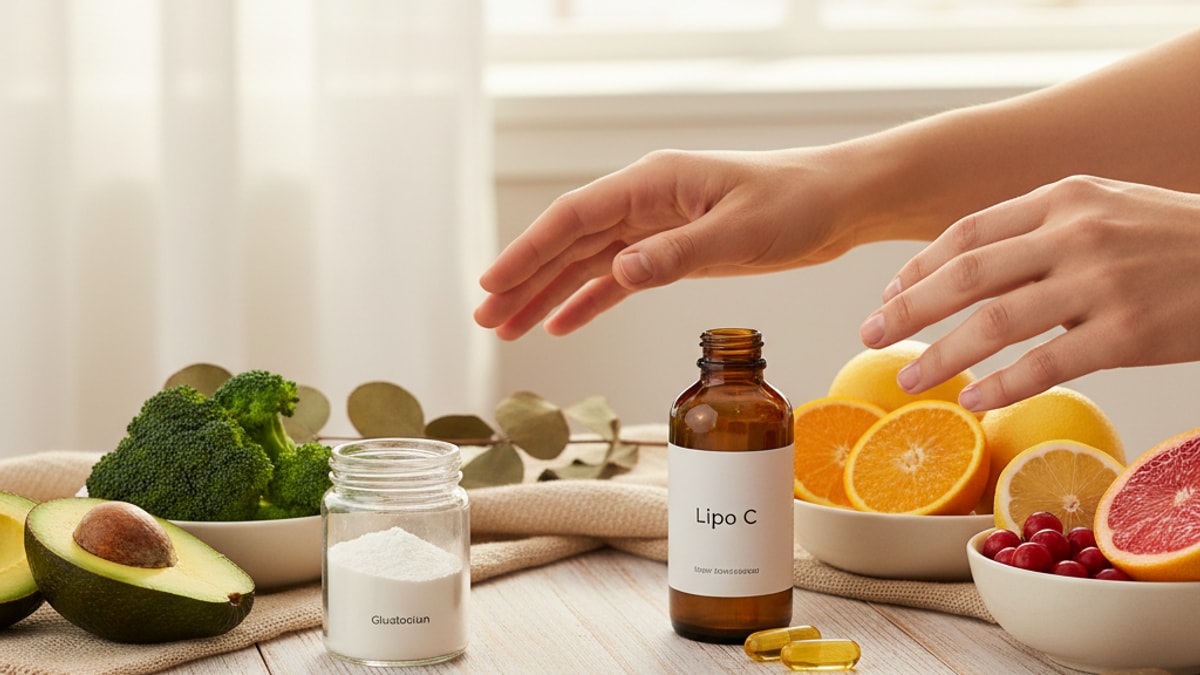
Glutathione vs Lipo C — Which Delivers Real Results?
A 2019 study published in the European Journal of Nutrition found that oral glutathione supplementation raised blood glutathione levels by only 17% after six months. Far below what intravenous administration achieves. Meanwhile, liposomal vitamin C (Lipo C) can deliver plasma ascorbic acid concentrations 1.5–2× higher than standard oral vitamin C at equivalent doses. The gap isn't marginal. It's the difference between a supplement that barely registers and one that saturates tissue levels within hours.
Our team has worked with hundreds of patients navigating supplement choices in metabolic health and weight management. The confusion between glutathione and Lipo C is understandable. Both are positioned as antioxidant solutions, both get administered orally or intravenously, and both carry premium price tags. But the mechanisms, outcomes, and clinical use cases are fundamentally different.
What is the difference between glutathione and Lipo C?
Glutathione is a tripeptide (gamma-glutamyl-cysteinyl-glycine) synthesized endogenously in every cell of the body. It functions as the primary intracellular antioxidant, neutralizing reactive oxygen species and recycling oxidized vitamins C and E back to active forms. Lipo C is liposomal vitamin C, an exogenous delivery system that encases ascorbic acid in phospholipid vesicles to protect it from gastrointestinal degradation and enhance absorption. Glutathione protects what's already in the cell; Lipo C floods the system with a water-soluble antioxidant that glutathione itself depends on to stay reduced and functional.
Glutathione vs Lipo C isn't an either-or choice. It's a question of which physiological target you're addressing. Glutathione supplementation attempts to raise intracellular levels of the body's most abundant antioxidant, but oral bioavailability is notoriously poor because glutathione breaks down in the gut before reaching systemic circulation. Lipo C bypasses that breakdown entirely by protecting ascorbic acid inside liposomal membranes, delivering vitamin C directly into the bloodstream at concentrations high enough to support collagen synthesis, immune function, and. Critically. Glutathione regeneration. This article covers the exact mechanisms that differentiate these two compounds, the bioavailability data that determines whether supplementation works, and the clinical contexts where one outperforms the other.
Mechanism: How Glutathione and Lipo C Function at the Cellular Level
Glutathione exists in two forms: reduced glutathione (GSH), the active antioxidant form, and oxidized glutathione (GSSG), the spent form that results from neutralizing free radicals. The GSH-to-GSSG ratio is a direct marker of oxidative stress. A high ratio indicates strong antioxidant capacity, while a low ratio signals cellular stress. Glutathione's primary job is to donate electrons to reactive oxygen species (ROS), neutralizing them before they damage DNA, proteins, or lipid membranes. Once oxidized, glutathione must be reduced back to GSH by the enzyme glutathione reductase, which requires NADPH (generated via the pentose phosphate pathway) to function.
Lipo C delivers ascorbic acid in a form that resists degradation. Standard oral vitamin C (ascorbic acid tablets) undergoes first-pass metabolism in the gut, where pH, digestive enzymes, and intestinal transporters limit absorption to roughly 20–30% at doses above 500mg. Liposomal encapsulation changes this: phospholipid bilayers fuse with intestinal epithelial cells, releasing vitamin C directly into enterocytes and bypassing the transporter bottleneck. Research from the Journal of Liposome Research found that liposomal vitamin C produced plasma ascorbic acid levels 1.77× higher than non-liposomal forms at the same dose.
The metabolic relationship between glutathione and vitamin C is reciprocal. Vitamin C directly reduces oxidized glutathione (GSSG) back to GSH, sparing NADPH for other metabolic processes. Without adequate vitamin C, glutathione recycling slows, oxidative stress rises, and the cell's ability to manage ROS declines. Lipo C doesn't replace glutathione. It keeps glutathione functional. Conversely, glutathione protects vitamin C from oxidation in the aqueous phase of the cell, extending its activity. The two compounds form an antioxidant network where one supports the other's regeneration.
Bioavailability: Why Oral Glutathione Fails and Lipo C Succeeds
Oral glutathione supplementation faces a critical barrier: enzymatic breakdown in the gastrointestinal tract. Glutathione is a tripeptide, and the gut contains gamma-glutamyltransferase enzymes that cleave it into constituent amino acids (glutamate, cysteine, glycine) before it reaches systemic circulation. A 2015 study in the European Journal of Nutrition demonstrated that 500mg oral glutathione twice daily for six months raised blood glutathione levels by 17%. A measurable but modest increase that pales compared to intravenous administration, which can raise plasma levels by 300–400% within minutes.
Liposomal delivery solves the breakdown problem by encapsulating ascorbic acid inside phospholipid vesicles that mimic cell membrane structure. These vesicles protect vitamin C from oxidation and pH degradation as they pass through the stomach, then fuse with intestinal cells to release their payload directly into the bloodstream. A 2016 pharmacokinetic study published in the Journal of Liposome Research compared liposomal vitamin C to standard ascorbic acid at 4g doses. Liposomal formulations produced peak plasma concentrations of 282 µmol/L versus 159 µmol/L for standard forms, and area-under-curve measurements (AUC) showed 1.77× greater total absorption.
The practical implication: if the goal is to raise systemic antioxidant levels through oral supplementation, Lipo C delivers measurable plasma increases that oral glutathione cannot match. Glutathione supplementation works only when administered intravenously, inhaled (for pulmonary delivery), or taken as a prodrug like N-acetylcysteine (NAC), which provides cysteine. The rate-limiting substrate for endogenous glutathione synthesis. We've seen patients spend months on oral glutathione capsules with no measurable change in oxidative stress markers, then switch to liposomal vitamin C and NAC with documented improvements in biomarkers within weeks.
Clinical Use Cases: When to Choose Glutathione, Lipo C, or Both
Glutathione's clinical applications center on conditions where intracellular antioxidant capacity is severely depleted. Parkinson's disease, for example, shows marked reductions in substantia nigra glutathione levels. Intravenous glutathione (1,400mg three times weekly) has shown symptomatic improvement in motor function in pilot studies, though results vary. Hepatic detoxification is another primary indication: glutathione conjugates toxins, heavy metals, and drug metabolites in Phase II liver detoxification, and patients with non-alcoholic fatty liver disease (NAFLD) or alcohol-induced liver damage consistently show depleted hepatic glutathione. Intravenous glutathione or NAC supplementation can support detox pathways, though dietary interventions (protein intake, sulfur-rich vegetables) remain first-line.
Lipo C's use cases revolve around acute immune challenges, wound healing, and collagen synthesis. Vitamin C is a cofactor for prolyl hydroxylase and lysyl hydroxylase. Enzymes required for collagen cross-linking. Without adequate ascorbic acid, collagen synthesis stalls, wound healing slows, and vascular integrity weakens. Lipo C delivers supraphysiologic doses (5–10g daily) without the gastrointestinal distress (osmotic diarrhea) that high-dose oral vitamin C causes, making it ideal for post-surgical recovery, chronic infections, or any state of elevated metabolic demand. Oncology patients undergoing chemotherapy or radiation often use high-dose intravenous vitamin C as an adjunct therapy. While evidence remains mixed, the mechanism (pro-oxidant effects in cancer cells at pharmacologic doses) is biochemically plausible.
The synergistic approach combines both. NAC (a glutathione precursor) raises intracellular GSH levels over weeks, while Lipo C provides immediate antioxidant support and enhances glutathione recycling. For patients managing oxidative stress from GLP-1 weight loss protocols (where rapid fat mobilization releases stored lipophilic toxins), this combination addresses both the acute oxidative load (Lipo C) and the chronic depletion of endogenous antioxidants (glutathione via NAC). At TrimrX, we often recommend this dual approach during intensive metabolic interventions.
Glutathione vs Lipo C: Side-by-Side Comparison
| Factor | Glutathione (Oral) | Glutathione (IV) | Lipo C (Oral) | Professional Assessment |
|---|---|---|---|---|
| Bioavailability | 10–20% (poor. Breaks down in gut) | 95%+ (bypasses GI tract entirely) | 70–90% (liposomal protection preserves absorption) | Lipo C is the only orally effective option for rapid systemic delivery |
| Mechanism of Action | Intracellular ROS neutralization, Phase II detox conjugation | Same as oral but achieves therapeutic levels | Extracellular and intracellular vitamin C delivery, supports glutathione recycling | Glutathione works inside cells; Lipo C floods plasma and crosses into cells via SVCT transporters |
| Typical Dosage | 500–1,000mg daily (oral) | 1,200–2,000mg per session (IV, 1–3× weekly) | 1,000–5,000mg daily (liposomal) | IV glutathione is impractical for most patients; Lipo C is the accessible daily option |
| Cost Per Month | $30–$60 (oral capsules) | $200–$500 (IV sessions, frequency-dependent) | $50–$120 (liposomal liquid or gel packs) | Lipo C offers better cost-effectiveness for sustained use |
| Primary Clinical Indication | Hepatic detox, neurodegenerative support (IV only) | Parkinson's, heavy metal chelation, acute oxidative crises | Immune support, wound healing, collagen synthesis, acute illness | Glutathione for detox pathways; Lipo C for metabolic and immune resilience |
| Side Effect Profile | Minimal (oral); rare allergic reactions (IV) | Rare: transient lightheadedness, sulfur odor | Minimal; mild GI upset at doses >10g daily | Both well-tolerated; Lipo C has no injection-site or infusion risks |
| Bottom Line | Oral forms are largely ineffective due to gut breakdown. IV required for therapeutic benefit | Gold standard for acute glutathione repletion but logistically impractical for daily use | Most practical option for raising systemic antioxidant capacity without injections | Lipo C wins for accessibility and bioavailability; IV glutathione wins for acute interventions |
Key Takeaways
- Glutathione is synthesized endogenously in every cell and functions as the primary intracellular antioxidant, but oral supplementation achieves only 10–20% bioavailability due to enzymatic breakdown in the gut.
- Lipo C (liposomal vitamin C) delivers plasma ascorbic acid levels 1.5–2× higher than standard oral vitamin C by protecting ascorbic acid inside phospholipid vesicles that bypass gastrointestinal degradation.
- Glutathione and vitamin C form a reciprocal antioxidant network. Vitamin C reduces oxidized glutathione (GSSG) back to active GSH, while glutathione protects vitamin C from oxidation in the cell.
- Intravenous glutathione is the only route that achieves therapeutic blood levels (1,200–2,000mg per session), making it impractical for daily use; oral Lipo C is the accessible alternative for sustained antioxidant support.
- Clinical use cases differ: glutathione targets intracellular detoxification and neurodegenerative conditions (IV only), while Lipo C supports immune function, collagen synthesis, wound healing, and glutathione recycling at oral doses of 1,000–5,000mg daily.
- Combining NAC (a glutathione precursor) with Lipo C addresses both intracellular GSH depletion and acute oxidative stress. The synergistic approach used in metabolic protocols like GLP-1 weight loss at TrimrX.
What If: Glutathione vs Lipo C Scenarios
What If I Take Oral Glutathione — Will It Actually Raise My Levels?
Switch to NAC instead. Oral glutathione breaks down into amino acids before reaching systemic circulation. The European Journal of Nutrition study showed only a 17% increase in blood glutathione after six months of 500mg twice daily. NAC (N-acetylcysteine) provides cysteine, the rate-limiting substrate for glutathione synthesis, and consistently raises intracellular GSH levels at doses of 600–1,200mg daily. If you want measurable glutathione increases without IV infusions, NAC is the proven oral route.
What If I'm Already Taking Standard Vitamin C — Should I Switch to Lipo C?
Yes, if you're taking doses above 500mg daily. Standard ascorbic acid absorption plateaus at 200–500mg due to intestinal transporter saturation. Higher doses pass through unabsorbed and cause osmotic diarrhea. Liposomal encapsulation bypasses this bottleneck, delivering 70–90% absorption even at multi-gram doses. If you're taking 2–5g vitamin C daily for immune support or recovery and experiencing GI distress, Lipo C eliminates the side effect while delivering higher plasma levels.
What If I Want the Benefits of Glutathione Without IV Treatments?
Combine NAC with Lipo C. NAC provides the substrate for endogenous glutathione synthesis, raising intracellular GSH over 2–4 weeks. Lipo C delivers high-dose vitamin C that keeps glutathione in its reduced (active) form by recycling oxidized GSSG back to GSH. This combination replicates the metabolic outcome of IV glutathione without the logistical burden or cost. Start with 600mg NAC twice daily and 2–3g liposomal vitamin C daily.
The Unfiltered Truth About Glutathione vs Lipo C
Here's the honest answer: oral glutathione capsules are a waste of money for most people. The supplement industry markets them as 'master antioxidants,' but the bioavailability data is damning. 10–20% absorption at best, with most of the tripeptide cleaved into amino acids before it reaches circulation. The only glutathione supplementation that works is intravenous, and unless you're treating a specific condition (Parkinson's, acute hepatotoxicity, heavy metal exposure), the expense and inconvenience aren't justified.
Lipo C, by contrast, delivers exactly what it promises: measurably higher plasma vitamin C levels with none of the gastrointestinal fallout of high-dose oral ascorbic acid. The liposomal encapsulation works. Pharmacokinetic studies confirm it. If the goal is to raise systemic antioxidant capacity through daily supplementation, Lipo C is the evidence-based choice. Glutathione has its place. But that place is intravenous, not oral.
Glutathione and Lipo C serve different roles in metabolic resilience. One builds endogenous antioxidant capacity from the inside out. The other floods the system with exogenous antioxidants that protect and regenerate what's already there. The biochemical relationship is complementary, not competitive. If you're managing oxidative stress during weight loss. Particularly on GLP-1 protocols where rapid fat mobilization releases stored toxins. The synergy between NAC, Lipo C, and adequate protein intake creates a metabolic buffer that standard multivitamins can't match. At TrimrX, we structure supplement protocols around this principle: support the pathways the body already uses rather than chasing supplements that promise shortcuts the biochemistry doesn't support.
Frequently Asked Questions
Can I take glutathione and Lipo C together?▼
Yes — glutathione and Lipo C (liposomal vitamin C) are metabolically synergistic, not competitive. Vitamin C directly reduces oxidized glutathione (GSSG) back to its active form (GSH), which means high-dose Lipo C enhances glutathione recycling and extends its antioxidant activity inside cells. If you’re using NAC (a glutathione precursor) to raise intracellular GSH levels, adding Lipo C amplifies the outcome by keeping that glutathione functional longer. This combination is particularly effective during periods of elevated oxidative stress — weight loss, illness recovery, or post-surgical healing.
Which is better for detoxification — glutathione or Lipo C?▼
Glutathione is the primary detoxification molecule — it directly conjugates toxins, heavy metals, and drug metabolites in Phase II liver detoxification pathways. Lipo C supports detoxification indirectly by regenerating glutathione and protecting hepatic cells from oxidative damage during the detox process. For active detox support, intravenous glutathione (1,200–2,000mg per session) or oral NAC (600–1,200mg daily) is the direct route. Lipo C functions as the support system that keeps glutathione active and reduces the oxidative burden detoxification creates.
How long does it take for Lipo C to raise vitamin C levels?▼
Plasma ascorbic acid levels peak 2–4 hours after oral liposomal vitamin C administration and remain elevated for 6–8 hours before returning to baseline. A single 2,000mg dose of Lipo C can raise plasma vitamin C from 50 µmol/L (typical baseline) to 200–280 µmol/L within hours — a level standard oral vitamin C cannot achieve without intravenous infusion. For sustained tissue saturation, daily dosing of 1,000–3,000mg liposomal vitamin C maintains plasma levels in the therapeutic range (150–300 µmol/L) consistently.
Is oral glutathione completely useless, or does it have any benefit?▼
Oral glutathione is not completely useless, but it’s severely limited by bioavailability — only 10–20% survives gut breakdown and reaches systemic circulation. Some research suggests that oral glutathione may support gut mucosal health directly (protecting intestinal cells from oxidative damage) even if it doesn’t raise blood levels significantly. For systemic glutathione increases, NAC (600–1,200mg daily) or intravenous glutathione (1,200–2,000mg per session) are the only effective routes. Oral glutathione capsules work as a local gut antioxidant but fail as a systemic supplement.
Can Lipo C replace intravenous vitamin C for cancer patients?▼
No — the doses used in intravenous vitamin C cancer protocols (25–100g per infusion) cannot be achieved orally, even with liposomal encapsulation. High-dose IV vitamin C creates pharmacologic plasma concentrations (20,000+ µmol/L) that generate hydrogen peroxide in the extracellular space, producing pro-oxidant cytotoxic effects in cancer cells. Oral Lipo C, even at 10g daily, reaches only 300–500 µmol/L plasma levels — insufficient for the mechanism targeted in oncology protocols. Lipo C is appropriate for nutritional support and immune function but is not a substitute for therapeutic IV vitamin C in cancer care.
What is the best form of glutathione to take if I can’t do IV treatments?▼
NAC (N-acetylcysteine) is the best oral alternative to IV glutathione because it provides cysteine, the rate-limiting amino acid for endogenous glutathione synthesis. Standard dosing is 600mg twice daily, which consistently raises intracellular glutathione levels over 2–4 weeks without the bioavailability issues of oral glutathione capsules. Liposomal glutathione is marketed as superior to standard oral forms, but evidence remains limited — NAC is the proven, cost-effective route for raising GSH levels through oral supplementation.
How much Lipo C should I take daily for immune support?▼
For general immune support, 1,000–2,000mg liposomal vitamin C daily is sufficient to maintain plasma ascorbic acid levels above 100 µmol/L, the threshold for saturating immune cell function. During acute illness (cold, flu, infection), doses can be increased to 3,000–5,000mg daily in divided doses (1,000mg every 4–6 hours) without causing gastrointestinal distress. Liposomal formulations allow high-dose vitamin C without the osmotic diarrhea that standard ascorbic acid tablets cause at doses above 2,000mg.
Can glutathione or Lipo C help with skin lightening or anti-aging?▼
Glutathione is marketed for skin lightening because it inhibits tyrosinase, the enzyme that produces melanin — clinical trials using 500mg oral glutathione daily for 12 weeks showed modest reductions in melanin index scores, but results are inconsistent and dose-dependent. Lipo C supports skin health by providing ascorbic acid for collagen synthesis (prolyl hydroxylase and lysyl hydroxylase require vitamin C as a cofactor), which improves skin elasticity and wound healing but does not lighten pigmentation. For skin outcomes, topical vitamin C serums (L-ascorbic acid 10–20%) deliver higher local concentrations than oral Lipo C can achieve systemically.
What are the side effects of taking high-dose Lipo C long-term?▼
Liposomal vitamin C is generally well-tolerated even at high doses (5–10g daily) because the liposomal encapsulation prevents osmotic diarrhea. The primary concern with long-term high-dose vitamin C supplementation is oxalate formation — ascorbic acid metabolizes to oxalate, which can contribute to kidney stone formation in susceptible individuals (those with hyperoxaluria or calcium oxalate stone history). For most people, doses up to 3,000mg daily pose minimal risk. Patients with renal impairment or a history of oxalate stones should limit vitamin C intake to 500–1,000mg daily and maintain adequate hydration.
Does taking glutathione interfere with GLP-1 medications like semaglutide or tirzepatide?▼
No — there is no known pharmacokinetic interaction between glutathione supplementation (oral or IV) and GLP-1 receptor agonists like semaglutide or tirzepatide. Glutathione functions as an intracellular antioxidant and Phase II detoxification substrate; GLP-1 medications work through receptor binding in the hypothalamus and gastrointestinal tract. The two pathways do not overlap. In fact, GLP-1-induced weight loss increases oxidative stress as stored lipophilic toxins are mobilized from adipose tissue — supporting glutathione levels (via NAC or IV glutathione) and vitamin C (via Lipo C) can mitigate this oxidative burden during active weight loss.

Transforming Lives, One Step at a Time
Keep reading

Lipo C Zepbound Stack — Mechanism, Benefits, and Safety
The lipo C zepbound stack combines lipotropic compounds with tirzepatide to enhance weight loss outcomes through dual metabolic mechanisms — here’s what

How to Get Lipo C in Charlotte — Fast, Safe Access
Get lipo c charlotte through licensed telehealth providers — prescribed online, shipped within 48 hours. Clinical-grade formulations without insurance

Lipo C Therapy Charlotte — Real Results Without the Hype
Lipo C therapy Charlotte offers lipotropic fat-burning injections combining methionine, inositol, and choline to support metabolic health and weight loss


