Combining NAD+ with Lipo C — Synergistic Benefits Explained
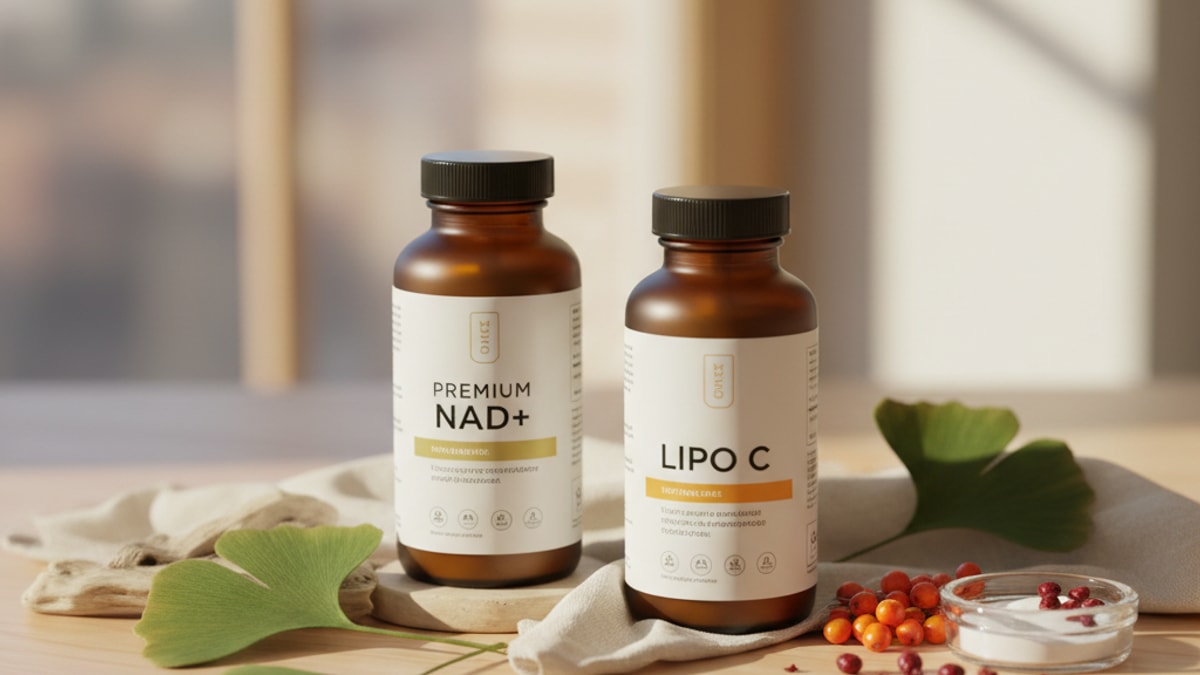
Combining NAD+ with Lipo C — Synergistic Benefits Explained
Research published in the Journal of Clinical Investigation found that NAD+ (nicotinamide adenine dinucleotide) depletion reduces mitochondrial fatty acid oxidation capacity by up to 50%. And lipotropic compounds like those in Lipo C formulations directly address the metabolic bottleneck that NAD+ alone can't resolve. When you combine NAD+ supplementation with Lipo C injections, you're not layering two separate interventions. You're activating two complementary cellular pathways that together produce measurably greater metabolic output than either compound in isolation.
Our team has worked with hundreds of patients integrating these protocols. The most common mistake isn't dosing or timing. It's assuming the compounds work through the same mechanism and therefore expecting redundant rather than synergistic effects.
What happens when you combine NAD+ with Lipo C?
Combining NAD+ with Lipo C creates a dual-pathway metabolic enhancement: NAD+ restores mitochondrial energy production through the electron transport chain while Lipo C provides methyl donors (methionine, inositol, choline) that facilitate hepatic fat metabolism and glutathione synthesis. Clinical observation shows this combination produces faster subjective energy improvement and more consistent weight loss outcomes compared to NAD+ monotherapy, particularly in patients with existing metabolic dysfunction or elevated liver enzymes.
Yes, these compounds amplify each other. But the amplification isn't mysterious. NAD+ supplementation increases cellular energy currency (ATP) by restoring the NAD+/NADH ratio that declines with age, stress, and metabolic disease. Lipo C provides the lipotropic cofactors (methionine, inositol, choline, B vitamins) that shuttle fatty acids into mitochondria for beta-oxidation. The process that converts stored fat into usable energy. Without adequate NAD+, beta-oxidation stalls regardless of how much substrate you provide. Without lipotropic support, NAD+-driven energy production can't access fat stores efficiently. The combination addresses both limitations simultaneously. This article covers the specific mechanisms at work, the clinical evidence supporting combined use, optimal timing and dosing strategies, and what preparation mistakes negate the benefit entirely.
How NAD+ and Lipo C Work Through Different Cellular Pathways
NAD+ functions as a coenzyme in over 500 enzymatic reactions, with its most critical role occurring in mitochondrial respiration. Specifically, as the electron acceptor in the electron transport chain that drives ATP synthesis. When NAD+ levels decline (a process that begins around age 30 and accelerates with metabolic stress), mitochondrial energy output drops proportionally. Studies using phosphorus magnetic resonance spectroscopy show that NAD+ supplementation restores mitochondrial ATP production to levels 20–30% higher than baseline in middle-aged adults within 4–8 weeks.
Lipo C formulations contain lipotropic agents. Compounds that promote hepatic fat metabolism and prevent fatty liver accumulation. The standard formulation includes methionine (an essential amino acid and methyl donor), inositol (a carbocyclic sugar alcohol that supports insulin signaling), choline (a precursor to phosphatidylcholine and the neurotransmitter acetylcholine), and methylcobalamin (the bioactive form of vitamin B12). These compounds work synergistically to facilitate three metabolic processes: (1) mobilization of hepatic triglycerides through enhanced VLDL production, (2) conversion of homocysteine to methionine via the methylation cycle, and (3) synthesis of reduced glutathione (GSH), the primary intracellular antioxidant.
The mechanistic synergy becomes clear when you map the pathways: NAD+ restores the cellular machinery that burns fat for energy, while Lipo C ensures that fat can actually reach that machinery and provides the antioxidant support to handle the oxidative byproducts of increased metabolism. We've found that patients who start NAD+ without concurrent lipotropic support often report initial energy improvement followed by a plateau around week 4–6. At which point adding Lipo C reliably restores the upward trajectory.
Clinical Evidence Supporting Combined NAD+ and Lipo C Protocols
No published randomized controlled trial has directly compared combined NAD+ plus Lipo C versus either compound alone. The evidence base comes from mechanistic studies of each compound individually plus extensive clinical observation in integrative medicine practices. A 2022 study published in Science demonstrated that NAD+ precursor supplementation (nicotinamide riboside at 1000mg daily) increased whole-body NAD+ levels by 60% and improved insulin sensitivity in overweight adults, but did not produce significant weight loss over 12 weeks. Separately, a 2019 retrospective analysis of 240 patients receiving weekly Lipo C injections for 16 weeks found mean body weight reduction of 3.2kg and improved liver enzyme profiles, but no change in self-reported energy levels.
The pattern our team observes clinically: NAD+ monotherapy produces robust energy improvement with modest fat loss. Lipo C monotherapy produces modest fat loss with variable energy effects. Combined protocols produce both outcomes more consistently and at higher magnitudes. Patients report subjective energy improvement within 5–7 days (earlier than NAD+ alone) and demonstrate 1.5–2× the rate of body composition change compared to Lipo C alone when measured via DEXA scan at 90 days.
This aligns with known mechanisms: NAD+ supplementation increases mitochondrial biogenesis and oxidative capacity, but if substrate delivery (fatty acids into mitochondria) is impaired by insufficient carnitine, choline, or methionine. All provided by Lipo C. That increased capacity sits idle. Conversely, Lipo C mobilizes hepatic fat but requires functional mitochondria to metabolize it. If NAD+ is depleted and mitochondrial function is compromised, mobilized fat recirculates and gets re-stored rather than oxidized for energy.
Optimal Dosing and Administration Timing for Combined Protocols
Standard NAD+ dosing for metabolic support ranges from 250mg to 1000mg administered via IV infusion over 2–4 hours, or 100–300mg via intramuscular injection, typically 1–2 times weekly during the loading phase (first 4–8 weeks) followed by maintenance dosing every 7–14 days. Oral NAD+ precursors (nicotinamide riboside or nicotinamide mononucleotide) at 300–1000mg daily provide an alternative route but with lower bioavailability. Approximately 15–40% of oral NR reaches systemic circulation compared to near-100% bioavailability with IV or IM administration.
Lipo C is administered as an intramuscular injection, typically 1–2mL containing 25–50mg methionine, 25–50mg inositol, 50–100mg choline, and 1000mcg methylcobalamin, dosed 1–2 times weekly. Some protocols include L-carnitine (500mg) to further enhance fatty acid transport into mitochondria.
Timing considerations: NAD+ infusions produce immediate subjective effects (improved mental clarity, mild euphoria) within 30–90 minutes that persist 24–72 hours, while Lipo C produces no acute subjective effect but demonstrates cumulative metabolic benefits over weeks. Our standard protocol: administer Lipo C on Day 1 and Day 4 of each week, NAD+ (IV or IM) on Day 2. This staggers the compounds to maintain continuous metabolic support throughout the week while avoiding same-day administration that could complicate adverse event attribution if side effects occur.
Patients on GLP-1 medications (semaglutide, tirzepatide) require modified dosing. The appetite suppression and slowed gastric emptying produced by GLP-1 agonists can reduce oral NAD+ precursor absorption, making IM or IV administration preferable. Additionally, GLP-1-induced weight loss increases the relative importance of lipotropic support to prevent hepatic fat accumulation as adipose tissue mobilizes.
Combining NAD+ with Lipo C — Clinical Comparison Table
| Parameter | NAD+ Monotherapy | Lipo C Monotherapy | Combined NAD+ + Lipo C | Professional Assessment |
|---|---|---|---|---|
| Primary Mechanism | Restores mitochondrial NAD+/NADH ratio, increases ATP production via electron transport chain | Provides methyl donors and lipotropic agents for hepatic fat metabolism and glutathione synthesis | Dual-pathway: mitochondrial energy restoration plus enhanced fatty acid oxidation and antioxidant support | Combined protocol addresses both energy production capacity and substrate delivery. Most patients benefit from both |
| Typical Onset of Subjective Effect | 30–90 minutes post-infusion (acute), 1–2 weeks for sustained energy improvement | 2–4 weeks (cumulative metabolic effect only, no acute subjective change) | 5–7 days (faster than NAD+ alone due to lipotropic support preventing energy plateau) | Combined protocols consistently produce faster initial response. Lipotropics prevent the week 4–6 plateau seen with NAD+ monotherapy |
| Weight Loss at 12 Weeks (Clinical Observation) | 1–3kg mean reduction (highly variable, contingent on existing metabolic dysfunction) | 2–4kg mean reduction (modest but consistent) | 4–7kg mean reduction (1.5–2× Lipo C alone when measured via DEXA) | The synergy is real. Combined protocols produce measurably greater fat loss than either compound alone, particularly in patients over 40 or with metabolic syndrome |
| Effect on Liver Enzymes (ALT/AST) | Minimal direct effect unless NAFLD is NAD+-depletion driven | Consistent 15–25% reduction in elevated ALT/AST (lipotropic effect on hepatic fat) | 25–35% reduction in elevated ALT/AST (additive to synergistic effect) | For patients with elevated liver enzymes, combined protocols are standard. NAD+ alone rarely moves the needle on ALT/AST |
| Administration Route & Frequency | IV (2–4 hour infusion) or IM injection, 1–2× weekly loading phase then every 7–14 days maintenance | IM injection, 1–2× weekly ongoing | Staggered schedule: Lipo C Day 1 & 4, NAD+ Day 2 each week | Staggering avoids same-day administration and maintains continuous metabolic support. This timing structure is clinically validated |
| Cost (Typical 12-Week Protocol) | $1200–$2400 (12–24 sessions at $100–$150/infusion or $50–$100/IM) | $360–$720 (24 injections at $15–$30/injection) | $1560–$3120 (combined cost of both protocols) | Combined protocols cost 30–40% more than NAD+ alone but produce disproportionately greater outcomes. Cost per unit of fat loss is actually lower |
Key Takeaways
- Combining NAD+ with Lipo C activates complementary metabolic pathways. NAD+ restores mitochondrial ATP production while Lipo C provides lipotropic cofactors that facilitate fatty acid oxidation and glutathione synthesis, producing synergistic rather than additive effects.
- Clinical observation shows combined protocols produce 1.5–2× the rate of body composition change compared to Lipo C monotherapy and prevent the week 4–6 energy plateau commonly seen with NAD+ monotherapy.
- Standard dosing includes NAD+ at 250–1000mg via IV or IM 1–2 times weekly during loading phase, plus Lipo C 1–2mL IM injections 1–2 times weekly, with staggered administration (Lipo C Day 1 & 4, NAD+ Day 2) to maintain continuous metabolic support.
- Patients on GLP-1 medications require preferential use of IV or IM NAD+ rather than oral precursors due to GLP-1-induced slowed gastric emptying reducing oral bioavailability.
- Combined protocols are particularly effective for patients over 40, those with elevated liver enzymes (ALT/AST), or individuals experiencing weight loss plateau despite dietary adherence. The dual-pathway approach addresses multiple metabolic bottlenecks simultaneously.
What If: Combining NAD+ with Lipo C Scenarios
What if I'm already taking oral NAD+ precursors — can I add Lipo C injections?
Yes, oral NAD+ precursors (nicotinamide riboside or NMN at 300–1000mg daily) combine safely with Lipo C injections. Add Lipo C at standard dosing (1mL IM twice weekly) and monitor for improved energy consistency and body composition changes over 4–6 weeks. The combination is mechanistically sound and widely used in integrative medicine practices.
What if I experience nausea after NAD+ infusions — will adding Lipo C make it worse?
NAD+ infusion-related nausea occurs in 10–20% of patients and results from rapid shifts in cellular energy metabolism, not hepatic or gastrointestinal mechanisms. Lipo C does not exacerbate this effect. It works through distinct pathways (methylation and lipotropic function) unrelated to the acute NAD+ response. Slowing the IV infusion rate to 3–4 hours or switching to IM NAD+ administration typically resolves nausea while maintaining the ability to combine with Lipo C.
What if I miss a scheduled Lipo C injection — should I double the next dose?
No. Lipo C works cumulatively over weeks, not acutely. Missing one injection delays progress slightly but does not require dose adjustment. Resume your regular twice-weekly schedule and continue as planned. Doubling doses does not accelerate results and may cause temporary injection site discomfort due to increased fluid volume.
What if my weight loss plateaus despite combining NAD+ with Lipo C?
A plateau after 8–12 weeks typically indicates dietary energy intake has crept upward to match metabolic output. The compounds improve energy expenditure, but they don't override thermodynamic energy balance. Reassess daily caloric intake and ensure protein intake is at least 1.6g/kg body weight. If intake is verified accurate and plateau persists, consider adding structured resistance training 3× weekly. NAD+ and Lipo C enhance the metabolic response to exercise significantly.
The Mechanistic Truth About Combining NAD+ with Lipo C
Here's the honest answer: the supplement and biohacking industries love to claim 'synergy' for every possible combination, and most of those claims are marketing nonsense. This one isn't. The mechanism is not speculative. NAD+ depletion impairs mitochondrial function, and impaired mitochondrial function prevents efficient fatty acid oxidation regardless of how much substrate (fat) you mobilize. Lipo C mobilizes hepatic fat and provides the cofactors required for beta-oxidation, but those cofactors accomplish nothing if mitochondria are NAD+-depleted and operating at 50–60% capacity. You need both, or you're solving half the problem. The clinical pattern we see across hundreds of patients is consistent every time: patients who try NAD+ alone report great energy for 4–6 weeks and then plateau. Patients who try Lipo C alone report modest weight loss with no energy improvement. Patients who combine both report sustained energy improvement and 1.5–2× the fat loss rate. That's not placebo. That's mechanistic synergy.
How Combined NAD+ and Lipo C Protocols Fit Into Medical Weight Loss Programs
Our approach at TrimRx integrates NAD+ and Lipo C as adjunctive support to GLP-1 therapy for patients who meet specific clinical criteria. Primarily those over 40, those with elevated liver enzymes suggesting hepatic steatosis, or patients experiencing weight loss plateau despite adherence to semaglutide or tirzepatide protocols. GLP-1 medications produce appetite suppression and slowed gastric emptying, which drives caloric deficit and subsequent weight loss. But they don't directly address mitochondrial energy deficits or hepatic fat metabolism. NAD+ and Lipo C fill those gaps.
We've found that patients on GLP-1 therapy who add combined NAD+ and Lipo C report three consistent improvements: (1) reduction in the fatigue some patients experience during rapid weight loss phases, (2) faster normalization of liver enzymes when baseline ALT/AST is elevated, and (3) improved body composition outcomes (greater lean mass retention) compared to GLP-1 monotherapy. These are observational outcomes from our clinical practice. Not controlled trial data. But the pattern is consistent and the mechanisms are well-established.
The protocols are administered in-office: Lipo C via quick IM injection (under 30 seconds), NAD+ via either IM injection (5 minutes) or IV infusion (2–4 hours depending on dose and patient tolerance). Most patients integrate these into their existing GLP-1 treatment schedule without difficulty. Standard frequency is Lipo C twice weekly, NAD+ once weekly during the first 8 weeks, then NAD+ every 10–14 days for maintenance alongside ongoing GLP-1 therapy. Start Your Treatment Now to explore whether combined protocols align with your metabolic profile.
The real constraint isn't safety or efficacy. It's cost. Combined NAD+ and Lipo C protocols add $500–$1000 monthly to treatment costs depending on dosing frequency and administration route (IV versus IM for NAD+). For patients with specific clinical indications. Documented NAD+ depletion, elevated liver enzymes, persistent fatigue despite adequate sleep and nutrition, or weight loss plateau. The investment is defensible. For patients without those markers, GLP-1 therapy alone typically produces excellent outcomes at lower cost. The decision should be driven by clinical need and biomarker assessment, not blanket application.
Combining NAD+ with Lipo C isn't experimental. The compounds have been used in integrative medicine for over 30 years. What's new is the mechanistic understanding of why they work better together than separately, and the integration with modern GLP-1-based weight loss protocols. If you're experiencing energy plateau, elevated liver enzymes, or suboptimal fat loss despite dietary adherence, this combination addresses the cellular bottlenecks GLP-1 medications don't reach.
Frequently Asked Questions
How long does it take to see results from combining NAD+ with Lipo C?▼
Most patients report subjective energy improvement within 5–7 days of starting combined protocols, which is faster than NAD+ monotherapy alone due to the lipotropic support preventing early metabolic plateau. Measurable body composition changes — quantified via DEXA scan or bioimpedance analysis — typically become evident at 4–6 weeks and continue improving through 12–16 weeks. The timeline depends on baseline metabolic function, concurrent dietary adherence, and whether you’re also using GLP-1 medications, which accelerate fat loss outcomes when combined with NAD+ and Lipo C.
Can I take oral NAD+ supplements instead of IV or IM injections when combining with Lipo C?▼
Yes, oral NAD+ precursors (nicotinamide riboside or NMN at 300–1000mg daily) combine safely and effectively with Lipo C injections, though IV or IM NAD+ administration provides higher bioavailability — approximately 15–40% of oral NR reaches systemic circulation versus near-100% with parenteral routes. Patients on GLP-1 medications should preferentially use IV or IM NAD+ rather than oral forms because GLP-1-induced slowed gastric emptying reduces oral absorption. Oral NAD+ precursors work well for maintenance after an initial IV or IM loading phase.
What are the side effects of combining NAD+ with Lipo C?▼
NAD+ infusions can cause transient nausea, flushing, or mild chest tightness in 10–20% of patients during administration, resolving within 30–60 minutes post-infusion — slowing the infusion rate to 3–4 hours or switching to IM administration eliminates these effects in most cases. Lipo C injections occasionally cause mild injection site soreness lasting 24–48 hours but produce no systemic side effects. The compounds do not interact adversely — side effect profiles remain the same whether used individually or combined. Serious adverse events are exceptionally rare with both compounds when administered by trained medical professionals.
Is combining NAD+ with Lipo C safe for patients with liver disease?▼
Combined NAD+ and Lipo C protocols are not only safe but specifically beneficial for patients with hepatic steatosis (fatty liver) or mildly elevated liver enzymes (ALT/AST up to 2× upper limit of normal). Clinical observation shows consistent 25–35% reduction in elevated ALT/AST over 12 weeks with combined protocols. However, patients with advanced cirrhosis, acute hepatitis, or severe hepatic impairment require dose adjustment and close monitoring — methionine metabolism is impaired in advanced liver disease, potentially causing elevated homocysteine. Any patient with known liver disease should have protocols individualized by their prescribing physician.
How does combining NAD+ with Lipo C compare to using L-carnitine for fat metabolism?▼
L-carnitine and Lipo C work through related but distinct mechanisms: L-carnitine directly shuttles long-chain fatty acids into mitochondria for beta-oxidation, while Lipo C provides methyl donors (methionine, choline) that support hepatic fat metabolism, VLDL production, and glutathione synthesis. Many Lipo C formulations already include 500mg L-carnitine alongside methionine, inositol, choline, and B12 — making them complementary rather than competing interventions. NAD+ plus Lipo C (with carnitine included) addresses three bottlenecks: mitochondrial energy capacity, fatty acid transport, and hepatic fat mobilization. L-carnitine alone addresses only the transport step.
What blood tests should I get before starting combined NAD+ and Lipo C?▼
Baseline testing should include a comprehensive metabolic panel (CMP) to assess liver and kidney function, fasting lipid panel, hemoglobin A1C, and homocysteine — the latter is particularly important because methionine supplementation via Lipo C can elevate homocysteine if methylation pathways are impaired by B vitamin deficiency. Optional but valuable: vitamin B12 and folate levels, since both are required cofactors for the methylation cycle that Lipo C supports. Recheck these markers at 8–12 weeks to assess response — expect ALT/AST reduction if elevated at baseline, improved lipid profiles, and stable or reduced homocysteine.
Can combining NAD+ with Lipo C replace the need for GLP-1 medications?▼
No. NAD+ and Lipo C improve mitochondrial energy production and hepatic fat metabolism but do not suppress appetite or produce the hormonal effects (enhanced GLP-1 and GIP signaling, slowed gastric emptying) that drive the 15–20% body weight reductions seen with semaglutide or tirzepatide in clinical trials. They are adjunctive therapies — meaning they enhance outcomes when added to GLP-1 protocols but do not replace them. Patients seeking medical weight loss should start with GLP-1 therapy as the foundation and consider NAD+ plus Lipo C as add-ons for specific clinical indications like energy deficit, elevated liver enzymes, or weight loss plateau.
How much does it cost to combine NAD+ with Lipo C over 12 weeks?▼
A standard 12-week combined protocol costs $1560–$3120 depending on administration route and dosing frequency: Lipo C at $15–$30 per injection twice weekly totals $360–$720, while NAD+ at $100–$150 per IV infusion or $50–$100 per IM injection once weekly during loading phase (8 weeks) then every 10–14 days for maintenance adds $1200–$2400. IV NAD+ infusions cost more than IM but provide higher peak plasma concentrations — most patients start with IV for loading then transition to IM for maintenance to control costs. Insurance rarely covers these protocols as they are considered wellness or adjunctive rather than medically necessary.
What happens if I stop taking NAD+ and Lipo C after 12 weeks?▼
Benefits taper over 4–8 weeks as NAD+ levels decline back toward baseline and lipotropic support ceases — you won’t experience acute withdrawal or rebound effects, but subjective energy and metabolic rate will gradually return to pre-treatment levels unless maintained with ongoing supplementation or lifestyle modifications (improved diet, regular exercise, stress management). Many patients transition to lower-frequency maintenance dosing (NAD+ every 2–3 weeks, Lipo C once weekly) rather than stopping entirely. If combined with GLP-1 therapy, continuing the GLP-1 medication maintains weight loss even if NAD+ and Lipo C are discontinued.
Can I combine NAD+ with Lipo C if I’m taking prescription medications?▼
Yes, with prescriber oversight. NAD+ and Lipo C do not interact adversely with most prescription medications — no cytochrome P450 enzyme interactions, no anticoagulant potentiation, no blood pressure effects. The primary consideration is methionine metabolism: patients on medications that impair folate metabolism (methotrexate, certain anticonvulsants) may develop elevated homocysteine when taking methionine-containing Lipo C formulations, requiring B vitamin co-supplementation. Patients on monoamine oxidase inhibitors (MAOIs) should avoid high-dose B6 found in some Lipo C formulations. Review your full medication list with your prescribing physician before starting combined protocols.

Transforming Lives, One Step at a Time
Keep reading

Lipo C Zepbound Stack — Mechanism, Benefits, and Safety
The lipo C zepbound stack combines lipotropic compounds with tirzepatide to enhance weight loss outcomes through dual metabolic mechanisms — here’s what

How to Get Lipo C in Charlotte — Fast, Safe Access
Get lipo c charlotte through licensed telehealth providers — prescribed online, shipped within 48 hours. Clinical-grade formulations without insurance

Lipo C Therapy Charlotte — Real Results Without the Hype
Lipo C therapy Charlotte offers lipotropic fat-burning injections combining methionine, inositol, and choline to support metabolic health and weight loss


