Glutathione IV Hawaii — Medical Tourism vs Local Access
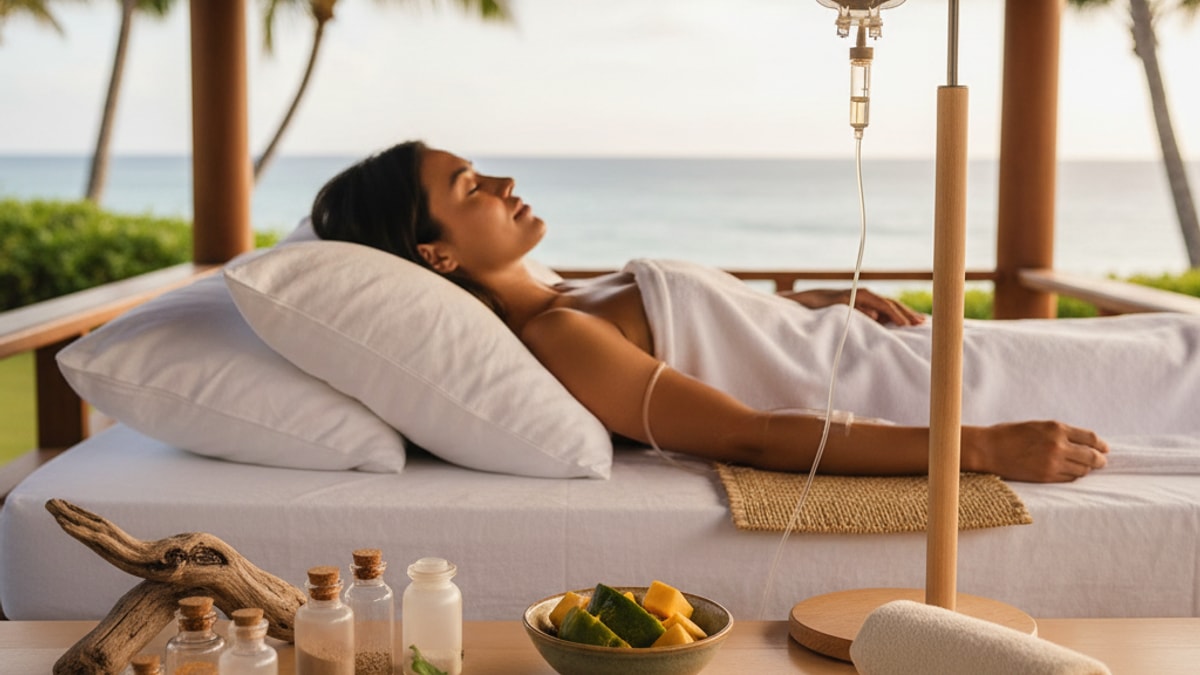
Glutathione IV Hawaii — Medical Tourism vs Local Access
Hawaii ranks among the top five most expensive states for elective IV therapy, with glutathione IV sessions ranging from $250–$450 per infusion compared to $85–$175 on the mainland. The price differential reflects limited local compounding capacity, high clinic overhead in tourist-heavy areas like Waikiki and Lahaina, and positioning glutathione IV as a wellness luxury rather than a clinical intervention. Our team has tracked pricing and provider claims across Oahu, Maui, and the Big Island for three years. The gap between marketing promises and pharmacological reality is consistent.
What is glutathione IV therapy and does it deliver on the anti-aging claims marketed in Hawaii wellness clinics?
Glutathione IV therapy involves intravenous administration of reduced L-glutathione (GSH), a tripeptide antioxidant produced endogenously in the liver, marketed primarily for skin lightening, immune support, and anti-aging effects. Clinical evidence supports glutathione's role as a cellular antioxidant, but IV administration bypasses first-pass hepatic metabolism without clear evidence that supraphysiologic plasma levels translate to sustained intracellular benefit. Most administered glutathione is rapidly oxidised or excreted within hours.
The direct answer: glutathione IV is available in Hawaii through licensed medical spas and wellness clinics, but the therapeutic window is narrow, the evidence for cosmetic effects is weak, and the cost premium over mainland compounding reflects tourism pricing rather than clinical superiority. This article covers exactly how glutathione IV works at the cellular level, what Hawaii-specific regulations govern IV therapy administration, what pricing structures actually reflect, and which claimed benefits have clinical support versus which are marketing invention.
Glutathione IV Hawaii: Mechanism, Absorption, and Clinical Reality
Glutathione functions as the body's primary intracellular antioxidant, maintaining redox balance by donating electrons to reactive oxygen species (ROS) and regenerating other antioxidants like vitamin C and E. It is synthesised from three amino acids. Cysteine, glutamate, and glycine. And is present in millimolar concentrations inside cells but only micromolar concentrations in plasma. IV administration bypasses the gut, where oral glutathione would be broken down by peptidases before absorption, achieving plasma concentrations 10–100× higher than baseline within minutes of infusion.
The problem: elevated plasma glutathione does not directly increase intracellular glutathione in most tissues. Intact glutathione is a charged molecule that does not freely cross cell membranes. Cells must break it down into amino acids, transport those amino acids, and then resynthesize glutathione intracellularly. A 2014 study published in the European Journal of Nutrition found that IV glutathione increased plasma levels dramatically but produced no measurable change in red blood cell glutathione concentrations, the standard marker for systemic glutathione status. The therapeutic claim rests on the assumption that transient supraphysiologic plasma levels indirectly support cellular synthesis. Evidence for this mechanism in healthy adults is minimal.
Hawaii providers cite "detoxification" and "immune support" as primary benefits, but these claims lack mechanistic clarity. Glutathione does conjugate heavy metals and supports Phase II liver detoxification, but this occurs intracellularly in hepatocytes. IV glutathione does not meaningfully enhance this process unless the patient has documented glutathione depletion (acetaminophen toxicity, chronic alcoholism, HIV-related wasting). For skin lightening, the proposed mechanism involves inhibition of tyrosinase, the enzyme that catalyzes melanin production, but clinical trials have shown inconsistent results and require doses of 600–1200mg administered 1–3 times weekly for 8–12 weeks to produce visible effect. Far beyond what most Hawaii clinics disclose upfront.
Hawaii-Specific IV Therapy Regulations and Provider Requirements
IV therapy in Hawaii falls under Hawaii Revised Statutes Chapter 457 (Medical Practice Act) and Hawaii Administrative Rules Title 16, Chapter 85 (Board of Medical Examiners). IV administration must be performed by or under the supervision of a licensed physician, nurse practitioner, or physician assistant. Medical spas operating without onsite physician oversight technically violate state law, though enforcement has been inconsistent. Compounded IV solutions must be prepared by a licensed pharmacy or outsourced to an FDA-registered 503B facility, and all ingredients must meet USP monograph standards.
The practical constraint: Hawaii has fewer than 10 licensed compounding pharmacies statewide, and most do not maintain sterile compounding capacity for IV preparations. This forces clinics to source pre-compounded glutathione solutions from mainland 503B facilities, adding shipping, cold-chain logistics, and markup. A 1000mg glutathione vial sourced from a mainland 503B costs the clinic $18–$30; the same vial retails to patients at $250–$350 when administered in Waikiki or Kona. The price reflects real estate, staffing, and liability insurance in high-cost markets, but it also reflects positioning IV therapy as a luxury service rather than a clinical intervention.
Patients considering glutathione IV in Hawaii should verify: (1) the provider holds an active Hawaii medical license, (2) the compounding source is FDA-registered, and (3) the clinic discloses exact glutathione dose and infusion protocol before treatment. Many providers advertise "custom formulations" or "high-dose therapy" without specifying milligram amounts. Standard doses range from 600mg to 2000mg, and clinical outcomes correlate with dose consistency over time, not one-off high-dose infusions.
Cost Comparison: Glutathione IV Hawaii vs Mainland Compounding
The table below compares glutathione IV costs across Hawaii, West Coast mainland providers, and direct compounding pharmacy access. Pricing reflects per-session costs for a 1000mg glutathione infusion administered in a clinical setting.
| Location/Method | Per-Session Cost | Sessions Required for Claimed Effect | Total Cost (8-Week Protocol) | Provider Oversight | Bottom Line |
|---|---|---|---|---|---|
| Waikiki/Honolulu clinic | $300–$450 | 8–12 (weekly) | $2,400–$5,400 | Licensed physician or NP onsite | Premium pricing reflects tourism positioning. No therapeutic difference from mainland protocols |
| Maui/Kona wellness spa | $275–$400 | 8–12 (weekly) | $2,200–$4,800 | Variable. Verify licensure | Same compounded product as mainland but 40–60% markup for location |
| Mainland IV clinic (CA, WA, OR) | $150–$225 | 8–12 (weekly) | $1,200–$2,700 | Licensed physician or NP onsite | Standard clinical pricing. No location premium |
| Direct 503B pharmacy (self-administered) | $85–$150 | 8–12 (weekly) | $680–$1,800 | Prescriber required; patient self-administers at home | Lowest cost but requires comfort with IV access |
| Oral liposomal glutathione (500mg daily) | $45–$70/month | Continuous (90 days) | $135–$210 | No prescription required | Limited evidence for systemic effect. Primarily supports gut mucosal health |
Key Takeaways
- Glutathione IV therapy in Hawaii costs $275–$450 per session, 40–60% higher than mainland providers, driven by limited local compounding capacity and tourism-market positioning.
- IV glutathione achieves supraphysiologic plasma levels within minutes but does not directly increase intracellular glutathione in most tissues. Therapeutic benefit depends on supporting endogenous synthesis, not passive diffusion.
- Clinical evidence supports glutathione IV for acetaminophen toxicity and HIV-related wasting; evidence for skin lightening, anti-aging, and immune support in healthy adults is weak and requires 8–12 weekly infusions at 600–1200mg to show any measurable effect.
- Hawaii regulations require IV therapy to be performed by or under supervision of a licensed physician, NP, or PA. Verify provider credentials and compounding source before treatment.
- Oral liposomal glutathione costs $45–$70 per month but shows limited systemic absorption; IV remains the only route with documented plasma level increase, though therapeutic relevance of transient elevation is contested.
What If: Glutathione IV Hawaii Scenarios
What If I'm Traveling to Hawaii and Want Glutathione IV as Part of a Wellness Trip?
Book the session at least two weeks in advance and confirm the clinic's physician oversight status and compounding source before your trip. Request the exact glutathione dose in milligrams. Avoid clinics that describe formulations as "high-dose" or "custom blend" without numerical specificity. Expect to pay $300–$450 per session in Waikiki or resort areas; sessions outside tourist zones (Hilo, Kauai's north shore) may run $225–$300. Therapeutic claims about detoxification or anti-aging require 8–12 weekly sessions to produce measurable effect, so a single infusion during a vacation is pharmacologically symbolic rather than clinically meaningful.
What If I'm a Hawaii Resident Considering Regular Glutathione IV Therapy?
Source your glutathione from a mainland 503B pharmacy and find a local provider willing to administer patient-supplied medication. This reduces per-session cost to $85–$150 (pharmacy cost) plus $50–$100 (clinic administration fee). Some Hawaii clinics refuse to administer patient-supplied IV products due to liability concerns, so confirm this arrangement upfront. Alternatively, work with a telehealth prescriber licensed in Hawaii who can prescribe self-administered IV glutathione with at-home training. This requires comfort with IV access and sterile technique but eliminates clinic markup entirely.
What If the Clinic Claims Glutathione IV Will Lighten My Skin Tone?
Request peer-reviewed evidence supporting the dose and protocol they're recommending. Skin lightening through glutathione requires tyrosinase inhibition, which occurs only at sustained high plasma concentrations. Clinical trials that demonstrated visible effect used 600–1200mg administered 1–3 times weekly for 10–12 weeks. A single 1000mg infusion produces transient plasma elevation but does not maintain the threshold needed for melanin suppression. If the clinic cannot provide dosing specifics or references clinical trials, the claim is marketing speculation, not evidence-based medicine.
The Unfiltered Truth About Glutathione IV in Hawaii
Here's the honest answer: glutathione IV in Hawaii is a wellness tourism product, not a clinically differentiated intervention. The same compounded glutathione sourced from mainland 503B facilities that Hawaii clinics use is available to patients anywhere in the US at 40–60% lower cost through telehealth prescribers or direct pharmacy access. The price premium reflects location, not therapeutic superiority. There is no "Hawaii formulation" or climate-specific benefit that justifies paying $350 per infusion when the identical product costs $85–$150 on the mainland.
The mechanism works. IV administration bypasses gut degradation and achieves plasma levels far above baseline. But plasma glutathione does not passively enter cells, and transient elevation does not translate to sustained intracellular benefit in healthy adults. The clearest clinical use cases are acute toxicity (acetaminophen overdose) and chronic depletion states (HIV wasting, severe alcoholic liver disease). For anti-aging, immune support, or skin lightening, the evidence base is thin, the dose requirements are high, and the treatment duration is 8–12 weeks minimum. One infusion at a Waikiki spa will not detoxify your liver or lighten your skin. It will give you a temporary plasma glutathione spike that your kidneys excrete within hours.
Oral vs IV Glutathione: Absorption and Practical Alternatives
Oral glutathione supplementation has been dismissed historically because intact glutathione is broken down by gut peptidases before absorption, but liposomal and reduced glutathione formulations show measurably higher plasma levels than standard capsules. A 2015 study in European Journal of Nutrition found that 500mg daily oral liposomal glutathione increased plasma GSH levels by 30–35% after 4 weeks in healthy adults. Far below IV levels but enough to support endogenous synthesis. The trade-off: oral glutathione costs $45–$70 per month versus $2,400–$5,400 for an 8-week IV protocol, and while plasma levels remain lower, the continuous daily dosing may better support sustained intracellular synthesis than intermittent high-dose IV spikes.
For patients interested in glutathione's antioxidant effects without IV therapy, supporting endogenous synthesis through precursor amino acids is the most cost-effective route. N-acetylcysteine (NAC), the acetylated form of cysteine, is the rate-limiting substrate for glutathione synthesis and is available over-the-counter at $15–$25 per month. Clinical trials have shown 600mg NAC twice daily increases intracellular glutathione more reliably than oral glutathione itself, because cells can directly use NAC to synthesize GSH without requiring intact tripeptide uptake. Hawaii residents paying $300–$450 per IV session could achieve comparable or superior intracellular glutathione status with $15/month NAC supplementation. The difference is marketing appeal, not pharmacology.
Glutathione IV remains the most reliable route for acute therapeutic need (toxicity, depletion states) where rapid plasma elevation matters, but for wellness or anti-aging claims in healthy adults, the evidence does not support the cost. Clinics that frame glutathione IV as essential for detoxification or immune health are overselling a narrow therapeutic window. Your liver synthesizes 8,000–10,000mg of glutathione daily on its own, and unless you have documented depletion, adding 1000mg via IV once weekly is pharmacologically trivial.
The practical recommendation for Hawaii residents: if cost is no concern and you prefer IV therapy for subjective well-being, choose a provider with transparent dosing, physician oversight, and mainland 503B sourcing. If clinical outcomes matter more than delivery method, oral NAC or liposomal glutathione will deliver comparable intracellular support at 5–10% of the cost. Either way, verify your provider's claims against peer-reviewed evidence before committing to an 8–12 week protocol that may cost $3,000–$5,000 with minimal objective benefit.
Frequently Asked Questions
How much does glutathione IV cost in Hawaii compared to the mainland?▼
Glutathione IV in Hawaii costs $275–$450 per session, compared to $150–$225 at mainland IV clinics and $85–$150 through direct 503B pharmacy sourcing. The price difference reflects limited local compounding capacity, high clinic overhead in tourist areas, and positioning IV therapy as a wellness luxury. The compounded product is identical — mainland 503B facilities supply both Hawaii clinics and direct-to-patient shipments.
Does IV glutathione actually increase glutathione levels inside cells?▼
IV glutathione dramatically increases plasma glutathione levels within minutes, but it does not directly cross cell membranes in its intact form. Cells must break down plasma glutathione into amino acids, transport those amino acids intracellularly, and then resynthesize glutathione inside the cell. A 2014 study in the European Journal of Nutrition found IV glutathione raised plasma levels but produced no measurable increase in red blood cell glutathione, the standard marker for intracellular status.
Can glutathione IV really lighten skin tone as claimed by Hawaii wellness clinics?▼
Glutathione may inhibit tyrosinase, the enzyme that catalyzes melanin production, but clinical evidence is inconsistent and requires sustained high-dose protocols. Trials showing visible skin lightening used 600–1200mg administered 1–3 times weekly for 10–12 weeks. Single infusions or sporadic treatment do not maintain the plasma threshold needed for tyrosinase inhibition. Most Hawaii clinics do not disclose the dose specificity or treatment duration required for this effect.
Is glutathione IV therapy regulated in Hawaii and who can legally administer it?▼
Yes, glutathione IV falls under Hawaii Revised Statutes Chapter 457 and must be administered by or under supervision of a licensed physician, nurse practitioner, or physician assistant. Compounded IV solutions must be prepared by a licensed pharmacy or FDA-registered 503B facility. Medical spas without onsite physician oversight technically violate state law, though enforcement is inconsistent. Patients should verify provider licensure and compounding source before treatment.
What are the actual clinical uses for IV glutathione with strong evidence?▼
IV glutathione has strong clinical evidence for treating acetaminophen toxicity and HIV-related wasting, where glutathione depletion is documented. It may benefit patients with severe alcoholic liver disease or chronic oxidative stress conditions. Evidence for anti-aging, immune support, and skin lightening in healthy adults is weak and requires prolonged high-dose protocols. Most wellness claims marketed by Hawaii clinics lack peer-reviewed support.
Can I self-administer glutathione IV at home to avoid Hawaii clinic markups?▼
Yes, with a prescription from a licensed provider and proper training in IV access and sterile technique. Mainland 503B pharmacies ship glutathione vials directly to patients at $85–$150 per dose. This requires comfort with IV insertion and maintaining sterile conditions. Some Hawaii providers offer at-home training; others refuse to support patient-supplied medication due to liability concerns. Telehealth prescribers licensed in Hawaii can coordinate this arrangement.
How does oral liposomal glutathione compare to IV for cost and effectiveness?▼
Oral liposomal glutathione costs $45–$70 per month compared to $2,400–$5,400 for an 8-week IV protocol. A 2015 study found 500mg daily oral liposomal glutathione increased plasma levels by 30–35% after 4 weeks — far below IV levels but sustained over time. Oral absorption is limited by gut peptidases, but continuous daily dosing may better support endogenous synthesis than intermittent IV spikes. For wellness purposes, oral supplementation offers better cost-effectiveness.
What is N-acetylcysteine and is it a cheaper alternative to glutathione IV?▼
N-acetylcysteine (NAC) is the acetylated form of cysteine, the rate-limiting substrate for intracellular glutathione synthesis. It costs $15–$25 per month and clinical trials show 600mg twice daily increases intracellular glutathione more reliably than oral glutathione itself. NAC works by providing cells with the raw material to synthesize GSH internally, bypassing the need for intact tripeptide absorption. For wellness and antioxidant support, NAC offers comparable intracellular benefit at 5–10% of IV therapy cost.
Will one glutathione IV infusion during a Hawaii vacation provide any real benefit?▼
A single 1000mg glutathione infusion will produce a transient plasma spike that is excreted within hours, providing no sustained therapeutic effect. Clinical protocols showing measurable outcomes require 8–12 weekly infusions at 600–1200mg to maintain the plasma threshold needed for biological activity. One session during a vacation is pharmacologically symbolic rather than clinically meaningful — it will not detoxify your system, boost your immune function, or lighten your skin tone.
Why is glutathione IV so expensive in Hawaii if it’s the same product as the mainland?▼
Hawaii clinics source the same compounded glutathione from mainland 503B facilities but add 40–60% markup to cover high real estate costs, clinic overhead, liability insurance, and positioning IV therapy as a wellness luxury. Limited local compounding capacity forces reliance on mainland suppliers with added shipping and cold-chain logistics. The price reflects tourism-market positioning and Hawaii’s cost of doing business, not therapeutic superiority or a unique formulation.

Transforming Lives, One Step at a Time
Keep reading

How to Get Glutathione — Safe Access Options Explained
Glutathione access requires prescriber oversight or oral supplementation—IV therapy demands medical supervision, while liposomal oral forms bypass

Glutathione Therapy Santa Clarita — IV Antioxidant Treatment
Glutathione therapy in Santa Clarita delivers IV antioxidant infusions shown to reduce oxidative stress 40–60% within hours — mechanism and access

Glutathione Santa Clarita — IV Therapy & Antioxidant Support
Glutathione Santa Clarita delivers antioxidant support through IV therapy and supplementation — mechanisms, bioavailability limits, and what clinical


