Glutathione IV Delaware — Medical Clinics & Mobile Services
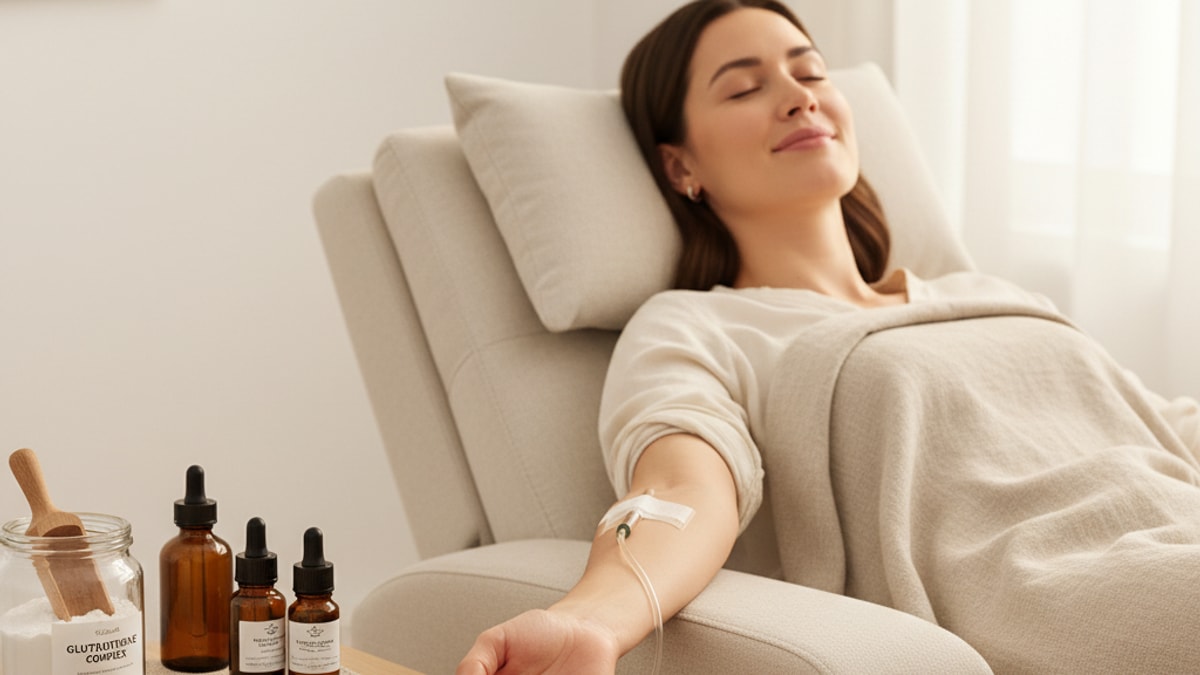
Glutathione IV Delaware — Medical Clinics & Mobile Services
Research from Johns Hopkins Medicine found that intravenous glutathione administration achieves plasma concentrations 100–1,000 times higher than oral supplementation within 15 minutes of infusion. Oral glutathione undergoes first-pass hepatic metabolism that destroys up to 80% of the compound before systemic circulation. For Delaware residents seeking glutathione IV therapy, that mechanism matters because it determines whether you're paying for a placebo effect or measurable tissue-level antioxidant replenishment.
Our team has reviewed glutathione IV providers across Wilmington, Newark, Dover, and Rehoboth Beach. The regulatory landscape, dosing protocols, and cost structures vary dramatically between medical clinics, wellness spas, and mobile IV services. The difference between a legitimate medical intervention and a wellness trend comes down to three factors most directories never explain.
What is glutathione IV therapy and how does it differ from oral glutathione supplements?
Glutathione IV therapy delivers reduced L-glutathione directly into the bloodstream via intravenous infusion, bypassing digestive breakdown that limits oral bioavailability to less than 20%. Standard IV protocols in Delaware administer 600mg to 2,000mg per session over 20–40 minutes, achieving peak plasma levels within 30 minutes that persist for 4–6 hours before hepatic metabolism. Oral glutathione, by contrast, is largely degraded by gastric acid and intestinal peptidases before reaching systemic circulation. The tripeptide structure (glutamate-cysteine-glycine) makes it particularly vulnerable to enzymatic cleavage during digestion.
The most common misconception about glutathione IV Delaware services is that all providers use pharmaceutical-grade compounds under medical supervision. Many wellness spas and mobile IV companies operate with compounded formulations prepared by out-of-state pharmacies without on-site physician oversight. This article covers which Delaware facilities maintain medical director protocols, what dosage ranges actually appear in clinical literature, and what preparation mistakes turn an expensive infusion into saline with trace antioxidant activity.
Where to Access Glutathione IV Delaware Services
Glutathione IV Delaware providers fall into three distinct operational categories: hospital-affiliated medical spas with on-staff physicians, independent wellness clinics operating under nurse practitioner or physician assistant supervision, and mobile IV services that travel to residential or commercial locations. ChristianaCare's Helen F. Graham Cancer Center in Newark offers glutathione IV as part of integrative oncology protocols under direct physician administration. Dosing follows Memorial Sloan Kettering's supportive care guidelines with 1,200–1,800mg per session. Beebe Healthcare's Rehoboth Beach campus operates a wellness center that provides glutathione IV under registered nurse administration with standing orders from an internal medicine physician.
Independent wellness clinics across Wilmington's Trolley Square and downtown Dover typically operate under Delaware's nurse practitioner collaborative practice agreements. The supervising physician reviews protocols quarterly but isn't present during infusions. Mobile IV companies like Drip Hydration and The IV Doc serve New Castle County and Sussex County with traveling nurses who carry pre-mixed glutathione bags prepared by 503B compounding pharmacies registered with the FDA. The legal framework matters: Delaware Code Title 24, Chapter 19 requires physician oversight for IV therapy but allows nurses to administer under standing orders, which is how most non-hospital providers operate.
Dosage protocols at Delaware glutathione IV providers range from 600mg 'maintenance' infusions marketed for general wellness to 2,000mg 'high-dose' protocols positioned for skin brightening or detoxification support. Clinical evidence for specific outcomes varies dramatically by dose. The University of Colorado's 2017 pilot study on Parkinson's disease used 1,400mg glutathione IV three times weekly and showed modest motor function improvement, while dermatology literature contains no randomised controlled trials demonstrating skin lightening efficacy at any IV glutathione dose. We've found that most Delaware providers don't cite specific clinical trials when describing expected outcomes. They reference 'antioxidant support' and 'cellular health' without mechanistic detail.
Glutathione IV Delaware Cost Structure and Insurance Coverage
Pricing for glutathione IV Delaware sessions ranges from $150 for a 600mg infusion at independent wellness clinics to $400 for a 2,000mg mobile service visit with add-on vitamins like vitamin C or B-complex. ChristianaCare's integrative oncology glutathione IV costs $225 per 1,200mg session when prescribed as part of chemotherapy supportive care. These sessions may qualify for insurance reimbursement under specific CPT codes if documented as medical necessity rather than wellness. Most Delaware health insurers including Highmark Blue Cross Blue Shield Delaware and Aetna classify standalone glutathione IV as 'not medically necessary' and deny coverage unless it's part of a documented treatment plan for conditions like chemotherapy-induced neuropathy.
Mobile IV services operating in Delaware add $50–$75 travel fees for locations outside Wilmington city limits. A standard 1,000mg glutathione IV from The IV Doc costs $275 base plus $60 travel to Lewes or Middletown. Package pricing reduces per-session cost: a six-session glutathione IV series at Reset IV Wellness in Newark drops from $200 per session to $165 per session when prepaid. The practical cost consideration isn't the sticker price. It's the frequency required to maintain claimed benefits. Glutathione has a serum half-life of approximately 2–3 hours, meaning plasma levels return to baseline within 24 hours of a single infusion. Providers marketing skin brightening or 'detox' effects typically recommend weekly sessions for 8–12 weeks, which translates to $1,200–$4,800 in total cost.
Compounding pharmacy sourcing affects both price and quality. Delaware providers using FDA-registered 503B facilities like Olympia Pharmaceuticals or Avella Specialty Pharmacy pay $40–$60 per 1,200mg vial wholesale, while providers sourcing from unregistered compounders may pay $15–$25 per vial. That cost difference directly impacts the glutathione purity and sterility verification. 503B facilities perform endotoxin testing and high-performance liquid chromatography on every batch, while state-licensed 503A pharmacies (which compound for individual patient prescriptions) don't always conduct batch-level potency testing.
Medical Oversight Requirements for Glutathione IV Delaware
Delaware Board of Medical Licensure and Discipline regulations require that all intravenous therapy be administered under physician direction, but 'direction' allows for collaborative practice agreements where a physician reviews protocols without being physically present during infusions. Most glutathione IV Delaware providers outside hospital settings operate this way. A supervising physician signs off on standard operating procedures, dosing guidelines, and contraindication screening, while nurse practitioners or registered nurses conduct the actual infusions. The legal gray area appears when mobile IV companies use out-of-state physicians as medical directors for Delaware operations. Delaware Code doesn't explicitly prohibit this, but the physician must hold an active Delaware medical license to legally supervise practice within the state.
Contraindication screening varies dramatically between providers. Hospital-affiliated services like ChristianaCare's integrative oncology program require complete metabolic panels and liver function tests before initiating glutathione IV. Elevated bilirubin or hepatic enzyme levels may indicate impaired glutathione metabolism that would contraindicate high-dose IV administration. Independent wellness clinics typically use questionnaire-based screening that asks about allergies, current medications, and history of asthma (glutathione IV can trigger bronchospasm in asthmatics). Mobile services we've reviewed often use the same questionnaire but don't verify responses with laboratory data.
Adverse event protocols are the clearest signal of medical oversight quality. Legitimate medical facilities maintain crash carts with epinephrine, diphenhydramine, and corticosteroids on-site in case of anaphylaxis. Glutathione IV rarely causes severe allergic reactions, but sulfur-sensitive individuals can experience acute reactions requiring immediate intervention. Mobile IV services operating in residential settings don't carry full crash carts due to transport constraints. They typically carry epinephrine autoinjectors and oral antihistamines, which is sufficient for mild reactions but inadequate for anaphylaxis requiring IV medication and airway management.
Glutathione IV Delaware: Treatment Protocol Comparison
| Provider Type | Typical Dose Range | Session Duration | Medical Director Present | Laboratory Screening | Cost Per Session | Location Flexibility |
|---|---|---|---|---|---|---|
| Hospital Integrative Medicine (ChristianaCare) | 1,200–1,800mg | 30–45 minutes | Physician on-site | CBC, CMP, LFTs required | $225–$300 | Fixed clinic only |
| Independent Wellness Clinic (Reset IV Wellness) | 600–1,500mg | 20–30 minutes | Physician reviews protocols quarterly | Questionnaire only | $165–$250 | Fixed clinic only |
| Mobile IV Service (Drip Hydration, The IV Doc) | 1,000–2,000mg | 20–40 minutes | Out-of-state physician medical director | Questionnaire only | $275–$400 + travel fee | Travels to patient location |
| Medical Spa (Non-Hospital) | 600–1,200mg | 15–25 minutes | Nurse practitioner supervision | Varies by facility | $150–$200 | Fixed location |
Key Takeaways
- Glutathione IV therapy in Delaware ranges from $150 to $400 per session depending on dosage strength (600mg to 2,000mg) and whether the service is clinic-based or mobile.
- Intravenous glutathione achieves plasma concentrations 100–1,000 times higher than oral supplementation because it bypasses first-pass hepatic metabolism that destroys up to 80% of orally ingested glutathione.
- Delaware health insurance including Highmark and Aetna typically classifies standalone glutathione IV as 'not medically necessary' and denies coverage unless prescribed as part of chemotherapy supportive care or documented neuropathy treatment.
- Hospital-affiliated providers like ChristianaCare require complete metabolic panels and liver function tests before initiating glutathione IV, while most wellness clinics and mobile services use questionnaire-based screening without laboratory verification.
- Glutathione has a serum half-life of 2–3 hours, meaning plasma levels return to baseline within 24 hours. Providers marketing sustained benefits typically recommend weekly sessions for 8–12 weeks at total costs of $1,200–$4,800.
- Mobile IV services operating in Delaware must use a medical director with an active Delaware medical license to legally supervise IV therapy under state regulations.
What If: Glutathione IV Delaware Scenarios
What If I'm Considering Glutathione IV for Skin Brightening?
Request the provider cite a peer-reviewed dermatology study demonstrating skin lightening efficacy at the proposed dose. No randomised controlled trials exist supporting this indication. Glutathione's proposed skin brightening mechanism involves inhibiting tyrosinase (the enzyme that produces melanin), but IV administration hasn't shown consistent melanin reduction in controlled studies. Filipino and Korean case series report subjective skin lightening after 8–12 weeks of twice-weekly 1,200mg glutathione IV, but these lack placebo controls and blinding. The effect may be seasonal variation or reporting bias rather than pharmacological action.
What If My Primary Care Doctor Hasn't Heard of Glutathione IV?
That's expected. Glutathione IV exists primarily in integrative medicine and wellness contexts rather than conventional internal medicine practice. Share published literature from reputable sources: the University of Louisville's 2014 pilot study on glutathione IV for Parkinson's disease (published in Journal of Parkinson's Disease) and Memorial Sloan Kettering's supportive care database entry on glutathione for chemotherapy-induced neuropathy. If the physician remains skeptical, that skepticism reflects the limited evidence base. Glutathione IV has physiological plausibility but minimal high-quality clinical trial data for most marketed indications.
What If I Have Asthma — Can I Still Receive Glutathione IV?
Inform the provider before the infusion. Asthmatics face elevated bronchospasm risk with IV glutathione administration. The mechanism isn't fully understood but may involve sulfhydryl group reactivity triggering airway smooth muscle contraction. Providers experienced with asthmatic patients pre-medicate with inhaled albuterol or slow the infusion rate to 10–15 minutes per 500mg glutathione to reduce bronchospasm incidence. If you've had prior severe asthma exacerbations requiring hospitalisation, oral glutathione precursors like N-acetylcysteine may be safer alternatives.
The Clinical Truth About Glutathione IV Delaware
Here's the honest answer: glutathione IV therapy sits in a regulatory and evidence gray zone that allows legitimate medical use alongside unsupported wellness marketing. The intravenous route unquestionably achieves higher plasma glutathione than oral supplementation. That pharmacokinetic advantage is established. What isn't established is whether elevated plasma glutathione for 4–6 hours once weekly produces clinically meaningful outcomes for the conditions most Delaware providers market: 'detoxification,' immune support, anti-aging, or skin brightening.
The strongest evidence for glutathione IV exists in two narrow contexts: chemotherapy-induced peripheral neuropathy (where it may reduce oxaliplatin neurotoxicity) and Parkinson's disease motor symptoms (where small pilot studies show modest benefit). For everything else. Fatigue, skin appearance, hangover recovery, athletic performance. The evidence consists of case reports, patient testimonials, and theoretical mechanisms without controlled trial verification. That doesn't mean glutathione IV Delaware services are scams, but it does mean the outcomes are speculative rather than proven.
Providers claiming glutathione IV 'detoxifies' the body are misrepresenting physiology. Glutathione does conjugate toxins in hepatocytes (liver cells), but that process occurs intracellularly using glutathione synthesised within the cell, not glutathione delivered via bloodstream. Intravenous glutathione doesn't cross cell membranes intact; it's broken down into constituent amino acids (glutamate, cysteine, glycine) before cellular uptake. Those amino acids can then be used to synthesise new intracellular glutathione, but that's mechanistically different from 'delivering glutathione to cells' the way marketing materials often describe.
If you're exploring glutathione IV Delaware options because a provider recommended it for a specific medical condition. Ask for the peer-reviewed study supporting that indication at that dose. If they can't provide one, you're participating in an unproven intervention. That's not inherently wrong if you understand the evidence limitations and the financial commitment, but it should be a fully informed choice rather than one based on wellness marketing claims.
Glutathione IV therapy represents one of many compounds where biochemical plausibility outpaces clinical proof. The substance matters physiologically, but whether exogenous IV administration translates to the outcomes patients seek remains largely undemonstrated in rigorous trials. Delaware residents considering this therapy should weigh that evidence gap against the $1,200–$4,800 cost of a typical treatment series and the lack of insurance coverage for wellness indications.
For Delaware patients seeking medically-supervised metabolic support with stronger evidence backing, TrimRx provides telehealth consultations for FDA-registered GLP-1 medications like semaglutide and tirzepatide. Compounds with Phase 3 trial data demonstrating reproducible weight loss outcomes. We mean this sincerely: metabolic health runs on interventions with documented mechanisms and quantified results, not on antioxidant infusions with speculative benefits and 24-hour clearance windows.
Frequently Asked Questions
How long do the effects of glutathione IV last after a single session?▼
Plasma glutathione levels return to baseline within 24 hours of a single IV infusion due to the compound’s 2–3 hour serum half-life and rapid hepatic metabolism. The immediate antioxidant elevation lasts 4–6 hours post-infusion before enzymatic breakdown reduces circulating levels. Providers recommending weekly sessions for sustained benefits are acknowledging this short duration — glutathione IV doesn’t produce lasting tissue-level changes from a single administration.
Is glutathione IV covered by health insurance in Delaware?▼
Most Delaware health insurers including Highmark Blue Cross Blue Shield and Aetna classify standalone glutathione IV as ‘not medically necessary’ and deny coverage for wellness indications like skin brightening or general antioxidant support. Coverage may be approved when glutathione IV is prescribed as part of chemotherapy supportive care for documented peripheral neuropathy or as adjunct therapy in hospital-based integrative oncology programs — these require ICD-10 diagnosis codes linking the infusion to an active medical condition.
What is the difference between glutathione IV at a hospital versus a mobile service?▼
Hospital-affiliated glutathione IV services like ChristianaCare’s integrative oncology program require laboratory screening (complete metabolic panel, liver function tests) before initiating therapy and maintain physician presence on-site during infusions. Mobile IV services typically use questionnaire-based screening without laboratory verification and operate under out-of-state physician medical director supervision rather than on-site physician oversight. Hospital services also maintain full crash carts with IV medications for managing severe allergic reactions, while mobile services carry epinephrine autoinjectors and oral antihistamines only.
Can glutathione IV cause side effects or allergic reactions?▼
Glutathione IV is generally well-tolerated but can trigger bronchospasm in asthmatic patients due to sulfhydryl group reactivity affecting airway smooth muscle. Rare allergic reactions including flushing, rash, and anaphylaxis have been documented in sulfur-sensitive individuals. Infusion site reactions (pain, redness, phlebitis) occur in approximately 2–5% of patients when glutathione is administered too rapidly or in high concentrations without adequate dilution. Providers experienced with these risks pre-medicate asthmatics with albuterol and slow infusion rates to 10–15 minutes per 500mg.
How does IV glutathione compare to oral glutathione supplements for bioavailability?▼
Intravenous glutathione achieves plasma concentrations 100–1,000 times higher than oral supplementation because it bypasses first-pass hepatic metabolism and gastrointestinal enzymatic degradation. Oral glutathione undergoes breakdown by gastric acid and intestinal peptidases, with less than 20% reaching systemic circulation intact. The tripeptide structure (glutamate-cysteine-glycine) makes oral glutathione particularly vulnerable to enzymatic cleavage before absorption. For this reason, oral glutathione precursors like N-acetylcysteine (which provides cysteine for intracellular glutathione synthesis) often demonstrate better functional outcomes than intact oral glutathione.
What medical conditions have clinical evidence supporting glutathione IV use?▼
The strongest clinical evidence for glutathione IV exists for chemotherapy-induced peripheral neuropathy (particularly oxaliplatin-related neurotoxicity) and Parkinson’s disease motor symptoms, based on small pilot studies and case series. The University of Louisville’s 2014 pilot study showed modest motor function improvement with 1,400mg glutathione IV three times weekly in Parkinson’s patients. Memorial Sloan Kettering’s supportive care database lists glutathione IV as a potential adjunct for reducing chemotherapy side effects, though evidence quality is rated as ‘preliminary.’ No high-quality randomised controlled trials support glutathione IV for skin brightening, detoxification, immune support, or athletic performance.
Do I need a prescription for glutathione IV in Delaware?▼
Yes — Delaware law classifies intravenous therapy as a medical procedure requiring physician direction, which means a prescriber (physician, nurse practitioner, or physician assistant) must evaluate you and issue orders before glutathione IV administration. Most Delaware wellness clinics and mobile IV services conduct brief virtual consultations where a nurse practitioner reviews your health history and contraindications before authorising the infusion. Hospital-based services require in-person evaluation before initiating therapy.
How many glutathione IV sessions are typically recommended?▼
Providers marketing glutathione IV for skin brightening or wellness benefits typically recommend 8–12 weekly sessions based on anecdotal protocols from Asian dermatology clinics, not clinical trial data. This frequency reflects glutathione’s 24-hour clearance time — weekly dosing maintains elevated plasma levels one day per week but doesn’t produce sustained tissue-level accumulation. Hospital-based integrative oncology programs using glutathione IV for chemotherapy supportive care often administer it 2–3 times weekly during active chemotherapy cycles, then discontinue after treatment completion.
What should I ask a Delaware glutathione IV provider before booking?▼
Ask for the compounding pharmacy source and whether they’re an FDA-registered 503B facility — this determines whether the glutathione undergoes batch-level potency and sterility testing. Request the medical director’s name and Delaware medical license number to verify they’re legally authorised to supervise IV therapy in the state. Ask what laboratory screening is performed before initiating therapy (questionnaire-only versus metabolic panel and liver function tests). Finally, ask the provider to cite a peer-reviewed study supporting glutathione IV for your specific health goal — if they can’t provide one, you’re participating in an unproven intervention.
Can I travel to Delaware specifically for glutathione IV therapy?▼
Yes, but verify the provider accepts out-of-state patients — some Delaware medical facilities require established patient relationships or Delaware residency for IV therapy services. Mobile IV companies operating in Delaware can serve hotel locations in Wilmington, Rehoboth Beach, or Dover without residency requirements. If you’re traveling from a state where telemedicine prescribing is more restrictive (like New York or California), confirm the Delaware provider can legally issue orders for you as an out-of-state patient under Delaware’s telemedicine statutes.

Transforming Lives, One Step at a Time
Keep reading

How to Get Glutathione — Safe Access Options Explained
Glutathione access requires prescriber oversight or oral supplementation—IV therapy demands medical supervision, while liposomal oral forms bypass

Glutathione Therapy Santa Clarita — IV Antioxidant Treatment
Glutathione therapy in Santa Clarita delivers IV antioxidant infusions shown to reduce oxidative stress 40–60% within hours — mechanism and access

Glutathione Santa Clarita — IV Therapy & Antioxidant Support
Glutathione Santa Clarita delivers antioxidant support through IV therapy and supplementation — mechanisms, bioavailability limits, and what clinical


