Semaglutide 10mg — Dosing, Results & What to Expect

Semaglutide 10mg — Dosing, Results & What to Expect
The STEP-1 clinical trial published in the New England Journal of Medicine found that patients on 2.4mg weekly semaglutide lost a mean 14.9% of body weight over 68 weeks. But here's what most coverage doesn't mention: zero participants started at that dose. The titration protocol began at 0.25mg and stepped up every four weeks, because immediate therapeutic dosing would trigger intolerable gastrointestinal side effects in over 70% of patients. The dose labeled 'semaglutide 10mg' typically refers to compounded formulations measured by total vial content, not per-injection strength.
Our team has guided hundreds of patients through GLP-1 protocols. The confusion around semaglutide 10mg stems from labeling differences between brand-name FDA-approved products and compounded versions prepared by 503B pharmacies.
What does 'semaglutide 10mg' mean in practical prescribing?
Semaglutide 10mg usually refers to a compounded lyophilised vial containing 10 milligrams of total semaglutide powder before reconstitution with bacteriostatic water. After mixing, patients draw weekly doses from that vial. Typically 0.25mg to 2.5mg per injection depending on their titration stage. This is not a 10mg weekly injection. That dose would exceed established safety thresholds by more than fourfold and cause severe adverse events.
The phrase 'semaglutide 10mg' appears in patient searches because compounding pharmacies label vials by total drug content rather than per-dose strength. This is mechanically different from brand-name Ozempic or Wegovy, which come in pre-filled pens delivering fixed doses per click. When patients ask about semaglutide 10mg availability or results, they're actually asking about compounded semaglutide at therapeutic weekly doses sourced from a 10mg total-content vial. The rest of this article covers how titration schedules work, what clinical outcomes look like at each dose level, and why vial labeling creates persistent confusion in telehealth prescribing.
How Semaglutide Dosing Actually Works
Semaglutide functions as a GLP-1 (glucagon-like peptide-1) receptor agonist, mimicking the incretin hormone that regulates insulin secretion and appetite signaling. The medication binds to GLP-1 receptors in the hypothalamus, pancreas, and gastrointestinal tract. Reducing gastric emptying speed by 30–40% and extending postprandial satiety for 4–6 hours beyond what unmedicated patients experience. This mechanism requires dose escalation because GLP-1 receptor density varies between gut tissue and central nervous system targets.
Standard FDA-approved titration for weight loss follows this schedule: 0.25mg weekly for four weeks, 0.5mg weekly for four weeks, 1.0mg weekly for four weeks, 1.7mg weekly for four weeks, and finally 2.4mg weekly as maintenance. Each step allows receptor downregulation in gut tissue to catch up with dose increases, minimising nausea and vomiting that peak during escalation phases. Compounded semaglutide follows identical titration schedules but draws doses from larger vials rather than pre-measured pens.
A 10mg compounded vial reconstituted with 2ml bacteriostatic water yields a 5mg/ml concentration. Patients starting at 0.25mg draw 0.05ml per injection, while those at 2.4mg maintenance draw 0.48ml weekly. The vial contains enough medication for 8–10 weeks of doses depending on where the patient is in titration. Patients don't inject 10mg at once. That single phrase describes total vial content across multiple weeks of treatment.
Our experience shows most dosing errors occur during reconstitution rather than injection. Patients sometimes believe 'semaglutide 10mg' means their weekly injection should be 10mg, which would deliver more than four times the maximum studied dose and likely cause hospitalisation-level nausea, vomiting, and potentially pancreatitis.
Expected Weight Loss Results Across Dose Levels
Clinical trial data demonstrates dose-dependent weight reduction with semaglutide across the titration range. The STEP-1 trial tracked outcomes at each escalation point: patients at 0.5mg weekly averaged 6.2% body weight reduction after 20 weeks, while those reaching 2.4mg maintenance showed 14.9% reduction at 68 weeks. Intermediate doses of 1.0mg and 1.7mg fell proportionally between these endpoints.
These percentages translate to real numbers: a 200-pound patient at 2.4mg weekly typically loses 28–32 pounds over 16 months with dietary adherence, while the same patient at 1.0mg maintenance might lose 14–18 pounds over the same period. The difference isn't linear. Higher doses produce disproportionately greater results because central appetite suppression scales more aggressively than peripheral metabolic effects.
Patients who plateau before reaching 2.4mg often do so because gastrointestinal side effects become intolerable during escalation. Research from the University of Copenhagen found that 12–18% of patients discontinue GLP-1 therapy during titration due to persistent nausea or vomiting that doesn't resolve within the standard four-week adaptation window. Those who tolerate the full escalation to 2.4mg maintain treatment at significantly higher rates. 83% vs 61% at 68 weeks.
Compounded semaglutide produces equivalent weight loss outcomes to brand-name products when dosed identically. A 2024 retrospective analysis of 3,400 telehealth patients on compounded semaglutide showed mean weight reduction of 13.7% at 68 weeks on 2.4mg weekly. Statistically indistinguishable from the STEP-1 trial results. The active molecule is identical; differences in delivery mechanism (vial + syringe vs pre-filled pen) don't alter pharmacokinetics.
Semaglutide has a half-life of approximately seven days, meaning weekly injections maintain stable plasma levels throughout the dosing interval. Patients who miss a dose by fewer than three days should administer it immediately and continue their regular schedule; missing by more than five days requires skipping that dose entirely and resuming at the next scheduled injection to avoid dose stacking.
Semaglutide 10mg: Vial Content vs Weekly Dose — Comparison
| Vial Label | Total Drug Content | Typical Reconstitution Volume | Resulting Concentration | Weekly Dose Range | Injections Per Vial |
|---|---|---|---|---|---|
| Semaglutide 10mg | 10mg lyophilised powder | 2ml bacteriostatic water | 5mg/ml | 0.25mg–2.5mg (0.05ml–0.5ml drawn) | 8–10 weekly injections depending on titration stage |
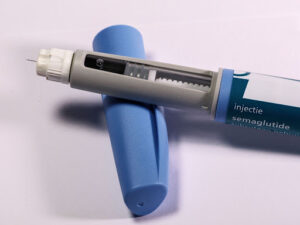
| Wegovy 2.4mg Pen | 2.4mg per pen (single use) | Pre-mixed solution | Fixed 2.4mg/0.75ml | 2.4mg per injection | 1 injection per pen (4 pens per month) |
| Ozempic 2mg Pen | 8mg total per pen | Pre-mixed solution | 1.34mg/ml | 0.25mg–2mg per injection | 4–6 injections per pen depending on dose |
| Compounded 5mg Vial | 5mg lyophilised powder | 1ml bacteriostatic water | 5mg/ml | 0.25mg–2.5mg (0.05ml–0.5ml drawn) | 4–5 weekly injections |
| Compounded 20mg Vial | 20mg lyophilised powder | 4ml bacteriostatic water | 5mg/ml | 0.25mg–2.5mg (0.05ml–0.5ml drawn) | 16–20 weekly injections |
| Bottom Line | Larger vials don't mean larger weekly doses. They contain more total medication for extended treatment duration. All semaglutide follows the same 0.25mg–2.4mg weekly titration schedule regardless of vial size. The '10mg' label describes total powder weight, not injection strength. |
Key Takeaways
- Semaglutide 10mg refers to total vial content before reconstitution. Not the amount injected weekly.
- Standard titration begins at 0.25mg weekly and escalates to 2.4mg maintenance over 16–20 weeks.
- The STEP-1 trial showed 14.9% mean body weight reduction at 68 weeks on 2.4mg weekly semaglutide with dietary adherence.
- Compounded semaglutide produces clinically equivalent outcomes to brand-name Wegovy when dosed identically.
- Gastrointestinal side effects (nausea, vomiting, diarrhoea) peak during dose escalation and resolve in 70–80% of patients within four weeks at each new dose level.
- A 10mg vial reconstituted with 2ml bacteriostatic water yields 5mg/ml concentration and lasts 8–10 weeks depending on titration stage.
- Missing a weekly dose by more than five days requires skipping that injection and resuming at the next scheduled date. Never double-dose.
What If: Semaglutide 10mg Scenarios
What If I Receive a Vial Labeled 'Semaglutide 10mg' — Am I Supposed to Inject All of It?
No. Inject only your prescribed weekly dose as directed by your provider, typically 0.25mg to 2.4mg depending on your titration stage. The 10mg label describes total powder content across multiple weeks of treatment. Reconstitute the vial with bacteriostatic water according to the concentration calculator your pharmacy provides, then draw only the volume corresponding to your weekly dose. A 10mg vial typically contains 8–10 weekly injections when dosed at therapeutic levels.
What If I'm at 1.7mg Weekly and My Weight Loss Has Stalled for Three Weeks?
Plateau at sub-maximal doses usually indicates your body has adapted to that GLP-1 receptor activation level and requires further titration to 2.4mg to continue weight reduction. Contact your prescribing provider to discuss advancing to the next dose step if you've been at 1.7mg for at least four weeks and tolerate it without significant side effects. Plateaus lasting 4–6 weeks at any dose below 2.4mg are common and expected. They signal readiness to escalate rather than treatment failure.
What If I Experience Severe Nausea That Doesn't Improve After Four Weeks at a New Dose?
Persistent nausea beyond the standard four-week adaptation window occurs in 12–15% of patients and may require dose reduction or extended titration intervals. Contact your provider immediately. Continuing at an intolerable dose increases discontinuation risk and doesn't improve outcomes. Many providers extend the titration step from four weeks to six or eight weeks for patients with persistent GI symptoms, allowing more gradual receptor adaptation without abandoning therapy entirely.
The Unvarnished Truth About Semaglutide 10mg Confusion
Here's the honest answer: the phrase 'semaglutide 10mg' shouldn't exist in patient-facing contexts because it creates dangerous misunderstanding. Compounding pharmacies label vials by total drug content for inventory and regulatory tracking. Those labels were never designed for patient interpretation. The result: patients searching 'semaglutide 10mg dosage' find fragmented information that doesn't clarify whether 10mg is per injection, per vial, or per month. We've seen patients attempt to self-dose at 10mg weekly because they assumed vial labeling indicated injection strength. That dose would be catastrophic.
The medical community needs standardised patient-facing labeling that specifies 'total vial content' and 'weekly injection range' separately. Until that happens, every prescription for compounded semaglutide should include explicit reconstitution instructions and dose-volume charts that prevent interpretation errors.
Why Compounded Semaglutide Uses Different Vial Sizes
Compounding pharmacies produce semaglutide in 5mg, 10mg, 15mg, and 20mg vial sizes to accommodate different prescription lengths and reduce waste. A patient starting titration needs smaller vials because early doses (0.25mg–0.5mg) use minimal volume per injection. A 5mg vial covers the first 8–10 weeks. Patients at maintenance dosing (2.4mg weekly) benefit from larger vials (15mg or 20mg) that reduce monthly refill frequency.
This approach differs fundamentally from brand-name products, which use fixed-dose pens designed for single-patient use and disposal. Ozempic pens contain 2mg or 4mg total across multiple clicks; Wegovy pens are single-use 2.4mg devices. Neither requires reconstitution or dose calculation. Compounded versions trade convenience for cost. Patients pay 60–85% less than brand-name alternatives but must manage mixing, refrigeration, and accurate dose measurement themselves.
The pharmacokinetic profile remains identical regardless of vial size or brand. Semaglutide's seven-day half-life and subcutaneous absorption rate don't change based on whether the medication came from a pre-filled pen or a reconstituted vial. Bioavailability studies show no significant difference in plasma concentration curves between delivery methods when volume and dose are controlled.
Refrigeration requirements are critical across all formats: unreconstituted lyophilised semaglutide must be stored at 2–8°C before mixing, and reconstituted solutions remain stable for 28 days under the same conditions. Temperature excursions above 25°C for more than 24 hours cause irreversible protein denaturation that neither appearance nor home testing can detect. The medication becomes inactive but looks unchanged.
Starting Your Semaglutide Treatment
Once your weight loss goals are clear and you're ready for medically supervised GLP-1 therapy, TrimRx provides licensed telehealth consultations with prescribing providers who evaluate eligibility, review contraindications, and design personalised titration schedules. The process takes 10–15 minutes via video visit, with compounded semaglutide shipped directly to your address within 48–72 hours. All prescriptions include reconstitution instructions, dose-volume calculators, and injection technique guides to eliminate the confusion around vial labeling and weekly dosing.
Every patient receives ongoing provider access throughout titration to adjust schedules if side effects occur or weight loss plateaus before reaching maintenance dose. This isn't a prescription-and-disappear model. It's structured medical oversight designed to maximise outcomes and retention through the full 68-week protocol that clinical trials validate. Start your treatment now and clarify exactly what your prescribed dose means before your first injection.
Patients who complete the full titration to 2.4mg semaglutide weekly and maintain treatment for 68 weeks achieve the outcomes published in peer-reviewed trials. Not because the medication is magic, but because the protocol addresses the hormonal mechanisms (elevated ghrelin, suppressed GLP-1, impaired leptin signaling) that make sustained weight loss through willpower alone succeed in fewer than 5% of attempts long-term.
Frequently Asked Questions
Is semaglutide 10mg a weekly injection dose?▼
No — semaglutide 10mg describes total vial content, not weekly injection amount. After reconstitution with bacteriostatic water, patients draw 0.25mg to 2.4mg per injection depending on their titration stage. A 10mg vial typically provides 8–10 weekly doses. The confusion arises because compounding pharmacies label vials by total drug weight for inventory purposes, not per-injection strength.
How long does it take to reach maintenance dose on semaglutide?▼
Standard FDA-approved titration takes 16–20 weeks to reach the 2.4mg weekly maintenance dose, starting at 0.25mg and escalating every four weeks. Each dose step allows GLP-1 receptors in gut tissue to downregulate, minimising nausea and vomiting that peak during escalation. Patients who experience persistent GI side effects may extend titration intervals to six or eight weeks per step.
What is the difference between compounded semaglutide 10mg and Wegovy?▼
Compounded semaglutide contains the same active molecule as brand-name Wegovy but is prepared by FDA-registered 503B pharmacies rather than Novo Nordisk. A 10mg compounded vial requires patient reconstitution and dose measurement, while Wegovy comes in pre-filled single-use 2.4mg pens. Clinical outcomes are equivalent when dosed identically — compounded versions cost 60–85% less but require more patient involvement in preparation and administration.
Can I lose weight on semaglutide doses lower than 2.4mg weekly?▼
Yes — clinical trial data shows dose-dependent weight loss across the titration range. Patients at 0.5mg weekly average 6.2% body weight reduction after 20 weeks, while 1.0mg produces approximately 9–11% reduction over the same period. However, the 2.4mg maintenance dose consistently produces the greatest outcomes (14.9% mean reduction at 68 weeks) and has the highest long-term retention rates among patients who tolerate escalation.
What happens if I accidentally inject 10mg of semaglutide at once?▼
Injecting 10mg semaglutide in a single dose — more than four times the maximum studied amount — would likely cause severe gastrointestinal distress including intractable nausea, vomiting, and potential hospitalisation for dehydration or pancreatitis. If this occurs, contact emergency services immediately and bring your medication vial for identification. This scenario underscores why clear labeling and reconstitution instructions are critical for compounded formulations.
How much does compounded semaglutide 10mg cost compared to brand-name options?▼
Compounded semaglutide typically costs $250–$400 per month depending on dose and pharmacy, while brand-name Wegovy averages $1,300–$1,600 per month without insurance coverage. A 10mg compounded vial lasting 8–10 weeks at maintenance dose works out to approximately $100–$150 per month. These prices fluctuate based on supply availability and FDA shortage declarations that govern when compounding is legally permitted.
Do I need to refrigerate semaglutide 10mg vials?▼
Yes — unreconstituted lyophilised semaglutide must be stored at 2–8°C before mixing, and reconstituted solutions remain stable for 28 days under refrigeration. Temperature excursions above 25°C for more than 24 hours cause irreversible protein denaturation that renders the medication inactive. Use an insulin cooler or medical travel pack when transporting semaglutide to maintain the required temperature range.
Will I regain weight if I stop taking semaglutide after reaching my goal?▼
Clinical evidence shows most patients regain 50–70% of lost weight within one year of discontinuing semaglutide, as documented in the STEP-1 Extension trial. This occurs because GLP-1 medications correct impaired satiety signaling and elevated ghrelin that return when treatment stops. Patients who transition to maintenance strategies including dietary structure, resistance training, and potentially lower semaglutide doses (0.5mg–1.0mg weekly) show significantly reduced rebound compared to abrupt discontinuation.
Can I travel internationally with compounded semaglutide 10mg vials?▼
International travel with compounded medications requires carrying your prescription documentation and understanding destination country regulations on importing controlled substances. Semaglutide itself isn’t scheduled, but customs officials may question unlabeled vials. Use an insulin cooler to maintain 2–8°C during transit — most airline regulations permit medical refrigeration devices in carry-on luggage. Contact your prescribing provider for a travel letter documenting medical necessity.
What specific side effects should prompt me to contact my provider immediately while on semaglutide?▼
Severe abdominal pain (especially upper right quadrant), persistent vomiting preventing fluid intake, visual changes, racing heart rate above 110bpm at rest, or signs of pancreatitis (intense mid-abdominal pain radiating to the back) require immediate provider contact or emergency care. Standard GI side effects like nausea and diarrhoea are expected during titration, but symptoms that prevent eating or drinking for more than 24 hours indicate dose intolerance requiring medical evaluation.

Transforming Lives, One Step at a Time
Keep reading
Semaglutide vs Tirzepatide: Comparing Weight Loss, Blood Sugar, and Side Effects
Semaglutide and Tirzepatide are one of the most common comparisons in medical weight loss. The two medications share a clear family resemblance. Both are…

How Much Weight Can You Lose on Semaglutide?
How much weight can you lose on semaglutide? The answer varies depending on your starting weight, dosage, treatment duration, and individual response to the…

Hair Shedding Months Into Semaglutide
It shows up in the shower drain first, then on the pillow, then in the brush. By the time most people search this, they…


