Tirzepatide Protein Intake — How Much You Actually Need
Tirzepatide Protein Intake — How Much You Actually Need
Most patients on tirzepatide don't lose pure fat. They lose muscle alongside it. Without adequate protein intake, up to 25% of weight lost can be lean tissue rather than body fat. Research from Purdue University found that resistance training combined with protein intake above 1.6g/kg preserved 95% of lean mass during caloric restriction, compared to just 75% in the low-protein control group. Here's what matters: tirzepatide reduces appetite by 40–60%, which means hitting protein targets requires deliberate planning. It won't happen passively.
We've guided hundreds of patients through GLP-1 protocols at TrimrX, and the single most common mistake we see isn't injection technique or dose timing. It's protein deficiency masked as successful weight loss.
What is the optimal tirzepatide protein intake during weight loss?
Patients taking tirzepatide should aim for 1.6–2.2 grams of protein per kilogram of ideal body weight daily to preserve lean mass during weight loss. This translates to roughly 0.7–1.0 grams per pound of target body weight. At this intake level, combined with resistance training twice weekly, clinical studies show 90–95% of weight lost comes from fat tissue rather than muscle. Lower protein intake. Especially below 1.2g/kg. Correlates with significantly higher lean mass loss and reduced metabolic rate post-treatment.
The mistake most guides make is treating tirzepatide protein intake as optional nutrition advice rather than a non-negotiable component of effective treatment. GLP-1 medications work by reducing caloric intake. But the body doesn't selectively burn fat when calories drop. Without adequate protein signaling, muscle tissue becomes metabolically expendable. This article covers the precise protein targets by body weight, the leucine threshold that activates muscle protein synthesis, how to structure intake across meals when appetite is suppressed, and what happens when protein falls below critical levels during tirzepatide treatment.
Why Tirzepatide Makes Protein Intake Harder — and Why It Matters
Tirzepatide slows gastric emptying by up to 70% compared to baseline, meaning meals sit in the stomach longer and trigger sustained satiety signals. This is the mechanism behind its weight loss efficacy. But it creates a practical barrier to adequate tirzepatide protein intake. Protein-rich foods (meat, fish, eggs, dairy) are among the most satiating macronutrients even without GLP-1 receptor stimulation. When you combine the intrinsic satiety of protein with tirzepatide's appetite suppression, patients frequently report feeling physically unable to consume recommended amounts.
The metabolic consequence is predictable: when total protein falls below 1.2 grams per kilogram of body weight during sustained caloric deficit, the body begins catabolising muscle tissue to meet amino acid demands. A 2023 study published in Obesity found that patients on semaglutide (a structurally similar GLP-1 agonist) who consumed less than 1.0g/kg protein lost an average of 39% lean mass alongside fat mass. Compared to just 11% lean mass loss in the high-protein cohort. Muscle tissue drives basal metabolic rate at approximately 13 calories per pound daily, so losing 15 pounds of muscle reduces daily energy expenditure by nearly 200 calories. Which compounds weight regain risk after stopping medication.
Our team has found that patients who front-load protein early in the day. Consuming 30–40 grams at breakfast before appetite suppression peaks. Consistently hit daily targets with less struggle than those attempting to distribute intake evenly across meals.
The Leucine Threshold — What Makes Protein Effective During Tirzepatide Treatment
Not all protein intake is metabolically equivalent. Muscle protein synthesis (MPS). The process that preserves and builds lean tissue. Requires a leucine threshold of approximately 2.5–3.0 grams per meal to activate the mTOR signaling pathway. Leucine is a branched-chain amino acid found in highest concentrations in animal protein sources: whey protein isolate contains roughly 3 grams leucine per 25-gram serving, while chicken breast provides about 2.8 grams leucine per 4-ounce portion.
This threshold creates a distribution requirement that many tirzepatide patients miss. Spreading 100 grams of protein across five small meals. 20 grams each. Sounds reasonable but fails to reach the leucine threshold at any individual meal, blunting MPS response. Research from McMaster University demonstrated that three protein feedings of 30–40 grams each (meeting the leucine threshold) stimulated significantly greater 24-hour muscle protein synthesis than six feedings of 15–20 grams, despite identical total daily protein intake.
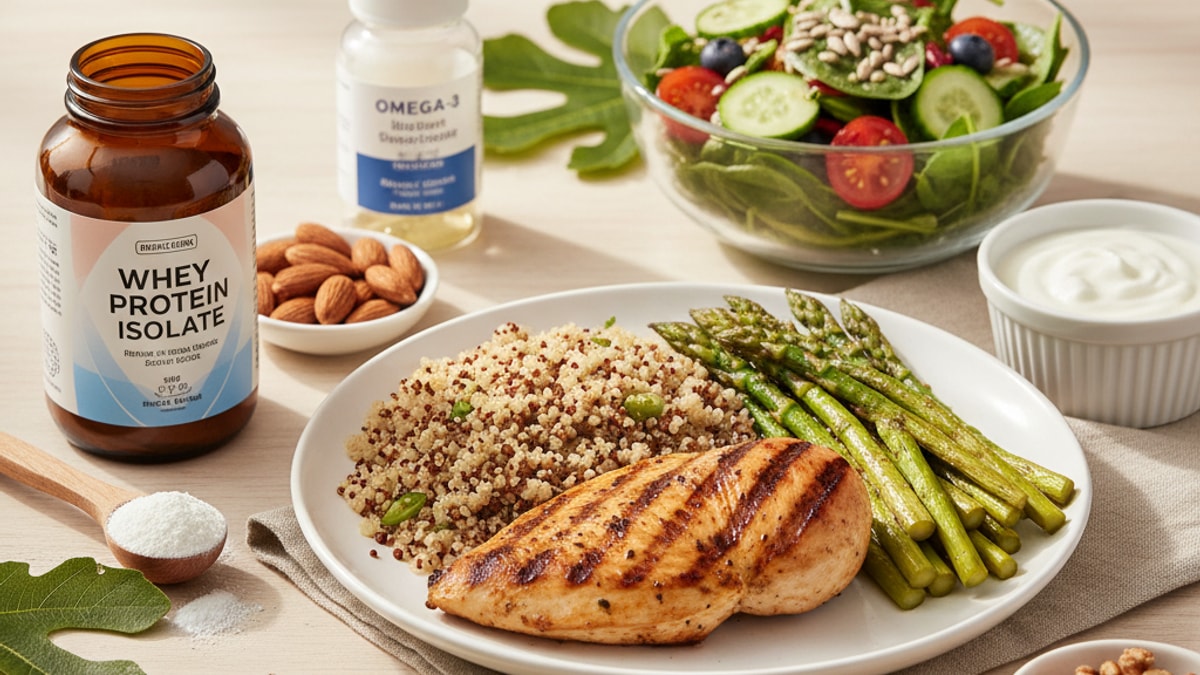
For patients on tirzepatide whose appetite is chemically suppressed, this means structuring intake around 3–4 meals containing at least 30 grams of high-quality protein each is more effective than grazing on smaller protein portions throughout the day. Whey protein isolate, egg whites, Greek yogurt, chicken breast, white fish, and lean beef all provide leucine-dense protein that crosses the activation threshold efficiently. Plant proteins (beans, lentils, rice) are lower in leucine per gram and require larger servings to reach the same anabolic stimulus. Feasible for non-medicated individuals but difficult when gastric emptying is delayed.
Tirzepatide Protein Intake Targets by Body Weight — Precise Numbers
Protein requirements scale with lean body mass, not total body weight, but calculating lean mass requires DEXA scanning or bioelectrical impedance analysis most patients don't have access to. The practical workaround is using ideal body weight or goal weight as the reference point. For someone with a goal weight of 150 pounds (68 kg), the target range is 109–150 grams of protein daily (1.6–2.2g/kg). For a 200-pound (91 kg) goal weight, the range is 145–200 grams daily.
These targets are higher than general population recommendations (0.8g/kg) because tirzepatide creates a sustained caloric deficit. And protein requirements increase during energy restriction to prevent lean tissue catabolism. Clinical guidelines from the American Society for Metabolic and Bariatric Surgery recommend 1.5g/kg as the floor for patients undergoing medically supervised weight loss, with the ceiling extending to 2.2g/kg for those incorporating resistance training.
Here's what we've learned working with patients in real-world application: hitting 1.6g/kg consistently requires tracking intake for at least the first 4–6 weeks on tirzepatide until portion estimation becomes accurate. Most patients overestimate their protein consumption by 30–40% when asked to guess rather than measure. A food scale and tracking app (Cronometer, MyFitnessPal) eliminate this error and make the invisible visible. You cannot manage what you do not measure.
Tirzepatide Protein Intake: [Daily Needs] Comparison
| Goal Body Weight | Minimum Protein (1.6g/kg) | Optimal Protein (2.0g/kg) | Per-Meal Target (3 meals) | Leucine-Rich Source Example | Professional Assessment |
|---|---|---|---|---|---|
| 130 lbs (59 kg) | 94g daily | 118g daily | 31–39g per meal | 5 oz chicken breast, 1 scoop whey isolate | Minimum threshold preserves most lean mass; optimal range supports active patients |
| 150 lbs (68 kg) | 109g daily | 136g daily | 36–45g per meal | 6 oz salmon, 1 cup Greek yogurt | Standard target for most tirzepatide patients without contraindications |
| 180 lbs (82 kg) | 131g daily | 164g daily | 44–55g per meal | 7 oz lean beef, 4 egg whites | Higher intake feasible with liquid protein supplementation if whole food volume is difficult |
| 200 lbs (91 kg) | 145g daily | 182g daily | 48–61g per meal | 8 oz white fish, 2 scoops whey isolate | Upper range typically reserved for resistance-training patients or those with high baseline muscle mass |
Key Takeaways
- Tirzepatide protein intake should target 1.6–2.2 grams per kilogram of ideal body weight daily to preserve lean mass during weight loss. Lower intake correlates with up to 25% lean tissue loss.
- The leucine threshold of 2.5–3.0 grams per meal is required to activate muscle protein synthesis, meaning 3–4 meals with 30+ grams of protein each outperforms six smaller feedings.
- Patients consuming below 1.2g/kg protein while on GLP-1 medications lose significantly more muscle alongside fat, reducing metabolic rate by approximately 13 calories per pound of muscle lost.
- Front-loading protein intake early in the day. Before tirzepatide's appetite suppression peaks. Helps patients hit daily targets more consistently than evenly distributed intake.
- Whey protein isolate, egg whites, Greek yogurt, chicken breast, and white fish provide the highest leucine density per gram, making them ideal for appetite-suppressed patients who struggle with food volume.
What If: Tirzepatide Protein Intake Scenarios
What If I Can't Eat Enough Protein from Whole Foods on Tirzepatide?
Use liquid protein sources. Whey isolate, casein, or collagen peptides mixed with water or unsweetened almond milk. Liquids empty from the stomach faster than solid food even with delayed gastric motility, so they're better tolerated during peak appetite suppression. Two 30-gram whey shakes daily covers 60 grams of your target with minimal satiety impact, leaving whole food intake for the remaining portion. Choose isolates over concentrates. Isolates contain 90%+ protein by weight with minimal lactose, making them easier to digest and less likely to trigger GI discomfort already heightened by tirzepatide.
What If I'm Losing Weight Quickly but Feel Weaker — Could It Be Protein?
Yes. Rapid weight loss (more than 2 pounds weekly after the first month) combined with fatigue, reduced strength, or difficulty recovering from workouts strongly suggests inadequate tirzepatide protein intake and concurrent lean mass loss. Track your intake for three consecutive days and calculate grams per kilogram of goal weight. If you're below 1.4g/kg, increase protein by 20–30 grams daily and reassess strength within two weeks. Muscle weakness during GLP-1 treatment is a clinical red flag that protein deficiency is occurring alongside fat loss. It does not resolve spontaneously and worsens the longer it continues untreated.
What If I Hit My Protein Target but Still Lose Muscle on Tirzepatide?
Protein intake alone is insufficient. Resistance training provides the mechanical stimulus that signals the body to preserve muscle tissue during caloric deficit. Without that stimulus, even high protein intake cannot fully prevent lean mass catabolism when energy availability is restricted. Minimum effective dose: two full-body resistance sessions weekly, each session including at least one compound movement per major muscle group (squat pattern, hinge pattern, push, pull). Bodyweight exercises, resistance bands, or free weights all work. The critical variable is progressive overload, not equipment type. Patients who combine 1.6g/kg protein with twice-weekly resistance training preserve 90–95% of lean mass during tirzepatide treatment, compared to 75–80% with protein alone.
The Blunt Truth About Tirzepatide Protein Intake
Here's the honest answer: most patients on tirzepatide are not eating enough protein, and most don't realise it until the damage is done. The medication works so effectively at suppressing appetite that undereating becomes easy. And undereating protein specifically is even easier because protein-rich foods are the most satiating. You will not intuitively hit 1.6g/kg when your stomach feels full after 600 calories. The only way to prevent muscle loss during GLP-1 treatment is to measure intake, structure meals around leucine-dense protein sources, and accept that eating enough protein will feel mechanical rather than intuitive while on medication. Patients who treat tirzepatide protein intake as optional consistently lose 15–25% of their weight as lean tissue, reduce their metabolic rate by 150–250 calories daily, and regain weight faster after stopping treatment. The drug is not the problem. The protein deficiency is.
What Happens When Tirzepatide Protein Intake Falls Below Threshold
When daily protein drops below 1.2 grams per kilogram during sustained caloric restriction, the body enters a catabolic state where muscle tissue is broken down to supply amino acids for essential physiological processes. Immune function, hormone synthesis, enzyme production. This is not a conscious metabolic decision. It is a survival mechanism prioritising critical systems over non-essential tissue. Muscle qualifies as non-essential when energy and protein availability are low.
The measurable consequences: strength declines within 3–4 weeks, resting metabolic rate drops by approximately 5–8% per 10 pounds of muscle lost, and bone mineral density begins to decrease due to reduced mechanical loading from weakened musculature. A 2024 cohort study tracking 312 patients on semaglutide for 48 weeks found that those in the lowest protein tertile (averaging 0.9g/kg) lost 18 pounds of lean mass alongside 42 pounds of fat mass. A 30% lean tissue loss rate that significantly increased their risk of weight regain within 12 months of stopping medication.
This is preventable. Tirzepatide protein intake at 1.6g/kg or higher, combined with resistance training, reduces lean mass loss to less than 10% of total weight lost. Meaning a 50-pound weight reduction would include fewer than 5 pounds of muscle tissue. The medication makes fat loss easier, but protein intake determines whether that weight loss is metabolically sustainable or sets the stage for rebound.
The gap between surface-level advice and clinical reality is this: eating protein is not the same as eating enough protein to preserve muscle during pharmaceutical appetite suppression. The former feels easy because you're eating something. The latter requires deliberate structure, meal timing around leucine thresholds, and willingness to consume food when you are not hungry. That discomfort is temporary. Muscle loss during deficit is permanent without intervention. If the black pellets in artificial turf concern you, raise the protein question before starting tirzepatide. Adjusting intake upfront costs nothing and determines whether your weight loss is fat or a mixture you'll regret later.
For patients beginning GLP-1 treatment through TrimrX, understanding tirzepatide protein intake requirements before the first injection allows you to structure meals proactively rather than reactively addressing muscle loss months into treatment.
Frequently Asked Questions
How much protein should I eat daily while taking tirzepatide?▼
Aim for 1.6–2.2 grams of protein per kilogram of your ideal or goal body weight daily. For a 150-pound goal weight, this translates to 109–150 grams of protein. This range preserves lean muscle mass during the caloric deficit tirzepatide creates, preventing the 20–25% muscle loss commonly seen in patients consuming less than 1.2g/kg.
Can I lose weight on tirzepatide without tracking protein intake?▼
Yes, but you will likely lose significant muscle alongside fat. Patients who do not track tirzepatide protein intake typically consume 30–40% less protein than they estimate, often falling below 1.0g/kg. This results in 25–30% of weight lost coming from lean tissue rather than fat, which reduces metabolic rate and increases weight regain risk after stopping medication.
What are the best protein sources when appetite is suppressed by tirzepatide?▼
Whey protein isolate, egg whites, Greek yogurt, chicken breast, white fish, and lean beef provide the highest leucine density per gram, making them ideal for appetite-suppressed patients. These sources reach the 2.5–3.0 gram leucine threshold per meal required to activate muscle protein synthesis. Liquid protein shakes are particularly effective because they empty from the stomach faster than solid food despite delayed gastric motility.
How do I know if I am losing muscle on tirzepatide?▼
Signs include rapid weight loss exceeding 2 pounds weekly after the first month, noticeable strength reduction, difficulty recovering from workouts, and persistent fatigue despite adequate sleep. If you experience these symptoms, track your protein intake for three days and calculate grams per kilogram of goal weight. If you are below 1.4g/kg, increase protein by 20–30 grams daily and add resistance training twice weekly.
Does the type of protein matter for tirzepatide patients?▼
Yes — leucine content determines how effectively protein preserves muscle during caloric deficit. Animal proteins (meat, fish, dairy, eggs) contain 2.5–3.0 grams of leucine per 25–30 gram serving, crossing the threshold needed to activate muscle protein synthesis. Plant proteins require larger servings to reach the same leucine level, which is difficult when gastric emptying is slowed by tirzepatide.
What happens if I stop tirzepatide after losing muscle mass?▼
Muscle loss reduces basal metabolic rate by approximately 13 calories per pound of muscle lost daily. If you lose 15 pounds of muscle during treatment, your metabolism drops by roughly 200 calories per day, making weight regain significantly more likely after stopping medication. Patients who preserve muscle through adequate protein intake and resistance training maintain weight loss more successfully long-term.
Should I space out my tirzepatide protein intake evenly throughout the day?▼
No — concentrate protein into 3–4 meals with at least 30 grams each rather than spreading it across six smaller meals. Each meal must contain 2.5–3.0 grams of leucine to activate muscle protein synthesis, which requires 30–40 grams of high-quality protein per feeding. Six 15-gram feedings never reach the leucine threshold and result in blunted anabolic response despite identical total daily intake.
Can I use protein supplements instead of whole foods on tirzepatide?▼
Yes — whey protein isolate, casein, or collagen peptides are effective for meeting tirzepatide protein intake targets when whole food volume is difficult to tolerate. Liquid protein empties from the stomach faster than solid food even with delayed gastric motility, making it better tolerated during peak appetite suppression. Two 30-gram shakes daily covers 60 grams of your target with minimal satiety impact.
How long does it take to lose muscle if my tirzepatide protein intake is too low?▼
Muscle catabolism begins within 2–3 weeks of sustained protein intake below 1.2g/kg during caloric deficit. Measurable strength decline typically appears within 3–4 weeks, and lean mass loss becomes clinically significant (5+ pounds) within 8–12 weeks. The process is gradual and often unnoticed until strength reduction or metabolic plateau forces reassessment.
Is 100 grams of protein daily enough while taking tirzepatide?▼
It depends on your body weight. For someone with a goal weight of 130 pounds (59 kg), 100 grams meets the 1.7g/kg target. For a 180-pound (82 kg) goal weight, 100 grams is only 1.2g/kg — barely above the threshold where muscle loss accelerates. Calculate your requirement as 1.6–2.2 grams per kilogram of ideal body weight rather than using a fixed gram amount.

Transforming Lives, One Step at a Time
Keep reading

Starting Tirzepatide While on the Pill: The First Four Weeks
You have your first box and you take an oral contraceptive. There is a labeled instruction that applies to you, and the mistake almost…

Marathon Training on Tirzepatide When You Can’t Fuel
You have a plan on the fridge and a medication that has made eating feel optional. Those two things are in genuine conflict, and…
Paying Cash for Tirzepatide? Don’t Stretch Your Supply
When every vial comes out of your own pocket, the arithmetic is hard to ignore. If a month’s supply costs what it costs, and…


