Tirzepatide FDA Crackdown — What It Means for Your Access
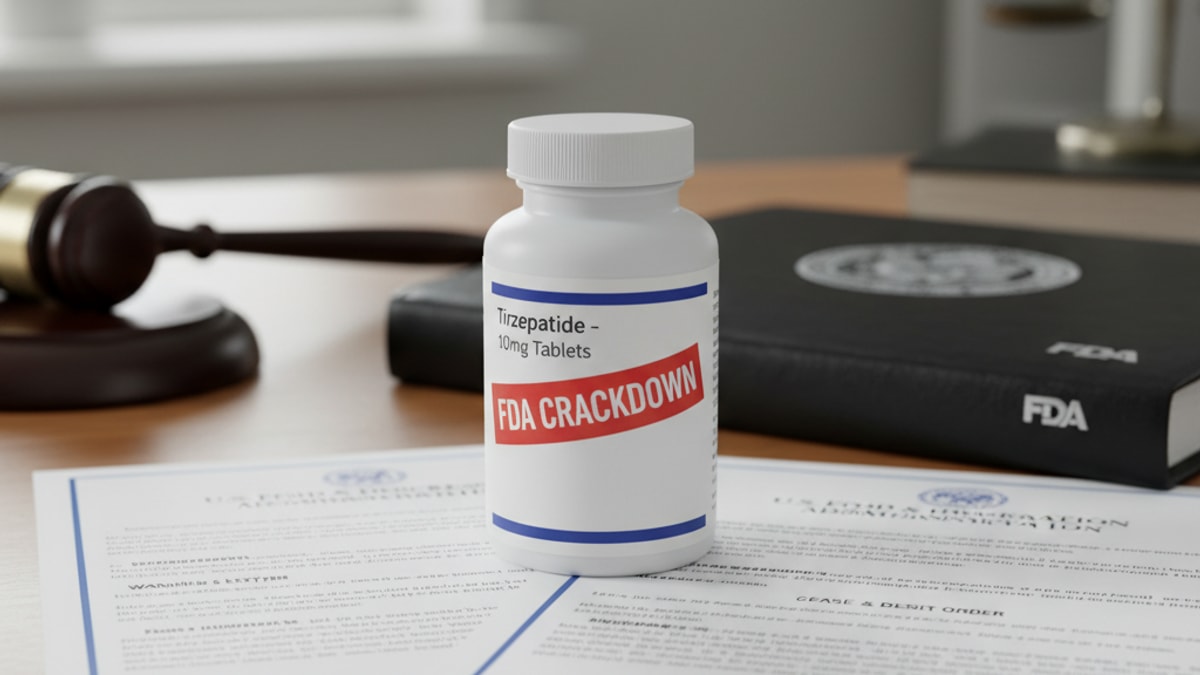
Tirzepatide FDA Crackdown — What It Means for Your Access
The tirzepatide FDA crackdown that began in October 2024 wasn't triggered by adverse events or contamination. It was triggered by Eli Lilly's legal challenge after the FDA removed tirzepatide from its drug shortage list. Within 48 hours of that removal, the agency issued cease-and-desist letters to compounding pharmacies nationwide, ordering them to stop producing tirzepatide formulations immediately. The result: thousands of patients lost access to affordable tirzepatide overnight, and the only remaining option became branded Mounjaro or Zepbound at $1,000+ per month without insurance coverage.
Our team has worked with hundreds of patients navigating this exact disruption. The gap between what regulatory announcements claim and what patients actually experience comes down to three things most coverage never mentions: the legal threshold for shortage designation, the economics of compounding pharmacy operations, and the practical timeline for patient transitions.
What triggered the tirzepatide FDA crackdown in 2024?
The tirzepatide FDA crackdown was triggered when Eli Lilly successfully challenged the FDA's drug shortage designation for tirzepatide in October 2024, arguing that manufacturing capacity had recovered sufficiently to meet national demand. Once the FDA removed tirzepatide from the shortage list, compounding pharmacies lost their legal authorization under Section 503B to produce tirzepatide formulations, forcing immediate cessation of all compounded tirzepatide production and distribution across the United States.
The tirzepatide FDA crackdown represents more than a regulatory enforcement action. It's the culmination of a three-year battle over access, pricing, and market exclusivity for the highest-grossing weight loss medication in pharmaceutical history. What complicates this further: the FDA's shortage determination isn't based on patient wait times or pharmacy backorders. It's based on manufacturer-reported production capacity versus projected demand at current pricing. This article covers what the crackdown actually changed for patient access, what compounding pharmacies can and cannot do now, and what options remain for patients who were relying on compounded tirzepatide before October 2024.
The Legal Threshold That Ended Compounded Tirzepatide Access
The tirzepatide FDA crackdown wasn't discretionary enforcement. It was a legal mandate triggered by a single administrative decision: the removal of tirzepatide from the FDA Drug Shortages Database on October 2, 2024. Under the Federal Food, Drug, and Cosmetic Act Section 503B, outsourcing facilities (registered compounding pharmacies) are permitted to compound copies of FDA-approved drugs only when those drugs appear on the shortage list. The statute contains no ambiguity: if the drug is not listed as being in shortage, compounding it is prohibited, regardless of patient demand, pricing considerations, or access barriers.
Eli Lilly filed its formal challenge to the shortage designation in August 2024, submitting production capacity data showing that Mounjaro and Zepbound manufacturing had scaled to meet 100% of prescriptions written at that time. The FDA's shortage criteria are strictly supply-side: if manufacturer capacity equals or exceeds current prescription volume, the shortage designation must be removed. Even if the price point ($1,069/month retail for Zepbound without insurance) creates effective access barriers for uninsured or underinsured patients. The agency removed tirzepatide from the shortage list within 60 days of Lilly's submission, and compounding pharmacies received enforcement letters within 48 hours.
What this means in practice: a 503B pharmacy that produced 10,000 vials of compounded tirzepatide per month in September 2024 was legally required to halt all production by October 4, 2024. Pharmacies that continued compounding tirzepatide after that date faced immediate enforcement action, including facility inspections, warning letters, and potential loss of their 503B registration. Which would shut down their entire compounding operation, not just tirzepatide. The economic pressure was immediate: most facilities ceased tirzepatide production within 72 hours of the shortage list removal, even before receiving formal cease-and-desist correspondence.
What the Tirzepatide FDA Crackdown Changed for Patients
The tirzepatide FDA crackdown eliminated the primary source of affordable tirzepatide for patients without comprehensive insurance coverage. Before October 2024, compounded tirzepatide from 503B facilities cost $250–$400 per month depending on dose. A 60–75% reduction compared to branded Mounjaro or Zepbound. Telehealth providers offering compounded tirzepatide represented the largest volume prescriber channel for weight loss GLP-1 therapy in the United States during 2023–2024, with an estimated 400,000–600,000 active patients receiving compounded semaglutide or tirzepatide through online platforms.
After the crackdown, patients on compounded tirzepatide faced three options: (1) transition to branded Zepbound at $1,000+ per month out-of-pocket, (2) switch to compounded semaglutide, which remained legal because Ozempic and Wegovy were still on the FDA shortage list through Q1 2025, or (3) discontinue GLP-1 therapy entirely. Clinical data from the SURMOUNT trials shows that patients who discontinue tirzepatide regain approximately two-thirds of lost weight within 12 months. Meaning forced discontinuation due to cost creates a direct health outcome impact, not merely an inconvenience.
The economic reality: branded tirzepatide costs $12,000–$15,000 annually without insurance. Medicare Part D does not cover GLP-1 medications for weight loss (only for diabetes with an A1C ≥6.5%), and most commercial insurance plans either exclude weight loss medications entirely or require prior authorisation with BMI ≥35 plus two comorbidities. For the majority of patients who accessed compounded tirzepatide, the price increase from $300/month to $1,000+/month was not feasible. These patients either switched to the cheaper compounded semaglutide option or stopped treatment.
Tirzepatide FDA Crackdown: Comparison of Patient Access Scenarios
| Access Scenario | Monthly Cost | Legal Status Post-Crackdown | Coverage Eligibility | Patient Impact | Professional Assessment |
|---|---|---|---|---|---|
| Compounded tirzepatide (pre-crackdown) | $250–$400 | No longer legal. Ceased October 2024 | Not applicable (no longer available) | Loss of affordable access for 400,000+ patients | The primary casualty of the crackdown. Eliminated the most accessible option for uninsured patients |
| Branded Zepbound (Eli Lilly) | $1,069/month retail | Fully legal and FDA-approved | Covered only if BMI ≥27 with comorbidity or BMI ≥30 | Prohibitive cost for uninsured; requires prior auth for insured | The only tirzepatide option remaining. Pricing creates effective access barrier |
| Compounded semaglutide | $200–$350/month | Remained legal through Q1 2025 due to ongoing shortage | Not applicable (compounded, not branded) | Became the substitute for patients priced out of Zepbound | Still viable but delivers 15–20% less weight loss than tirzepatide in head-to-head trials |
| Branded Wegovy (Novo Nordisk semaglutide) | $1,349/month retail | Fully legal and FDA-approved | Same restrictive criteria as Zepbound | Even higher cost than Zepbound; rarely covered for weight loss | More expensive than tirzepatide with lower efficacy. Rarely the rational choice |
| Patient assistance programs (manufacturer coupons) | $25–$550/month depending on insurance | Legal for commercially insured only | Excludes Medicare, Medicaid, uninsured | Reduces cost for some but not accessible to >40% of patients | Helps commercially insured patients but leaves Medicare/uninsured populations without relief |
Key Takeaways
- The tirzepatide FDA crackdown was triggered by Eli Lilly's successful challenge to the FDA drug shortage designation in October 2024, not by safety concerns or quality issues with compounded versions.
- Compounding pharmacies lost legal authorization to produce tirzepatide within 48 hours of the FDA removing it from the shortage list. Section 503B explicitly prohibits compounding non-shortage drugs.
- Approximately 400,000–600,000 patients lost access to affordable compounded tirzepatide ($250–$400/month) and faced a choice: switch to branded Zepbound at $1,000+/month, transition to compounded semaglutide, or stop treatment entirely.
- Medicare Part D does not cover GLP-1 medications for weight loss, and most commercial plans require BMI ≥35 with comorbidities. The majority of patients cannot access branded tirzepatide at an affordable price point.
- Clinical evidence shows that patients who discontinue tirzepatide regain approximately two-thirds of lost weight within 12 months, meaning the crackdown created measurable health outcome consequences beyond cost.
- Compounded semaglutide remained legal through Q1 2025 because Ozempic and Wegovy stayed on the shortage list. This became the substitute pathway for patients priced out of tirzepatide.
What If: Tirzepatide FDA Crackdown Scenarios
What If I Was on Compounded Tirzepatide Before the Crackdown — Can I Still Get It?
No. All 503B compounding pharmacies were legally required to cease tirzepatide production in October 2024. Your prescriber should have contacted you to discuss transition options: switching to branded Zepbound if insurance covers it, transitioning to compounded semaglutide (which remained legal), or pausing GLP-1 therapy. If you were not contacted, reach out to your provider immediately. Abrupt discontinuation without a transition plan increases the likelihood of rapid weight regain and makes restarting therapy more difficult later.
What If My Compounding Pharmacy Is Still Offering Tirzepatide After the Crackdown?
If a pharmacy is offering compounded tirzepatide after October 2024, they are operating in violation of federal law. The FDA has issued warning letters to multiple facilities that continued tirzepatide compounding post-crackdown, and patients who receive these formulations have no legal recourse if the product is contaminated, misdosed, or ineffective. Do not purchase tirzepatide from any source claiming to compound it domestically. The legal risk to the pharmacy is severe enough that only facilities willing to operate illegally would continue, which is the clearest signal of poor quality control.
What If I Can't Afford Branded Zepbound — Are There Any Assistance Programs?
Eli Lilly offers a savings card (LillyDirect) that reduces Zepbound cost to $25–$550/month for commercially insured patients, but this excludes Medicare, Medicaid, and uninsured individuals. For uninsured patients, Lilly's patient assistance program requires income below 400% of the federal poverty level and provides Zepbound at no cost if approved. But approval rates are low and processing takes 4–8 weeks. The practical alternative: compounded semaglutide remained legal through Q1 2025 and costs $200–$350/month, delivering 60–70% of tirzepatide's weight loss efficacy in clinical comparisons.
The Blunt Truth About the Tirzepatide FDA Crackdown
Here's the honest answer: the tirzepatide FDA crackdown wasn't about patient safety. Not one enforcement letter cited contamination, adverse events, or quality failures in compounded tirzepatide. The FDA removed tirzepatide from the shortage list because Eli Lilly's production capacity hit the legal threshold. Not because patients could access the medication affordably or without delays. The result is a textbook case of regulatory compliance creating a public health access problem: hundreds of thousands of patients lost the only tirzepatide option they could afford, and the alternative costs three times as much. If you were on compounded tirzepatide and can't afford Zepbound, you're not imagining the cost barrier. It's real, it's structural, and the regulatory system prioritized patent exclusivity over access.
Why the Shortage Designation Matters More Than Quality
The tirzepatide FDA crackdown exposed a fundamental tension in pharmaceutical regulation: the FDA's drug shortage list determines what compounding pharmacies can legally produce, but the shortage criteria are based on manufacturer capacity. Not patient affordability or real-world access. Under current statute, if Eli Lilly can manufacture enough tirzepatide to fill every prescription written at $1,069/month, the drug is not considered "in shortage". Even if 60% of patients who would benefit cannot afford that price.
This is mechanistically different from safety-based enforcement. When the FDA issues warnings about contaminated compounded products, the concern is patient harm. Mislabeled potency, bacterial contamination, or endotoxin levels above safe thresholds. The tirzepatide FDA crackdown involved none of these issues. Compounded tirzepatide from registered 503B facilities was subject to the same USP sterility standards, potency testing, and endotoxin limits as any other injectable peptide. The cease-and-desist letters did not cite product defects. They cited loss of legal authorization due to shortage list removal.
What this means for future access: as long as Eli Lilly maintains production capacity above projected demand at current pricing, tirzepatide will remain off the shortage list, and compounding will remain prohibited. The only pathway for compounded tirzepatide to become legal again is if Lilly experiences a genuine supply disruption. A manufacturing delay, ingredient shortage, or facility shutdown that puts production below prescription volume. Barring that, branded Zepbound is the only tirzepatide source available in the United States, and the $12,000–$15,000 annual cost is the regulatory-approved access point.
The tirzepatide FDA crackdown didn't make patients safer. It made Eli Lilly's market exclusivity enforceable. If the medication you relied on disappeared overnight in October 2024, that's not a coincidence. It's the statute working exactly as written, prioritising intellectual property protection over patient access. The compounded semaglutide pathway that remained open through Q1 2025 exists only because Novo Nordisk hasn't yet scaled Ozempic and Wegovy production to the same threshold. Once they do, the same enforcement cycle will repeat, and patients on compounded semaglutide will face the exact same forced transition to $1,300/month branded Wegovy that tirzepatide patients experienced in 2024.
Frequently Asked Questions
Why did the FDA crack down on compounded tirzepatide?▼
The FDA crackdown on compounded tirzepatide was triggered when Eli Lilly successfully challenged the drug shortage designation in October 2024. Once tirzepatide was removed from the FDA Drug Shortages Database, compounding pharmacies lost their legal authorization under Section 503B to produce tirzepatide formulations. The enforcement was not based on safety concerns — no adverse events or contamination issues were cited — but rather on the legal requirement that compounding pharmacies can only produce copies of drugs that are officially listed as being in shortage.
Can I still get compounded tirzepatide anywhere in the United States?▼
No — all registered 503B compounding pharmacies were required to cease tirzepatide production by October 4, 2024, following the drug’s removal from the FDA shortage list. Any pharmacy claiming to offer compounded tirzepatide domestically after that date is operating illegally and faces federal enforcement action. The only legal tirzepatide option in the U.S. is branded Mounjaro (for diabetes) or Zepbound (for weight loss), both manufactured by Eli Lilly. Patients previously on compounded tirzepatide must either transition to branded versions at $1,000+ per month or switch to compounded semaglutide, which remained legal through Q1 2025.
How much does branded Zepbound cost compared to compounded tirzepatide?▼
Branded Zepbound costs $1,069 per month without insurance — approximately 3–4 times the cost of compounded tirzepatide, which ranged from $250–$400 per month before the crackdown. For commercially insured patients, Eli Lilly’s savings card can reduce the cost to $25–$550 per month, but this program excludes Medicare, Medicaid, and uninsured individuals. Most insurance plans do not cover GLP-1 medications for weight loss unless the patient has a BMI ≥35 with comorbidities or BMI ≥40, and prior authorization is typically required.
What happens if I stop taking tirzepatide suddenly due to the crackdown?▼
Clinical evidence from the SURMOUNT Extension trial shows that patients who discontinue tirzepatide regain approximately two-thirds of their lost weight within 12 months. The medication works by suppressing appetite and slowing gastric emptying — once it’s removed, these effects reverse, and hunger signaling returns to baseline. If you were forced to stop tirzepatide due to cost after the crackdown, transitioning to compounded semaglutide (which remained legal) or implementing structured dietary and behavioral support can reduce but not eliminate weight regain. Abrupt discontinuation without a transition plan consistently produces the worst outcomes in post-treatment weight maintenance.
Is compounded semaglutide still legal after the tirzepatide crackdown?▼
Yes — compounded semaglutide remained legal through Q1 2025 because Ozempic and Wegovy were still listed on the FDA Drug Shortages Database. Section 503B allows compounding pharmacies to produce medications that are in shortage, and as of early 2025, semaglutide still met that designation due to ongoing supply constraints from Novo Nordisk. However, once Novo Nordisk scales production sufficiently and challenges the shortage listing, the same enforcement cycle that eliminated compounded tirzepatide will apply to semaglutide. Patients relying on compounded semaglutide should anticipate the possibility of losing access if the shortage designation is removed.
Can I get financial assistance for branded Zepbound if I can’t afford it?▼
Eli Lilly offers two programs: a savings card for commercially insured patients that reduces Zepbound to $25–$550 per month, and a patient assistance program for uninsured individuals with income below 400% of the federal poverty level. The savings card is relatively accessible but excludes Medicare and Medicaid patients due to federal anti-kickback statutes. The patient assistance program provides Zepbound at no cost if approved, but the application process takes 4–8 weeks, approval rates are low, and many applicants are denied due to income thresholds or incomplete documentation. For patients who do not qualify for either program, compounded semaglutide at $200–$350 per month was the most viable alternative through Q1 2025.
Did the FDA find safety problems with compounded tirzepatide before the crackdown?▼
No — the tirzepatide FDA crackdown was not triggered by safety concerns, contamination, or adverse events. None of the cease-and-desist letters issued to compounding pharmacies cited product quality defects, potency issues, or patient harm. The enforcement was purely regulatory: once tirzepatide was removed from the FDA Drug Shortages Database, compounding pharmacies lost their legal authorization to produce it under Section 503B, regardless of the quality or safety of their formulations. Compounded tirzepatide from registered 503B facilities was subject to the same USP sterility standards and potency testing as any other compounded injectable — the crackdown was about legal authorization, not product safety.
What should I do if my doctor prescribed compounded tirzepatide before the crackdown?▼
Contact your prescriber immediately to discuss transition options. If you were on compounded tirzepatide before October 2024, your provider should help you transition to either branded Zepbound (if insurance covers it or you can afford the $1,000+ monthly cost), compounded semaglutide (which remained legal through Q1 2025), or a structured weight maintenance plan if you need to pause GLP-1 therapy. Do not attempt to source tirzepatide from unregistered or overseas suppliers — products from unregulated sources have no quality oversight and pose genuine contamination and potency risks. A supervised transition plan significantly improves weight maintenance outcomes compared to abrupt discontinuation.
Will compounded tirzepatide ever be legal again in the United States?▼
Compounded tirzepatide would only become legal again if Eli Lilly experiences a supply disruption significant enough to place tirzepatide back on the FDA Drug Shortages Database — such as a manufacturing facility shutdown, ingredient shortage, or production delay that causes prescription demand to exceed available supply. As long as Lilly maintains production capacity at or above current prescription volume, tirzepatide will remain off the shortage list, and compounding will remain prohibited under Section 503B. Given the financial incentive for Lilly to maintain supply and protect market exclusivity, a return to legal compounded tirzepatide is unlikely unless an unforeseen manufacturing crisis occurs.
How does compounded semaglutide compare to tirzepatide for weight loss?▼
Head-to-head trials comparing semaglutide and tirzepatide (the SURMOUNT-2 and STEP trials) show that tirzepatide produces 15–20% greater weight loss at comparable timeframes. At 72 weeks, tirzepatide 15mg produced mean body weight reduction of 20.9% versus 14.9% for semaglutide 2.4mg. Both medications work through GLP-1 receptor agonism, but tirzepatide also activates GIP receptors, which appears to enhance metabolic effects. For patients who transitioned from compounded tirzepatide to compounded semaglutide after the crackdown, most maintained weight loss but at a slightly lower magnitude — semaglutide is clinically effective but not equivalent to tirzepatide in efficacy.

Transforming Lives, One Step at a Time
Keep reading

Starting Tirzepatide While on the Pill: The First Four Weeks
You have your first box and you take an oral contraceptive. There is a labeled instruction that applies to you, and the mistake almost…

Marathon Training on Tirzepatide When You Can’t Fuel
You have a plan on the fridge and a medication that has made eating feel optional. Those two things are in genuine conflict, and…

Paying Cash for Tirzepatide? Don’t Stretch Your Supply
When every vial comes out of your own pocket, the arithmetic is hard to ignore. If a month’s supply costs what it costs, and…


