Are Planks Good for Weight Loss? Our Team’s Unflinching Take
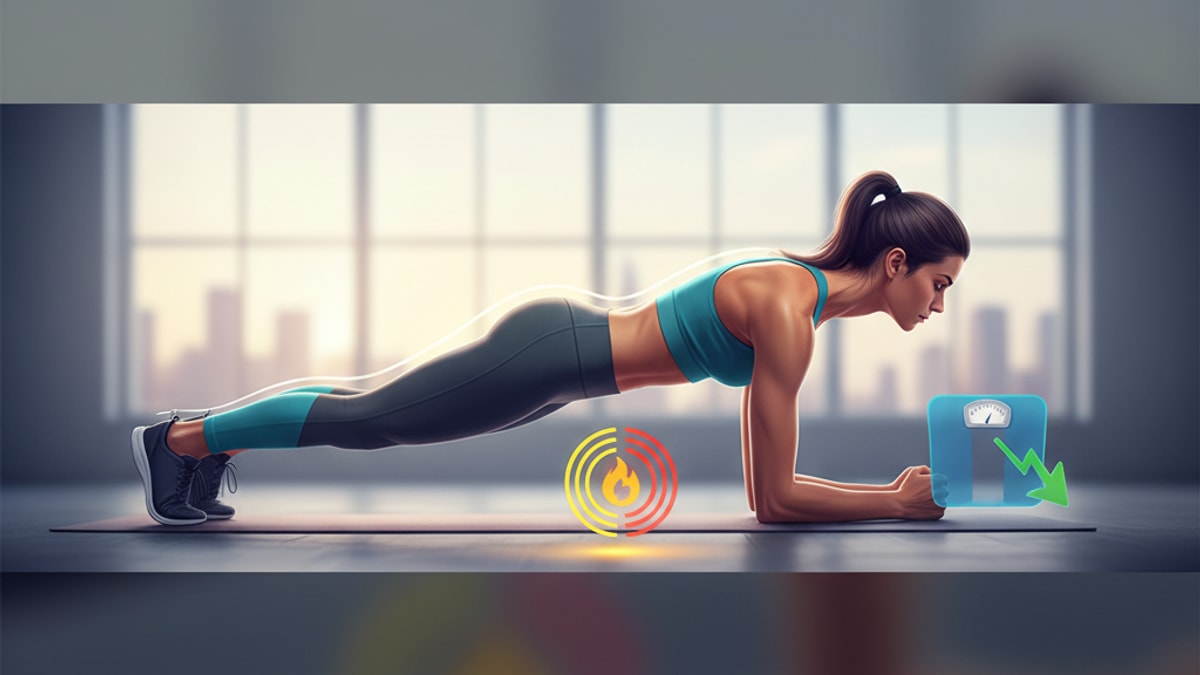
Let's get right to it. You see them everywhere: in gym classes, on social media feeds, in those 30-day fitness challenges that promise a miraculous transformation. The plank. It looks so simple, yet feels so formidable. And the question that inevitably follows is the one that probably brought you here: are planks good for weight loss?
The simple answer is… not in the way most people think. And that's okay. In fact, understanding the real role of the plank is far more valuable than chasing a myth. Our team at TrimrX has spent years guiding clients through the complex, often frustrating landscape of weight management. We've seen firsthand what works, what doesn't, and what's just noise. The plank is a fantastic tool, but it's just one tool in a much larger, more sophisticated toolbox. Believing it's a magic bullet for fat loss is a setup for disappointment.
The Honest Truth About Planks and Calorie Burn
If your primary goal is to burn a significant number of calories in a short amount of time, the plank isn't your exercise. We have to be brutally honest about that. A 150-pound person might burn somewhere between 3 and 5 calories per minute holding a static plank. That's it. You'd burn more calories walking at a moderate pace for that same minute.
Why is the number so low? Because a standard plank is an isometric exercise. You're holding a position, contracting your muscles, but there's no dynamic movement. Your body isn't traveling through space, which is what really drives up heart rate and energy expenditure. So, if you're thinking you can plank your way to a major calorie deficit, you're going to be holding that position for a very, very long time.
But this is where the conversation gets interesting. We can't stress this enough: judging an exercise solely on its immediate calorie burn is a rookie mistake. It's like judging a company's success by a single day's stock price. It misses the entire point. The true value of the plank isn't in the calories it burns during the exercise, but in the metabolic and functional foundation it builds for everything else you do.
It’s about building an asset. That asset is lean muscle tissue. More specifically, a strong, stable, and resilient core.
The Real Superpower: Building a Metabolic Engine
Here’s what we've learned after analyzing countless patient journeys: sustainable weight loss is less about punishing workouts and more about re-engineering your body's baseline metabolism. This is where the plank starts to shine.
When you hold a plank correctly, you're engaging a sprawling network of muscles: your rectus abdominis (the 'six-pack' muscles), transverse abdominis (your deep internal corset), obliques (the sides of your torso), but also your glutes, quads, shoulders, and back. It's a full-body conversation, and your core is leading it.
Building and maintaining this muscle has a profound effect on your Basal Metabolic Rate (BMR). Your BMR is the number of calories your body burns at rest, just to keep the lights on—powering your brain, circulating your blood, breathing. Muscle is metabolically active tissue. It requires more energy to maintain than fat tissue does. So, the more lean muscle you have, the more calories you burn around the clock, even when you're sleeping or sitting at your desk.
It’s not a dramatic, overnight shift. You won't do planks for a week and suddenly have the metabolism of a professional athlete. But consistently challenging your muscles with exercises like planks contributes to a gradual, permanent increase in your BMR. This is the long game. It's about turning your body into a more efficient calorie-burning machine, 24/7. That's a far more powerful strategy for weight loss than trying to 'burn off' a meal with a few minutes of exercise.
A Strong Core: The Unsung Hero of Your Fitness Journey
Think of your core as the central power station for your entire body. When it’s weak, every other movement is compromised. Our experience shows that a weak core is often the hidden culprit behind workout plateaus and injuries that derail weight loss progress entirely.
A strong core built by planks provides critical, non-negotiable benefits:
- Injury Prevention: This is huge. A stable core protects your spine. It prevents that lower back pain that so many people experience when they start a new fitness routine. When your back doesn't hurt, you can show up for your workouts consistently. Consistency is everything.
- Improved Performance in Other Exercises: Want to lift heavier weights? Run faster? Jump higher? It all starts in the core. A solid core allows you to transfer force more efficiently through your body, making your squats, deadlifts, and cardio sessions infinitely more effective. More effective workouts mean better results and higher calorie burn.
- Better Posture: A strong transverse abdominis acts like a natural corset, pulling everything in and helping you stand taller. This can create an immediate visual effect of looking leaner and more confident long before the scale moves.
So, while the plank itself isn't a fat-melting exercise, it's the foundational work that enables you to perform the fat-melting exercises safely and effectively. It's the essential, behind-the-scenes crew member that allows the star performers (like HIIT and strength training) to do their job without getting hurt.
The Plank Problem: Common Mistakes We See All The Time
Execution is everything. A poorly performed plank is, at best, a waste of time and, at worst, a direct ticket to a lower back injury. Our team has seen every possible variation of bad form, and they almost always fall into a few categories. Let's be honest, this is crucial.
- The Sagging Bridge: This is the most common mistake. The hips drop towards the floor, putting immense pressure on the lumbar spine. It happens when the core and glutes get tired and disengage. If you feel this in your lower back, your form has failed. Stop, reset, and go for a shorter duration.
- The Mountain Peak: The opposite of the sag. The butt is pushed high up into the air. This takes all the tension off the abs and puts it on the shoulders. It’s basically a lazy downward dog. You’re not working your core here; you’re just giving it a break.
- The Head Crane: People either let their head drop completely, straining their neck, or they crane it up to look at a clock or mirror. Your neck is part of your spine. It should be in a neutral position, with your gaze directed at the floor just in front of your hands. Keep a straight line from your head to your heels.
To do it right: Squeeze your glutes. Tighten your quads. Brace your abs as if you're about to take a punch to the gut. Push the floor away with your forearms or hands to engage your shoulders. Your body should be one long, rigid line. It's better to hold a perfect plank for 20 seconds than a sloppy one for two minutes.
A Smarter Plank Strategy: Variations and Progression
Once you've mastered the basic forearm plank, staying there forever is a recipe for a plateau. The goal isn't to hold a plank for ten minutes. The goal is to progressively challenge your muscles. That means introducing instability and movement.
This is where plank variations come in. They force your core to work harder to resist twisting and bending, which is its primary job. Here’s a quick comparison of a few variations our team recommends for progressing beyond the basics.
| Plank Variation | Difficulty | Primary Muscles Targeted | Key Benefit for Weight Loss Journey |
|---|---|---|---|
| High Plank (on hands) | Beginner/Intermediate | Core, Shoulders, Chest | Builds shoulder stability needed for more dynamic movements like push-ups and burpees. |
| Side Plank | Intermediate | Obliques, Transverse Abdominis, Gluteus Medius | Targets the 'love handle' area and builds rotational stability, crucial for preventing injury in sports and daily life. |
| Plank with Leg Raise | Intermediate/Advanced | Core, Glutes, Hamstrings | Introduces instability, forcing the core to work much harder to prevent the hips from rotating. Excellent for building true functional strength. |
| Plank with Arm Raise | Advanced | Core, Shoulders, Upper Back | A significant anti-rotation challenge. This builds the kind of deep core stability that supports heavy lifting and explosive movements. |
Start by incorporating these into your routine. Maybe you do 30 seconds of a standard plank, followed by 20 seconds on each side for a side plank. As you get stronger, you can try adding the leg or arm raises. The constant is change. You have to keep your body guessing.
The Bigger Picture: Where Planks Fit in a Real Weight Loss Plan
Now, this is where it gets really important. Planks are a supporting actor. They are not the star of the show. At TrimrX, our entire philosophy is built on a comprehensive, medically-supervised understanding of weight loss. It’s a complex interplay of biology, hormones, metabolism, nutrition, and behavior.
Expecting planks—or any single exercise—to overcome the powerful biological forces that regulate body weight is unrealistic. For many people, factors like insulin resistance, hormonal imbalances, and powerful appetite signals from the brain create a formidable barrier to weight loss. You can do planks until you're blue in the face, but if your body's internal systems are working against you, progress will be a grueling, uphill battle.
This is why modern medical advancements, like GLP-1 medications, have been such a game-changer. These treatments work by targeting the underlying biology. They help regulate appetite, improve how your body processes sugar, and restore balance to the hormones that govern hunger and satiety. Essentially, they quiet the biological 'noise' that makes weight loss feel impossible.
Think of it this way: our medical programs create the optimal internal environment for success. They put your body back in the driver's seat. With that biological foundation in place, healthy habits like a nutritious diet and a smart exercise routine—which absolutely includes planks!—can finally deliver the results they're supposed to. The exercise isn't fighting an uphill battle anymore. It's working with your biology, not against it.
If you've been stuck in that cycle of trying harder and harder with exercise and diet but seeing minimal results, it’s likely not a failure of willpower. It may be a sign that your biology needs support. If that sounds familiar, we recommend you Take Quiz to see if a medical approach is right for you. It can be the missing piece of the puzzle.
Building a Complete Routine Around Your Planks
So, how do you integrate planks into a routine that actually moves the needle on weight loss? You pair them with the big guns. Here’s a simple framework:
- Total-Body Strength Training (2-3 times per week): Focus on compound movements that use multiple muscle groups at once. Squats, lunges, push-ups, and rows. These exercises build the most muscle and burn the most calories. Use planks as part of your warm-up to activate your core or as a 'finisher' at the end of your workout.
- High-Intensity Interval Training (HIIT) (1-2 times per week): Short bursts of all-out effort followed by brief recovery. Think sprinting, cycling, or bodyweight circuits. This is phenomenal for burning calories and improving cardiovascular health. A strong core from planking will allow you to perform these movements with more power and less risk.
- Consistent Nutrition: You can't out-plank a bad diet. It's a non-negotiable element. Focus on lean protein to support muscle growth, fiber from vegetables and whole grains for satiety, and healthy fats. This works hand-in-hand with the appetite regulation provided by a medical program.
- Daily Movement (NEAT): Non-Exercise Activity Thermogenesis. This is all the movement you do that isn't formal exercise—walking, taking the stairs, fidgeting. It can account for hundreds of calories burned each day. A strong, pain-free body makes you more likely to move throughout the day.
Planks are the glue that holds this all together. They build the strong, stable foundation that makes everything else possible.
So, are planks good for weight loss? Yes. Absolutely. But not because they torch calories. They're good for weight loss because they build a stronger, more resilient, more metabolically active body. They are an investment in the physical architecture that will support your entire journey. They won't get you to your goal on their own, but the journey will be much, much harder without them. When you combine that foundational strength with a plan that addresses your unique biology, you create a truly unstoppable formula for success. If you're ready to build that complete foundation, you can Start Your Treatment Now.
Frequently Asked Questions
How long should I hold a plank for weight loss?
▼
Focus on perfect form, not time. It’s better to hold a perfect plank for 20-30 seconds than a sloppy one for two minutes. Aim for multiple sets of shorter, high-quality holds to build strength without risking injury.
Do planks burn belly fat?
▼
No exercise can ‘spot reduce’ fat from a specific area. Planks strengthen the abdominal muscles underneath the fat, which can help your midsection appear tighter and more toned, but they don’t directly burn the fat covering your abs. Overall fat loss requires a comprehensive approach to diet and exercise.
How many calories does a 1-minute plank burn?
▼
It’s very low, typically just 3-5 calories per minute for an average-sized person. The real benefit of planks isn’t the immediate calorie burn but their role in building metabolically active muscle over time.
Is it better to do one long plank or several short ones?
▼
For most people, several shorter sets with perfect form are far more effective and safer than one long, grueling hold where form is likely to break down. This approach allows you to accumulate time under tension without putting excessive strain on your lower back.
Can I do planks every day?
▼
Yes, you can do planks daily as they are a bodyweight exercise that puts less stress on your joints than other movements. However, it’s also important to listen to your body and incorporate rest days, especially if you’re feeling sore or fatigued.
What’s more effective for weight loss, planks or crunches?
▼
Planks are generally more effective for overall core strength as they engage a wider range of muscles. Neither exercise burns a significant number of calories, but the functional strength built by planks provides a better foundation for other, more intense weight loss activities.
Do planks help with loose skin after weight loss?
▼
Planks can’t tighten loose skin, as skin elasticity is a separate issue. However, by building the underlying abdominal muscles, you can improve the overall tone and appearance of your midsection, which can provide a firmer foundation beneath the skin.
Will planks make my waist smaller?
▼
Yes, they can. Planks, especially side planks, strengthen the transverse abdominis, which acts like a natural corset. Strengthening this muscle can help pull in your waistline and create a slimmer profile, even without significant weight loss.
Are side planks better for weight loss?
▼
No single plank variation is ‘better’ for weight loss. Side planks are excellent for targeting the obliques and improving rotational stability, which is a critical part of a well-rounded fitness program that supports a weight loss journey.
Why do I shake so much when I plank?
▼
Shaking is completely normal, especially when you’re starting out. It’s a sign that your muscles are reaching the point of fatigue as your nervous system rapidly fires to recruit muscle fibers. As you get stronger, the shaking will likely decrease.
How do planks fit with a medically-supervised program like the one TrimrX offers?
▼
Perfectly. Our medical programs address the underlying biology of weight loss, like appetite and metabolism. Planks and other exercises build the physical strength and metabolic health that allow you to maximize the benefits of the treatment, creating a powerful, holistic solution.
Are there people who shouldn’t do planks?
▼
Individuals with shoulder, back, or neck injuries should consult a doctor or physical therapist before attempting planks. Pregnant women may also need to modify the exercise, particularly in later trimesters. It’s always best to get professional medical advice if you have pre-existing conditions.

Transforming Lives, One Step at a Time
Keep reading

Do You Need a Prescription for GLP-1s? The 2026 Answer
Wondering ‘do you need a prescription for glp 1’ in 2026? Yes. We explain why a doctor’s oversight is critical for safe, effective results.

How to Get GLP-1 Covered By Insurance: Our 2026 Playbook
Struggling with how to get glp-1 covered by insurance? Our 2026 guide breaks down prior authorizations, appeals, and documentation.

Traveling with GLP-1s in 2026: Your Essential Trip-Proof Plan
Don’t let travel disrupt your GLP-1 treatment. Learn how to travel with glp 1 medications safely and stress-free in our 2026 expert guide.


