Are Pretzels Healthy for Weight Loss? Our Team Weighs In
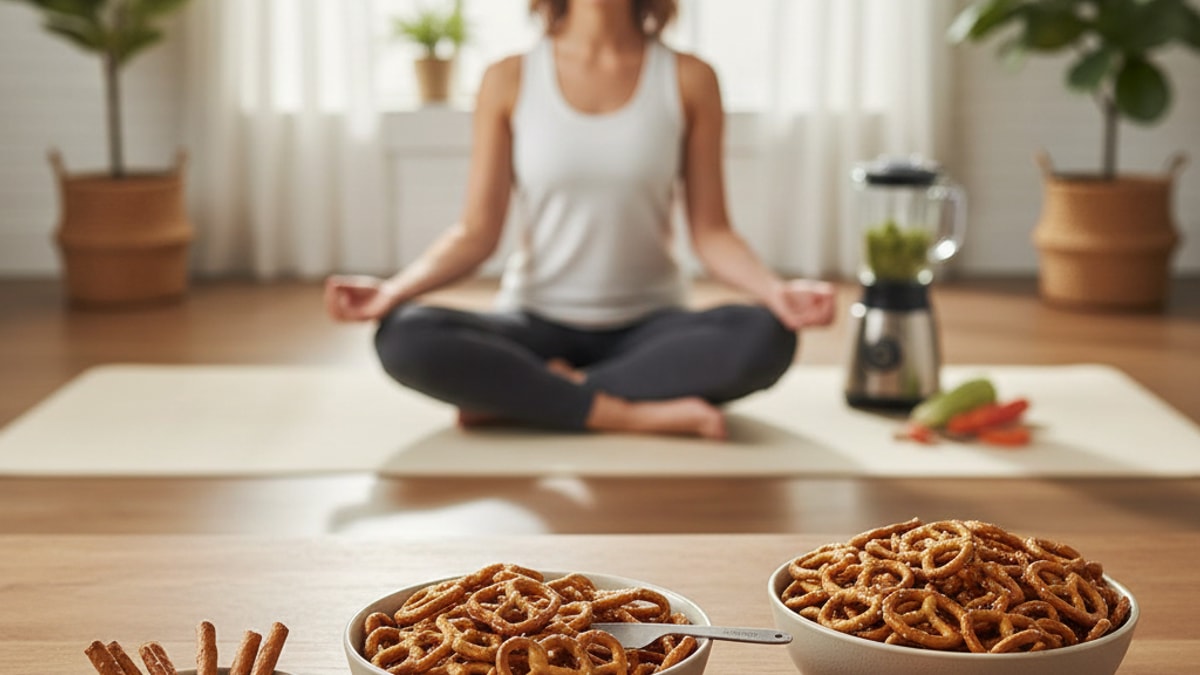
We see it all the time. The office breakroom, the pantry shelf, the school lunchbox. Sitting there, looking innocent, is a bowl of pretzels. They’ve cultivated this reputation as the “smarter” salty snack, a virtuous alternative to the greasy potato chip. It's a perception so common it's practically a fact in our collective consciousness. But our team has worked with thousands of individuals on their weight loss journeys, and we can tell you this: perceptions can be misleading. So, are pretzels healthy for weight loss? The short answer is a resounding no.
That probably isn't the answer you were hoping for. We get it. But the long answer is far more important, because it gets to the very heart of how your body processes food, manages hunger, and ultimately succeeds or fails at shedding pounds. It’s not about demonizing a single snack. It’s about understanding the biological reality of what you’re eating. And that’s a conversation we're passionate about having, because it’s where real, sustainable change begins.
The Nutritional Truth About Pretzels
Let’s pull back the curtain on that standard bag of hard, salty pretzels. What are you actually eating? The ingredient list is usually deceptively simple: enriched wheat flour, salt, malt, and yeast. On the surface, it seems fine. It's not fried. It's low in fat. These are the points that marketing campaigns have clung to for decades. But our experience in metabolic health tells us to look deeper.
The primary ingredient, enriched wheat flour, is the first red flag. This is just a gentler term for refined white flour. During the refining process, the wheat kernel is stripped of its bran and germ, which contain virtually all the fiber, vitamins, and minerals. What’s left is the starchy endosperm, which your body treats almost identically to pure sugar. It’s a rapid-release carbohydrate with almost no nutritional upside. We mean this sincerely: you are essentially eating crunchy, salty, baked sugar.
This leads to the core issue for anyone focused on weight management: the glycemic index (GI). Foods made from refined flour have a very high GI, meaning they cause a rapid and dramatic spike in your blood sugar levels. Your body responds by releasing a surge of insulin, the hormone responsible for shuttling that sugar out of your bloodstream and into your cells. While necessary, this massive insulin response is catastrophic for weight loss. Why? Because insulin is also a fat-storage hormone. When insulin levels are high, your body’s fat-burning processes grind to a screeching halt. Your body is in storage mode, not burning mode. That’s the reality. It all comes down to hormonal signals.
And what happens after that blood sugar spike and the subsequent insulin rush? A crash. Your blood sugar plummets, often leaving you feeling tired, irritable, and even hungrier than you were before you ate the pretzels. This triggers a vicious cycle of cravings for more fast-acting carbs to bring your energy levels back up. It's a physiological rollercoaster, and it’s one of the biggest, most formidable barriers to sustainable weight loss our patients face.
More Than Just 'Empty Calories'
You’ve heard the term “empty calories,” and pretzels are a textbook example. A typical one-ounce serving (about a small handful) contains around 110 calories. But those calories provide almost nothing of value to your body. There’s negligible fiber to promote fullness, barely a gram of protein to build muscle or aid in satiety, and virtually no healthy fats to support hormone function. They don't fill you up. They don't nourish you. They simply add to your daily calorie count while actively working against your metabolic goals.
Then there's the sodium. Oh, the sodium. That beautiful, crystalline salt that makes pretzels so craveable is another significant issue. A single serving can pack over 20% of your recommended daily sodium intake. This contributes to water retention, which can make you feel bloated and cause the number on the scale to tick upwards, creating a frustrating illusion of weight gain. Beyond that, a chronically high sodium intake is a major risk factor for high blood pressure and cardiovascular issues. It’s a critical, non-negotiable element of overall health that often gets overlooked in the narrow focus on calories.
So, when you reach for that handful of pretzels, you're not just eating a low-fat snack. You're consuming a high-glycemic, nutrient-poor, sodium-dense food that spikes your fat-storage hormone, sets you up for a cycle of cravings, and contributes to bloating. It’s a trifecta of trouble for weight loss.
A Snack-by-Snack Comparison
Context is everything. To truly understand why pretzels fall short, it helps to see how they stack up against other common snack choices. We’ve put together a simple comparison to illustrate the differences in the nutrients that actually matter for satiety and metabolic health.
| Snack (Approx. 1 oz serving) | Calories | Protein (g) | Fiber (g) | Healthy Fats (g) | Satiety & Metabolic Impact |
|---|---|---|---|---|---|
| Hard Pretzels | ~110 | ~2-3 | <1 | <1 | Very Low: High glycemic index spikes insulin, promoting fat storage. Lack of protein and fiber leads to rapid return of hunger. |
| Potato Chips (Fried) | ~160 | ~2 | ~1 | ~10 | Very Low: High in refined carbs and unhealthy fats. Also high-glycemic and offers little nutritional value or satiety. |
| Raw Almonds | ~165 | ~6 | ~3.5 | ~14 | High: Excellent source of protein, fiber, and healthy fats. Promotes stable blood sugar and long-lasting fullness. |
| Apple Slices (Medium) | ~95 | <1 | ~4 | 0 | Moderate to High: Rich in fiber and water, which creates volume and fullness. Natural sugars are paired with fiber, blunting blood sugar response. |
| Baby Carrots with Hummus | ~120 | ~4 | ~5 | ~6 | High: A powerful combination of fiber from the carrots and protein/healthy fats from the hummus. Excellent for satiety. |
Look at that table. The difference is stark. While almonds are higher in calories, those calories are working for you. They’re delivering protein, fiber, and healthy fats that stabilize your blood sugar and keep you full for hours. Pretzels, on the other hand, deliver calories that work against you. It's a critical distinction that our team emphasizes constantly: the quality of your calories is infinitely more important than the quantity.
What About 'Healthier' Pretzel Varieties?
This is a question we get all the time. What about whole-wheat pretzels? Or sourdough? Or those big, soft pretzels you get at the mall? It's a fair question, but unfortunately, the answer is still disappointing.
Whole-Wheat Pretzels: While they sound better, and may contain a gram or two more fiber, most are still made from highly processed whole-wheat flour. The wheat is pulverized so finely that your body still digests it very quickly, leading to a significant blood sugar response that is only marginally better than their white-flour counterparts. They are a slightly less-bad option, but they are far from a good one.
Sourdough Pretzels: The fermentation process for sourdough can offer some benefits, like making certain nutrients more bioavailable and potentially lowering the glycemic response slightly. However, the base ingredient is still refined flour. The fundamental problem remains unchanged. Don't let the artisanal-sounding name fool you into thinking it's a health food.
Soft Pretzels: These are often the worst offenders. They are significantly larger, meaning the calorie and refined carbohydrate load is massive. A single large soft pretzel can contain over 400 calories and 80 grams of carbohydrates—the equivalent of eating more than five slices of white bread. They are a metabolic disaster masquerading as a snack.
Honestly, though. Switching from regular to whole-wheat pretzels is like swapping a cigarette for a 'light' cigarette. You’re still engaging in the same fundamental behavior with only a minuscule, almost meaningless, improvement.
The Hormonal Cascade: Why This Matters So Much
At TrimrX, our entire approach is built on the science of metabolic health. We know that sustainable weight loss isn't about starvation diets or punishing workout routines; it's about rebalancing the complex system of hormones that governs hunger, satiety, and metabolism. This is why a food like a pretzel is so problematic.
When you eat pretzels, the rapid blood sugar spike and subsequent insulin surge send a powerful signal to your body: “Store fat!” At the same time, this process does nothing to satisfy the hormones that control hunger. Ghrelin, often called the 'hunger hormone,' isn't suppressed effectively by a low-protein, low-fiber snack. Leptin, the hormone that signals fullness to your brain, isn't triggered effectively either. The result? Your body is storing energy while your brain is still screaming that you're hungry.
This is the very hormonal chaos that advanced medical treatments, like the GLP-1 agonists (Semaglutide and Tirzepatide) we utilize in our programs, are designed to correct. These medications work by mimicking natural hormones that slow digestion, regulate insulin release, and send powerful satiety signals to the brain. They help restore the balance that a diet high in processed foods has disrupted. They make it profoundly easier to bypass the biological urge for a snack that offers nothing but a temporary fix.
When your body's hormonal signaling is functioning correctly, you naturally gravitate towards foods that nourish you because your cravings are no longer driven by a blood sugar rollercoaster. You start to see pretzels not as a tempting treat, but as what they are: a nutritionally bankrupt food that won't actually satisfy you.
Building a Better Snack Strategy
So, if pretzels are off the table, what should you be reaching for when that mid-afternoon hunger pang hits? The key is to think in terms of nutrient combinations. We recommend a simple formula to our patients: Protein + Fiber +/– Healthy Fat.
This combination is the gold standard for satiety and blood sugar control. It slows down digestion, provides a steady release of energy, and keeps you feeling full and satisfied until your next meal. This isn't just about avoiding a 'bad' snack; it's about strategically choosing a 'good' one that actively supports your weight loss goals.
Here are some of our team’s go-to recommendations:
- Greek Yogurt with Berries: The yogurt provides a powerful punch of protein, while the berries add fiber and antioxidants.
- A Handful of Nuts or Seeds: Almonds, walnuts, or pumpkin seeds offer a fantastic mix of protein, fiber, and healthy fats.
- Vegetable Sticks with Hummus: The crunch of celery, bell peppers, or cucumbers paired with the protein and fiber in hummus is incredibly satisfying.
- Hard-Boiled Eggs: A perfect, portable source of high-quality protein that is exceptionally good at crushing hunger.
- Cottage Cheese: Another protein powerhouse that can be paired with fruit or enjoyed on its own.
- An Apple with a Tablespoon of Peanut Butter: The fiber from the apple and the protein/fat from the peanut butter is a classic combination for a reason. It works.
We've found that the most dramatic, lasting transformations happen when people shift their mindset from deprivation to nourishment. It's not about what you can't have. It's about discovering the delicious, satisfying foods you can have that will make you feel great and move you closer to your goals.
When Life Happens: The 80/20 Mindset
Let's be realistic. You're going to go to a party, a sporting event, or a family gathering where a big bowl of pretzels is sitting on the table. Does having a few mean you've failed? Absolutely not. A single instance of eating pretzels will not derail your entire journey. We can't stress this enough.
The real problem arises when these foods become a staple—a daily habit born from the misconception that they are a healthy choice. The goal is consistency, not perfection. If 80-90% of your food choices are aligned with your goals, a small deviation won't make a meaningful difference. It’s the habitual patterns that define your success.
Think of it this way: a sustainable plan has to be livable. If you feel so restricted that you can never enjoy social situations, the plan is destined to fail. The key is to go into those situations with knowledge. Understand that the handful of pretzels is purely for enjoyment, not for nutrition or hunger. Have a small amount, savor it, and then move on to healthier options without guilt.
If you've been caught in the cycle of yo-yo dieting and battling relentless cravings, it's easy to feel like it's a personal failing. But our experience shows it’s often a biological one. Your body is fighting against you because its hormonal signals are out of whack. This is precisely where a medically-supervised approach can be a complete game-changer. If you’re tired of the struggle and ready to explore a solution that works with your body's biology, not against it, we invite you to Take Quiz to see if you're a candidate for our program.
Ultimately, the question of whether pretzels are healthy for weight loss is a gateway to a much larger and more important conversation about food, hormones, and metabolic health. They aren't a health food. They aren't even a neutral food. For someone actively trying to lose weight, they are a step in the wrong direction. By replacing them with nutrient-dense, satisfying snacks, you're not just cutting calories; you're sending your body the right signals to burn fat, control hunger, and finally achieve the lasting results you deserve. If you're ready to make that change, you can Start Your Treatment and begin your journey with our team's support.
Frequently Asked Questions
Are whole wheat pretzels a good choice for weight loss?
▼
While slightly better than pretzels made with refined white flour, whole wheat pretzels are still a poor choice. They are highly processed, offer minimal fiber, and can still cause a significant blood sugar spike that hinders weight loss.
How many pretzels can I eat on a diet?
▼
Our team advises against making pretzels a regular part of your diet. If you choose to have them, stick to a very small portion (a few pretzels, not a handful) on rare occasions, and be aware that they offer no nutritional benefits for satiety or fat loss.
Are gluten-free pretzels healthier for weight loss?
▼
No, gluten-free does not automatically mean healthy or good for weight loss. Gluten-free pretzels are typically made from other refined starches like rice flour or potato starch, which have a very high glycemic index and can spike blood sugar just as much, if not more, than wheat-based pretzels.
Do pretzels make you bloated?
▼
Yes, pretzels can definitely cause bloating for two main reasons. Their high sodium content leads to water retention, and the refined carbohydrates can sometimes cause gas and digestive discomfort for some individuals.
What is a good crunchy, salty snack to replace pretzels?
▼
We recommend roasted chickpeas (edamame), salted almonds, or raw veggie sticks like celery and bell peppers. These options provide that satisfying crunch and saltiness along with crucial nutrients like fiber and protein to keep you full.
Why do I crave salty snacks like pretzels?
▼
Cravings for salty, crunchy foods can be complex. Sometimes it’s a sign of dehydration or an electrolyte imbalance, but often it’s linked to the blood sugar rollercoaster caused by eating refined carbs, leading to a cycle of cravings.
Are soft pretzels worse than hard pretzels for weight loss?
▼
Yes, generally soft pretzels are significantly worse. They are much larger, packing a massive load of calories and refined carbohydrates—often equivalent to several slices of white bread—making them a major setback for any weight loss effort.
Do pretzels have any health benefits at all?
▼
From a nutritional standpoint for weight loss, the health benefits of pretzels are virtually nonexistent. They are a source of empty calories, refined carbs, and sodium, providing none of the fiber, protein, or healthy fats your body needs.
Can I eat pretzels if I’m on a GLP-1 medication like Semaglutide?
▼
While on a GLP-1 medication, you’ll likely find your cravings for foods like pretzels diminish. However, it’s still best to avoid them as they don’t align with the goal of nourishing your body with nutrient-dense foods for sustainable, long-term health.
What’s more important for weight loss: low-fat or low-carb?
▼
Our experience and clinical data show that focusing on carbohydrate quality and managing insulin response is far more effective for sustainable weight loss than simply cutting fat. Healthy fats are vital for satiety and hormone function, whereas refined carbs actively promote fat storage.
Are sourdough pretzels a healthier option?
▼
The sourdough fermentation process might offer minor benefits, but the primary ingredient is still refined flour. This means they will still negatively impact your blood sugar and insulin levels, making them an unsuitable choice for a weight loss plan.
Will eating pretzels at night make me gain more weight?
▼
While the timing of eating matters less than your total daily intake, consuming a high-carb snack like pretzels at night is particularly unhelpful. It can disrupt sleep quality due to blood sugar fluctuations and provides your body with quick energy right when it’s preparing to rest and repair.

Transforming Lives, One Step at a Time
Keep reading

Do You Need a Prescription for GLP-1s? The 2026 Answer
Wondering ‘do you need a prescription for glp 1’ in 2026? Yes. We explain why a doctor’s oversight is critical for safe, effective results.

How to Get GLP-1 Covered By Insurance: Our 2026 Playbook
Struggling with how to get glp-1 covered by insurance? Our 2026 guide breaks down prior authorizations, appeals, and documentation.

Traveling with GLP-1s in 2026: Your Essential Trip-Proof Plan
Don’t let travel disrupt your GLP-1 treatment. Learn how to travel with glp 1 medications safely and stress-free in our 2026 expert guide.


