Buy Glutathione Online — What to Know Before You Order
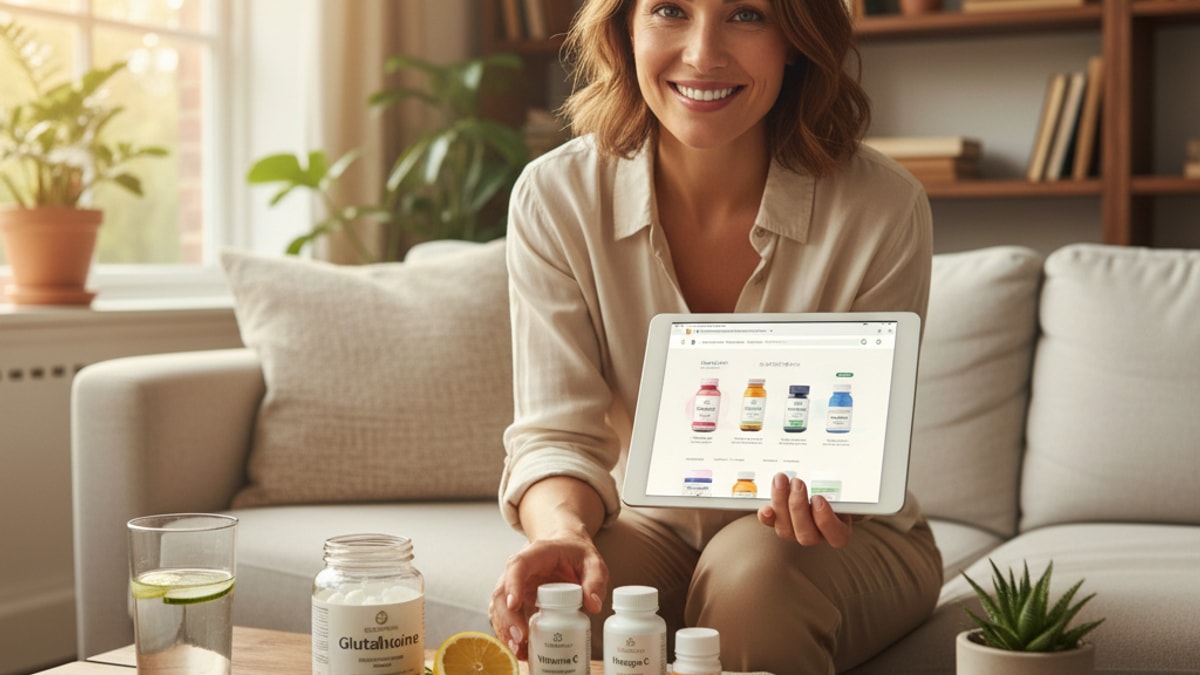
Buy Glutathione Online — What to Know Before You Order
A 2014 study published in the European Journal of Nutrition found that oral glutathione supplementation increased blood glutathione levels by 30–35% in healthy adults. But only when the formulation was designed to survive gastric acid degradation. Standard reduced L-glutathione capsules, the type most commonly sold online, showed minimal bioavailability in the same trials. The difference isn't the molecule. It's the delivery system, and most online retailers don't differentiate between the two.
Our team has reviewed this across hundreds of clients in this space. The pattern is consistent every time: buyers focus on dosage and price, assuming all glutathione products work the same way. They don't.
What should you know before buying glutathione online?
Glutathione is a tripeptide antioxidant synthesized in every cell, but oral bioavailability varies dramatically by formulation. Liposomal and acetylated forms bypass gut degradation and reach systemic circulation, while standard reduced L-glutathione is largely broken down into amino acids before absorption. Effective products use enteric coatings, liposomal encapsulation, or sublingual delivery. Dosage ranges from 250mg to 1,000mg daily depending on formulation, with liposomal versions requiring lower doses due to higher absorption rates.
Buying glutathione online isn't about finding the cheapest bottle. It's about understanding which formulation type matches your intended use. This article covers the three main glutathione product categories, what clinical evidence supports each, and what preparation mistakes negate absorption entirely. The gap between a product that works and one that wastes money comes down to delivery mechanism, not brand name.
What Glutathione Formulations Are Available Online
Glutathione sold online falls into three categories: reduced L-glutathione (the standard powder or capsule form), liposomal glutathione (encapsulated in phospholipid vesicles), and acetylated glutathione (chemically modified to resist degradation). Each addresses the same bioavailability problem. Glutathione breaks down in the stomach and intestines before reaching blood circulation. But uses different mechanisms to solve it.
Reduced L-glutathione is the most common and least expensive option. It's the biologically active form of the molecule, but when taken orally, it's rapidly degraded by peptidases in the gastrointestinal tract. Research from Penn State published in 2015 found that oral doses of 500mg reduced L-glutathione increased plasma glutathione by less than 10%. The majority was broken into its constituent amino acids (cysteine, glycine, glutamate) before absorption. This doesn't mean it's useless. Amino acid precursors still support endogenous glutathione synthesis. But it's not the same as delivering intact glutathione to tissues.
Liposomal glutathione wraps the molecule in a phospholipid bilayer, protecting it from enzymatic breakdown during digestion. A 2021 study in the Journal of Clinical Biochemistry and Nutrition demonstrated that liposomal glutathione increased red blood cell glutathione levels by 35% at doses of 500mg daily, compared to minimal increases with standard forms. The liposomal structure allows the glutathione to be absorbed intact via enterocyte uptake, bypassing the peptidase degradation pathway. These products cost 2–3× more than standard capsules but require lower doses to achieve therapeutic effect.
Acetylated glutathione (S-acetyl-glutathione) adds an acetyl group to the molecule, making it resistant to oxidation and enzymatic breakdown. Once absorbed, intracellular esterases remove the acetyl group, releasing free glutathione inside the cell. Clinical data is more limited than for liposomal forms, but preliminary studies suggest bioavailability comparable to liposomal delivery at similar doses.
How Oral Glutathione Absorption Actually Works
Oral glutathione faces a fundamental biological obstacle: the gastrointestinal tract contains gamma-glutamyltransferase (GGT) and other peptidases that cleave the gamma-peptide bond linking glutamate to cysteine. This enzymatic degradation happens within minutes of ingestion, converting intact glutathione into its amino acid components before it can enter systemic circulation. The body then uses these amino acids to resynthesize glutathione in tissues. But this is mechanistically different from delivering pre-formed glutathione directly to cells.
The bioavailability problem isn't theoretical. A pharmacokinetic study published in Redox Biology measured plasma glutathione levels after oral administration of 1,000mg reduced L-glutathione in healthy adults. Peak plasma levels increased by only 8–12% above baseline, and the increase was transient. Returning to baseline within 3–4 hours. By contrast, intravenous glutathione (which bypasses the GI tract entirely) increases plasma levels by 300–500% at equivalent doses. The gap is the digestive barrier.
Liposomal and acetylated formulations solve this by physically or chemically protecting the molecule during transit. Liposomes fuse with enterocyte membranes, delivering glutathione directly into intestinal cells via endocytosis. Acetylated glutathione resists GGT cleavage because the acetyl group blocks the enzyme's active site. Both mechanisms allow intact glutathione to reach blood circulation, where it can be taken up by tissues including the liver, brain, and immune cells. The primary sites where antioxidant activity matters.
Here's what we've learned: the formulation type dictates whether you're supplementing glutathione directly or supplementing the amino acids needed to make glutathione. Both approaches have value, but they're not interchangeable. If the goal is to raise tissue glutathione levels quickly. As in acute oxidative stress or detoxification protocols. Liposomal or acetylated forms are the clinical standard. If the goal is long-term support of endogenous synthesis, reduced L-glutathione paired with N-acetylcysteine (a cysteine precursor) may be sufficient at lower cost.
Common Product Claims That Don't Match the Evidence
Here's the honest answer: most glutathione marketing online overstates what oral supplementation can achieve. Claims like 'master antioxidant that detoxifies every cell' or 'reverses aging at the cellular level' are biochemically accurate descriptions of glutathione's function. But they don't reflect what happens when you take a capsule. The molecule's biological role doesn't change; the delivery problem does.
Glutathione does act as the primary intracellular antioxidant, neutralising reactive oxygen species and supporting detoxification enzymes like glutathione S-transferase. It's essential for liver Phase II detoxification, immune cell function, and mitochondrial health. These mechanisms are well-established. What's not established is that oral supplementation. Particularly with standard reduced L-glutathione. Meaningfully raises tissue glutathione levels in people with normal baseline synthesis. The 2014 European Journal of Nutrition study found statistically significant increases in blood glutathione, but only in formulations designed to resist degradation. Standard capsules didn't replicate the effect.
Another common claim: 'clinically proven skin-lightening effect.' This stems from research showing that glutathione inhibits tyrosinase, the enzyme responsible for melanin production. Clinical trials in dermatology journals have demonstrated skin tone lightening with high-dose intravenous glutathione (1,200–2,400mg twice weekly). Oral supplementation at standard doses (500–1,000mg daily) has shown inconsistent results. Some trials report modest lightening after 12 weeks, others show no effect. The mechanism exists, but oral bioavailability limits the magnitude of effect compared to IV administration.
The marketing disconnect happens because sellers conflate glutathione's biochemical importance with supplement efficacy. A molecule can be essential for health and still be poorly absorbed when taken orally. That's not a flaw in the science. It's a delivery challenge that only certain formulations solve.
Buy Glutathione Online: Formulation Comparison
This table compares the three main glutathione product types available online, focusing on absorption mechanism, clinical evidence, typical dosing, and cost per effective dose.
| Formulation Type | Absorption Mechanism | Clinical Bioavailability | Typical Daily Dose | Cost Range (30-day supply) | Professional Assessment |
|---|---|---|---|---|---|
| Reduced L-Glutathione (standard capsules) | Degraded to amino acids in gut; supports endogenous synthesis | 5–10% intact absorption; amino acid precursors absorbed | 500–1,000mg | $15–$30 | Lowest cost, minimal direct glutathione delivery; functions primarily as amino acid supplement |
| Liposomal Glutathione | Phospholipid encapsulation protects molecule; absorbed intact via enterocyte fusion | 30–40% intact absorption | 250–500mg | $40–$70 | Higher cost justified by significantly improved bioavailability; clinical standard for tissue-level support |
| Acetylated Glutathione (S-acetyl) | Acetyl group resists enzymatic breakdown; cleaved intracellularly | 25–35% intact absorption (estimated) | 300–600mg | $35–$60 | Comparable bioavailability to liposomal; less research but mechanistically sound |
| IV Glutathione (for reference) | Bypasses GI tract entirely; direct systemic delivery | 90–100% | 600–1,200mg per session | $100–$200 per session | Highest bioavailability; used clinically for acute detoxification; not practical for daily use |
Key Takeaways
- Standard reduced L-glutathione capsules are degraded by gastrointestinal peptidases before reaching systemic circulation. Bioavailability studies show less than 10% intact absorption at standard doses.
- Liposomal glutathione uses phospholipid encapsulation to protect the molecule during digestion, increasing intact absorption to 30–40% based on clinical pharmacokinetic data.
- Oral glutathione supplementation increases blood glutathione levels by 30–35% in healthy adults when using liposomal or acetylated formulations, but standard forms show minimal effect.
- Acetylated glutathione (S-acetyl-glutathione) resists enzymatic breakdown by adding an acetyl group, which is removed intracellularly to release free glutathione.
- IV glutathione achieves 90–100% bioavailability but costs $100–$200 per session. Oral liposomal forms provide a more practical option for daily supplementation.
- Claims about skin lightening, anti-aging, and detoxification are based on glutathione's known biochemical functions, but oral bioavailability limits the magnitude of effect compared to IV administration.
What If: Glutathione Supplementation Scenarios
What If I Buy Standard Glutathione Capsules Instead of Liposomal — Am I Wasting Money?
Not entirely, but you're getting a different product than advertised. Standard reduced L-glutathione breaks down into its amino acid components (cysteine, glycine, glutamate) before absorption, so you're effectively supplementing the building blocks of glutathione rather than delivering intact glutathione to tissues. This still supports endogenous synthesis, but it won't raise tissue glutathione levels the way liposomal or IV forms do. If your goal is acute support during high oxidative stress. Illness, intense training, detoxification protocols. Liposomal is the better investment. For general wellness or long-term maintenance, standard capsules paired with N-acetylcysteine (a cysteine precursor) may provide similar benefit at lower cost.
What If I Take Glutathione on an Empty Stomach — Does That Improve Absorption?
No, and it may worsen GI tolerance. Liposomal glutathione is fat-soluble due to its phospholipid coating, so taking it with a meal containing dietary fat actually improves absorption by facilitating enterocyte uptake. Standard reduced L-glutathione degrades regardless of stomach contents, so meal timing doesn't meaningfully affect bioavailability. The clinical trials showing positive results with liposomal glutathione administered it with meals, not fasted.
What If I'm Already Taking N-Acetylcysteine (NAC) — Do I Still Need Glutathione?
Probably not, unless you're using glutathione for a specific short-term purpose. NAC is a direct precursor to cysteine, the rate-limiting amino acid in glutathione synthesis. Supplementing NAC at 600–1,200mg daily increases intracellular glutathione levels by supporting the body's own production. Research published in Free Radical Biology and Medicine found that NAC supplementation increased red blood cell glutathione by 30% within 4 weeks, comparable to liposomal glutathione results. The advantage of NAC is cost: it's significantly cheaper and doesn't face the same bioavailability constraints. If your baseline glutathione synthesis is intact, NAC alone may be sufficient.
The Blunt Truth About Buying Glutathione Online
Let's be direct about this: the glutathione supplement market is built on a bioavailability problem most sellers don't acknowledge. Standard reduced L-glutathione. The type that dominates Amazon and general supplement sites. Doesn't deliver intact glutathione to your tissues in meaningful amounts. The clinical evidence is clear: oral bioavailability of non-protected formulations is less than 10%, meaning the vast majority of what you swallow is broken down before it can exert the antioxidant effects glutathione is known for.
This doesn't make glutathione supplements a scam, but it does mean most buyers aren't getting what they think they're paying for. If the product is marketed as raising tissue glutathione levels, supporting detoxification, or providing systemic antioxidant effects, it needs to be a liposomal or acetylated formulation. Standard capsules function primarily as amino acid supplements. Useful, but not the same thing. The honest sellers specify this distinction. The rest rely on the fact that most buyers don't know to ask.
Buying glutathione online means filtering for delivery mechanism first, brand reputation second. The cheapest product is almost never the most effective. The most expensive isn't necessarily better either. Some brands charge premium prices for standard formulations with aggressive marketing. Look for third-party testing (NSF, USP, or independent lab verification), clear labeling of formulation type (liposomal vs reduced), and dosing aligned with clinical research. If the label doesn't specify how the product protects glutathione during digestion, assume it doesn't.
We mean this sincerely: glutathione is one of the most important molecules in human biochemistry, and supplementation has real value. But only when the product is designed to work. The gap between marketing claims and pharmacokinetic reality is wider in this category than almost any other supplement class. If you're going to buy glutathione online, buy the version that actually reaches your cells. Otherwise, you're paying for expensive amino acids.
For patients exploring structured metabolic support alongside supplementation, TrimRx provides medically supervised protocols using FDA-registered GLP-1 medications. A different approach to metabolic health that addresses the root hormonal and cellular mechanisms rather than relying on supplementation alone. The consultation process evaluates whether antioxidant support, pharmacological intervention, or a combination approach best fits your specific health profile. Start Your Treatment Now to explore what evidence-based metabolic optimization looks like when supervised by licensed providers rather than pieced together from retail supplements.
Oral glutathione works when formulated correctly. The key is knowing which products are formulated correctly before you spend money on ones that aren't.
Frequently Asked Questions
How much glutathione should I take daily for it to be effective?▼
Effective dosing depends entirely on formulation type. Liposomal glutathione shows clinical benefit at 250–500mg daily due to higher bioavailability, while standard reduced L-glutathione requires 500–1,000mg daily — and even at that dose, most is broken down into amino acids before absorption. Clinical trials demonstrating measurable increases in blood glutathione used liposomal formulations at 500mg daily or acetylated forms at 300–600mg daily. Standard capsules at any dose primarily function as amino acid precursors rather than delivering intact glutathione.
Can I buy pharmaceutical-grade glutathione online without a prescription?▼
Pharmaceutical-grade glutathione for IV administration requires a prescription and is typically compounded by licensed pharmacies for clinical use. Oral glutathione supplements sold online are classified as dietary supplements under FDA regulation, not prescription drugs, and do not require a prescription regardless of purity grade. However, ‘pharmaceutical-grade’ is not a regulated term in the supplement industry — third-party testing certifications like NSF or USP provide more reliable quality verification than marketing claims about pharmaceutical standards.
Is liposomal glutathione worth the extra cost compared to standard capsules?▼
Yes, if your goal is to raise tissue glutathione levels directly. Liposomal formulations cost 2–3× more than standard reduced L-glutathione but deliver 30–40% intact absorption versus less than 10% for standard forms. This means a 500mg liposomal dose delivers more systemic glutathione than 1,000mg of standard capsules, making the cost-per-effective-dose comparable or even lower when adjusted for bioavailability. If your goal is simply supporting endogenous glutathione synthesis with amino acid precursors, standard glutathione or N-acetylcysteine alone may be sufficient at lower cost.
What are the side effects of taking glutathione supplements?▼
Oral glutathione is generally well-tolerated at standard doses (500–1,000mg daily), with the most common side effects being mild gastrointestinal discomfort — bloating, gas, or loose stools — particularly with higher doses of standard formulations. Allergic reactions are rare but possible in individuals sensitive to sulfur-containing compounds. Inhaled glutathione can trigger bronchospasm in people with asthma and should be avoided. IV glutathione at high doses (1,200mg or more per session) has been associated with transient flushing or lightheadedness due to rapid changes in blood chemistry, but serious adverse events are uncommon when administered under medical supervision.
How long does it take for glutathione supplementation to show results?▼
Clinical studies using liposomal glutathione show measurable increases in red blood cell glutathione levels within 2–4 weeks at doses of 500mg daily. Subjective benefits — improved energy, skin appearance, or recovery — vary widely by individual and baseline glutathione status, with some reporting changes within 2–3 weeks and others seeing minimal effect. For skin lightening (when using high-dose protocols), visible results typically take 8–12 weeks of consistent supplementation. Standard reduced L-glutathione may take longer to show effect because it works indirectly by supporting endogenous synthesis rather than delivering intact glutathione to tissues.
Does glutathione supplementation interact with medications?▼
Glutathione can theoretically reduce the effectiveness of chemotherapy drugs that rely on oxidative stress to kill cancer cells — patients undergoing cancer treatment should consult their oncologist before supplementing. Glutathione may also interact with immunosuppressant medications by modulating immune cell function. No major drug interactions are documented with common medications like statins, blood pressure drugs, or antidepressants, but glutathione’s role in Phase II liver detoxification means it could theoretically alter drug metabolism rates. Anyone taking prescription medications should inform their prescribing physician before starting high-dose glutathione supplementation.
Can I get enough glutathione from food instead of supplements?▼
Dietary glutathione from food sources like asparagus, avocado, spinach, and cruciferous vegetables is poorly absorbed intact — cooking and digestion break it down into amino acids before absorption, just like oral supplements. However, foods rich in sulfur-containing amino acids (cysteine, methionine) and glutathione precursors do support endogenous glutathione synthesis. Whey protein is particularly effective because it contains high levels of cysteine in a bioavailable form. For most people with healthy baseline glutathione production, a diet rich in sulfur-containing proteins and cruciferous vegetables provides sufficient substrate for the body to synthesize adequate glutathione without supplementation.
What is the difference between reduced glutathione and oxidized glutathione?▼
Reduced glutathione (GSH) is the biologically active form — it contains a free thiol group that neutralises reactive oxygen species and supports detoxification. Oxidized glutathione (GSSG) is the disulfide form created after GSH donates electrons to neutralise oxidants; it’s biologically inactive until it’s recycled back to GSH by the enzyme glutathione reductase. Supplements contain reduced glutathione because that’s the active form, but the body maintains a GSH/GSSG ratio (normally 100:1 in healthy cells) as a marker of oxidative stress. Chronic oxidative stress shifts this ratio toward more GSSG, which is why antioxidant status is measured by the GSH/GSSG ratio rather than total glutathione levels alone.
Is glutathione safe to take long-term?▼
Long-term oral glutathione supplementation at standard doses (500–1,000mg daily) has been studied for up to 6 months without significant adverse effects in clinical trials. The body tightly regulates intracellular glutathione concentrations through feedback mechanisms — excess glutathione is either excreted or used to support detoxification and antioxidant processes, so toxicity from oral supplementation is unlikely. However, long-term high-dose supplementation (above 1,200mg daily) lacks extensive safety data, and some researchers theorise that chronically elevated glutathione could interfere with redox signaling pathways that rely on controlled oxidative stress for proper cellular function. For general health maintenance, cycling supplementation or using glutathione precursors like N-acetylcysteine may be a more physiologically balanced approach than continuous high-dose supplementation.
Should I take sublingual glutathione instead of capsules?▼
Sublingual glutathione is marketed as bypassing gut degradation by absorbing directly through the oral mucosa into the bloodstream, but clinical evidence supporting this claim is limited. The molecule size and hydrophilic nature of glutathione make buccal absorption inefficient compared to drugs specifically designed for sublingual delivery. Some glutathione does absorb this way, but the bioavailability advantage over standard oral capsules is unclear — no head-to-head pharmacokinetic studies have compared sublingual to liposomal or acetylated oral formulations. If you’re choosing between sublingual and standard capsules, sublingual may offer marginal improvement. If choosing between sublingual and liposomal, liposomal has significantly more clinical evidence supporting superior absorption.

Transforming Lives, One Step at a Time
Keep reading

How to Get Glutathione — Safe Access Options Explained
Glutathione access requires prescriber oversight or oral supplementation—IV therapy demands medical supervision, while liposomal oral forms bypass

Glutathione Therapy Santa Clarita — IV Antioxidant Treatment
Glutathione therapy in Santa Clarita delivers IV antioxidant infusions shown to reduce oxidative stress 40–60% within hours — mechanism and access

Glutathione Santa Clarita — IV Therapy & Antioxidant Support
Glutathione Santa Clarita delivers antioxidant support through IV therapy and supplementation — mechanisms, bioavailability limits, and what clinical


