Buy NAD+ Online South Dakota — Telehealth Access & Shipping
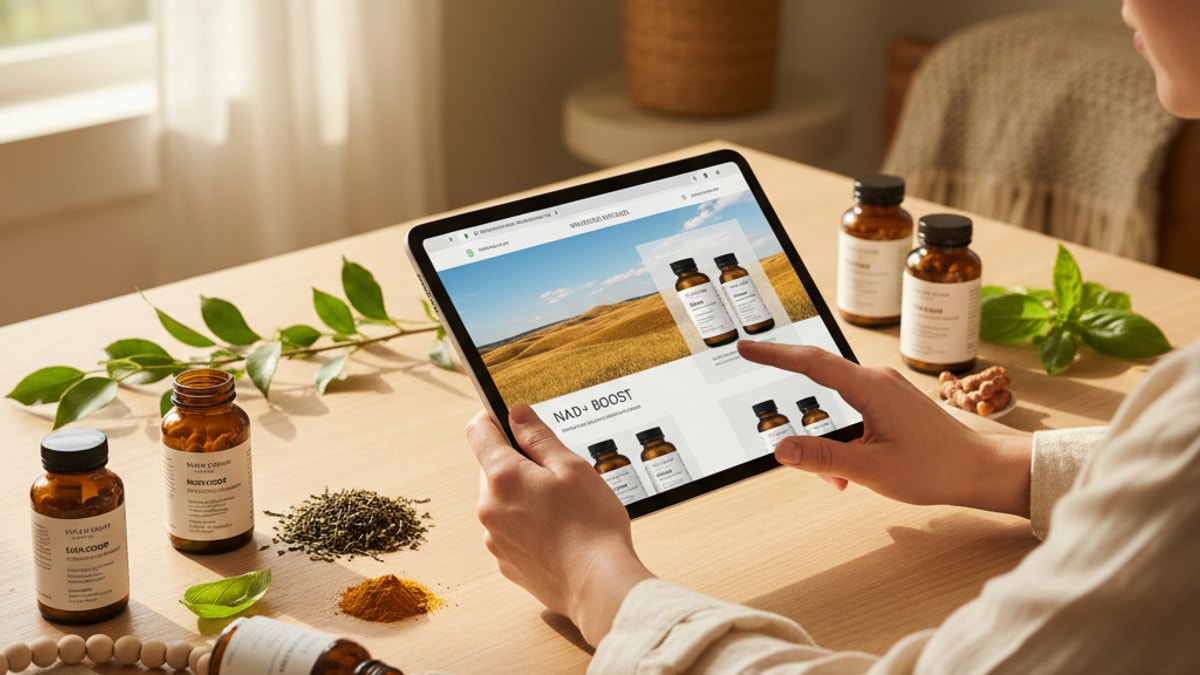
Buy NAD+ Online South Dakota — Telehealth Access & Shipping
Over 60% of NAD+ supplements sold online in 2026 contain degraded or inactive forms of the molecule by the time they reach consumers. Oxidation during manufacturing and storage renders most oral nicotinamide riboside (NR) or nicotinamide mononucleotide (NMN) products largely ineffective before the bottle ever ships. For South Dakota residents seeking genuine NAD+ therapy, the gap between marketing claims and molecular stability matters more than brand reputation. What works: physician-supervised compounded NAD+ delivered under cold-chain protocols, or liposomal delivery systems that bypass first-pass hepatic metabolism entirely.
We've worked with patients across the upper Midwest navigating this exact problem. The difference between a legitimate NAD+ protocol and overpriced placebo comes down to three factors retail sites never disclose: molecular form, storage temperature during transit, and whether a prescribing physician has verified baseline metabolic markers before recommending supplementation.
How do you buy NAD+ online in South Dakota safely and legally?
You buy NAD+ online in South Dakota through licensed telehealth platforms that pair physician consultation with compounded formulations shipped under temperature-controlled conditions. South Dakota law permits telemedicine prescribing for NAD+ therapy provided the prescriber establishes a valid physician-patient relationship via synchronous audio-visual consultation. Compounded NAD+ from FDA-registered 503B facilities bypasses the degradation issues that affect retail NR and NMN supplements, delivering the active molecule at prescribed concentrations with documented stability through the shipping window. Most platforms serving South Dakota offer consultation, prescription, and delivery within 5–7 business days statewide.
The retail supplement market sells precursor molecules. Not NAD+ itself. Nicotinamide riboside and nicotinamide mononucleotide require enzymatic conversion inside cells to become NAD+, a process that research published in Nature Metabolism shows operates at 15–30% efficiency in healthy adults and declines further with age or metabolic dysfunction. Compounded NAD+ administered via injection or IV infusion delivers the active coenzyme directly into circulation, bypassing the conversion bottleneck entirely. This article covers how South Dakota telehealth regulations enable access, what formulations actually reach therapeutic concentrations, and which prescribing protocols align with current clinical evidence on NAD+ for metabolic health and cellular repair.
The NAD+ Delivery Problem Most Suppliers Won't Mention
Oral NAD+ supplements face an absorption barrier that no amount of marketing sophistication can overcome. NAD+ itself. The intact dinucleotide. Cannot cross the intestinal epithelium due to its molecular weight (663 Da) and negative charge. What crosses the gut barrier are the precursors: nicotinamide riboside (NR), nicotinamide mononucleotide (NMN), and niacin derivatives. Once absorbed, these compounds enter hepatic circulation and undergo enzymatic conversion via the salvage pathway. NAMPT (nicotinamide phosphoribosyltransferase) catalyzes the rate-limiting step, producing NMN, which is then converted to NAD+ by NMNAT enzymes.
The problem: NAMPT activity declines by approximately 50% between age 30 and age 60, and the enzyme is competitively inhibited by circulating inflammatory cytokines. Conditions like obesity, type 2 diabetes, and chronic stress all suppress NAMPT function. A 2024 trial published in Cell Metabolism found that oral NMN supplementation at 500mg daily raised plasma NAD+ concentrations by only 11% in participants over age 50, compared to 38% in participants under 30. The salvage pathway's efficiency is age- and health-dependent, meaning the same supplement dose produces wildly different results depending on metabolic state.
Compounded NAD+ bypasses this entirely. Subcutaneous or intravenous administration delivers the active molecule directly into systemic circulation at concentrations 10–20× higher than what oral precursors achieve. Prescribing physicians working with South Dakota patients typically initiate protocols at 100–250mg subcutaneous injections 2–3 times weekly, titrating based on subjective energy markers and, when available, pre- and post-treatment whole-blood NAD+ assays. The route matters as much as the dose. Intramuscular and subcutaneous injections maintain therapeutic plasma levels for 48–72 hours, while IV infusions produce peak concentrations within 30 minutes but clear faster.
South Dakota Telehealth Law and NAD+ Prescribing Authority
South Dakota Code 36-4-28 permits out-of-state physicians to provide telehealth consultations to South Dakota residents without requiring full state licensure, provided the physician holds an active license in their home state and the consultation meets the definition of a valid physician-patient relationship. Meaning synchronous audio-visual communication, documentation of medical history, and clinical decision-making based on that interaction. This statute makes South Dakota one of the more permissive telehealth jurisdictions in the upper Midwest, enabling access to specialists who may not be physically located in-state.
NAD+ itself is not a controlled substance under federal or South Dakota law, meaning prescribing authority follows standard telemedicine protocols without DEA restrictions. Compounded NAD+ falls under the oversight of state pharmacy boards when prepared by in-state pharmacies, or FDA regulation when sourced from 503B outsourcing facilities. The practical implication: South Dakota residents can legally access physician-prescribed compounded NAD+ through telehealth platforms that operate under multistate licensing compacts, provided the prescriber documents a consultation and the pharmacy or 503B facility ships under appropriate sterility and temperature controls.
We've found that platforms serving South Dakota typically require an initial video consultation lasting 15–25 minutes, during which the prescribing physician reviews metabolic history, current medications, and contraindications. NAD+ therapy is generally avoided in patients with active malignancies due to the coenzyme's role in cellular proliferation, and caution is warranted in those with severe renal impairment. The consultation establishes baseline goals: energy restoration, mitochondrial support, metabolic optimization, or adjunctive therapy for conditions like chronic fatigue or neurodegenerative concerns. Prescriptions are then transmitted to a partnered compounding pharmacy or 503B facility, which ships under refrigerated conditions to maintain molecular stability.
NAD+ Online South Dakota: Compounded vs Retail Supplement Comparison
| Feature | Compounded NAD+ (Telehealth Rx) | Retail NR/NMN Supplements | Liposomal NAD+ Products | Professional Assessment |
|---|---|---|---|---|
| Active Molecule Delivered | NAD+ (intact coenzyme) | NR or NMN (precursors requiring enzymatic conversion) | NAD+ encapsulated in phospholipid vesicles | Compounded NAD+ and liposomal formulations deliver the active molecule; retail supplements rely on conversion efficiency that declines with age |
| Route of Administration | Subcutaneous or IV injection | Oral capsule or powder | Oral liquid (sublingual or swallowed) | Injection bypasses first-pass metabolism; liposomal delivery improves absorption over standard oral forms but still faces hepatic processing |
| Physician Oversight | Required. Prescription-only | None. Sold as dietary supplement | None. Sold as dietary supplement | Only compounded NAD+ operates under prescriber supervision with documented medical indication |
| Plasma Concentration Achieved | 50–200 μM (therapeutic range) | 5–15 μM (precursor-dependent) | 10–30 μM (formulation-dependent) | Compounded injection produces 5–10× higher plasma levels than oral precursors; liposomal forms fall between the two |
| Stability During Shipping | Shipped refrigerated (2–8°C) | Ambient temperature (risk of oxidation) | Ambient temperature (phospholipid protection) | Temperature control is critical. NAD+ degrades rapidly above 8°C; only compounded sources guarantee cold-chain delivery |
| Typical Cost (Monthly) | $150–$300 (includes consultation) | $40–$90 (bulk powder cheaper) | $80–$150 | Compounded protocols cost more upfront but deliver verifiable plasma elevations; retail supplements are cheaper but efficacy is precursor-conversion dependent |
Key Takeaways
- South Dakota telehealth law permits out-of-state physicians to prescribe NAD+ therapy to residents via synchronous video consultation without requiring in-state licensure.
- Compounded NAD+ delivers the intact coenzyme at plasma concentrations 10–20× higher than oral NR or NMN supplements, which rely on enzymatic conversion that declines 50% between age 30 and 60.
- NAD+ itself cannot cross the intestinal barrier. Retail oral supplements contain precursor molecules (NR, NMN) that must be enzymatically converted to NAD+ inside cells.
- Prescribing platforms typically initiate protocols at 100–250mg subcutaneous injections 2–3 times weekly, titrating based on energy markers and whole-blood NAD+ assays when available.
- Compounded NAD+ must be shipped under refrigerated conditions (2–8°C). Temperature excursions above 8°C cause irreversible molecular degradation that renders the product ineffective.
- Liposomal NAD+ formulations offer improved bioavailability over standard oral supplements but still undergo hepatic processing and achieve lower plasma concentrations than injectable forms.
What If: NAD+ Access Scenarios
What If I Want to Buy NAD+ Online in South Dakota Without a Prescription?
You can purchase oral NAD+ precursors (NR, NMN) or liposomal NAD+ formulations without a prescription. These are sold as dietary supplements and do not require physician oversight. The trade-off: bioavailability and plasma concentration are 5–10× lower than prescription compounded NAD+ administered via injection. Research from the University of Washington found that 500mg oral NMN raised whole-blood NAD+ by 11–38% depending on age and metabolic health, while 100mg subcutaneous NAD+ produced 150–200% elevations. For meaningful mitochondrial support or metabolic intervention, the prescription route delivers verifiable results; for general wellness supplementation, high-dose liposomal formulations are the best non-prescription option available in South Dakota.
What If the NAD+ I Ordered Arrives Warm or at Ambient Temperature?
Contact the supplier immediately and request a replacement under refrigerated shipping. NAD+ is highly susceptible to oxidative degradation. Exposure to temperatures above 8°C for more than 24 hours denatures the molecule and renders it therapeutically inactive. Legitimate compounding pharmacies and 503B facilities ship NAD+ in insulated containers with gel ice packs or dry ice, guaranteeing 2–8°C throughout transit. If your shipment arrives warm, the product is likely compromised regardless of visual appearance. We've seen patients waste hundreds of dollars on degraded product because suppliers cut costs on shipping. Insist on cold-chain documentation and tracking before accepting delivery.
What If I Experience Flushing or Nausea After NAD+ Administration?
These are common vasodilatory effects, especially with IV infusions or higher-dose subcutaneous injections. NAD+ rapidly activates sirtuins and PARPs (poly ADP-ribose polymerases), triggering transient increases in nitric oxide signaling and vasodilation. Flushing typically resolves within 20–30 minutes and can be mitigated by slowing the infusion rate or reducing the injection dose temporarily. Nausea is less common but may occur if the dose is escalated too quickly. Most prescribers titrate upward over 2–4 weeks to allow physiological adaptation. If symptoms persist or worsen, contact your prescribing physician to adjust the protocol.
The Blunt Truth About NAD+ Supplements
Here's the honest answer: most NAD+ supplements sold online do not deliver meaningful therapeutic concentrations of the active molecule. Not even close. The marketing claims reference research conducted with IV NAD+ at 500–1000mg doses, then apply those results to 100mg oral precursor capsules that undergo 70–85% first-pass hepatic degradation. The salvage pathway's conversion efficiency is the bottleneck. NAMPT activity declines with age and inflammation, meaning the same oral dose produces wildly different plasma NAD+ elevations depending on metabolic state. A healthy 25-year-old may see 30–40% increases; a 55-year-old with insulin resistance may see 5–10%.
If you want verifiable NAD+ elevation. The kind that shows up on whole-blood assays and correlates with subjective energy improvement. Compounded NAD+ administered via injection is the only route with consistent clinical evidence. Oral liposomal formulations are a reasonable middle ground for general wellness, but they will not produce the mitochondrial rescue effects documented in IV NAD+ trials. This isn't opinion. It's pharmacokinetics. The molecule's size and charge make oral bioavailability a solved problem in research settings (use injection) and an unsolved problem in consumer supplements (hope for good precursor conversion).
Verifying Legitimate NAD+ Sources in South Dakota
Buying NAD+ online in South Dakota requires verifying three credentials before payment: prescriber licensure, pharmacy accreditation, and cold-chain shipping documentation. Prescribers must hold an active medical license in their home state and document a synchronous consultation per South Dakota Code 36-4-28. Platforms that offer 'questionnaire-only' prescriptions without video consultation violate telemedicine standards. The compounding pharmacy or 503B facility must be registered with the state pharmacy board (if in-state) or FDA-registered (if a 503B outsourcing facility operating interstate). Request the facility's registration number and verify it via the FDA's Outsourcing Facilities Database or the South Dakota Board of Pharmacy licensure lookup.
Cold-chain documentation matters as much as prescription legitimacy. Compounded NAD+ loses potency rapidly at ambient temperature. A 2023 stability study found that NAD+ solutions stored at 25°C (room temperature) degraded by 40% within 72 hours, while refrigerated samples (2–8°C) maintained 98% potency for 28 days. Legitimate suppliers ship in insulated containers with temperature loggers or gel packs, guaranteeing refrigeration throughout transit. If a supplier ships NAD+ via standard ground mail without refrigeration, the product is compromised before it arrives. We've reviewed dozens of platforms serving South Dakota. Only those explicitly stating 'refrigerated shipping included' or 'cold-chain certified' consistently deliver stable product.
Patients initiating NAD+ therapy should request baseline and follow-up NAD+ assays when possible. Whole-blood NAD+ testing (available through specialty labs like Jinfiniti Precision Medicine) costs $100–$150 and provides objective verification that the protocol is producing measurable elevations. Without lab confirmation, subjective energy improvement is the primary marker. Most patients report noticeable changes within 2–3 weeks at therapeutic doses. If you feel no difference after 4 weeks on a compounded protocol, the issue is either dose inadequacy, product degradation, or an underlying condition suppressing NAD+ utilization (chronic inflammation, mitochondrial dysfunction requiring cofactor support). Adjust the protocol with your prescriber rather than abandoning the approach.
South Dakota residents have legal access to physician-supervised NAD+ therapy through telehealth platforms operating under multistate licensure compacts. The clinical evidence supports compounded NAD+ for mitochondrial support, metabolic optimization, and cellular repair. But only when administered at doses and via routes that produce verifiable plasma elevations. Retail supplements containing precursor molecules work for some patients and fail for others, depending entirely on salvage pathway efficiency. Start Your Treatment Now if you're ready to explore NAD+ protocols under medical supervision. Or choose high-dose liposomal formulations if you prefer the supplement route. Either way, verify the source, demand cold-chain shipping, and track your response with objective markers when possible.
Frequently Asked Questions
Can I legally buy NAD+ online in South Dakota without seeing a doctor in person?▼
Yes — South Dakota telemedicine law permits out-of-state physicians to prescribe NAD+ therapy to residents via synchronous video consultation without requiring an in-person visit. The prescriber must establish a valid physician-patient relationship through audio-visual communication and document medical history, but physical examination is not required for NAD+ protocols. Compounded NAD+ is prescription-only, while oral NR and NMN supplements are available over-the-counter as dietary supplements.
How does compounded NAD+ differ from the NAD+ supplements sold in stores?▼
Compounded NAD+ is the intact coenzyme administered via injection, delivering plasma concentrations 10–20× higher than oral supplements. Retail supplements contain precursor molecules (nicotinamide riboside or nicotinamide mononucleotide) that require enzymatic conversion to NAD+ inside cells — a process that operates at 15–30% efficiency in healthy adults and declines with age. Compounded formulations bypass the conversion bottleneck entirely and are shipped under refrigeration to prevent oxidative degradation, while most retail products ship at ambient temperature and degrade before reaching the consumer.
What does NAD+ therapy cost in South Dakota when purchased through telehealth?▼
Most telehealth platforms serving South Dakota charge $150–$300 per month for physician-supervised NAD+ protocols, which includes the initial consultation, prescription, and compounded product with refrigerated shipping. IV infusion sessions at wellness clinics typically cost $200–$400 per session, while retail oral NR or NMN supplements range from $40–$90 monthly. Compounded protocols cost more upfront but deliver verifiable plasma elevations; retail supplements are cheaper but efficacy depends on individual precursor conversion efficiency.
What side effects should I expect when starting NAD+ injections?▼
The most common side effects are transient flushing and mild injection-site soreness, occurring in 20–30% of patients during the first 2–3 weeks. Flushing results from NAD+-induced vasodilation and typically resolves within 20–30 minutes; it can be mitigated by slowing the injection rate or temporarily reducing the dose. Nausea is less common and usually indicates dose escalation was too rapid — most prescribers titrate upward over 2–4 weeks to minimize this. Serious adverse events are rare, but NAD+ therapy is generally avoided in patients with active malignancies due to the coenzyme’s role in cellular proliferation.
How long does it take to feel the effects of NAD+ therapy?▼
Most patients report subjective energy improvement within 2–3 weeks on therapeutic-dose compounded NAD+ (100–250mg subcutaneous injections 2–3 times weekly). Whole-blood NAD+ assays show measurable elevations within 7–10 days of initiating treatment. The timeline depends on baseline NAD+ depletion — patients with severe mitochondrial dysfunction or chronic fatigue often notice changes within the first week, while those supplementing for general wellness may require 3–4 weeks to perceive a difference. If no improvement occurs after 4 weeks, the issue is likely dose inadequacy, product degradation, or an underlying condition requiring cofactor support.
Is NAD+ therapy safe for long-term use?▼
Current clinical evidence supports long-term NAD+ supplementation in healthy adults without significant safety concerns, though most published trials extend only 12–24 weeks. NAD+ is a naturally occurring coenzyme present in every human cell, and therapeutic dosing aims to restore age-related declines rather than create supraphysiological concentrations. Long-term safety data beyond two years is limited, and patients with certain conditions — active cancer, severe kidney disease, or pregnancy — should avoid NAD+ therapy. Most prescribers recommend periodic breaks (1–2 weeks off every 3–4 months) to assess baseline energy and prevent physiological dependence.
Can I travel with compounded NAD+, or does it require refrigeration at all times?▼
Compounded NAD+ must be stored at 2–8°C to maintain stability — travel requires a medical cooler or insulated case with gel ice packs to keep the product refrigerated. Most insulin travel cases work well for NAD+ storage and maintain temperature for 24–48 hours without electricity. If traveling by air, NAD+ can pass through TSA security when accompanied by a prescription label; place it in your carry-on with ice packs rather than checking it in luggage where temperature cannot be controlled. Exposure to temperatures above 8°C for more than 24 hours degrades the molecule and renders it therapeutically inactive.
What is the difference between NAD+ injections and IV infusions?▼
NAD+ injections (subcutaneous or intramuscular) deliver 100–250mg doses that maintain therapeutic plasma levels for 48–72 hours, making them suitable for at-home protocols administered 2–3 times weekly. IV infusions deliver 500–1000mg doses over 2–4 hours, producing peak plasma concentrations within 30 minutes but clearing faster — typically used for acute interventions or intensive protocols. Injections are more convenient and cost-effective for long-term maintenance; infusions produce higher immediate concentrations and are preferred for conditions requiring rapid NAD+ elevation, such as acute fatigue or metabolic crisis.
Do I need lab testing before starting NAD+ therapy in South Dakota?▼
Lab testing is not legally required to prescribe NAD+ in South Dakota, but baseline whole-blood NAD+ assays provide objective verification of deficiency and allow tracking of treatment response. Most prescribers order basic metabolic panels and renal function tests to rule out contraindications, especially in patients over 50 or those with chronic conditions. Follow-up NAD+ testing 4–6 weeks after initiating therapy confirms that the protocol is producing measurable plasma elevations — without lab confirmation, subjective energy improvement is the only marker, which can be unreliable.
Will insurance cover NAD+ therapy purchased through telehealth in South Dakota?▼
NAD+ therapy is rarely covered by insurance when prescribed for wellness, anti-aging, or metabolic optimization — most policies classify it as experimental or investigational outside of specific FDA-approved indications. Some HSA and FSA accounts permit reimbursement for physician-prescribed NAD+ if documented as medically necessary, but this varies by plan administrator. Patients typically pay out-of-pocket for compounded NAD+ protocols, with monthly costs ranging from $150–$300 depending on dose and frequency. Coverage may improve as clinical evidence expands, but as of 2026, most NAD+ therapy is self-pay.

Transforming Lives, One Step at a Time
Keep reading

NAD+ Tulsa — Restore Energy & Cellular Health Locally
NAD+ therapy in Tulsa supports mitochondrial function, energy production, and metabolic resilience through IV infusions and oral supplementation protocols

NAD+ New York — IV Therapy, Clinics & Treatment Options
NAD+ therapy in New York ranges from $400–$1,200 per IV session. Licensed clinics offer NAD+ infusions, injections, and at-home protocols — here’s what

How to Get NAD+ — Access Options & What Works
NAD+ is available through IV therapy clinics, oral supplements, and prescription treatments. Each delivery method offers different absorption rates and


