Can Creatine Help Weight Loss? Here’s What We’ve Seen Work
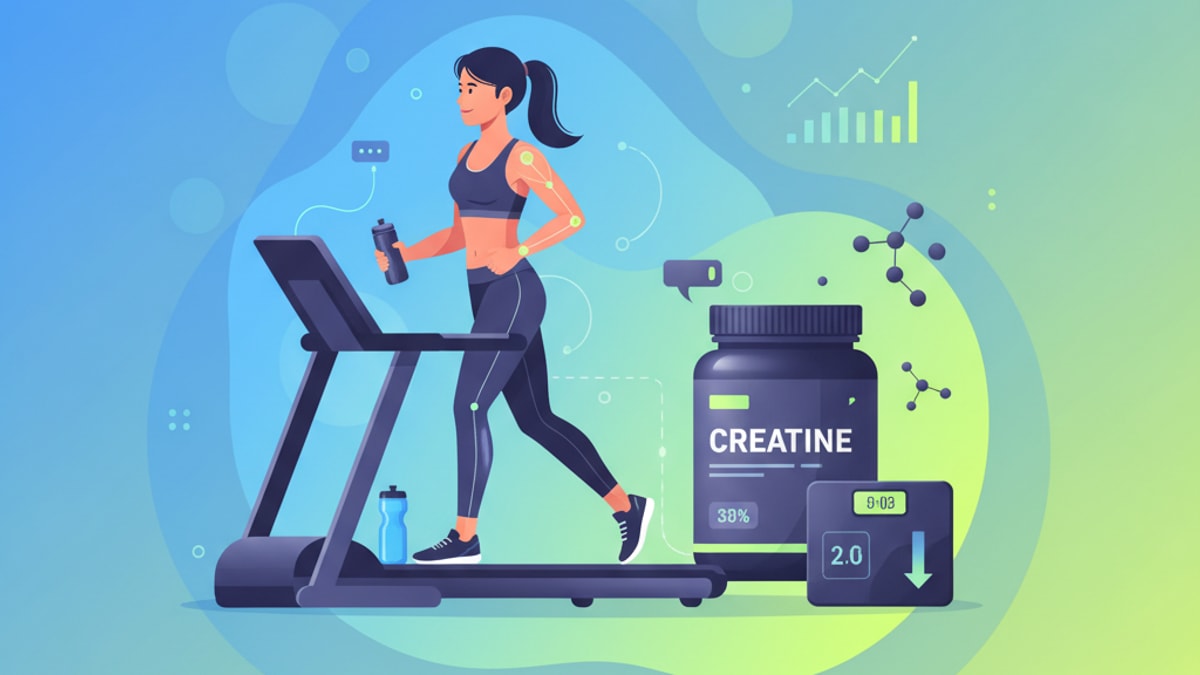
The question comes up all the time in our consultations: "Can creatine help with weight loss?" It's a fantastic question, honestly, because it cuts right to the heart of so many fitness myths. On one hand, you have bodybuilders and strength athletes who swear by it for gaining mass. On the other, you have a growing number of people in the wellness community suggesting it as a tool for getting leaner. It feels like a contradiction. So, which is it?
Here at TrimrX, our entire approach is grounded in medical science and real-world results. We guide patients through transformative weight loss journeys, often leveraging powerful tools like GLP-1 medications. But we know that medication is just one piece of a much larger puzzle. Sustainable success depends on a holistic strategy that includes nutrition, exercise, and yes, sometimes targeted supplementation. We've seen firsthand how the right tools can accelerate results, and creatine is one of the most well-researched, effective, and misunderstood supplements on the market. Let's clear the air and give you the straightforward, science-backed answer you're looking for.
Let’s Start with the Basics: What Is Creatine?
Before we can talk about weight loss, we need to be on the same page about what creatine actually is. It’s not some exotic, lab-created chemical. It's a completely natural substance. Your body produces it on its own in the liver, kidneys, and pancreas. You also get it from foods like red meat and fish. Creatine's primary job in your body is to help recycle energy, specifically something called adenosine triphosphate, or ATP.
Think of ATP as the direct energy currency for your muscles. When you perform any quick, explosive movement—like lifting a weight, sprinting, or jumping—your muscles burn through their ATP stores in seconds. This is where creatine phosphate, the stored form of creatine in your muscles, becomes a hero. It swoops in and rapidly donates a phosphate molecule to regenerate ATP, allowing you to push out another rep or hold that sprint for a few more seconds. It's your body's own rapid-recharge system for high-intensity effort. More power, more endurance in short bursts. That’s the core function.
The Elephant in the Room: Creatine and Water Weight
Okay, let's tackle the biggest myth head-on. Many people hear "creatine" and immediately think "weight gain." And they're not entirely wrong, but they're misunderstanding the type of weight being gained. This is a critical distinction our team stresses constantly.
When you first start taking creatine, your body begins to store more of it within your muscle cells. Because creatine is 'osmotically active,' it draws water into the muscle cells along with it. This process is called cell volumization. So yes, the number on the scale might go up by a few pounds in the first week or two. We’ve seen it happen countless times. But—and we can't stress this enough—this is intracellular water weight. It's water inside your muscles, not the soft, puffy water retention under your skin (subcutaneous) that you might associate with a high-sodium meal.
This initial water gain is actually a good sign. It means the supplement is working, saturating your muscles and getting them ready to perform. It makes your muscles look fuller and more defined, not bloated. It’s a temporary, functional weight gain that has absolutely nothing to do with gaining body fat. Conflating this initial water shift with actual fat gain is the single biggest reason people get scared away from one of the most beneficial supplements for their fitness goals.
How Creatine Indirectly Fuels Your Fat Loss Engine
So, if creatine doesn't directly burn fat, how can it possibly help with weight loss? The magic is in its indirect effects. Creatine doesn't target fat cells. It targets your performance. And improved performance is a direct catalyst for fat loss.
Think about it this way. A successful weight loss plan requires a calorie deficit, meaning you burn more calories than you consume. Exercise is a massive part of that "calories burned" equation. Now, what if you could make every single workout more effective? What if you could lift a little heavier, push out one or two more reps on every set, or sprint a little longer during your cardio session?
That’s exactly what creatine does. By supercharging your ATP energy system, it allows you to increase your work capacity. That extra rep or that heavier weight doesn't just build strength; it burns more calories. Over weeks and months, these small increases in workout intensity compound into a significant, sometimes dramatic, shift in total energy expenditure. You're not just going through the motions; you're able to push your body harder, demanding more energy and, consequently, burning more fat to fuel that demand. It turns your workouts from a simple calorie-burning activity into a high-octane metabolic event.
The Muscle-Metabolism Connection: Creatine’s True Power
Here’s where it gets really interesting, especially from our perspective at TrimrX. The single most important factor for a healthy, sustainable metabolism is lean muscle mass. Muscle is metabolically active tissue. It burns calories 24/7, even when you're resting on the couch. The more muscle you have, the higher your basal metabolic rate (BMR), which is the number of calories your body burns just to stay alive.
When you're in a calorie deficit to lose weight, your body is in a catabolic state, meaning it's breaking down tissues for energy. Unfortunately, it doesn't just break down fat. It can, and often does, break down precious muscle tissue as well. This is the worst-case scenario. Losing muscle torpedoes your metabolism, making it harder and harder to continue losing weight and much easier to regain it later. It's a physiological trap we work diligently to help our patients avoid.
Creatine is a powerful anti-catabolic agent. By providing your muscles with energy and keeping them hydrated and volumized, it helps protect them from being broken down during a dieting phase. It helps you preserve, and even build, lean muscle while you're actively shedding body fat. This is the absolute key. By using creatine, you ensure that the weight you're losing is primarily fat, not muscle. You're essentially telling your body: "Burn the fat for fuel, but leave this valuable muscle alone." This preserves your metabolic engine, leading to a leaner, stronger, and more defined physique, not just a smaller version of your previous self.
Creatine and GLP-1 Medications: A Powerful Partnership We See
Now, this is a topic our team is uniquely positioned to discuss. Many of our patients at TrimrX are on medically-supervised weight loss programs using GLP-1 medications like Semaglutide or Tirzepatide. These treatments are incredibly effective at reducing appetite and improving insulin sensitivity, leading to significant weight loss. However, one of the primary clinical concerns with rapid weight loss from any method, including GLP-1s, is the potential for muscle loss alongside fat loss. It's a formidable challenge.
This is precisely where we've seen creatine become an invaluable ally. When a patient is on a GLP-1, their calorie intake naturally decreases. This makes resistance training and adequate protein intake non-negotiable elements for preserving muscle mass. Adding creatine to this equation can be a game-changer. It supports the quality and intensity of their resistance workouts, sending a powerful signal to the body to hold onto muscle tissue even while the number on the scale is dropping steadily.
Our experience shows that patients who combine their GLP-1 treatment with a structured resistance training program and creatine supplementation report better body composition outcomes. They don't just lose weight; they reshape their bodies. They feel stronger, look more toned, and are building a metabolic foundation that will help them maintain their results long-term. It’s a synergistic effect. The GLP-1 medication makes the calorie deficit easier to manage, while the creatine and strength training ensure the weight lost is overwhelmingly fat. It's a sophisticated, science-backed approach that moves beyond simply chasing a number on the scale. If you're ready to explore how a comprehensive medical plan can work for you, you can Start Your Treatment with our team.
Our Recommendation: How to Use Creatine for Weight Loss
Simplicity is key. The fitness industry loves to overcomplicate things, but using creatine is incredibly straightforward. Here’s the protocol we recommend, which is backed by decades of research:
-
Choose the Right Type: Stick with Creatine Monohydrate. It's the most researched, most effective, and typically the most affordable form. Don't fall for the marketing hype around fancier, more expensive versions. Micronized creatine monohydrate is a great choice as it dissolves a bit better in water.
-
Dosing is Simple: Take 3-5 grams per day. That's it. Some people advocate for a "loading phase" where you take 20 grams a day for the first week to saturate your muscles faster. It can work, but our team finds it's often unnecessary and can sometimes lead to mild stomach discomfort. A consistent 3-5 gram daily dose will fully saturate your muscles within about 3-4 weeks, and it's much easier to stick with. Consistency beats intensity here.
-
Timing Isn't Critical: Don't stress about when to take it. Some studies suggest a slight benefit to taking it post-workout with carbs and protein, but the difference is minimal. The most important thing is to take it every single day. On workout days, on rest days, on weekends. Every day. Mix it into your protein shake, a glass of juice, or just plain water. The goal is to keep your muscle stores topped off.
Choosing Your Creatine: A Simple Breakdown
While we stand by Creatine Monohydrate, it's helpful to see how it stacks up against other forms you might see advertised. Let's be honest, the marketing can be confusing. Here's a no-nonsense comparison.
| Feature | Creatine Monohydrate | Creatine HCL (Hydrochloride) | Buffered Creatine (Kre-Alkalyn) | Creatine Ethyl Ester (CEE) |
|---|---|---|---|---|
| Effectiveness | The gold standard. Over 99% of positive research is on this form. Unquestionably effective. | Claims better solubility and absorption, but research showing superior performance results is lacking. | Marketed as having a higher pH to prevent breakdown in the stomach. Studies show it's no more effective than monohydrate. | An older form that was marketed for better absorption. Research later showed it was actually less stable and converted to a waste product (creatinine) at a higher rate. Largely obsolete now. |
| Research | Extensive. Thousands of studies confirming safety and efficacy over decades. | Limited. Far less scientific backing compared to monohydrate. | Limited. Studies have not supported its claims of superiority over monohydrate. | Research has largely disproven its effectiveness compared to monohydrate. |
| Cost | Very affordable. The most cost-effective option by a wide margin. | Significantly more expensive per gram. | More expensive than monohydrate with no proven added benefit. | Tends to be more expensive, despite being less effective. |
| Our Verdict | The Clear Winner. Proven, safe, and economical. This is what we recommend. | Not worth the extra cost. Stick with what's proven. | A marketing concept without the scientific evidence to back it up. | Avoid this form. It's an inferior product based on outdated science. |
Are There Any Downsides to Consider?
Creatine is one of the safest supplements on the planet. It's been studied relentlessly for decades in diverse populations, from elite athletes to the elderly. The primary side effect, as we discussed, is the initial water retention in the muscles. For some, taking too much at once, especially on an empty stomach, can cause minor gastrointestinal distress like cramping or bloating. This is another reason we recommend skipping the high-dose loading phase and just sticking to a simple 3-5 grams per day.
It's also crucial to stay well-hydrated. Since creatine pulls water into your muscles, you need to ensure you're drinking enough water throughout the day to support all your body's other functions. This is good advice for anyone, but especially important when you're supplementing with creatine.
As with any change to your health regimen, we always advise speaking with a healthcare professional, especially if you have pre-existing kidney conditions. For the vast majority of healthy individuals, however, long-term creatine use has been shown to be perfectly safe. It's a reliable, effective tool for anyone serious about improving their body composition.
So, can creatine help with weight loss? The answer is a resounding, though nuanced, yes. It won't magically melt fat away. But it acts as a powerful catalyst, enabling the very processes that do. It enhances your workout performance to burn more calories, and most importantly, it protects and builds metabolically active muscle mass, ensuring the weight you lose is fat. It shifts the focus from just losing weight to building a stronger, healthier, and more resilient body. When you combine this powerful supplement with a solid nutrition plan and a consistent training schedule—perhaps as part of a medically-guided program like the ones we offer at TrimrX—it becomes an undeniable asset in achieving your goals. If you're not sure where to begin, you can always Take Quiz to see what program might be the right fit for your unique physiology and goals. It’s about building a complete system for success. Your body is worth that investment.
Frequently Asked Questions
Will creatine make me look bloated or puffy?
▼
No. Creatine pulls water inside your muscle cells (intracellular), making them look fuller and more defined. It does not cause the subcutaneous water retention under the skin that is typically associated with looking ‘puffy’ or ‘bloated’.
Do I need to do a ‘loading phase’ with high doses of creatine?
▼
While a loading phase can saturate your muscles faster, our team finds it’s generally unnecessary. A consistent daily dose of 3-5 grams will achieve the same full saturation within 3-4 weeks without the potential for stomach discomfort that higher doses can cause.
Can I take creatine if I’m on a GLP-1 medication like Semaglutide?
▼
Yes, and it can be highly beneficial. We’ve found that creatine helps preserve vital muscle mass during the rapid weight loss often seen with GLP-1s, leading to better body composition outcomes. As always, consult with your healthcare provider first.
Is creatine a steroid?
▼
Absolutely not. Creatine is a natural amino acid compound that your body produces and gets from food. It has no relation to anabolic steroids or any hormonal substance. It’s one of the most well-researched and safe supplements available.
Do I need to cycle off creatine?
▼
There’s no scientific evidence to suggest that cycling creatine (taking breaks from it) is necessary or beneficial for healthy individuals. Continuous daily use is shown to be safe and effective for maintaining elevated muscle creatine stores.
What’s the best form of creatine to take?
▼
Our team strongly recommends creatine monohydrate. It’s the most extensively studied, proven to be the most effective, and is the most affordable. The micronized version is great as it dissolves more easily in liquid.
When is the best time of day to take creatine?
▼
The most important factor is consistency, not timing. Take it every single day. While some minor studies suggest a slight benefit post-workout, the overall difference is negligible. Just find a time that’s easy for you to remember.
Will taking creatine stop my body from producing its own?
▼
Supplementing with creatine can down-regulate your body’s natural production. However, this process is completely reversible. If you stop taking the supplement, your body’s production will return to its normal baseline levels.
Can women take creatine for weight loss?
▼
Yes, absolutely. The benefits of creatine—increased strength, better workout performance, and muscle preservation—are just as valuable for women as they are for men. It will not make women ‘bulky’; it will help them build a stronger, leaner physique.
Does creatine cause hair loss?
▼
This is a common myth based on a single, small study from 2009 that showed an increase in DHT, a hormone linked to male pattern baldness. However, this study has never been replicated, and large-scale reviews have found no link between creatine supplementation and hair loss.
How much water should I drink while taking creatine?
▼
We recommend staying well-hydrated in general, but it’s particularly important with creatine. Since it draws water into your muscles, aim for a consistent and ample daily water intake to support your body’s needs. There’s no magic number, just listen to your body and drink regularly.
Will I lose all my progress if I stop taking creatine?
▼
You won’t lose the actual muscle and strength you’ve built. Your muscle creatine stores will return to normal levels after a few weeks, which may result in a slight decrease in workout performance and the loss of some intracellular water weight. The underlying strength gains will remain.

Transforming Lives, One Step at a Time
Keep reading

Do You Need a Prescription for GLP-1s? The 2026 Answer
Wondering ‘do you need a prescription for glp 1’ in 2026? Yes. We explain why a doctor’s oversight is critical for safe, effective results.

How to Get GLP-1 Covered By Insurance: Our 2026 Playbook
Struggling with how to get glp-1 covered by insurance? Our 2026 guide breaks down prior authorizations, appeals, and documentation.

Traveling with GLP-1s in 2026: Your Essential Trip-Proof Plan
Don’t let travel disrupt your GLP-1 treatment. Learn how to travel with glp 1 medications safely and stress-free in our 2026 expert guide.


