Can I Split My Semaglutide Dose?

Introduction
Finding a rhythm with a new weight loss medication can feel like a delicate balancing act. You may be experiencing significant progress, but perhaps the side effects—like nausea or fatigue—are more intense than you anticipated. Or, you might be looking at your prescription and wondering if there is a way to make the medication more manageable throughout the week. These common concerns often lead people to ask a very specific question: can I split my semaglutide dose?
At TrimRx, we understand that a successful weight loss journey requires more than just a prescription; it requires clarity, safety, and a personalized approach to how you use your medication. If you are considering semaglutide treatment, you can complete a free eligibility assessment to connect with the next steps for personalized care. This post will cover the mechanics of different semaglutide delivery systems, the safety risks associated with splitting doses without supervision, and how to work with a clinical provider to find a dosing schedule that works for your body. Whether you are curious about “microdosing” or simply trying to manage gastrointestinal discomfort, understanding the science behind your dosage is the first step toward sustainable success.
Understanding Semaglutide and How It Works
Before addressing the logistics of injection schedules, it is important to understand what happens inside your body when you use this medication. Semaglutide is a glucagon-like peptide-1 (GLP-1) receptor agonist. In plain English, this means it mimics a natural hormone your body produces to regulate appetite and blood sugar.
When you take your weekly injection, the medication travels through your system and binds to GLP-1 receptors in the brain and the gut. It slows down gastric emptying—the rate at which food leaves your stomach—and signals to your brain that you are full. Semaglutide has a long half-life of about seven days. This is the time it takes for the concentration of the drug in your body to reduce by half. Because of this long duration, the medication is traditionally administered once every seven days.
The standard titration schedule usually starts at a low dose, such as 0.25 mg, to allow the body to adjust. For more detail on how gradual dose increases work, see this guide to semaglutide starting doses and titration. Over several months, a provider may increase the dose. This gradual increase is designed to minimize side effects while maximizing the weight loss benefits. However, because every metabolic profile is unique, some individuals find the standard weekly “peak” of the medication to be overwhelming.
Quick Answer: Generally, you cannot split doses with single-use autoinjector pens like Wegovy®. While some multi-dose pens or compounded vials offer more flexibility, you should never split or alter your dose without the explicit guidance of a licensed healthcare provider due to risks of contamination and dosing errors.
The Different Types of Delivery Systems
Whether or not you can split a dose depends almost entirely on the hardware you are using. Semaglutide is available in several formats, and each has its own set of rules for safety and accuracy. Our detailed guide on splitting semaglutide doses twice a week covers these format differences in greater detail.
Single-Dose Autoinjectors
Branded medications like Wegovy® often come in single-dose autoinjector pens. These devices are designed to be “one and done.” You press the pen against your skin, the needle deploys automatically, and the entire pre-measured dose is delivered at once.
Can you split these? No. These pens do not have a mechanism to stop the flow of medication once it has started. Attempting to take the needle out halfway through would result in wasted medication and an inaccurate dose. The internal spring mechanism is built to empty the entire chamber in one go.
Multi-Dose Pens
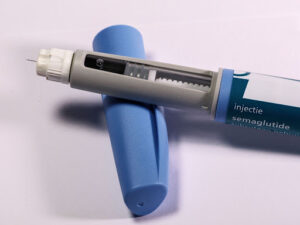
Medications like Ozempic® (which is FDA-approved for Type 2 diabetes but sometimes prescribed off-label for weight loss) use a multi-dose pen. These pens contain a reservoir of medication intended for four separate doses. Users attach a new needle for each injection and “dial” the dose.
Can you split these? While some people attempt to “count clicks” on the dial to deliver a partial dose, the manufacturer does not recommend this. These pens are calibrated for specific dose increments. Splitting a dose this way can lead to under-dosing or over-dosing, which may stall your progress or increase side effects. Furthermore, the pen is only rated for a specific number of uses before the internal seal may be compromised.
Vials and Syringes
Compounded semaglutide—which is prepared by FDA-registered, inspected compounding pharmacies—often arrives in a glass vial. You use a traditional insulin-style syringe to draw the medication out yourself. Our platform connects patients with providers who may prescribe these compounded options when appropriate for the patient’s needs.
Can you split these? This format offers the most manual flexibility because you are measuring the volume of liquid yourself. However, “splitting” here usually refers to taking a smaller dose more frequently (such as twice a week). Even with this flexibility, you must follow the specific instructions provided by your clinical team. You should never decide to change your frequency or volume on your own.
| Delivery Format | Can You Split the Dose? | Why or Why Not? |
|---|---|---|
| Single-Dose Autoinjector (Wegovy®) | No | Mechanical design delivers the full dose automatically. |
| Multi-Dose Pen (Ozempic®) | Not Recommended | Risk of “click-counting” errors and mechanical failure. |
| Compounded Vial | Technically Possible | Requires manual measurement; must be approved by a provider. |
Why People Consider Splitting Their Dose
Most individuals who ask about splitting injections are trying to solve a specific problem. Understanding these motivations helps us address the underlying issues more effectively.
Managing Side Effects
The most common reason for wanting to split a dose is to reduce gastrointestinal side effects like nausea, bloating, or “sulfur burps.” The theory is that by taking two smaller doses (for example, half on Monday and half on Thursday), the “peak” level of medication in the bloodstream will be lower, making the side effects more tolerable. For additional information, review this guide to common semaglutide side effects. For some, the sudden influx of a full weekly dose can feel like a shock to the digestive system.
Managing the “Wear-Off” Effect
Some patients feel that the medication’s appetite-suppressing effects begin to fade around day five or six. This is often referred to as “food noise” returning before the next injection is due. They consider splitting the dose to keep a more consistent level of the hormone in their system throughout the entire week.
Cost Concerns and Stretching Supply
In some cases, individuals may have a higher-strength pen and want to make it last twice as long by splitting the dose. While the financial pressure of weight loss treatment is real, using a pen past its intended “in-use” date or using unauthorized needles can be dangerous. Safety should always come before cost-saving measures that compromise the integrity of the medicine.
The Clinical Risks of Unsupervised Dose Splitting
While it might seem like a simple math problem, splitting doses involves significant clinical and safety risks. We prioritize your safety above all else, which is why we emphasize the following dangers.
1. Risk of Contamination and Infection
Every time a needle enters a vial or a pen, there is a risk of introducing bacteria. Multi-dose pens and vials contain preservatives to handle multiple entries, but they are not designed for an infinite number of punctures. Using a single-use needle multiple times or trying to “save” part of a dose in an unsealed syringe can lead to serious skin infections or abscesses.
2. Medication Instability
Semaglutide is a protein-based medication. It is sensitive to light, temperature, and agitation. When you split a dose or transfer medication between containers, you expose the liquid to air and light, which can cause the protein to break down. If the medication “denatures,” it may become less effective or completely inactive, meaning you are injecting yourself without receiving any therapeutic benefit.
3. Dosing Inaccuracy
Precision is everything with GLP-1 medications. Small changes in the amount of liquid injected can lead to large changes in how your body reacts. Without a calibrated dial or clear instructions on “units” from a provider, you risk taking too much or too little. An overdose can lead to severe vomiting and dehydration, while an underdose can halt your weight loss progress.
4. Lack of Clinical Data
Manufacturers of branded products like Ozempic® and Wegovy® have conducted extensive clinical trials based on once-weekly dosing. There is currently no robust, large-scale clinical data to prove that splitting doses is as effective for long-term weight loss as the standard weekly protocol. Most medical guidelines are built on these established trials to ensure patient safety.
Key Takeaway: Splitting semaglutide doses increases the risk of bacterial contamination and dosing errors. While it may seem like a way to manage side effects, it is safer to adjust your total weekly dose under medical supervision rather than altering the frequency yourself.
The Concept of “Microdosing” Semaglutide
In recent clinical discussions, some healthcare providers have begun exploring “microdosing” or “split dosing” as a legitimate strategy for patients who are highly sensitive to the medication. This involves taking a smaller dose more frequently—usually twice a week—to maintain a “steady state” of the drug in the blood.
For example, instead of taking 1.0 mg every Sunday, a provider might suggest 0.5 mg on Sunday and 0.5 mg on Thursday. The total weekly amount remains the same, but the “peaks and valleys” of the medication level are smoothed out.
When is this appropriate?
- For individuals with extreme nausea that does not resolve after the first month.
- For those who experience a significant “crash” in energy or mood after a full dose.
- When using compounded semaglutide where manual measurement is already part of the process.
It is critical to note that this is a clinical decision. If you feel that split dosing might be right for you, you must discuss it with your healthcare provider. They can adjust your prescription and provide the correct “unit” measurements to ensure you are staying within safe parameters.
Managing Side Effects Without Splitting Doses
If your primary goal for splitting doses is to stop feeling nauseous, there are several evidence-based strategies you can use that do not involve changing your injection schedule. These lifestyle adjustments can often provide the relief you need while keeping you on your prescribed path.
Adjust Your Injection Site
Many patients report that injecting into the thigh or the back of the arm results in fewer gastrointestinal side effects compared to injecting into the abdomen. While the medication still enters your systemic circulation, the rate of absorption may vary slightly, providing a “softer” start for some.
Focus on Hydration and Electrolytes
Nausea is often exacerbated by dehydration. GLP-1 medications can decrease your thirst signals along with your hunger signals. Aiming for at least 60 to 80 ounces of water daily is essential. Adding electrolytes can help prevent the headaches and fatigue that sometimes accompany the start of treatment.
Prioritize Protein Intake
When your appetite drops, you must be intentional about what you eat. Protein is the most important macronutrient for preserving muscle mass during weight loss. Aim for a minimum of 90 grams of protein per day. This also helps stabilize blood sugar and can reduce the “shaky” feeling some people experience on semaglutide.
Evaluate Food Choices Near Injection Day
The “peak” of your medication usually occurs 24 to 48 hours after the injection. During this window, avoid high-fat, greasy, or very sugary foods. These foods sit in the stomach longer, and because semaglutide already slows digestion, the combination can lead to significant discomfort and bloating.
The 30-60-90 Framework for Success
To help our patients stay on track, we often recommend a simple daily framework. This supports the medication’s effectiveness regardless of whether you are on a standard or split dose.
- 30 Minutes of Movement: Daily physical activity, such as walking or light resistance training, helps maintain muscle and improves digestion.
- 60 Ounces of Water: This is the bare minimum to prevent dehydration-related nausea and constipation.
- 90 Grams of Protein: Essential for metabolic health and sustained energy levels.
Following this structure helps ensure that the weight you lose comes from fat, not muscle, and that your energy stays high enough to enjoy your daily life.
How to Work with a Provider on Your Dose
If you are struggling with your current dose, the solution is not to experiment on your own. Instead, use the resources available through your treatment program. At TrimRx, we connect you with licensed professionals who can help you navigate these challenges. If you are considering a medically supervised plan, you can see if you qualify for personalized care.
Step-by-Step: Adjusting Your Plan
Step 1: Log your symptoms. / Keep a simple journal for one week, noting when side effects occur in relation to your injection.
Step 2: Message your specialist. / Reach out through our platform to share your concerns and your symptom log.
Step 3: Review your titration. / Your provider may suggest staying at your current lower dose for another month rather than moving up.
Step 4: Discuss frequency. / If side effects persist, ask your provider if a twice-weekly split is appropriate for your specific medication format.
By following this professional path, you ensure that any changes made to your treatment are safe, documented, and clinically sound.
The Role of Personalized Programs
Weight loss is not a “one size fits all” process. What works for one person’s metabolism may be too intense for another’s. This is why a telehealth-first approach is so valuable. You have the ability to communicate with experts without waiting weeks for an in-person appointment. For more context, read about how online semaglutide prescriptions work.
Our platform is designed to provide this level of personalized care. From the initial assessment to the ongoing support, the goal is to find the “sweet spot” where the medication is effective but the side effects are minimal. We believe that weight loss should improve your quality of life, not diminish it with constant discomfort.
Bottom line: While you cannot split single-dose pens like Wegovy®, other formats may allow for split dosing under strict medical supervision. Always prioritize sterility and accuracy to ensure your safety and the medication’s effectiveness.
Conclusion
The question of whether you can split a semaglutide dose is common, but the answer depends heavily on your specific medication and the guidance of your healthcare provider. While splitting doses might seem like an easy fix for side effects, doing so incorrectly can lead to infection, wasted medication, or ineffective treatment. The most successful outcomes happen when patients work closely with a clinical team to personalize their dosing schedule and support their bodies with proper nutrition and hydration.
At TrimRx, our mission is to help you embrace a healthier lifestyle through science, empathy, and a transparent approach to sustainable weight loss. We provide the tools and professional access you need to navigate these decisions safely. If you are ready to take the next step in your journey with a plan tailored to your health profile, we invite you to take the free assessment quiz to see which program may be right for you.
FAQ
Can I split the dose in a Wegovy® pen?
No, you cannot split the dose in a Wegovy® autoinjector pen because it is designed to release the entire pre-measured dose in a single injection. Attempting to stop the injection or dismantle the pen will result in medication waste and inaccurate dosing.
Does splitting a semaglutide dose reduce nausea?
Some patients find that taking two smaller doses per week (split dosing) reduces nausea by lowering the peak concentration of the drug in the bloodstream. However, this should only be done with compounded medications and under the direct supervision of a healthcare provider. You can also review ways to manage semaglutide side effects with your care team.
Is it safe to “count clicks” on an Ozempic® pen to split a dose?
Manufacturers do not recommend “click counting” because the pens are not intended or calibrated for partial doses between the marked increments. Doing so increases the risk of dosing errors and can compromise the mechanical integrity of the pen.
What should I do if my current semaglutide dose feels too strong?
If you are experiencing severe side effects, you should contact your healthcare provider immediately rather than altering your dose yourself. They may recommend staying at a lower dose for a longer period or adjusting your injection site and hydration levels to improve tolerability. If you are not yet working with a provider, you can complete a free assessment quiz to begin the evaluation process.
Disclaimer: This content is for informational purposes only and does not constitute medical advice. It is not intended to diagnose, treat, cure, or prevent any disease or condition. Individual results may vary. Always consult a qualified healthcare professional before starting any weight loss program or medication.

Transforming Lives, One Step at a Time
Keep reading
Semaglutide vs Tirzepatide: Comparing Weight Loss, Blood Sugar, and Side Effects
Semaglutide and Tirzepatide are one of the most common comparisons in medical weight loss. The two medications share a clear family resemblance. Both are…

How Much Weight Can You Lose on Semaglutide?
How much weight can you lose on semaglutide? The answer varies depending on your starting weight, dosage, treatment duration, and individual response to the…

Hair Shedding Months Into Semaglutide
It shows up in the shower drain first, then on the pillow, then in the brush. By the time most people search this, they…


