Can You Split Wegovy Dose Safely?

Introduction
Finding a sustainable rhythm with weight loss medication can feel like a balancing act. For many individuals using Wegovy®, a branded GLP-1 medication, questions often arise about how to manage the dosage. Whether you are navigating a national supply shortage, trying to mitigate initial side effects, or looking for ways to make your prescription last longer, the idea of splitting a dose may have crossed your mind. If you are at the point of asking whether a GLP-1 medication is right for you, it may be worth taking the free assessment quiz at TrimRx to see whether a personalized program is a fit. This article will explain the mechanics of these medication pens, why people consider splitting doses, and the critical safety protocols you must follow. We cover the science behind semaglutide and why standardized pens can sometimes feel restrictive. While technically possible, splitting a single-use dose requires careful consideration of medical safety and precision.
Understanding the Wegovy® Pen Design
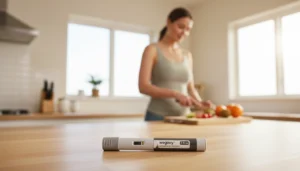
To understand whether you can split a dose, you must first understand the hardware. Wegovy® is delivered via a single-dose auto-injector. This is a “fire and forget” system designed for simplicity and ease of use. Unlike some other medications that come in multi-dose pens, each pen is intended to be used once and then discarded.
When you press the pen against your skin, a hidden needle deploys. The entire volume of the medication is released at once. There is no dial to select a partial dose. This design ensures that patients receive the exact amount prescribed by their doctor without having to do any math or manual measurements. However, this same simplicity makes splitting a dose a complex manual process that the manufacturer did not originally intend.
Quick Answer: Wegovy® pens are single-use auto-injectors and are not designed to be split. To split a dose, the medication must be “decanted” into a sterile vial and measured with a separate syringe. This process carries risks of contamination and dosing errors.
For additional context, see this guide to splitting semaglutide doses and understanding delivery systems.
The Difference Between Single-Use and Multi-Dose Pens
It is important to clear up a common source of confusion regarding semaglutide pens. Many patients see videos online of people “clicking” their pens to get a partial dose. These individuals are usually using Ozempic®, not Wegovy®. While both medications contain semaglutide, they use different delivery systems.
Ozempic® pens are multi-dose pens with a dial. You can count the “clicks” on the dial to select a dose that is smaller than the maximum. One pen typically lasts for four weeks. Wegovy® pens are single-use auto-injectors. There is no dial. Once the button is pressed, the entire contents are expelled. Attempting to apply “click” instructions to a Wegovy® pen will not work and will result in wasting the entire dose.
Why People Consider Splitting Wegovy® Doses
There are several practical reasons why a person might ask their healthcare provider about splitting a dose. Most of these reasons stem from the way the medication is manufactured and the challenges of the current healthcare landscape.
Managing Gastrointestinal Side Effects
The most common side effects of GLP-1 medications include nausea, bloating, and fatigue. These often happen when a person moves up to a higher dose too quickly. Some find that taking a smaller dose twice a week, rather than one large dose once a week, helps the body adjust more comfortably. This practice is sometimes called “microdosing.”
For more information about managing nausea and other reactions, read this guide to semaglutide side effects.
Navigating Medication Shortages
Supply chain issues have made it difficult for some patients to find lower “starter” doses of branded medications. If an individual can only find a high-dose pen, they may consider splitting it to stay on their current schedule rather than skipping doses entirely. This is often done out of necessity to maintain the progress they have already made.
If you are having trouble finding your prescribed dose, you can complete a free eligibility assessment to explore whether a personalized program may be appropriate.
Personalized Titration Needs
Every body reacts differently to semaglutide. A standard titration schedule might move a person from 0.5 mg to 1.0 mg. However, that individual might find that 0.75 mg is their “sweet spot” for weight loss without side effects. Splitting doses allows for a level of granular control that a standard auto-injector pen does not offer.
The Technical Reality of Dose Splitting
If a healthcare provider agrees that splitting is a viable path for you, it is never done by “stopping” the pen mid-injection. The spring-loaded mechanism makes this physically impossible and unsafe. Instead, the process involves “decanting” the medication.
The Decanting Process
Decanting involves triggering the auto-injector into a sterile glass vial instead of into the skin. Once the medication is in the vial, the patient uses a traditional insulin syringe to draw up the specific amount needed. This allows a single 2.4 mg pen to be divided into multiple smaller doses.
For education about vial handling and injection technique, review this step-by-step guide to injecting compounded semaglutide.
Mathematical Accuracy
The volume of liquid in these pens is very small, often less than one milliliter. A person must calculate exactly how many “units” on an insulin syringe correspond to the desired milligram dose. For example, if a pen contains 2.4 mg of semaglutide in 0.75 ml of liquid, and the patient wants a 0.6 mg dose, the math must be perfect. Even a tiny error can lead to an accidental overdose or an ineffective sub-therapeutic dose.
Key Takeaway: Dose splitting requires moving the medication from a sealed auto-injector into a sterile vial. This process requires precise mathematical calculations and a sterile environment to prevent infection or incorrect dosing.
The Serious Risks of DIY Dose Splitting
While the process of decanting seems straightforward, there are significant clinical risks when patients attempt it at home without direct supervision and the proper equipment.
Contamination and Infection
The moment medication is transferred from its original pen into a vial, it is exposed to the environment. If the vial or the needle used for extraction is not perfectly sterile, bacteria can enter the liquid. Injecting contaminated medication can lead to serious skin infections, abscesses, or systemic illness. Branded pens are designed to be a closed system for a reason.
Loss of Potency and Stability
Semaglutide is a peptide, which is a fragile string of amino acids. Peptides are sensitive to light, temperature, and even “shearing forces.” The physical act of being sprayed at high pressure from a pen into a vial can potentially damage the molecules. Furthermore, Wegovy® contains preservatives intended for a single use. Once the seal is broken and the liquid is moved, its shelf life decreases rapidly.
Dosing Inaccuracy
A standard insulin syringe is measured in units, not milligrams. Converting the concentration of a branded pen into units requires a clear understanding of the liquid’s density. If a patient miscalculates, they may experience severe vomiting and dehydration from too much medication, or they may stall their weight loss progress by taking too little.
Important: Never attempt to split a dose using household items or non-sterile containers. If you are struggling with your current dosage, always consult a licensed healthcare professional to discuss safer alternatives.
A Safer Path: Personalized Programs and Compounded Options
For many people, the desire to split doses is actually a desire for a more personalized treatment plan. The “one size fits all” approach of branded auto-injectors does not work for everyone. This is where our approach provides a distinct advantage.
Through the TrimRx platform, we connect you with licensed healthcare providers who can prescribe compounded semaglutide when appropriate. Compounded medications are prepared by FDA-registered, inspected compounding pharmacies. Unlike branded auto-injectors, compounded semaglutide often comes in a multi-dose vial as the standard delivery method.
To learn more about this delivery format, read this overview of compounded semaglutide injections.
The Benefits of Multi-Dose Vials
Using a multi-dose vial from a compounding pharmacy solves the “dose splitting” dilemma safely. Since the medication is already intended to be drawn with a syringe, there is no need to “hack” a pen.
- Precision Titration: Your provider can instruct you to take the exact dose that works for your body, whether that is 0.25 mg, 0.7 mg, or 1.2 mg.
- Reduced Waste: You only draw what you need, and the vial remains refrigerated and stable for the duration of its use-by date.
- Ease of Use: You use a standard, thin insulin syringe to draw the medication directly. This eliminates the uncertainty of the auto-injector mechanism.
We believe that weight loss should be tailored to the individual, not a rigid manufacturing schedule. Our program includes the doctor consultation and the medication shipped directly from an inspected pharmacy, ensuring you have professional guidance at every step.
How to Manage Side Effects Without Splitting
If your primary reason for wanting to split a dose is to avoid nausea, there are evidence-based strategies you can use alongside your prescribed regimen. You do not always need to change your dose to feel better.
Prioritize Hydration and Electrolytes
GLP-1 medications can suppress your thirst cues just as much as your hunger cues. Dehydration is a leading cause of the headaches and fatigue associated with weight loss medications. We recommend aiming for at least 60 to 80 ounces of water daily. Adding electrolytes can help maintain the mineral balance your muscles need to function.
For more hydration strategies during weight loss, explore this guide to hydration and metabolic health.
Focus on Protein Intake
When your appetite is low, it is easy to under-eat. This can lead to muscle loss and a “crashing” feeling. Aim for roughly 30 grams of protein per meal. If you find it hard to eat solid food, high-quality protein shakes can be a helpful tool. Supporting your body’s nutritional needs makes the medication much easier to tolerate.
This protein guide for weight loss offers additional context for maintaining protein intake.
Consider Targeted Supplements
Sometimes, your body needs extra support to handle the metabolic changes of weight loss. Our GLP-1 Daily Support supplement is designed to provide essential nutrients that may be lacking when your calorie intake decreases. Additionally, Weight Loss Boost can help maintain energy levels during the titration process. These supplements do not require a prescription and can be a helpful addition to any program.
The Science of Semaglutide Half-Life
To understand why splitting a dose into twice-weekly injections might feel better, we have to look at the “half-life” of the drug. The half-life of semaglutide is approximately seven days. This means that one week after your injection, half of the medication is still in your system.
When you take one large dose on Monday, your blood levels peak about 24 to 48 hours later. This peak is often when side effects are most intense. By Friday and Saturday, the levels are lower, and some patients notice their hunger returning. Splitting the dose, for example, taking half on Monday and half on Thursday, keeps the blood levels more stable. This “smooths out” the peaks and valleys, which can lead to more consistent appetite control and fewer side effects.
Bottom line: While the science of a more frequent, lower dose, or microdosing, is sound, doing it by manually breaking open a Wegovy® pen is risky. A multi-dose vial from a compounding pharmacy is the clinically appropriate way to achieve this stability.
Preparing for a Discussion With Your Provider
If you feel that your current Wegovy® dose is too high or causing too many side effects, you should prepare for a telehealth consultation. Being specific about your experience helps your provider make the best recommendation.
Track Your Symptoms
Keep a log for one week. Note when you take your injection and exactly when side effects occur. Are you most nauseous 24 hours after the shot? Does your hunger return on day six? This data is invaluable for a provider to determine if a dose adjustment or a change in frequency is necessary.
Ask About Compounded Alternatives
During your consultation through our platform, you can ask the provider about compounded semaglutide. This is a common path for patients who require non-standard doses or who have had difficulty with the branded auto-injectors. The provider can explain how the transition works and how to safely use a vial and syringe.
Steps to Starting a Personalized Program
- Take the Assessment: Complete the free online health quiz to share your medical history and goals.
- Consult with a Provider: Review your options with a licensed professional who understands GLP-1 therapy.
- Receive Your Plan: If eligible, your personalized program will include medication shipped from a sterile, inspected pharmacy.
- Ongoing Support: Access our team 24/7 for help with dosing questions or side effect management.
Long-Term Success with GLP-1 Therapy
Successful weight loss is not just about the medication; it is about how the medication fits into your life. If a treatment plan feels like a struggle because of side effects or pen mechanics, it is much harder to stay consistent. Consistency is the most important factor for long-term metabolic health.
At TrimRx, our mission is to help individuals embrace healthier lifestyles through science, empathy, and a transparent, personalized approach. We understand that the journey is not linear. By moving away from a “one size fits all” mindset, we empower you to find the exact rhythm that works for your unique biology. Whether you are using compounded semaglutide or seeking nutritional support, we are here to provide a medically supervised, telehealth-first experience.
FAQ
Can I save a Wegovy pen for two doses?
No, the Wegovy® pen is a single-use auto-injector designed to release its entire contents in one session. Once the needle is triggered, the mechanism cannot be stopped or reused. Attempting to save a partially discharged pen is unsafe and will likely result in the medication leaking or becoming contaminated.
Is it safe to use a syringe to take Wegovy out of the pen?
This process, known as decanting, should only be done under the explicit guidance of a healthcare provider and with sterile supplies. While some patients do this to manage shortages or side effects, it carries risks of infection and dosing errors. A safer alternative is to use compounded semaglutide, which is designed to be used with a syringe and vial.
Does splitting a GLP-1 dose reduce side effects?
Many patients and some clinicians report that “microdosing,” or taking smaller doses more frequently, can help reduce nausea by preventing high peaks of medication in the bloodstream. However, this should be done using a multi-dose vial rather than trying to split a single-use branded pen. Always discuss changes to your dosing frequency with your medical provider.
What should I do if I can’t find my Wegovy dose due to a shortage?
If your prescribed dose is unavailable, do not attempt to “hack” a higher-dose pen without professional advice. You can consult with a provider through the TrimRx platform to explore compounded semaglutide options. These are often more readily available during branded medication shortages and allow you to maintain your titration schedule without interruption.
Disclaimer: This content is for informational purposes only and does not constitute medical advice. It is not intended to diagnose, treat, cure, or prevent any disease or condition. Individual results may vary. Always consult a qualified healthcare professional before starting any weight loss program or medication.

Transforming Lives, One Step at a Time
Keep reading
Can the Wegovy Pill Hold the Weight You Lost on Semaglutide Injections?
Most likely yes, once you reach the maintenance dose. The risk is not the destination but the trip: switching means restarting titration on the…

Wegovy Alternatives: What Else Works for Weight Loss
If Wegovy isn’t working out, the strongest alternative is tirzepatide (Zepbound), which tends to produce more weight loss, followed by other GLP-1 options and…

VK2735 vs Wegovy: Investigational Contender vs Proven Semaglutide
VK2735 and Wegovy sit at different stages of development. VK2735, an investigational drug from Viking Therapeutics, comes in both injectable and oral forms and…


