Compounded Semaglutide South Carolina — Access, Cost &

Compounded Semaglutide South Carolina — Access, Cost & Safety
South Carolina has one of the highest obesity rates in the Southeast. Nearly 35% of adults in the state meet clinical criteria for obesity, according to 2025 CDC data. Compounded semaglutide in South Carolina has become the primary access route for residents who qualify for GLP-1 therapy but can't afford Wegovy's $1,349 monthly retail price or navigate the insurance denials that still affect 60–70% of prior authorization requests. The gap between clinical need and financial access has made compounding pharmacies the de facto solution for weight management across Charleston, Columbia, Greenville, and smaller communities statewide.
Our team has guided hundreds of patients through South Carolina's telehealth prescribing landscape. The confusion isn't whether compounded semaglutide works. It's understanding what you're actually getting, what it costs, and how South Carolina's telehealth statutes make access straightforward when you know where to look.
What is compounded semaglutide, and how does it differ from brand-name Wegovy?
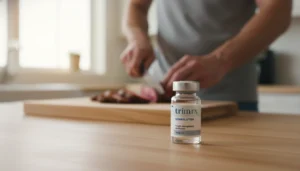
Compounded semaglutide contains the same active pharmaceutical ingredient as Wegovy and Ozempic. Semaglutide. Prepared by FDA-registered 503B outsourcing facilities or state-licensed compounding pharmacies under USP Chapter 797 sterile compounding standards. It's not FDA-approved as a finished drug product, meaning the final formulation hasn't undergone Phase III clinical trials the way Novo Nordisk's branded versions have. What it lacks in brand approval it compensates for in cost: compounded semaglutide typically runs $250–$450 monthly depending on dose, compared to $1,300+ for Wegovy without insurance.
The molecule is identical. GLP-1 receptor agonist that slows gastric emptying and reduces appetite signaling through hypothalamic pathways. The preparation method differs slightly: compounded versions are typically supplied as lyophilized powder requiring reconstitution with bacteriostatic water, while Wegovy comes in pre-filled single-dose pens. Clinical outcomes depend on dosing accuracy and adherence, not the brand name on the vial. South Carolina law permits compounding when a commercially available drug is in shortage. A status semaglutide has held since 2023.
This article covers how South Carolina residents access compounded semaglutide through telehealth providers, what compounding pharmacies are legally permitted to prepare, cost structures, safety considerations specific to compounded formulations, and the regulatory framework that makes this access possible without visiting a brick-and-mortar clinic.
How South Carolina Residents Access Compounded Semaglutide
Access to compounded semaglutide in South Carolina runs through three channels: telehealth providers with in-state medical licensure, independent compounding pharmacies that ship statewide, and weight management clinics offering hybrid in-person/telehealth models. The telehealth route dominates because South Carolina's telemedicine statute (SC Code § 40-47-113) permits prescription of controlled and non-controlled medications via synchronous audiovisual consultation without requiring an in-person initial visit. Semaglutide is not a controlled substance, which simplifies the prescribing pathway compared to stimulant-based weight loss medications.
The standard process: complete an intake questionnaire covering medical history, current medications, and contraindications (personal or family history of medullary thyroid carcinoma, multiple endocrine neoplasia syndrome type 2, history of pancreatitis). A South Carolina-licensed physician or nurse practitioner conducts a live video consultation. Duration typically 15–25 minutes. To review labs if available (baseline A1C, lipid panel, comprehensive metabolic panel), confirm eligibility, and write the prescription. The prescription is sent electronically to a partner 503B pharmacy, which ships the compounded semaglutide via overnight courier with cold packs to maintain 2–8°C during transit. Time from consultation to delivery: 48–72 hours for most South Carolina zip codes.
Geographic coverage extends across all 46 counties. Charleston, Greenville, Columbia, Spartanburg, Rock Hill, Mount Pleasant, Summerville, and rural communities have equal access under state telehealth law. No in-person follow-up is required unless adverse events necessitate examination. Monthly refills are processed through the same telehealth platform with brief asynchronous check-ins to assess tolerance and adjust dosing. TrimRx operates under this model, serving South Carolina residents with licensed prescribers and overnight pharmacy fulfillment.
Cost Structure: Compounded vs Brand-Name Semaglutide
Brand-name Wegovy retails at $1,349 monthly without insurance. A price point that excludes the majority of South Carolina residents who would clinically benefit from GLP-1 therapy. Insurance coverage remains inconsistent: while federal Medicare and Medicaid programs now cover GLP-1 medications for obesity (as of 2025), commercial insurers still deny 60–70% of prior authorization requests based on formulary restrictions or step-therapy requirements demanding documented failure of lifestyle intervention. The result: most patients pay out-of-pocket.
Compounded semaglutide in South Carolina costs $250–$450 monthly depending on dose tier and whether the provider includes ancillary supplies (syringes, alcohol swabs, sharps container). Starting doses (0.25mg weekly) fall at the lower end; maintenance doses (1.0–2.4mg weekly) scale toward the upper range. This represents 70–85% cost reduction compared to Wegovy. The caveat: compounded versions require self-injection using insulin syringes and manual dose measurement, whereas Wegovy pens deliver pre-measured single doses with a spring-loaded autoinjector. Convenience traded for affordability.
Breakdown of typical monthly costs for compounded semaglutide via South Carolina telehealth providers:
- Telehealth consultation: $49–$99 initial visit, $0–$29 monthly follow-ups
- Compounded semaglutide (0.25mg weekly starting dose): $199–$299
- Compounded semaglutide (1.0mg weekly maintenance dose): $299–$399
- Compounded semaglutide (2.4mg weekly maximum dose): $399–$499
- Injection supplies (if not included): $15–$25 monthly
No South Carolina insurance plans currently reimburse compounded semaglutide. It is classified as a non-FDA-approved preparation ineligible for formulary inclusion. HSA and FSA funds can be used if the prescription is written by a licensed provider for a diagnosed medical condition (obesity with BMI ≥30, or BMI ≥27 with comorbidity). The financial calculation is straightforward: 12 months of compounded semaglutide at $400/month totals $4,800 annually, compared to $16,188 for Wegovy. A $11,388 difference that makes long-term adherence financially viable for middle-income patients.
Safety Considerations: What Compounding Standards Mean
The primary safety concern with compounded semaglutide isn't the active ingredient. It's preparation quality and sterility assurance. FDA-registered 503B facilities operate under Current Good Manufacturing Practice (CGMP) standards and undergo regular FDA inspection, but they do not perform Phase III clinical trials on each compounded batch. State-licensed 503A pharmacies (which compound on a per-prescription basis) are regulated by state pharmacy boards, not the FDA directly. The distinction matters: 503B facilities can ship across state lines and compound in larger batches; 503A pharmacies must document a patient-specific prescription before compounding.
South Carolina law requires all compounding pharmacies to maintain USP Chapter 797 compliance for sterile preparations. This governs cleanroom standards, beyond-use dating, sterility testing, and endotoxin limits. A compounded semaglutide vial prepared under USP 797 should be microbiologically equivalent to a pharmaceutical-grade product. The risk emerges when pharmacies operate below these standards or when counterfeit operations misrepresent non-compounded product as legitimate. Red flags: unusually low pricing (sub-$200/month for maintenance doses), no pharmacy license verification, shipment from non-US facilities, lack of lot numbers or beyond-use dates on vials.
Adverse event profiles for compounded semaglutide mirror those of brand-name formulations. Nausea, vomiting, diarrhea, and constipation occur in 30–45% of patients during dose escalation. These are mechanism-driven effects (GLP-1 slows gastric motility), not contamination issues. Serious adverse events. Pancreatitis, gallbladder disease, hypoglycemia in diabetic patients on concurrent insulin. Appear at similar rates regardless of compounding source. The South Carolina Board of Pharmacy maintains a public license lookup tool to verify any compounding pharmacy's standing before filling a prescription.
| Semaglutide Source | FDA Oversight | Cost (Monthly) | Delivery Format | Sterility Standard | Professional Assessment |
|---|---|---|---|---|---|
| Wegovy (Novo Nordisk) | Full FDA approval. Phase III trials completed | $1,349 retail | Pre-filled single-dose pen | Pharmaceutical-grade CGMP | Gold standard for traceability and batch consistency, but cost prohibitive for most uninsured patients |
| Compounded (503B facility) | FDA-registered, inspected; no product-level approval | $299–$499 | Multi-dose vial requiring reconstitution | USP 797 sterile compounding | Clinically equivalent molecule at fraction of cost; requires patient comfort with self-dosing and syringe use |
| Compounded (503A pharmacy) | State board regulated; no FDA oversight | $250–$399 | Multi-dose vial requiring reconstitution | USP 797 sterile compounding | Lower cost but less regulatory transparency; verify state license before use |
| International/gray market | None | $100–$200 | Variable | Unknown | Highest risk. No sterility assurance, no recourse for adverse events, potential counterfeit product |
Key Takeaways
- Compounded semaglutide in South Carolina costs $250–$450 monthly compared to $1,349 for brand-name Wegovy, representing 70–85% savings without insurance coverage.
- South Carolina's telehealth statute permits licensed providers to prescribe semaglutide via video consultation without requiring an in-person visit, with 48–72 hour statewide delivery.
- FDA-registered 503B compounding facilities prepare semaglutide under sterile CGMP standards. The active molecule is identical to Wegovy, but the final formulation lacks Phase III clinical trial data.
- The same GI side effects (nausea, vomiting, diarrhea) occur with compounded and brand-name semaglutide because they are mechanism-driven, not preparation-related.
- South Carolina residents can verify any compounding pharmacy's license status through the SC Board of Pharmacy public lookup before filling a prescription.
What If: Compounded Semaglutide Scenarios
What if I experience severe nausea after starting compounded semaglutide?
Contact your prescribing provider to discuss dose reduction or slower titration. GI side effects peak during the first 4–8 weeks at each new dose level and typically resolve as GLP-1 receptors downregulate in the gut. Standard mitigation: eat smaller meals, avoid high-fat foods, stay upright for two hours after eating. If nausea persists beyond week 8 or prevents adequate hydration, your provider may recommend antiemetic support (ondansetron) or switching to tirzepatide, which has lower reported nausea rates at equivalent weight loss efficacy.
What if my compounded semaglutide vial arrived warm during shipping?
Do not use it. Semaglutide degrades irreversibly at temperatures above 8°C. Thermal excursions denature the protein structure even if the solution appears clear. Contact the pharmacy immediately for replacement. Legitimate 503B facilities ship with temperature data loggers and include cold packs rated for 48-hour transit. If your package lacked these, that's a red flag about the pharmacy's quality systems.
What if I miss a weekly dose by more than five days?
Skip the missed dose entirely and resume your regular schedule with the next planned injection. Do not double-dose to compensate. Semaglutide has a five-day half-life, meaning therapeutic levels persist for 10–14 days after the last injection. Missing one dose may cause temporary appetite rebound but won't reset your progress. Consistent missed doses signal the need to reassess whether weekly injections fit your routine. Daily GLP-1 options like liraglutide exist but cost significantly more.
The Unvarnished Truth About Compounded Semaglutide
Here's the honest answer: compounded semaglutide works exactly like Wegovy because it is the same molecule. The fear-mongering around
Frequently Asked Questions
Is compounded semaglutide legal in South Carolina?▼
Yes — South Carolina law permits licensed compounding pharmacies to prepare semaglutide when the branded product is in FDA-declared shortage, which has been the case since 2023. Compounded semaglutide must be prescribed by a licensed provider and prepared by a state-licensed or FDA-registered 503B pharmacy. It is not FDA-approved as a finished drug product, but the compounding process itself is legal and regulated under state pharmacy board statutes and USP Chapter 797 sterile preparation standards.
How much does compounded semaglutide cost in South Carolina without insurance?▼
Compounded semaglutide costs $250–$450 monthly in South Carolina depending on dose tier, compared to $1,349 for brand-name Wegovy. Starting doses (0.25mg weekly) typically cost $199–$299; maintenance doses (1.0–2.4mg weekly) range $299–$499. Most telehealth providers bundle the medication, consultation, and injection supplies into a single monthly fee. No commercial insurance plans currently reimburse compounded semaglutide, but HSA/FSA funds can be used if prescribed for a diagnosed medical condition.
Can I get compounded semaglutide through telehealth in South Carolina?▼
Yes — South Carolina statute SC Code § 40-47-113 permits licensed providers to prescribe non-controlled medications like semaglutide via synchronous video consultation without requiring an in-person visit. The consultation typically lasts 15–25 minutes, covers medical history and contraindications, and results in a prescription sent electronically to a partner compounding pharmacy. Most providers ship compounded semaglutide within 48–72 hours to any South Carolina address with overnight delivery and cold packs to maintain proper storage temperature.
What are the risks of using compounded semaglutide instead of Wegovy?▼
The primary risk is preparation quality — compounded semaglutide from unlicensed or substandard facilities may lack sterility assurance or correct dosing. FDA-registered 503B pharmacies mitigate this by operating under CGMP standards with regular FDA inspections, making their product microbiologically equivalent to pharmaceutical-grade semaglutide. The clinical side effect profile is identical to Wegovy (nausea, vomiting, diarrhea in 30–45% of patients) because these are mechanism-driven, not formulation-related. Verify any compounding pharmacy’s license through the SC Board of Pharmacy before filling a prescription.
How long does compounded semaglutide take to work for weight loss?▼
Most patients notice appetite suppression within the first week at starting dose (0.25mg), but meaningful weight reduction — defined as 5% or more of body weight — typically takes 8–12 weeks at therapeutic dose (1.0mg or higher). The STEP-1 trial found 14.9% mean body weight reduction at 68 weeks on 2.4mg weekly semaglutide. Results depend on dose escalation schedule, dietary adherence, and baseline metabolic factors. Patients who maintain a caloric deficit alongside semaglutide consistently lose 2–3 times more weight than those relying on the medication alone.
Do I need a prescription for compounded semaglutide in South Carolina?▼
Yes — semaglutide is a prescription medication whether compounded or branded. South Carolina law requires a valid prescription from a licensed provider (physician, nurse practitioner, or physician assistant with prescriptive authority) before any pharmacy can dispense it. Telehealth providers satisfy this requirement through video consultations with SC-licensed practitioners. Any source offering semaglutide without requiring a prescription is operating illegally and should be avoided.
What is the difference between 503A and 503B compounding pharmacies?▼
503A pharmacies are state-licensed facilities that compound medications on a per-prescription basis for individual patients — they cannot ship across state lines or compound in anticipation of orders. 503B facilities are FDA-registered outsourcing facilities that can manufacture larger batches and distribute interstate, operating under stricter CGMP standards with regular FDA inspection. For South Carolina residents, both are legal sources of compounded semaglutide, but 503B facilities offer greater regulatory transparency and batch traceability.
Can I use my HSA or FSA to pay for compounded semaglutide?▼
Yes — if the compounded semaglutide is prescribed by a licensed provider for a diagnosed medical condition (obesity with BMI ≥30, or BMI ≥27 with weight-related comorbidity like hypertension or type 2 diabetes), it qualifies as an eligible medical expense under IRS guidelines. Most HSA/FSA administrators require a prescription and itemized receipt showing the medication name, prescriber information, and amount paid. Keep documentation for tax filing purposes.
What should I do if my compounded semaglutide looks cloudy or discolored?▼
Do not use it — contact the compounding pharmacy immediately. Properly reconstituted semaglutide should be clear to slightly opalescent and colorless to pale yellow. Cloudiness, particulates, or color changes indicate protein aggregation, contamination, or degradation. Legitimate 503B pharmacies will replace defective product at no charge. If the pharmacy refuses or becomes unresponsive, file a complaint with the South Carolina Board of Pharmacy and report the incident to your prescribing provider.
Will I regain weight after stopping compounded semaglutide?▼
Most patients regain a significant portion of lost weight within 12 months of discontinuing semaglutide — the STEP 1 Extension trial found participants regained approximately two-thirds of their lost weight within one year. This reflects the fact that GLP-1 agonists correct impaired satiety signaling that returns when the medication stops. Transition planning with your provider — including dietary adjustments, exercise programming, and potentially a lower maintenance dose — can reduce rebound. Semaglutide is increasingly prescribed as long-term metabolic management rather than short-term weight loss.

Transforming Lives, One Step at a Time
Keep reading
Is a Body Composition Scan Worth It While You’re on Semaglutide?
Worth it if it will change something you do, and mostly not if it will not. That is the whole test. A scan that…

Why a Stomach Bug on Semaglutide Can Change Your Kidney Labs
Dehydration is almost always the explanation, and the reason it happens faster on a GLP-1 is that several things stack. You were already drinking…

Gallstones Found on a Scan While on Semaglutide: Do You Have to Stop?
Not automatically. Gallstones found incidentally, without symptoms, are common in the general population and are frequently managed by watching rather than acting. The decision…


