Do Squats Help With Weight Loss? Our Team Explains the Truth
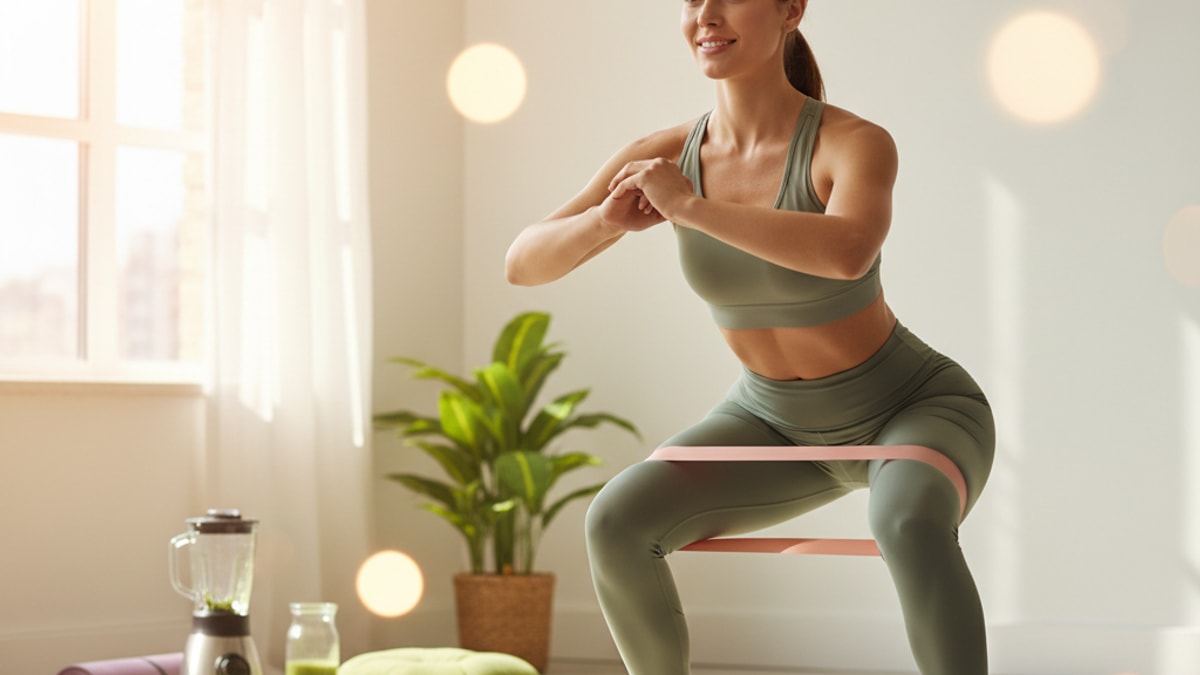
Let's get right to it. It’s one of the most common questions our team hears from clients who are starting a new fitness regimen alongside their treatment plan: "Do squats help with weight loss?" It's a great question, born from countless fitness articles and gym-floor conversations that position the squat as the undisputed king of exercises. And in many ways, it is.
But the answer isn't a simple 'yes' or 'no'. It's more complex, more interesting, and frankly, more empowering than that. The truth is, thinking of squats—or any single exercise—as a direct tool for shedding pounds is a fundamental misunderstanding of how the body actually works. We've found that real, sustainable weight loss is a systemic change. It’s about building a better metabolic engine, not just trying to burn off last night's dinner. And that's where squats truly shine, just not in the way most people think.
The Short Answer (and Why It's Misleading)
Yes, squats help with weight loss. But they don't do it by themselves.
That’s the crucial distinction. Performing a set of squats does, of course, burn calories. But the number is often less than what people imagine. You're not going to undo a caloric surplus with a few sets in your living room. The real magic of the squat isn't in the immediate calories burned during the exercise; it's in the profound, long-term physiological changes it triggers within your body. It's a catalyst. A powerful one.
Our experience shows that clients who achieve the most dramatic and lasting results are the ones who grasp this concept. They stop chasing the calorie burn from a single workout and start focusing on building a body that is fundamentally more efficient at managing energy 24/7. This is a significant, sometimes dramatic, mental shift. It's moving from a mindset of 'earning' your food to one of 'investing' in your metabolism. Squats are one of the single best investments you can make.
How Squats Actually Build a Better Metabolism
Here’s what you need to know: your metabolism is largely driven by your muscle mass. Muscle is metabolically active tissue. This means it requires energy (calories) just to exist, even when you're resting on the couch. Fat, on the other hand, is primarily storage. It's passive. It just sits there, requiring very little energy to maintain.
So, the more muscle you have, the higher your Basal Metabolic Rate (BMR)—the number of calories your body burns at rest. It's your metabolic engine. A bigger engine burns more fuel, even when it's idling.
This is where the squat becomes a formidable tool. Squats are a compound exercise, meaning they work multiple large muscle groups at once: your quadriceps, hamstrings, glutes, and core. These are some of the largest muscles in your entire body. When you consistently challenge these muscles through squats (especially with added weight), your body responds by repairing and building them to be stronger and larger. This process, known as hypertrophy, directly increases your total muscle mass.
Let's be honest, this is crucial. As you build more muscle in your legs and glutes, you are literally upgrading your body's metabolic hardware. Your BMR creeps higher. You start burning more calories around the clock—while you're working, sleeping, and watching TV. This is the 'afterburn' effect on a permanent scale. It’s not about the 100 calories you burned during your workout; it's about the extra 50, 75, or 100+ calories you burn every single day afterward, without doing a thing.
For our clients on GLP-1 programs, this is a particularly powerful synergy. The medication is expertly managing the hormonal and appetite side of the equation, creating the ideal environment for fat loss. Adding squats into the mix ensures that you're not just losing weight, but you're fundamentally changing your body composition in favor of a leaner, more metabolically active physique. You're building the very tissue that will help you maintain your results long-term.
Beyond the Burn: The Hormonal Advantage of Heavy Lifting
Intense compound exercises do more than just build muscle; they create a cascade of beneficial hormonal responses that are incredibly conducive to weight loss. When you push your body with challenging movements like squats, you trigger the release of powerful anabolic (muscle-building) hormones.
Two of the most important are Human Growth Hormone (HGH) and testosterone. Both play critical, non-negotiable roles in regulating body composition. HGH helps to mobilize fat stores to be used for energy and is vital for cellular repair. Testosterone contributes directly to muscle protein synthesis and helps maintain bone density and overall vitality. While often associated with men, it's a vital hormone for women's health and body composition as well.
High-intensity resistance training, with squats as a cornerstone, is one of the most effective natural ways to stimulate the release of these hormones. This hormonal shift creates an internal environment that favors burning fat and building muscle. It's another reason why focusing solely on the calorie count of an exercise is so shortsighted. You can't quantify this potent hormonal advantage on a smartwatch, but its impact on your physique over time can be absolutely profound.
This is a nuanced point that often gets lost in mainstream fitness advice. It's not just about energy in vs. energy out; it's about the quality of the signals you're sending your body. Squats send a powerful signal: 'Build. Repair. Become stronger and more efficient.' Cardio sends a different, also valuable, signal: 'Endure. Improve cardiovascular capacity.' Both are important, but for reshaping your body and boosting your metabolism, the signal from squats is arguably more impactful.
Squats vs. Cardio: A Quick Comparison
We've all seen the person at the gym who spends an hour on the elliptical every day but never seems to see a change in their body shape. This is often because they're missing the muscle-building component. Let's break down how a typical squat session compares to a steady-state cardio session.
| Feature | 30-Min Weight Squats | 30-Min Moderate Jog | Our Team's Insight |
|---|---|---|---|
| Immediate Calorie Burn | Moderate (approx. 200-300 cal) | Moderate to High (approx. 250-400 cal) | Cardio often 'wins' in the moment, which is why it's so tempting. But this is a very small part of the story. |
| EPOC (Afterburn Effect) | High | Low to Moderate | The intense nature of resistance training causes more muscle micro-tears, demanding significant energy for repair for up to 24-48 hours. |
| Muscle Building | High | Negligible | This is the game-changer. Squats directly build the tissue that raises your BMR. Jogging does not. |
| Hormonal Response | Significant release of HGH & Testosterone | Primarily cortisol (stress hormone) release | Squats create an anabolic (building) environment, while long-duration cardio can be catabolic (breaking down). |
| Long-Term Metabolism | Significantly increases BMR over time | Minimal impact on BMR | Investing in squats is an investment in your permanent metabolic rate. It's the gift that keeps on giving. |
This isn't to say cardio is bad. It's not. It’s fantastic for heart health, endurance, and stress relief. We recommend it. But when the specific question is 'do squats help with weight loss?', the answer lies in their unique ability to fundamentally re-engineer your metabolism in a way that cardio simply can't match.
This Is Where Most People Go Wrong
So, if squats are so effective, why don't more people see results? Our team has identified a few common, catastrophic pitfalls.
First, there's the issue of form over ego. We've seen it a thousand times: someone loads up the bar with too much weight, their form breaks down, and they perform shallow, ineffective reps. Not only does this dramatically increase the risk of injury, but it also fails to properly engage the target muscles. A deep, perfectly executed bodyweight squat is infinitely more effective than a heavy, partial-rep ego lift. We can't stress this enough.
Second is the lack of progressive overload. Your body is an amazing adaptation machine. If you do the same 3 sets of 10 reps with the same weight every week, your body will adapt and the stimulus for growth will vanish. You have to consistently challenge it. This means gradually increasing the weight, the number of reps, the number of sets, or decreasing rest time. You must give your body a reason to change.
Third, and most importantly, is the fallacy of isolation. People think they can just add squats to their routine and watch the fat melt away while still ignoring nutrition and overall lifestyle. It doesn't work like that. You can't out-squat a bad diet. Exercise is a powerful partner to a sound nutritional strategy, not a replacement for it.
This is precisely why a comprehensive, medically-supervised approach is so effective. It addresses the entire system. At TrimrX, our programs are designed to optimize your body's hormonal and metabolic environment first. Medically-prescribed GLP-1 treatments help regulate appetite and improve how your body processes food, making it far easier to maintain the necessary caloric deficit for weight loss without the constant, draining battle against hunger. When you pair that foundational support with a smart exercise plan built around movements like squats, the results are amplified exponentially. If you're ready to see how both pieces fit together, you can Start Your Treatment with us.
Squats and GLP-1s: A Formidable Partnership
Now, this is where it gets really interesting for anyone considering a modern approach to weight management. One of the potential downsides of rapid weight loss through caloric restriction alone is the loss of precious muscle mass alongside fat. This is a pyrrhic victory. Losing muscle lowers your metabolism, making it incredibly difficult to maintain the weight loss long-term and setting you up for the dreaded weight regain cycle.
This is where the partnership between a program like TrimrX and resistance training becomes so powerful. GLP-1 medications are incredibly effective at targeting fat loss. By incorporating squats and other resistance exercises into your routine while on the program, you send your body an unequivocal signal to preserve and build muscle while it releases stored fat for energy.
Think of it this way:
- The GLP-1 medication is telling your body: "We have enough fuel. You don't need to feel hungry. Let's start using our stored energy reserves (fat)."
- The squats are telling your body: "Hey, we need these leg and glute muscles! They are critical for movement and strength. Whatever you do, don't break this tissue down for energy. In fact, we need to make it stronger!"
This dual-pronged approach is the secret to not just losing weight, but achieving a true body recomposition. You lose the fat you don't want while building or maintaining the muscle you absolutely need for a strong, healthy, and metabolically resilient body. It’s a smarter, more sustainable strategy that looks beyond the number on the scale to the quality of the weight being lost. It ensures the 'after' version of you is not just smaller, but stronger and healthier from the inside out.
Building a Smarter Squat Routine for Your Goals
Ready to get started? A good routine doesn't have to be complicated. The key is consistency and progression.
Here’s a simple framework we often recommend for beginners:
-
Master the Bodyweight Squat: Before you even think about picking up a weight, master the form. Stand with your feet shoulder-width apart, chest up, and core tight. Lower yourself as if sitting in a chair, keeping your back straight and knees behind your toes. Go as deep as you can comfortably while maintaining good form. Film yourself if you have to. Aim for 3 sets of 15-20 perfect reps.
-
Introduce Variations: Once you've mastered the basic squat, start playing with variations to challenge your muscles in new ways.
- Goblet Squats: Hold a single dumbbell or kettlebell against your chest. This is a fantastic way to learn to keep your chest up and engage your core.
- Sumo Squats: Take a much wider stance with your toes pointed out. This variation places more emphasis on the glutes and inner thighs.
- Bulgarian Split Squats: Elevate your back foot on a bench or chair. This single-leg variation is brutal but incredibly effective for building stability and strength.
-
Add Weight (Progressive Overload): Once you're comfortable with the variations, it's time to add weight. Start light. The goal is to find a weight that makes the last 2-3 reps of your set challenging but achievable with good form. Aim for a rep range of 8-12 for 3-4 sets. When that becomes easy, it's time to increase the weight slightly. This relentless pursuit of 'a little bit more' is what drives change.
Don't do squats every day. Your muscles need time to recover and rebuild. For most people, incorporating squats into a full-body routine 2-3 times per week is the sweet spot. Listen to your body. Recovery is just as important as the work itself.
Ultimately, the 'best' routine is the one you can stick with consistently. The goal is to build a strong foundation, and that takes time. But the metabolic rewards are more than worth the effort. It's an investment that pays dividends for years to come, creating a body that's more resilient and efficient. When you combine this powerful physical stimulus with a medically-guided program designed to optimize your internal chemistry, you create an unstoppable force for change. This is how you achieve results that last. This is how you can Start Your Treatment Now and build a healthier future.
Frequently Asked Questions
How many squats should I do a day to lose weight?
▼
Thinking in terms of ‘squats per day’ is a common mistake. It’s more effective to focus on quality over quantity. We recommend incorporating 3-4 sets of 8-15 challenging reps into a structured workout 2-3 times per week, allowing your muscles adequate time to recover and grow.
Will squats make my thighs bigger?
▼
This is a frequent concern, especially for women. While squats build muscle, it’s very difficult for most people to build bulky thighs without a specific, high-calorie diet and intense training. For most, squats will create leaner, stronger, and more toned-looking legs, not bulky ones.
Can I lose belly fat just by doing squats?
▼
No, you can’t spot-reduce fat from any part of your body. Squats help with overall weight loss by building muscle and boosting your metabolism, which will lead to fat loss from all over your body, including your belly. But the squats themselves don’t directly burn fat from your stomach.
Are bodyweight squats still effective for weight loss?
▼
Absolutely. Bodyweight squats are a fantastic starting point and can be very effective, especially when performed with perfect form and high repetitions. They build a strong foundation and still provide a metabolic stimulus. For continued progress, you’ll eventually want to add resistance.
How do squats complement a GLP-1 weight loss program like TrimrX?
▼
It’s a powerful combination. The GLP-1 medication helps create an ideal state for fat loss by managing appetite and hormones. Squats ensure that you preserve and build metabolically active muscle during this process, leading to a better body composition and making it easier to maintain your results long-term.
Do I need to lift heavy weights to see weight loss benefits from squats?
▼
Not necessarily. ‘Heavy’ is relative. The key is progressive overload—consistently challenging your muscles. This could mean moving from bodyweight to light dumbbells, or gradually increasing the weight you’re already using. The effort and consistency are more important than the specific number on the weight.
What’s better for fat loss: squats or lunges?
▼
Both are excellent compound exercises. Squats generally allow you to lift heavier weight, providing a greater stimulus for overall muscle growth. Lunges challenge your stability and work each leg independently. Our team recommends including both in a well-rounded routine for the best results.
How soon will I see results from doing squats?
▼
You may feel stronger within a few weeks. Visible changes in muscle tone and body composition typically take 6-8 weeks of consistent training and proper nutrition. Remember, this is a long-term investment in your metabolism.
Is it okay to do squats every day?
▼
We don’t recommend it. Your muscles grow during recovery, not during the workout itself. Squatting every day, especially with weight, can lead to overtraining, injury, and diminished results. Aim for 2-3 sessions per week with at least 48 hours of rest in between.
What if I have bad knees? Can I still do squats?
▼
If you have knee pain, it’s essential to consult with a doctor or physical therapist first. Often, pain is due to poor form or muscle imbalances. Strengthening the glutes and hamstrings with exercises like glute bridges and hip thrusts, and mastering a pain-free range of motion, can often help.
Does squat form really matter that much for weight loss?
▼
Yes, it’s critical. Proper form ensures you’re actually engaging the large muscles of the glutes and legs, which is what drives the metabolic benefits. Poor form not only reduces effectiveness but also puts you at a high risk for injury, which can sideline your progress entirely.
Should I do squats before or after cardio?
▼
For optimal strength and muscle-building, our team recommends performing squats and other resistance training before your cardio session. You want to lift when your muscles are fresh to maximize performance and safety. Doing cardio first can pre-fatigue the muscles, compromising your form and strength.

Transforming Lives, One Step at a Time
Keep reading

Do You Need a Prescription for GLP-1s? The 2026 Answer
Wondering ‘do you need a prescription for glp 1’ in 2026? Yes. We explain why a doctor’s oversight is critical for safe, effective results.

How to Get GLP-1 Covered By Insurance: Our 2026 Playbook
Struggling with how to get glp-1 covered by insurance? Our 2026 guide breaks down prior authorizations, appeals, and documentation.

Traveling with GLP-1s in 2026: Your Essential Trip-Proof Plan
Don’t let travel disrupt your GLP-1 treatment. Learn how to travel with glp 1 medications safely and stress-free in our 2026 expert guide.


