Do Vibration Plates Work for Weight Loss? Our Unflinching Take
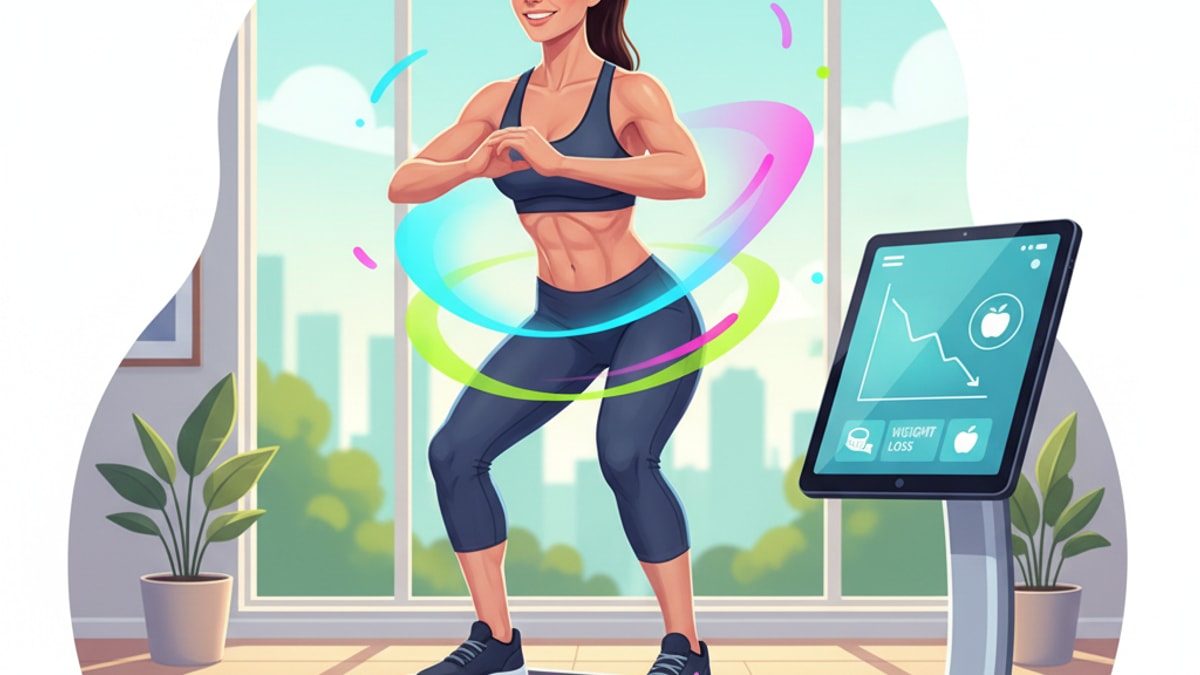
We've all seen them. Tucked away in the corner of a gym or featured prominently in late-night infomercials, the vibration plate promises a revolutionary path to fitness. Just stand there, they say, and let the machine jiggle your way to a slimmer, more toned physique. It's an alluring concept, especially in a world of grueling schedules and the relentless pursuit of wellness. The central question, the one our team gets asked surprisingly often, is simple: do vibration plates work for weight loss?
Let’s be direct. As a team dedicated to the science of metabolic health and sustainable weight management, we approach every new trend with a healthy dose of skepticism and a demand for evidence. We’ve guided countless individuals through the complex journey of weight loss, focusing on powerful, medically-supervised treatments like GLP-1 medications that work with your body’s biology. So when we look at something like a vibration plate, we’re not just looking at the marketing claims; we're digging into the physiological reality. This isn't about dismissing a tool outright—it's about giving you an honest, unflinching assessment of where it fits, and more importantly, where it doesn't.
First, What's Happening When You Stand on That Plate?
Before we can tackle the weight loss question, it's crucial to understand what's actually going on. These machines utilize something called Whole Body Vibration (WBV). The platform you stand on oscillates at a specific frequency, sending tiny, rapid vibrations up through your body. This energy forces your muscles to contract and relax dozens of times per second in an involuntary reflex.
Think of it like this: if you briefly lose your balance, your muscles instantly tense up to stabilize you. A vibration plate creates that same instability on a micro-level, continuously. It's a form of passive exercise. You aren't consciously performing a squat or a lunge, but your muscles are being stimulated to work nonetheless. There are two main types—lineal, where the platform moves straight up and down, and pivotal, which rocks side-to-side like a seesaw. Both aim to achieve the same goal: forcing your muscles into a state of rapid-fire contraction.
It sounds pretty high-tech. And in a way, it is.
But the critical question remains. Do these tiny, involuntary contractions translate into meaningful, significant weight loss?
The Big Question: Do Vibration Plates Actually Burn Fat?
Here’s the straightforward answer our experience has led us to: on their own, vibration plates are an exceptionally poor tool for meaningful weight loss. It’s just not what they’re built for.
While the muscle contractions generated by WBV do burn a small number of calories, the amount is often trivial compared to traditional forms of exercise. The marketing might show perfectly sculpted models effortlessly shaking their way to a six-pack, but the physiological reality is far less dramatic. We're talking about an energy expenditure that's, in many cases, only slightly more than standing still. Some studies suggest it might be comparable to a slow walk. A very, very slow walk.
The entire foundation of weight loss rests on a principle that is non-negotiable: a consistent caloric deficit. You must expend more energy than you consume. It's the law of thermodynamics, and no machine can defy it. To create a deficit substantial enough to lose one pound of fat (roughly 3,500 calories), you would need to spend an astronomical amount of time on a vibration plate. It's not a practical or effective strategy.
Some research has pointed to modest benefits when WBV is combined with conventional exercise, like performing squats or lunges while on the plate. In these scenarios, the plate can increase muscle activation and potentially make the workout more intense. But let's be crystal clear here. The vibration plate isn't the hero of that story. The squats and lunges are doing the heavy lifting. The plate is, at best, a supporting actor. The primary driver of results is the active exercise, not the passive vibration.
Our team has seen this pattern repeatedly. People invest in a machine hoping for a shortcut, use it for a few weeks, see no discernible change in their weight or body composition, and then feel defeated. The problem wasn't their effort; it was their tool. They were trying to build a house with a screwdriver when they needed a full set of power tools.
A Reality Check on Calorie Burn
To put this into perspective, let's look at the numbers. While exact figures vary based on the machine's intensity, your body weight, and your muscle mass, the data is consistently underwhelming. We've compiled a simple comparison to illustrate the point.
| Activity (30 Minutes) | Estimated Calories Burned (155-lb person) | Primary Benefit |
|---|---|---|
| Vibration Plate (Passive Standing) | 50 – 150 | Potential for increased circulation, minor muscle activation |
| Brisk Walking (3.5 mph) | 167 | Cardiovascular health, low-impact fat burning, mental clarity |
| Resistance Training (General) | 112 – 224 | Building metabolism-boosting muscle, bone density, strength |
| Running (6 mph) | 372 | High calorie burn, significant cardiovascular improvement |
| Medically-Supervised Program (e.g., GLP-1) | N/A (Targets Biology) | Appetite regulation, enhanced satiety, metabolic reset |
As you can see, the caloric burn from passively using a vibration plate is minimal. You'd achieve a far greater metabolic impact by simply taking a brisk walk outside. The return on your time investment is dramatically higher with almost any other form of intentional movement. That's the key: intentional movement. Weight loss requires deliberate effort, not just passive stimulation.
So, Are They Completely Useless? Not Exactly.
This is where the nuance comes in. While we've established that vibration plates are not effective primary tools for weight loss, it doesn't mean they have zero value. It's all about context and managing expectations. Let's be fair and look at what the science suggests they can be good for.
Our professional observation is that their true benefits lie in therapeutic and supplementary applications, not in fat reduction. For certain populations, WBV can be quite helpful:
-
Improved Circulation and Flexibility: The vibrations can stimulate blood flow and help warm up muscles, making them potentially useful for a pre-workout routine or for individuals with poor circulation.
-
Muscle Activation in Sedentary Individuals: For people who are unable to perform traditional exercise due to age, injury, or severe mobility limitations, a vibration plate can provide a gentle way to stimulate muscles that would otherwise remain dormant. It's a way to keep things 'switched on.'
-
Potential for Bone Density: Some of the most promising research on WBV is related to its potential to improve bone mineral density, particularly in postmenopausal women or those at risk for osteoporosis. The mechanical stress, even though slight, may encourage bone growth.
-
Balance and Stability: The constant need to stabilize the body can help improve proprioception (your sense of where your body is in space) and balance, which is particularly beneficial for older adults.
Notice a theme here? These are not weight loss benefits. They are therapeutic benefits. It's a tool for rehabilitation, for maintaining a baseline in populations that can't do more, or for a gentle warm-up. Marketing it as a fat-shredding machine is, in our professional opinion, deeply misleading. It creates false hope and distracts from the strategies that genuinely work.
The Path to Real, Sustainable Weight Loss
If the vibration plate isn't the answer, what is? After years of working at the forefront of weight management science, our team has found that sustainable success is built on a few critical, non-negotiable pillars. It’s about creating a comprehensive strategy that addresses your unique biology, not just your behavior.
The journey starts with acknowledging that weight loss is a complex biological process. It’s not a simple matter of 'calories in, calories out' for everyone. Hormones, genetics, and metabolic function play a formidable role. This is why so many people struggle—they're fighting their own body's internal signals.
This is precisely where modern medical advancements have become a game-changer. At TrimrX, we specialize in using FDA-registered GLP-1 medications like Semaglutide and Tirzepatide. These aren't stimulants or fad pills. They are sophisticated biotechnological tools that work with your body's endocrine system. They target the very mechanisms that control hunger, satiety, and blood sugar.
A GLP-1 agonist works by mimicking a natural gut hormone. It tells your brain you're full, slows down how quickly your stomach empties, and helps regulate your insulin response. The result? The constant, nagging food 'noise' quiets down. You feel satisfied with smaller portions. You're no longer battling relentless cravings. This allows you to comfortably and consistently achieve the caloric deficit needed for weight loss without the white-knuckle struggle.
Now, compare that to a vibration plate.
One approach addresses the root biological drivers of weight gain. The other simply shakes the surface. One empowers you to build new, sustainable habits around nutrition. The other requires nothing of you and therefore teaches you nothing. It’s a profound difference. We can't stress this enough: for those who have tried everything and still struggle, addressing the underlying biology is often the missing piece of the puzzle.
If you're tired of the cycle of trying and failing with devices that overpromise and underdeliver, it might be time to explore a medical approach. You can find out if you're a candidate by taking a simple quiz on our site. It’s the first step toward a strategy that’s based on science, not science fiction.
Building Your Toolbox for Success (Vibration Plate Optional)
A medically-supervised program provides the powerful foundation, but it's most effective when combined with lifestyle pillars. This is the holistic strategy we champion.
Pillar 1: Intelligent Nutrition. This is the cornerstone. We work with patients to move away from restrictive dieting and toward sustainable, nutrient-dense eating patterns. Prioritizing protein to maintain muscle mass during weight loss, focusing on fiber for satiety, and understanding portion control become second nature when your biology is on your side.
Pillar 2: Meaningful Movement. This is where the vibration plate conversation comes full circle. We encourage activity that delivers the biggest return: a combination of resistance training and cardiovascular exercise.
- Resistance Training: Lifting weights (or using your body weight) is critical. It builds lean muscle mass. Why does that matter? Muscle is metabolically active tissue. The more you have, the more calories your body burns at rest. It literally raises your baseline metabolism. This is something a vibration plate cannot do in any meaningful way.
- Cardiovascular Exercise: Activities like walking, jogging, cycling, or swimming are essential for heart health and for burning a significant number of calories. They strengthen the most important muscle in your body—your heart.
Could you use a vibration plate for a 5-minute warm-up before a real workout? Sure. It won't hurt. But should it be the centerpiece of your fitness plan? Absolutely not. It's a piece of optional accessory equipment, at best.
Pillar 3: Consistency and Support. Real change doesn't happen overnight. It happens through consistent application of the right principles. Having a medical team to guide you, adjust your plan, and provide support is invaluable. It removes the guesswork and keeps you on track.
When you're ready to stop chasing shortcuts and commit to a proven, comprehensive plan, we're here. You can Start Your Treatment and connect with our medical team to build a personalized strategy that finally works for you.
So, do vibration plates work for weight loss? The evidence is clear. They do not. They are a distraction from the real, effective work that leads to lasting change. True transformation doesn't come from a machine that shakes you; it comes from a scientifically-backed strategy that reshapes your health from the inside out. Don't settle for the vibration. Demand the real results.
Frequently Asked Questions
Can you lose belly fat with a vibration plate?
▼
No, you cannot spot-reduce fat from any part of your body, including your belly, with a vibration plate. Fat loss occurs system-wide through a sustained calorie deficit, which these machines are not effective at creating. True belly fat reduction comes from a combination of proper nutrition, consistent exercise, and in some cases, medical intervention.
How long should you use a vibration plate for weight loss?
▼
Our team’s position is that you shouldn’t rely on a vibration plate for weight loss at all. The time spent on the machine would be far more effectively used for activities like brisk walking or resistance training, which burn significantly more calories and provide greater health benefits.
Do vibration plates actually build muscle?
▼
Vibration plates do not build muscle in the way traditional resistance training does. While they cause involuntary muscle contractions, this stimulation is not enough to create the micro-tears and subsequent repair (hypertrophy) needed for significant muscle growth. For building strength and muscle mass, lifting weights is non-negotiable.
Are vibration plates better than walking?
▼
No, from a weight loss and cardiovascular health perspective, walking is far superior. A brisk walk burns more calories, improves heart health, and engages your body in active, functional movement. A vibration plate offers a much lower return on your time investment.
Who should not use a vibration plate?
▼
Certain individuals should avoid vibration plates or consult a doctor first. This includes pregnant women, people with pacemakers or other implanted devices, individuals with a history of blood clots, acute hernias, or those recovering from recent surgery. Safety should always be the first priority.
What are the real, proven benefits of a vibration plate?
▼
The most credible benefits are not related to weight loss. Research suggests potential improvements in circulation, flexibility, balance, and possibly bone density in specific populations, such as the elderly or those with mobility issues. It’s best viewed as a therapeutic or supplementary tool.
Do doctors recommend vibration plates for weight loss?
▼
The overwhelming consensus in the medical community is that vibration plates are not a recommended tool for weight loss. We, along with other medical professionals, advocate for evidence-based methods like nutritional changes, consistent exercise, and medically-supervised treatments that address the underlying biology of weight.
Can I just stand on a vibration plate and lose weight?
▼
Unfortunately, no. The idea of passive weight loss is an appealing marketing concept, but it’s not based in physiological reality. The calorie burn from simply standing on a plate is minimal and insufficient to create the energy deficit required for noticeable fat loss.
How do vibration plates compare to medical weight loss treatments like GLP-1s?
▼
There is no comparison. A vibration plate is a piece of exercise equipment with minor benefits, while GLP-1 medications are a powerful medical treatment that targets the root hormonal causes of weight gain. GLP-1s fundamentally change your relationship with food by regulating appetite and satiety, enabling sustainable weight loss.
Is a vibration plate a good investment for my health?
▼
If your goal is significant weight loss, it’s a poor investment. That money would be better spent on a gym membership, a consultation with a nutritionist, or exploring a medical weight loss program. If you have specific mobility or circulation issues, it might have some therapeutic value, but not as a general fitness tool.
Do vibration plates help with cellulite?
▼
Some manufacturers claim vibration can reduce cellulite by increasing circulation, but there is no strong scientific evidence to support this. Cellulite is a complex structural issue involving fat deposits and connective tissue, and it’s unlikely that external vibration alone can resolve it.
How often can you use a vibration plate?
▼
Most manufacturers recommend using a vibration plate for 10-15 minutes at a time, a few times per week. However, since its effectiveness for major fitness goals is limited, focusing on the frequency of proven exercises like strength training and cardio is a much better strategy.

Transforming Lives, One Step at a Time
Keep reading

Do You Need a Prescription for GLP-1s? The 2026 Answer
Wondering ‘do you need a prescription for glp 1’ in 2026? Yes. We explain why a doctor’s oversight is critical for safe, effective results.

How to Get GLP-1 Covered By Insurance: Our 2026 Playbook
Struggling with how to get glp-1 covered by insurance? Our 2026 guide breaks down prior authorizations, appeals, and documentation.

Traveling with GLP-1s in 2026: Your Essential Trip-Proof Plan
Don’t let travel disrupt your GLP-1 treatment. Learn how to travel with glp 1 medications safely and stress-free in our 2026 expert guide.


