Do Weighted Vests Actually Help You Lose Weight? Our Team Explains.
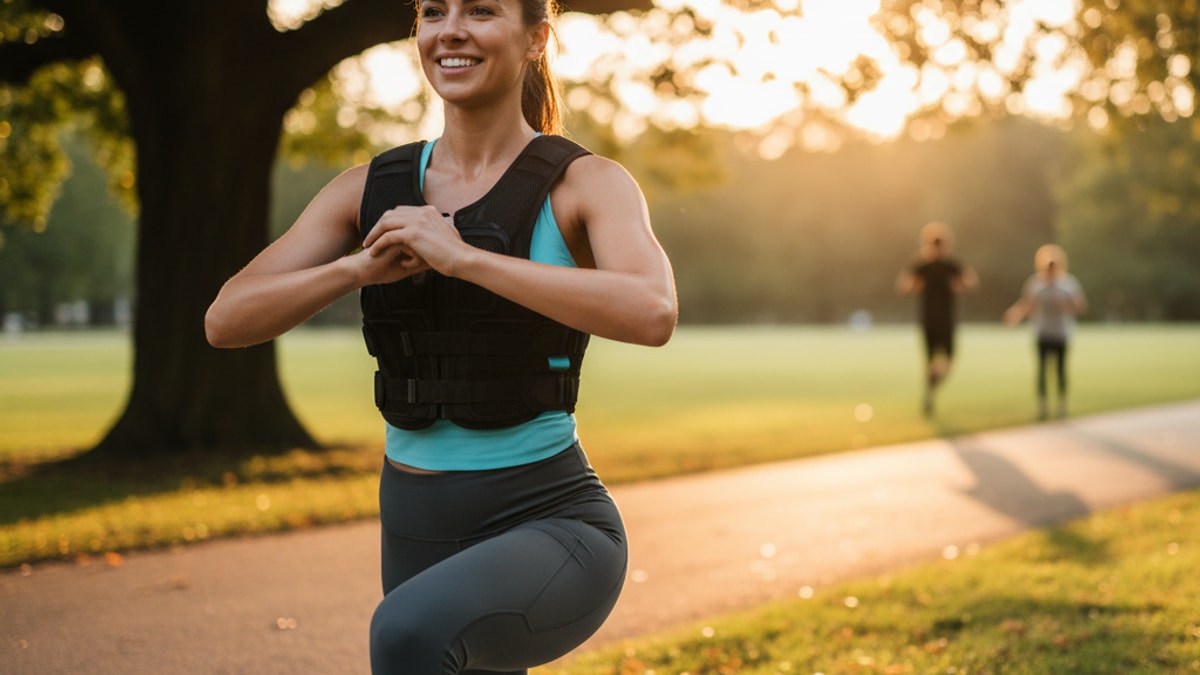
You’ve seen them. At the park, in the gym, maybe even on a neighbor hustling down the street. That tactical-looking piece of gear, the weighted vest, has officially gone mainstream. It’s no longer just for elite athletes or military personnel. And with its rise in popularity, one question keeps bubbling to the surface: do weighted vests help with weight loss? It’s a simple question with a surprisingly complex answer.
Here at TrimrX, our entire focus is on medically-supervised weight loss, primarily using cutting-edge GLP-1 treatments that work from the inside out. But our clinical team understands that lasting success isn't just about medication. It’s about building a sustainable lifestyle, and that includes exercise. We've seen countless tools and trends come and go. So, we're here to give you our unflinching, professional take on weighted vests. They can be an incredible asset, but they can also be a liability if used incorrectly. Let’s break down the science, the strategy, and where they fit in a truly effective weight management plan.
The Core Science: Why Adding Weight Makes a Difference
To understand if weighted vests help with weight loss, we first have to talk about energy. Your body is an engine that’s always running, and it requires fuel in the form of calories. Weight loss, at its most fundamental level, happens when you burn more calories than you consume. It’s a simple equation, but achieving it is anything but.
A weighted vest is a tool of amplification. It doesn't do the work for you; it makes the work you're already doing harder. And in the world of physiology, harder work demands more energy.
Think about it this way: every step you take, every stair you climb, every squat you perform requires your muscles to move your body mass against gravity. When you strap on a 20-pound vest, you've instantly increased your body mass by 20 pounds. Your body doesn't know it's a vest—it just knows it's heavier and has to work harder to perform the exact same movement. This increased demand translates directly to a higher calorie burn.
This applies to everything. It's not just about your formal workout. We're also talking about something called Non-Exercise Activity Thermogenesis (NEAT). NEAT is the energy you expend for everything you do that is not sleeping, eating, or sports-like exercise. It’s walking to the car, doing chores, fidgeting. Wearing a light vest during some of these activities can subtly increase your total daily energy expenditure without you even thinking about it. It’s a small, consistent push that can add up to a significant deficit over time.
Then, of course, there’s the workout itself. A 30-minute bodyweight circuit becomes a formidable challenge with an extra 15 pounds. Your heart rate gets higher, your muscles fatigue faster, and the total caloric cost of that session skyrockets. We've seen data suggesting that walking with a vest weighing about 15% of your body weight can increase calorie burn by over 10-12%. That's a dramatic shift for simply adding one piece of gear.
Beyond Just Burning Calories: The Other Perks
Honestly, focusing only on the calorie burn of a weighted vest is missing the bigger, more important picture. The secondary benefits are what truly contribute to long-term, sustainable body recomposition and health. This is where our team gets particularly interested.
First up is bone density. This is a critical, non-negotiable element of healthy aging that often gets ignored in weight loss conversations. Your bones respond to stress. It's a principle called Wolff's Law: bone in a healthy person will adapt to the loads under which it is placed. By adding external weight, you're placing a greater load on your skeletal system with every step. This signals your body to reinforce the bone matrix, making your bones stronger and more resilient. This is a massive win, especially as we get older.
Second is the development of lean muscle mass. When you challenge your muscles with more resistance—whether from a dumbbell or a weighted vest—they adapt by getting stronger and, with the right nutrition, bigger. Why does this matter for weight loss? Muscle is metabolically active tissue. It burns more calories at rest than fat does. By building more muscle, you're effectively turning up your body's resting metabolism. This means you'll burn more calories 24/7, even while you're sleeping. It’s a long-term investment in an easier weight management future.
And let's not forget your cardiovascular system. Your heart is a muscle, too. Forcing it to pump blood to a body that's suddenly heavier during exercise is a form of cardio conditioning. It has to work harder, and just like any other muscle, it adapts by becoming stronger and more efficient. This can lead to a lower resting heart rate and improved overall cardiovascular health—a cornerstone of any legitimate wellness journey.
Walking vs. High-Intensity Workouts: Where Vests Shine
So, how should you actually use one? The beauty of a weighted vest is its versatility. It can elevate almost any activity, but its effectiveness really shines in a few key areas.
For most people, the single best entry point is walking. We can't stress this enough. Walking is accessible, low-impact, and something most people can do consistently. Adding a weighted vest transforms a casual stroll into a legitimate workout. It elevates your heart rate into a fat-burning zone and engages your core, back, and leg muscles more intensely. This practice, sometimes called 'rucking,' is a phenomenal way to burn significant calories without the high-impact stress of running.
Then there's bodyweight training. Push-ups, air squats, lunges, planks, pull-ups—these are the foundations of functional strength. But eventually, your body adapts. You get to a point where you can do 30, 40, or 50 squats, and it's more of an endurance challenge than a strength-building one. This is where a vest is a game-changer. It allows you to apply the principle of progressive overload without needing a room full of equipment. Adding just 10 or 20 pounds can make 10 squats feel like they did when you first started. This is how you build real, functional muscle.
What about running? This is where our clinical team urges caution. Running with a weighted vest is an advanced technique. While it can dramatically improve speed and endurance, it also exponentially increases the impact forces on your ankles, knees, and hips. If you have any history of joint issues or poor running form, this is not the place to start. If you do decide to try it, begin with an extremely light weight (think 2-5% of your body weight) and focus maniacally on maintaining perfect form. For most people seeking weight loss, a brisk, inclined walk with a vest is a much safer and nearly as effective alternative.
A Reality Check: The Risks and How to Avoid Them
We would be irresponsible if we didn't dedicate serious time to the potential downsides. A weighted vest is a tool, and like any powerful tool, it can cause harm if misused. We've seen it happen.
The most immediate risk is joint strain. Every extra pound you wear is an extra pound your joints have to absorb with every single step. If your form isn't impeccable, that extra weight can exacerbate existing imbalances, leading to pain in your lower back, hips, knees, or ankles. It magnifies flaws. This is why you must master the unweighted version of an exercise before even thinking about adding a vest.
Overuse injuries are another major concern. The enthusiasm is great, but jumping in too fast is a classic mistake. Going from zero to wearing a 30-pound vest for an hour every day is a surefire recipe for tendonitis, stress fractures, or other nagging injuries that will sideline your progress entirely. The key is gradual progression. Start with a light weight for short durations and slowly increase one variable at a time—either the weight or the duration, but never both at once.
And we have to talk about your posture. A heavy vest, especially if it doesn't fit well, can pull your shoulders forward and cause you to slump, altering your natural biomechanics. This can lead to neck and back pain. The goal is to maintain a proud chest and an engaged core, fighting the vest’s pull. It should feel like it's strengthening your posture, not destroying it.
This is precisely why a holistic, medically-supervised approach to weight loss is so valuable. At TrimrX, our programs aren't just about prescribing medication; they're about understanding the whole person. Before recommending any intense exercise protocol, we'd want to understand your physical condition, injury history, and overall health. A tool is only as good as the strategy it's a part of.
Choosing Your Weapon: A Guide to Selecting the Right Vest
Not all vests are created equal. The market is flooded with options, and picking the right one for your goals is crucial for both safety and effectiveness. Our experience shows that fit and weight type are the two most important factors.
Let’s break down the main styles:
| Feature | Plate Carrier Style | Sandbag/Shot Style | Fixed-Weight Style |
|---|---|---|---|
| Adjustability | Highly adjustable (add/remove metal plates) | Moderately adjustable (removable bags) | Not adjustable |
| Weight Profile | Slim, compact, sits high on the torso | Bulkier, conforms more to the body | Often bulky, fixed shape |
| Best For | CrossFit, tactical fitness, running (if careful) | General fitness, walking, bodyweight exercises | Beginners, walking, budget-conscious users |
| Our Team's Take | Excellent for precise progression, but can be rigid and less comfortable for some movements. | The most versatile and comfortable option for most people. The weight distribution is more natural. | A good starting point to see if you like it, but you'll likely outgrow its fixed weight quickly. |
A snug fit is non-negotiable. The vest should feel like a part of your body, not something that's bouncing and shifting around. A loose vest will cause chafing and throw off your balance, increasing your risk of injury. Look for multiple adjustment straps to get it tight against your torso.
The TrimrX Perspective: How Tools Fit into a Bigger Picture
So, do weighted vests help with weight loss? Yes, they absolutely can. But—and this is the most important part—they are an accessory. They are a fantastic tool for accelerating results, for breaking through plateaus, and for building a stronger, more resilient body. They are not, however, a foundational solution.
Let's be honest. The most formidable barrier to weight loss for most people isn't the intensity of their workout. It's appetite control, hormonal imbalances, and the relentless biological signals that drive us to overeat. You simply cannot out-train a poor diet or a body that is metabolically struggling. That's the reality. It all comes down to biology.
This is where the TrimrX approach fundamentally differs. We start with the biology first. Our clinical team utilizes powerful, FDA-registered GLP-1 medications like Semaglutide and Tirzepatide. These treatments work with your body's own systems to regulate hunger, improve how your body processes sugar, and help you feel full and satisfied with smaller portions. They quiet the food noise. They fix the engine.
Once that engine is running smoothly, tools like a weighted vest become exponentially more effective. When your appetite is managed and you're naturally consuming fewer calories, the extra 200-300 calories you burn on a weighted vest walk suddenly becomes incredibly significant. It deepens your caloric deficit, preserves precious muscle mass, and accelerates fat loss. The medication creates the opportunity for weight loss; the exercise protocol shapes what that weight loss looks like.
Think of it as a powerful synergy. The GLP-1 treatment addresses the internal, metabolic, and hormonal challenges of weight loss. The weighted vest addresses the external, physical conditioning that ensures the weight you lose is primarily fat, and that you build a strong, capable body in the process. If you’ve been struggling with the foundational pieces, it might be time to see if a modern medical approach is right for you. You can Take Quiz on our site to see if you're a candidate.
When you're ready to pair a sound medical strategy with effective fitness tools, that's when truly transformative, long-lasting results happen. It's about using the best of science and the best of physical training in a smart, integrated way. When you combine them, you can Start Your Treatment with a comprehensive plan for success.
Putting It All Together: A Simple Starter Protocol
Ready to give it a try? Our team recommends a slow and steady approach. Here’s a simple protocol to get started safely:
- Start Lighter Than You Think: Your ego is your enemy here. We recommend starting with a vest that is 5-10% of your total body weight. If you weigh 200 pounds, that means a 10 to 20-pound vest. It will feel deceptively light at first. That's the point.
- Focus on Form First: Before you even put on the vest, make sure your form on the intended exercises is impeccable. Can you walk with a proud chest and engaged core? Can you perform 15-20 bodyweight squats with perfect technique? If not, fix that first.
- Consistency Over Intensity: Begin by using the vest 2-3 times per week for 20-30 minute sessions. A few brisk walks are a perfect start. Don't try to wear it for hours on end right away. Let your body adapt.
- Listen to Your Body: This is the most crucial rule. We mean this sincerely. Learn to differentiate between the good burn of muscle fatigue and the sharp, problematic pain in a joint. If you feel joint pain, stop immediately. Take the vest off, assess the issue, and don't push through it.
A weighted vest isn't a magic pill, but it is a potent catalyst. It's a way to make every step more meaningful and every workout more productive. When integrated into a comprehensive plan that addresses nutrition, recovery, and, when necessary, the underlying biology of weight regulation, it can absolutely help you achieve your goals faster and build a stronger body for the long haul. It's a tool, and when you're ready for it, we encourage you to use it wisely. If you feel the underlying biology is what's holding you back, it might be time to Start Your Treatment Now.
Frequently Asked Questions
How heavy should my first weighted vest be?
▼
Our team strongly recommends starting with a weight that is 5-10% of your body weight. For a 180-pound person, this would be between 9 and 18 pounds. Starting light allows your joints, tendons, and muscles to adapt safely.
Can I wear a weighted vest all day to lose weight?
▼
We absolutely do not recommend this. Wearing a vest for prolonged periods can lead to postural problems, joint strain, and excessive fatigue. It’s a tool for intentional exercise, not for all-day wear. Aim for specific sessions of 30-60 minutes.
Is walking with a weighted vest a good way to lose weight?
▼
Yes, it’s one of the best and safest ways to use a weighted vest for weight loss. It significantly increases the calorie burn and cardiovascular demand of walking without the high impact of running, making it an excellent, accessible option.
Do weighted vests burn belly fat specifically?
▼
No tool or exercise can target fat loss from a specific area of the body. A weighted vest helps you burn more total calories, which leads to overall fat loss. Where you lose fat first is determined by your genetics, not the exercise.
Are weighted vests safe for seniors?
▼
They can be, but only with a doctor’s clearance and extreme caution. If a senior has good mobility and no major joint issues, a very light vest (e.g., 2-5 pounds) can be beneficial for bone density. A medical consultation is essential first.
How do I clean my weighted vest?
▼
This depends on the material. Most vests can be hand-washed with mild soap and water and then air-dried. Avoid putting them in a washing machine or dryer, as this can damage the fabric and weight materials.
Can women use weighted vests?
▼
Absolutely. Weighted vests are equally effective for women and can be particularly beneficial for building bone density, which is a key health concern for many women. Look for vests designed to accommodate a woman’s anatomy for a more comfortable fit.
What’s better for weight loss: a weighted vest or ankle weights?
▼
Our clinicians recommend a weighted vest over ankle weights for most activities. A vest distributes weight across your core, which is safer for your biomechanics. Ankle weights can alter your gait and place unnatural stress on your ankle, knee, and hip joints.
Can a weighted vest help me break a weight loss plateau?
▼
Yes, this is one of its best applications. A plateau often occurs when your body adapts to your current routine. Introducing a weighted vest increases the intensity and provides a new stimulus, forcing your body to adapt again and potentially kick-starting further weight loss.
How does this compare to a medical program like TrimrX?
▼
A weighted vest is a fitness tool that helps you burn more calories. A medical program like ours addresses the root biological factors of weight gain, like appetite and metabolism, using GLP-1 medications. They are complementary: our program makes weight loss possible, and a vest can help accelerate it.
Will a weighted vest make me bulky?
▼
It’s highly unlikely. Building significant muscle bulk requires a very specific, high-volume training regimen and a substantial calorie surplus. For most people, using a vest will help build lean, toned muscle that increases metabolism, not unwanted bulk.
Should I wear a weighted vest for cardio like cycling or the elliptical?
▼
We generally don’t recommend it for these activities. The seated or fixed-motion nature of these machines isn’t optimized for a vest, which can cause uncomfortable pressure points and may not add significant benefit compared to simply increasing the machine’s resistance.

Transforming Lives, One Step at a Time
Keep reading

Do You Need a Prescription for GLP-1s? The 2026 Answer
Wondering ‘do you need a prescription for glp 1’ in 2026? Yes. We explain why a doctor’s oversight is critical for safe, effective results.

How to Get GLP-1 Covered By Insurance: Our 2026 Playbook
Struggling with how to get glp-1 covered by insurance? Our 2026 guide breaks down prior authorizations, appeals, and documentation.

Traveling with GLP-1s in 2026: Your Essential Trip-Proof Plan
Don’t let travel disrupt your GLP-1 treatment. Learn how to travel with glp 1 medications safely and stress-free in our 2026 expert guide.


