Does Anxiety Cause Weight Loss? The Unspoken Connection
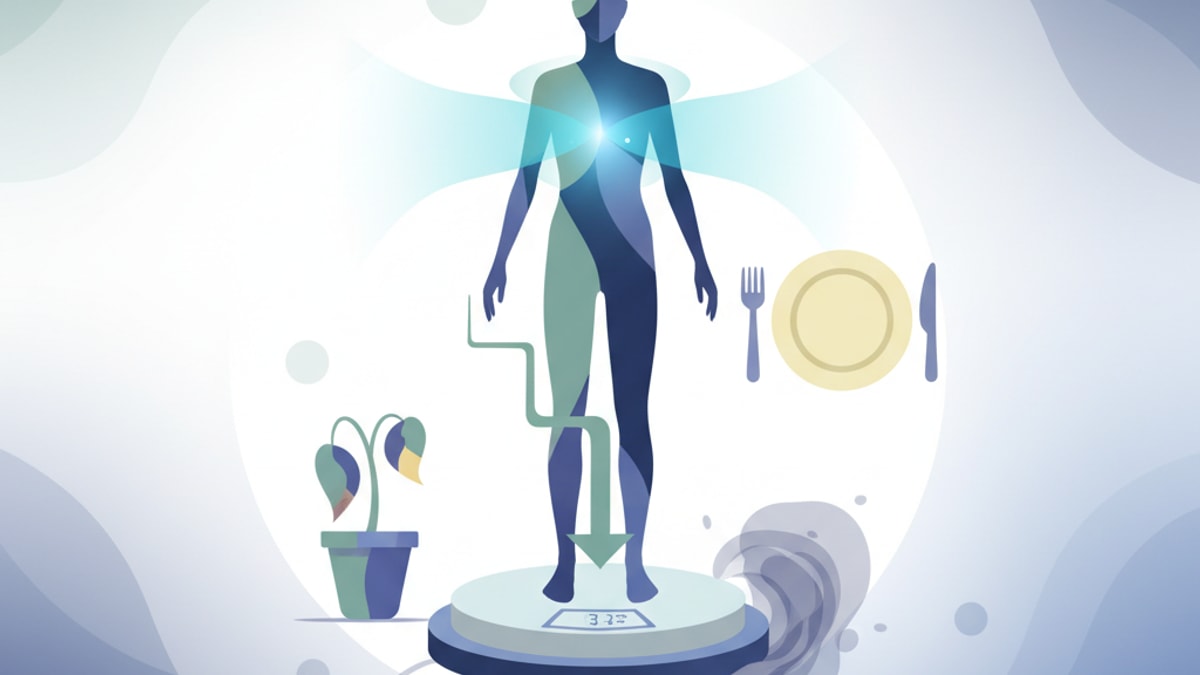
You’re running on fumes, your mind is racing, and you feel a constant, humming sense of dread. It’s anxiety. But then you notice something else—your clothes are looser, and the number on the scale is dropping without any real effort on your part. It can be confusing, even alarming. While many people associate stress with weight gain, the opposite is often true. The question we hear frequently is, “Does anxiety cause weight loss?”
The answer is an unequivocal yes. It’s not just in your head, and it’s not a coincidence. It's a direct physiological and psychological response to a state of chronic alert. Our team at TrimrX specializes in the intricate science of weight and metabolism, and we’ve seen firsthand how mental health can profoundly impact physical health. This isn't just about calories in, calories out; it's about a complex hormonal and neurological storm that can completely re-engineer your body’s operating system. Let's break down exactly what’s happening.
The Straight Answer: Yes, Anxiety Can Cause Weight Loss
Let's get this out of the way immediately. The link between anxiety and weight loss is real, documented, and based on a cascade of biological reactions. When your brain perceives a threat—whether it's a looming work deadline, a difficult family situation, or a persistent, free-floating sense of worry—it doesn't differentiate between a real predator and a perceived one. It triggers the same ancient survival mechanism.
This response is powerful. It’s designed to prepare you to either fight the threat or flee from it. And that preparation requires a tremendous amount of energy. Your body essentially goes into a state of emergency lockdown, diverting resources away from non-essential functions (like digestion and appetite) and toward immediate survival. For some, this manifests as weight gain, often driven by the hormone cortisol in the long term. But for a significant number of people, the initial and sustained response is a significant, sometimes dramatic, drop in weight. It’s a physical manifestation of your internal turmoil.
How Your Body's Stress Response Triggers Weight Changes
To really understand how anxiety causes weight loss, you have to look under the hood at your body's biochemistry. It all starts with the sympathetic nervous system and the infamous 'fight-or-flight' response. This isn't just a turn of phrase; it's a profound physiological shift.
When you're anxious, your brain’s amygdala sounds the alarm, activating the hypothalamic-pituitary-adrenal (HPA) axis. This triggers a flood of stress hormones, primarily adrenaline (epinephrine) and cortisol. Think of adrenaline as the immediate crisis manager. It’s what gives you that jolt of energy, makes your heart pound, and sharpens your senses. It also directly tells your body to start burning energy—now. It taps into your stored glucose and fat for quick fuel. A crucial side effect? Adrenaline is a potent appetite suppressant. In a true survival situation, stopping for a meal is the last thing your body wants you to do.
Then there's cortisol. Its role is a bit more nuanced. In the short term, during an acute stress event, it works alongside adrenaline to mobilize energy and can also suppress appetite. The problem with chronic anxiety is that the HPA axis never fully shuts off. Cortisol levels remain elevated. While chronically high cortisol is often linked to increased abdominal fat and cravings for high-calorie foods (leading to weight gain), the initial and ongoing state of high alert fueled by both hormones often leads to a net calorie deficit. Your body is in a constant state of catabolism, breaking down tissue for energy.
This creates a state of metabolic mayhem. Your basal metabolic rate (BMR)—the number of calories you burn just by existing—can actually increase. Your body is working overtime, even when you’re sitting still, caught in a loop of worry. It's burning through fuel at an accelerated rate, preparing for a fight that never comes. Our experience shows this isn't a small change; it can be a significant metabolic shift that directly contributes to weight loss, even if your diet remains the same.
The Behavioral Side of Anxiety-Induced Weight Loss
While the hormonal story is compelling, it's only half the picture. We can't stress this enough: anxiety changes your behavior in ways that directly impact your weight. These shifts are often subtle and can creep up on you without you even realizing it.
First, there's the most obvious factor: a complete loss of appetite. Anxiety often manifests with physical symptoms like nausea, a tight or churning stomach, and even acid reflux. The very thought of eating can feel repulsive. Food, which should be a source of pleasure and nourishment, becomes another chore to be endured. You might force down a few bites, but you're not getting the calories your supercharged metabolism is burning through.
Beyond that, your eating habits can become completely disorganized. When your mind is occupied with a thousand worries, who has the mental bandwidth to plan, shop for, and prepare a balanced meal? It’s far easier to just skip it. You might forget to eat lunch entirely, only realizing at 4 PM that you're dizzy and haven't eaten since a piece of toast that morning. This unintentional calorie restriction is a massive driver of weight loss.
Another fascinating, and often overlooked, component is an increase in nervous physical activity. This isn't about hitting the gym more. It's about the constant, low-level movement that anxiety produces. We're talking about fidgeting, tapping your foot, pacing around the room while on the phone, or restless legs at night. This is what scientists call Non-Exercise Activity Thermogenesis (NEAT), and it can burn hundreds of extra calories per day. It’s your body’s way of physically discharging all that nervous energy.
Finally, anxiety has a notorious relationship with your digestive system. It can trigger or worsen conditions like Irritable Bowel Syndrome (IBS), leading to symptoms like diarrhea, cramping, and urgency. When your gut is in turmoil, you're not properly absorbing the nutrients and calories from the food you do manage to eat. It's a brutal one-two punch: you're eating less, and you're absorbing less of what you eat.
Anxiety's Impact vs. Other Medical Conditions
Unexplained weight loss should always be taken seriously. While anxiety is a common culprit, it's critical to rule out other medical conditions. As a medically-supervised program, we always insist on a thorough understanding of a person's health history. Distinguishing between anxiety-related weight loss and other issues is a critical, non-negotiable first step.
Here’s a comparison our team put together to help illustrate the differences. Remember, this is for informational purposes only and is not a substitute for a professional medical diagnosis.
| Symptom/Factor | Anxiety-Related Weight Loss | Hyperthyroidism (Overactive Thyroid) | Uncontrolled Diabetes (Type 1) |
|---|---|---|---|
| Onset | Often coincides with a period of high stress or worry. | Can be gradual or sudden, not necessarily tied to mood. | Often rapid weight loss despite normal or increased hunger. |
| Accompanying Mood | Characterized by worry, fear, irritability, and restlessness. | Can include anxiety and irritability, but also tremors and heat intolerance. | May include irritability and fatigue, but not the same 'dread'. |
| Physical Symptoms | Nausea, stomach knots, muscle tension, fatigue, insomnia. | Heart palpitations, sweating, hand tremors, bulging eyes. | Extreme thirst, frequent urination, blurred vision, fatigue. |
| Appetite | Usually decreased; feeling of fullness or nausea. | Often increased; feeling hungry all the time despite weight loss. | Often significantly increased (polyphagia). |
| Professional Insight | The weight loss is a secondary symptom of the primary psychological distress. | It's a primary metabolic disorder; the thyroid is in overdrive. | It's a failure of glucose metabolism; the body is starving for energy. |
Looking at this, it becomes clear why a doctor's visit is so important. The symptoms can overlap, but the underlying causes are fundamentally different and require completely different treatment plans.
When Does Weight Loss Become a Serious Concern?
So, when does the weight loss from anxiety cross the line from a troubling symptom to a serious health risk? There isn't a single magic number, but there are clear guidelines our medical team uses. The most common clinical benchmark for concern is the unintentional loss of more than 5% of your body weight over a period of 6 to 12 months.
But honestly, it’s about more than the number on the scale. It's about how you feel. Are you constantly fatigued? Do you feel weak or dizzy? Have you noticed your hair thinning or your skin becoming dry and dull? These are signs that your body isn't getting the fuel it needs to function properly. You may be losing not just fat but also valuable muscle mass, which can impact your strength, mobility, and overall metabolic health for years to come.
This is where the cycle becomes particularly insidious. Malnutrition can worsen anxiety symptoms, creating a feedback loop that’s incredibly difficult to break on your own. Your brain needs nutrients to produce neurotransmitters that regulate mood. When it's deprived, your ability to cope with stress plummets, which in turn fuels the anxiety, which further suppresses your appetite. It’s a downward spiral. If you're caught in this loop, it's time to seek help. Seriously. Don't wait.
A Holistic Path Forward: Managing Anxiety and Your Weight
Regaining control requires a two-pronged approach: you must address the root cause (the anxiety) while also actively supporting your body's physical needs. One cannot be solved without the other. This is the philosophy that guides us at TrimrX—we look at the whole system, not just the symptom.
First and foremost, the anxiety itself must be managed. This is the source of the fire. While we specialize in the metabolic side of things, we recognize that professional mental health support is paramount. Techniques like Cognitive Behavioral Therapy (CBT), mindfulness, meditation, and regular physical exercise are proven, powerful tools for calming the nervous system. This is non-negotiable.
Simultaneously, you need to focus on nutrition to break the cycle of weight loss and malnutrition. This can feel like a formidable challenge when you have zero appetite. The key is to start small. Don't try to force down three huge meals. Instead, aim for small, frequent, nutrient-dense snacks or mini-meals throughout the day. Think protein shakes, Greek yogurt, nuts, avocado, or a hard-boiled egg. These provide sustained energy without overwhelming your stressed digestive system. Hydration is also critical; dehydration alone can spike cortisol and worsen feelings of anxiety.
Now, this is where it gets interesting. What if you've done all that, your anxiety is better managed, but your weight and metabolism still feel… off? Our team has found that prolonged periods of intense stress can leave a lasting mark on your metabolic and hormonal systems. Your body can get 'stuck' in that high-alert, energy-burning mode. This is where a medically-supervised approach can make all the difference. For some individuals, interventions are needed to help reset the body's delicate hormonal balance. Modern treatments, including GLP-1 medications like Semaglutide and Tirzepatide, are remarkable tools. While widely known for weight loss, they work by targeting the very systems—appetite regulation, insulin response, and gut-brain communication—that are thrown into disarray by chronic anxiety. They can help restore a sense of normalcy to your body's hunger and satiety cues, allowing you to rebuild a healthy relationship with food and stabilize your weight in a controlled, clinical environment.
If this sounds like the support you’ve been missing, you can see if you're a candidate and Start Your Treatment with our dedicated medical team. It's about using science to help your body find its equilibrium again.
Our Professional Perspective on Mind-Body Health
Here's what we've learned after years in this field: you can't separate the mind from the body. They are one interconnected system. The anxiety you feel in your mind is being physically expressed by your metabolism. The weight dropping off the scale is as real a symptom as a racing heart or intrusive thoughts.
In our practice, we see weight as a biomarker—an indicator of what's happening on a deeper physiological level. When someone comes to us after experiencing anxiety-related weight loss, our goal isn't just to help them regain pounds. That's too simplistic. Our goal is to help them restore metabolic health and hormonal balance. It’s about helping their body exit survival mode and return to a state of stability and nourishment.
This approach requires more than just a diet plan. It requires a deep understanding of the HPA axis, gut-brain signaling, and the hormonal cascade that governs both mood and metabolism. This is why a comprehensive, medically-guided program is so effective. We can provide the clinical tools and expert oversight needed to address the physiological dysregulation that anxiety leaves in its wake. Not sure where to begin? Our simple Take Quiz can help you understand your options and take the first step.
Recognizing that your weight loss is connected to your anxiety is a huge first step. It's validation that what you're experiencing is real. The path back to feeling like yourself—both mentally and physically—may seem daunting, but it is absolutely achievable. It requires a compassionate approach that honors the profound connection between your mind and your body, addressing both with the care and expertise they deserve. You don't have to navigate this alone.
Frequently Asked Questions
Can anxiety really cause sudden weight loss?
▼
Yes, it absolutely can. During periods of acute, intense anxiety, the flood of adrenaline can dramatically suppress appetite and spike your metabolism, leading to rapid, noticeable weight loss over a short period.
How much weight can you lose from anxiety?
▼
This varies greatly from person to person. Some may lose a few pounds, while others can experience significant weight loss, sometimes over 10% of their body weight, if the anxiety is severe and prolonged.
Does anxiety permanently speed up your metabolism?
▼
While anxiety can temporarily increase your metabolic rate, it doesn’t typically cause a permanent change. However, our team has observed that chronic anxiety can lead to a state of metabolic dysregulation that may require intervention to help restore normal function.
What’s the difference between stress weight loss and anxiety weight loss?
▼
The terms are often used interchangeably, as the physiological mechanisms are very similar (fight-or-flight response). However, anxiety is often characterized by persistent, excessive worry that doesn’t go away, leading to a more chronic state of metabolic disruption compared to short-term stress.
How do I stop losing weight from anxiety?
▼
The primary step is to manage the anxiety itself through therapy, mindfulness, or other techniques. Nutritionally, focus on small, frequent, calorie-dense meals and stay hydrated. If you’re still struggling, a medical consultation can help address underlying metabolic imbalances.
Is it normal to have no appetite at all with anxiety?
▼
Yes, a complete loss of appetite is a very common physical symptom of anxiety. The body’s stress response diverts resources away from digestion, often leading to feelings of nausea or a ‘knot’ in your stomach that makes eating feel impossible.
Can anti-anxiety medication affect my weight?
▼
It can. Some medications may lead to weight gain, while others can have a neutral effect or even contribute to weight loss initially. It’s essential to discuss potential side effects with your prescribing doctor.
Why do I lose weight when I’m anxious but my friend gains it?
▼
Individual responses to stress hormones like cortisol vary. For some, chronic cortisol triggers cravings and fat storage, leading to weight gain. For others, the stimulating effects of adrenaline and appetite suppression are more dominant, resulting in weight loss.
Will I gain the weight back when my anxiety gets better?
▼
Often, yes. As your nervous system calms down and your appetite returns to normal, you will likely regain the weight naturally. A controlled, healthy approach is key to ensure you’re rebuilding lean muscle and not just fat.
Could my weight loss be caused by something other than anxiety?
▼
Definitely. Unexplained weight loss should always be evaluated by a healthcare professional to rule out other medical conditions like thyroid issues, diabetes, or gastrointestinal disorders. Never self-diagnose.
Does anxiety cause muscle loss?
▼
Yes, if the weight loss is significant and prolonged. When your body is in a catabolic state and not getting enough calories, it can start breaking down muscle tissue for energy, which is a serious health concern.
How can I eat when my stomach is in knots from anxiety?
▼
Our team recommends focusing on easily digestible foods and liquids. Try smoothies, protein shakes, soups, yogurt, and bananas. Avoid heavy, greasy, or spicy foods that can further irritate your digestive system.

Transforming Lives, One Step at a Time
Keep reading

Do You Need a Prescription for GLP-1s? The 2026 Answer
Wondering ‘do you need a prescription for glp 1’ in 2026? Yes. We explain why a doctor’s oversight is critical for safe, effective results.

How to Get GLP-1 Covered By Insurance: Our 2026 Playbook
Struggling with how to get glp-1 covered by insurance? Our 2026 guide breaks down prior authorizations, appeals, and documentation.

Traveling with GLP-1s in 2026: Your Essential Trip-Proof Plan
Don’t let travel disrupt your GLP-1 treatment. Learn how to travel with glp 1 medications safely and stress-free in our 2026 expert guide.


