Does BPC-157 Really Help With Weight Loss? Our Expert Take
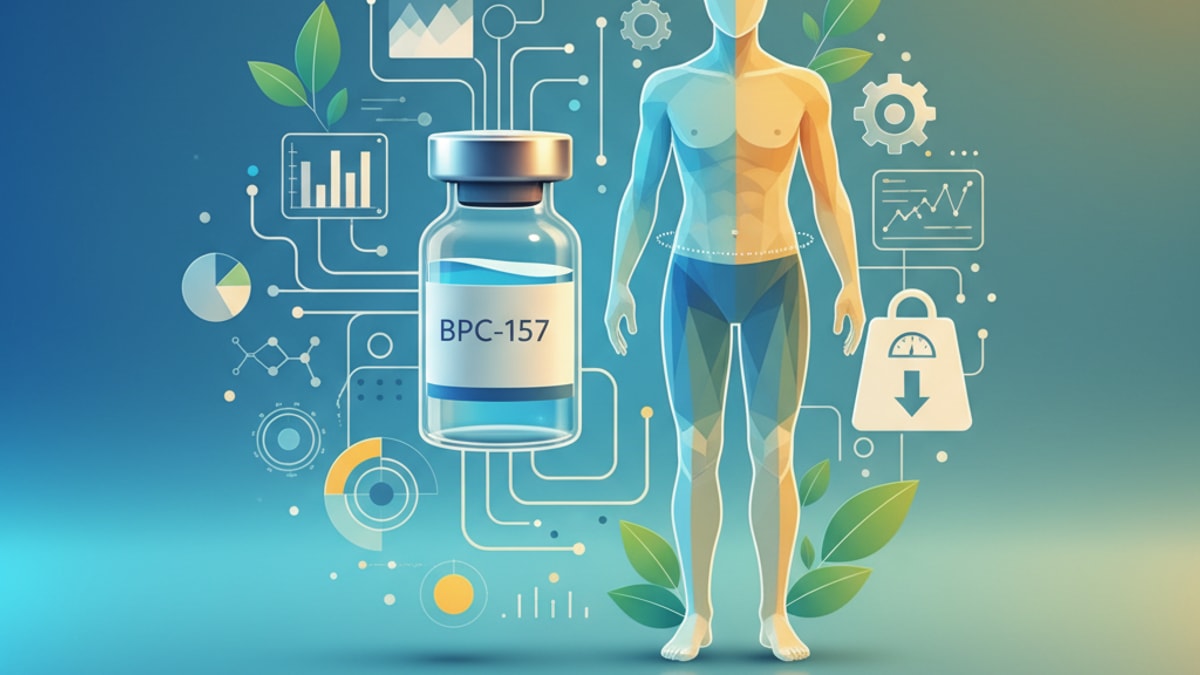
The world of health and wellness is sprawling, filled with new compounds and cutting-edge research that promises to unlock our body's full potential. It's exciting. But it can also be incredibly confusing. Peptides, in particular, have stormed onto the scene, and one name that comes up constantly is BPC-157. It’s hailed in fitness circles as a near-miraculous recovery agent, a fixer of nagging injuries. Naturally, the conversation has drifted, and a big question has emerged: does BPC-157 help with weight loss?
It’s a fair question. When you're on a weight loss journey, you're looking for every possible advantage. Our team at TrimrX fields questions like this all the time. As specialists in medically-supervised weight loss, we live and breathe the science of metabolic health. We work with powerful, clinically-proven tools like GLP-1 medications every single day. So, when a compound like BPC-157 gains this much traction, we feel it's our responsibility to provide an unflinching, science-backed perspective. Let's cut through the noise and get to the truth.
First Things First: What Exactly Is BPC-157?
Before we can talk about weight loss, we need to understand what we're dealing with. BPC-157 stands for 'Body Protection Compound 157.' It's a synthetic peptide, which is just a short chain of amino acids. Think of peptides as tiny proteins that act as signaling molecules in your body, telling cells what to do. BPC-157 is a partial sequence of a protein found in human gastric juice.
Sounds a little strange, right? Gastric juice.
But its origins are the key to its primary function. Researchers discovered its powerful protective and healing effects, particularly in the gastrointestinal (GI) tract. It's what scientists call a 'cytoprotective' agent, meaning it protects cells. Its fame, however, comes from its remarkable ability to accelerate healing in a wide range of tissues—tendons, ligaments, muscles, and even nerves. It does this primarily by promoting angiogenesis, the formation of new blood vessels, which is critical for tissue repair. For athletes and anyone dealing with persistent injuries, this is a game-changer. But healing an injury and burning body fat are two very different biological processes. That’s the critical distinction we need to make.
The Direct Question: Is BPC-157 a Fat Burner?
Let’s be direct. Our team has reviewed the existing research, and the answer is clear: BPC-157 is not a direct weight loss drug. There is currently no significant body of scientific evidence from human clinical trials to suggest that it directly stimulates lipolysis (the breakdown of fat) or dramatically boosts metabolic rate in the way that compounds like caffeine, ephedrine, or even proven medications do.
It doesn't work by telling your fat cells to release their contents. It doesn't trick your brain into feeling full. Its primary, celebrated mechanism is tissue regeneration and repair. Anyone claiming that BPC-157 is a 'fat-burning peptide' is either misinformed or, frankly, being misleading. It simply doesn't fit that category.
So, is that the end of the story? Not quite.
The human body is a complex, interconnected system. Just because something doesn't pull one specific lever doesn't mean it can't influence the entire machine. The potential role of BPC-157 in a weight management plan is far more nuanced, operating through indirect pathways that support the overall goal. This is where the conversation gets interesting.
The Indirect Pathways: How BPC-157 Might Support Weight Loss
Weight loss isn't just about 'calories in, calories out.' It's about hormonal balance, inflammation, gut health, sleep quality, and—perhaps most importantly—consistency. If you can’t stick to your plan, the plan doesn't matter. This is where the ancillary benefits of BPC-157 could theoretically play a supporting role.
1. Enhanced Recovery and Training Consistency
This is the most significant and plausible connection. A successful weight loss journey almost always involves a consistent exercise regimen. What’s the number one thing that derails a workout routine? Injury. Nagging knee pain, a tweaked shoulder, or persistent tendonitis can sideline you for weeks, destroying your momentum and motivation.
Our experience shows that consistency is the non-negotiable element of success. BPC-157’s proven strength is in accelerating recovery. By helping repair damaged tissues faster, it can:
- Reduce Downtime: Get you back to your training schedule more quickly after an injury.
- Allow for Higher Training Volume/Intensity: When your body recovers more efficiently, you can potentially train harder and more frequently without breaking down. More intense workouts burn more calories and build more muscle, which in turn elevates your resting metabolism.
- Improve Workout Quality: Training through pain is a recipe for disaster. By addressing the underlying issue, you can perform exercises with better form and focus, leading to better results.
Think about it this way: if BPC-157 allows you to have 50 great workouts in a three-month period instead of 25 painful, half-hearted ones, the downstream effect on your body composition will be dramatic. It’s not burning the fat itself; it’s enabling the activity that burns the fat. That's a crucial difference.
2. Gut Health and Systemic Inflammation
Now, this is where it gets deep into the science. The health of your gut microbiome is intrinsically linked to your metabolic health. An imbalanced gut (dysbiosis) and a leaky gut lining can lead to chronic, low-grade systemic inflammation. This inflammation is a formidable enemy of weight loss. It can contribute to insulin resistance, a condition where your cells don't respond properly to insulin, making it much harder for your body to process sugar and much easier to store fat.
What does this have to do with BPC-157? Its origins are in gastric juice. It has a profound healing effect on the entire GI tract. Research (mostly in animal models, it’s important to state) has shown it can help heal ulcers, repair intestinal damage from NSAIDs, and manage conditions like inflammatory bowel disease (IBD).
By improving the integrity of the gut lining and reducing gut-derived inflammation, BPC-157 could theoretically help improve insulin sensitivity and overall metabolic function. A healthier gut is a more efficient gut. It absorbs nutrients better and sends fewer inflammatory signals throughout the body. This creates a more favorable internal environment for fat loss to occur. It's a foundational fix, not a surface-level treatment.
3. Potential Influence on the Dopaminergic System
This is a more speculative but fascinating area. Some animal studies suggest that BPC-157 can interact with and modulate the body's dopamine system. Dopamine is a neurotransmitter heavily involved in motivation, reward, and focus. The grueling nature of a diet and exercise plan can deplete motivation. The constant cravings and discipline required are mentally taxing.
If BPC-157 can help normalize dopamine pathways, it might contribute to better mood, increased drive, and a greater ability to stick to your goals. Again, this isn't a direct fat-burning effect. It's about shoring up the psychological resilience needed to see a weight loss plan through to the end. It's about winning the mental game, which, as we've seen with countless clients, is often the biggest battle.
A Realistic Comparison: BPC-157 vs. Medically-Proven Treatments
So, BPC-157 might help you train harder and improve your gut health. That’s great. But how does it stack up against treatments specifically designed and clinically proven for weight loss? This is where we need to have an honest conversation and manage expectations.
At TrimrX, we focus on what the data unequivocally supports. That means therapies built on years of rigorous, double-blind, placebo-controlled human trials. The most powerful tools in our arsenal today are GLP-1 receptor agonists like Semaglutide and Tirzepatide. These medications represent a monumental leap forward in weight management.
Let’s compare them directly to BPC-157. It makes the distinction crystal clear.
| Feature | BPC-157 | GLP-1 Agonists (e.g., Semaglutide, Tirzepatide) |
|---|---|---|
| Primary Function | Tissue healing, anti-inflammatory, cytoprotective. | Blood sugar control, appetite regulation, and weight management. |
| FDA Approval Status | Not approved for human use. Exists in a research/grey market space. | FDA-approved for type 2 diabetes and/or chronic weight management. |
| Mechanism of Action | Promotes angiogenesis (new blood vessel growth) and tissue repair. | Mimics gut hormones (GLP-1/GIP) to slow digestion, curb appetite, and improve insulin sensitivity. |
| Direct Evidence for Weight Loss | Virtually none in human trials. Effects are indirect and theoretical. | Overwhelming. Large-scale clinical trials show significant, sustained weight loss (15-20%+ of body weight). |
| How It's Used | Primarily for injury recovery and gut health support. | As a cornerstone of a comprehensive, medically-supervised weight loss program. |
| Our Professional Take | A potentially useful ancillary tool for recovery, not a primary weight loss agent. | The gold standard for effective, science-backed medical weight loss today. |
Seeing it laid out like this is illuminating, isn't it? BPC-157 is a specialized tool for one job (healing), while GLP-1s are precision instruments designed for another (metabolic regulation and weight loss).
Trying to use BPC-157 as your primary weight loss strategy is like using a hammer to turn a screw. It’s the wrong tool for the job. You might make some progress through sheer force of will, but you risk frustration and failure. A program built around a GLP-1 agonist, on the other hand, is like using a high-torque power drill. It's designed specifically for the task and delivers powerful, predictable results. If you're ready to see what a dedicated medical approach can do, we invite you to Start Your Treatment with a plan tailored to your unique biology.
The Wild West: Safety, Sourcing, and Regulation
We can't stress this enough: because BPC-157 is not an FDA-approved drug, the market for it is completely unregulated. This is the 'Wild West' of supplements and peptides. When you buy a product online from an unknown source, you have no real guarantee of its:
- Purity: Is it actually BPC-157, or is it something else?
- Potency: Is it dosed correctly, or is it under-dosed and ineffective?
- Sterility: If it's an injectable form, is it free from harmful bacteria and contaminants?
These are not small risks. The potential for harm from a contaminated or counterfeit product is very real. Our team's philosophy is built on safety and efficacy. We only work with FDA-registered medications from licensed pharmacies. This ensures that what our clients receive is exactly what it's supposed to be, manufactured to the highest possible standards.
This lack of regulation is the single biggest reason to be cautious with peptides like BPC-157. The potential benefits for recovery are intriguing, but they must be weighed against the very real risks of an unregulated market. Always, always speak with a qualified medical professional before considering any experimental compound.
Our Final Verdict: A Tool, Not a Solution
So, let’s circle back to the original question: does BPC-157 help with weight loss?
Our professional conclusion is this: No, not directly. It is not a weight loss peptide.
However, it can be a valuable support tool for a specific type of person on a weight loss journey—namely, someone whose primary obstacle to consistency is injury or slow recovery from intense physical training. For this person, BPC-157's healing properties could be the key that unlocks their ability to exercise consistently, which in turn drives fat loss. It addresses a bottleneck.
For the vast majority of people, however, focusing on BPC-157 for weight loss is a distraction from the things that truly move the needle. The foundational pillars of success are, and always will be:
- Sustainable Nutrition: Creating a consistent, manageable calorie deficit.
- Consistent Activity: A blend of resistance training and cardiovascular exercise.
- Powerful Medical Support: Using clinically-proven tools like GLP-1 medications to fundamentally change your body's relationship with food and energy.
BPC-157 is, at best, a small, supplemental piece of the puzzle for a niche situation. It is not the puzzle itself. The real transformation comes from addressing the core metabolic and behavioral drivers of weight gain. That's where we focus our energy, and that's where we see life-changing results. If you're not sure where to begin, a great first step is to Take Quiz to see if a medical weight loss program is right for you.
Don't chase magic bullets. Focus on building a comprehensive, science-backed strategy. That's the most reliable path to achieving and sustaining a healthy weight for the long haul. It's not about finding one secret compound; it's about leveraging the right combination of proven tools to build a healthier you.
Frequently Asked Questions
Can I stack BPC-157 with Semaglutide or other GLP-1 medications?
▼
There is no clinical data on this combination. You should never combine any prescription medication with an experimental compound without explicit guidance from your prescribing physician. Our team strongly advises against it due to the unpredictable nature of such interactions.
Is BPC-157 a steroid?
▼
No, absolutely not. BPC-157 is a peptide, which is a chain of amino acids. Anabolic steroids are synthetic versions of testosterone. They have completely different chemical structures and mechanisms of action in the body.
Will BPC-157 show up on a standard drug test?
▼
It is highly unlikely. Standard workplace drug tests are not designed to screen for peptides. However, high-level anti-doping tests for professional athletes (like those used by WADA) do test for BPC-157, as it is a banned substance in most competitive sports.
What’s the difference between oral and injectable BPC-157?
▼
Injectable (subcutaneous) BPC-157 has higher bioavailability, meaning more of it enters the bloodstream to exert systemic effects, like healing a tendon. Oral forms are designed to be more stable in stomach acid and are typically used for targeted gut health issues.
Does BPC-157 directly affect or suppress appetite?
▼
There is no strong evidence to suggest that BPC-157 has a direct impact on appetite suppression. This is a key difference from GLP-1 medications like Semaglutide, whose primary mechanism for weight loss is significantly reducing hunger signals.
Why isn’t BPC-157 FDA-approved?
▼
For a compound to gain FDA approval, it must go through extensive, multi-phase clinical trials in humans to prove both safety and efficacy for a specific condition. BPC-157 has not completed this rigorous and costly process, so it remains an experimental research chemical.
Is BPC-157 more for muscle gain or fat loss?
▼
Neither, directly. Its primary role is tissue repair and recovery. While improved recovery can support more effective muscle-building workouts, it is not an anabolic agent for muscle growth, nor is it a lipolytic agent for fat loss.
Should I talk to my doctor before trying BPC-157?
▼
Yes, 100%. We can’t stress this enough. You should always consult with a qualified healthcare professional before considering any experimental compound, especially one from an unregulated market. Your safety should always be the top priority.
How long does it take for BPC-157 to work for healing?
▼
This is highly individual and depends on the type and severity of the injury. Some users report noticing improvements in pain and mobility within a week or two, while deeper tissue repair for chronic issues can take several weeks or longer.
What is the single most important factor for weight loss?
▼
Consistency. In our professional experience, the most critical factor is consistent adherence to a sustainable plan that includes a calorie deficit and regular activity. Medically-supervised treatments like GLP-1s are powerful because they make this consistency far more achievable.
Are there any known long-term side effects of BPC-157?
▼
Because it lacks long-term human clinical trials, the full long-term side effect profile is unknown. This is one of the primary risks associated with using experimental peptides from the grey market.

Transforming Lives, One Step at a Time
Keep reading

Do You Need a Prescription for GLP-1s? The 2026 Answer
Wondering ‘do you need a prescription for glp 1’ in 2026? Yes. We explain why a doctor’s oversight is critical for safe, effective results.

How to Get GLP-1 Covered By Insurance: Our 2026 Playbook
Struggling with how to get glp-1 covered by insurance? Our 2026 guide breaks down prior authorizations, appeals, and documentation.

Traveling with GLP-1s in 2026: Your Essential Trip-Proof Plan
Don’t let travel disrupt your GLP-1 treatment. Learn how to travel with glp 1 medications safely and stress-free in our 2026 expert guide.


