Does NAD+ Help With Weight Loss? Our Team Explains the Science
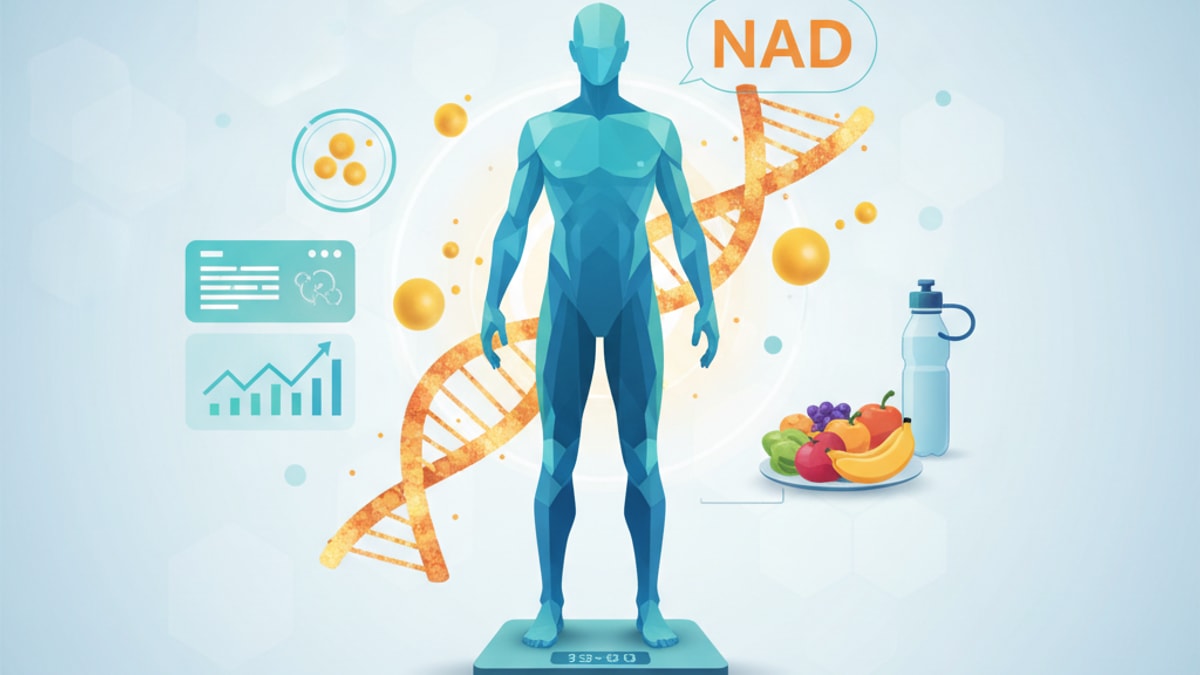
Let's be honest. The wellness world is sprawling and often confusing. Every week, it seems there's a new 'miracle' supplement or groundbreaking therapy promising to unlock your body's potential, and right now, NAD+ is having a major moment. We've seen the headlines and heard the buzz from clients asking us about it. The central question on everyone's mind is simple: does NAD+ help with weight loss? It’s a valid question, especially when you're putting in the hard work and looking for every possible edge.
Our team at TrimrX is obsessed with the science of metabolic health. It's the foundation of everything we do, from our medically-supervised GLP-1 programs to the advice we provide. So when a topic like NAD+ gains this much traction, we feel it's our responsibility to cut through the noise. We're not here to sell you hype. We're here to give you the unvarnished truth, based on clinical understanding and our direct experience helping people achieve real, sustainable weight loss. We want to unpack the role of this fascinating molecule, separate fact from fiction, and show you where it fits—and where it doesn't—in a serious weight management strategy.
So, What Exactly is NAD+ Anyway?
Before we can talk about weight loss, we have to get on the same page about what we're even discussing. Forget the complex biochemistry diagrams for a moment. Think of NAD+, or Nicotinamide Adenine Dinucleotide, as your body's tiny, essential cellular fuel transporter. It’s a coenzyme, which is basically a 'helper molecule' that other enzymes need to do their jobs properly. And its main job is absolutely critical.
It's involved in hundreds of metabolic processes, but its most famous role is in creating energy. Your cells have power plants called mitochondria. When you eat food—carbohydrates, fats, proteins—it gets broken down. NAD+ acts like a microscopic shuttle bus, picking up electrons from those broken-down food molecules and dropping them off at the mitochondria. This process, called cellular respiration, is what generates ATP (adenosine triphosphate), the primary energy currency of every single cell in your body. No NAD+, no energy. It's that fundamental.
But it doesn't stop there. NAD+ is also crucial for activating a class of proteins called sirtuins. Sirtuins are often called 'longevity genes' because they play a huge role in cellular repair, managing inflammation, and protecting your DNA from damage. They're like the master regulators of cellular health, and they need NAD+ to function. So, you can see why it's so important. It's not just about raw energy; it's about cellular maintenance and resilience.
The Link Between NAD+, Metabolism, and Aging
Here’s where the conversation gets really interesting, especially for anyone over the age of 30. One of the unflinching realities of biology is that our natural levels of NAD+ decline as we age. It's a pretty dramatic drop. By the time you're 50, you might have half the NAD+ levels you had in your 20s. This isn't just a random number; it has profound, cascading effects on your body.
A decline in NAD+ means your cellular shuttle buses are running less frequently. This leads to less efficient energy production in your mitochondria. You know that feeling of slowing down, of not having the same get-up-and-go you used to? A big part of that is happening at a microscopic level. Your cellular engines just aren't firing on all cylinders anymore. This slowdown directly impacts your metabolic rate. A less efficient energy system means your body is less capable of burning calories for fuel, making it easier to store them as fat.
This is a critical, non-negotiable element of the aging process that our team sees the consequences of every day. Clients come to us feeling frustrated, saying they're eating the same and moving the same but are still gaining weight. This cellular slowdown is often a key culprit. The decline in NAD+ also means those protective sirtuins aren't as active, leading to increased cellular stress and slower repair. It's a feedback loop: lower energy makes you less active, and a slower metabolism makes weight gain more likely, which in turn puts more stress on your cells. It's a formidable challenge.
Does NAD+ Directly Cause Weight Loss? Here's the Nuance
Now for the million-dollar question. Given everything we've just discussed, boosting NAD+ levels should rev up your metabolism and melt fat away, right? Well, it's not that simple.
Let us be perfectly clear: NAD+ is not a weight loss drug. It doesn't directly trigger fat burning in the way that, say, intense exercise or a medication designed for that purpose does. Its role is far more foundational and, therefore, indirect. Our experience shows that thinking of NAD+ as a magic bullet for shedding pounds is a recipe for disappointment. Instead, we see it as a powerful supporter of the systems your body needs to lose weight effectively.
Here's how it can potentially help:
-
Enhanced Energy Production: By improving mitochondrial function, NAD+ can increase your overall energy levels. This isn't just a feeling; it's real, cellular energy. What does that mean for weight loss? It could mean you have more stamina for workouts, you recover faster, and you're more likely to choose taking the stairs over the elevator. It might be the difference between collapsing on the couch after work and going for an evening walk. This increase in physical activity is a direct driver of calorie expenditure.
-
Improved Muscle Function: Skeletal muscle is incredibly metabolically active. NAD+ is vital for muscle health, repair, and growth. Better NAD+ levels can support muscle integrity, which is crucial because muscle tissue burns more calories at rest than fat tissue does. Maintaining or building lean muscle mass is a cornerstone of any successful long-term weight management plan.
-
Regulation of Circadian Rhythms: This is a fascinating and often overlooked area. NAD+ levels naturally fluctuate in a 24-hour cycle, helping to regulate your sleep-wake cycle. Poor sleep is a known disaster for weight management. It messes with hunger hormones like ghrelin and leptin, increases cravings for high-calorie foods, and raises cortisol levels, which can promote fat storage. By helping to stabilize your circadian rhythm, NAD+ can contribute to better sleep quality, which in turn creates a much more favorable hormonal environment for weight loss.
So, while NAD+ won't magically shrink fat cells, it can help create the internal, biological environment that makes your diet and exercise efforts more effective. It's about optimizing the machinery, not just adding more fuel.
Comparing NAD+ Therapy with Proven Medical Weight Loss
This is where we need to have a practical, results-oriented conversation. While optimizing cellular health with NAD+ is a worthy goal, for individuals seeking significant, sometimes dramatic weight loss, it's simply not the primary tool for the job. Our team has dedicated years to implementing strategies that deliver predictable and life-changing results, and those are built on a foundation of clinically-proven interventions.
In the current landscape, nothing has proven more effective for substantial weight loss than GLP-1 receptor agonists like Semaglutide and Tirzepatide. These medications are the cornerstone of our programs at TrimrX for a reason: they work on the direct mechanisms of weight control. They target the brain's hunger centers to reduce appetite, slow stomach emptying to make you feel fuller for longer, and improve how your body handles blood sugar. The results are not subtle; they are transformative.
So, how do these approaches stack up? Let's break it down.
| Feature | NAD+ Therapy | Medically-Supervised GLP-1 Program |
|---|---|---|
| Primary Mechanism | Supports cellular energy production and repair (indirect). | Directly regulates appetite, satiety, and blood sugar (direct). |
| Primary Goal | Enhance cellular health, energy levels, and longevity. | Drive significant and sustainable fat loss. |
| Expected Results | Increased energy, improved mental clarity, better recovery. | Substantial reduction in body weight, decreased cravings, improved metabolic markers. |
| Clinical Evidence | Strong evidence for improving age-related cellular decline. | Overwhelming, large-scale clinical trial data proving efficacy for weight loss. |
| Best Use Case | As a complementary therapy to boost wellness alongside a primary weight loss plan. | As the foundational treatment for individuals who need to lose a significant amount of weight. |
We see these two not as competitors, but as potentially complementary tools for different jobs. GLP-1s are the 'heavy machinery' doing the primary work of reshaping your relationship with food and driving down the number on the scale. NAD+ could be seen as the 'fine-tuning' that ensures the underlying engine is running as cleanly and efficiently as possible. For those seeking a truly comprehensive approach to health, using both might make sense. But for the difficult, often moving-target objective of weight loss itself, a program built around GLP-1s is the most direct and proven path. If you're curious about this approach, you can easily see if you're a candidate when you Take Quiz.
Who Might Benefit Most from NAD+ Supplementation?
Because NAD+ isn't a targeted weight loss solution, it's not for everyone—at least not for that specific goal. The ideal candidate for NAD+ therapy is someone who understands its role and has the right expectations. We've found it resonates most with a few specific groups.
First, individuals over 40 who are feeling the tangible effects of that natural metabolic slowdown. If your primary complaint is pervasive fatigue, brain fog, and a general sense of 'running on empty,' then addressing declining NAD+ levels could make a noticeable difference in your quality of life. That renewed energy can then become the fuel for a more active lifestyle that supports weight management.
Second, the bio-optimizer. This is the person who is already engaged in a healthy lifestyle—they're eating well, exercising, and possibly already on a program like ours—but they want to take their cellular health to the next level. They're interested in longevity, performance, and ensuring their body is functioning at its absolute peak. For them, NAD+ is another tool in their arsenal for long-term wellness.
Lastly, someone who needs support for recovery. Whether it's from intense athletic training or from the cellular stress of chronic illness, NAD+'s role in DNA repair and reducing inflammation can be beneficial. But we can't stress this enough: it's not a shortcut. It won't undo the damage of a poor diet or a sedentary lifestyle. It supports a system that is already being cared for in other ways.
Different Forms of NAD+ Therapy: What You Need to Know
If you do decide to explore NAD+ supplementation, you'll quickly find it's not a one-size-fits-all situation. The delivery method matters. A lot.
-
IV Infusion: This is the gold standard for bioavailability. By delivering NAD+ directly into your bloodstream, you bypass the digestive system entirely, ensuring 100% of it is available for your cells to use. It's the most powerful, fastest-acting method, but it's also the most expensive and time-consuming, requiring you to be hooked up to a drip for several hours.
-
Subcutaneous Injections: A step down from IV in terms of immediacy, but still highly effective. These are small injections into the fatty tissue, similar to an insulin shot. They offer excellent bioavailability and can be done at home, making them a more convenient option than IV therapy for ongoing use.
-
Oral Supplements (Precursors): This is the most accessible route. You won't find NAD+ itself in a pill, because the molecule is too large to be absorbed effectively. Instead, you'll find its precursors—nicotinamide riboside (NR) and nicotinamide mononucleotide (NMN)—which your body uses as raw materials to build its own NAD+. While convenient, their effectiveness can be debated, and the dose required to significantly raise NAD+ levels is much higher than with injections or IVs. Our team generally recommends that if you're serious about boosting NAD+ levels, injectable or IV routes are far more reliable.
Building a Comprehensive Strategy: Beyond a Single Supplement
We've covered a lot of ground, but here's the key point we want you to walk away with: sustainable health and weight loss are never, ever about a single ingredient. Your body is a complex, interconnected system. Believing that one supplement, one therapy, or one food can fix everything is a fundamental misunderstanding of human biology.
True, lasting change comes from a comprehensive, multi-pronged strategy. It's comprehensive. That's the key.
It starts with a foundation of powerful, evidence-based tools. For many of our clients, that's a medically-supervised GLP-1 program that finally gives them control over their hunger and metabolism. But it's layered with critical lifestyle pillars: a nutrient-dense eating plan that fuels the body, a consistent movement routine that builds strength, stress management techniques that lower cortisol, and a relentless focus on high-quality sleep. This is the ecosystem in which your body can thrive.
Where does NAD+ fit in? It's an optimization layer. It's a way to ensure the very engine of your cells is running at peak performance while you're making all these other positive changes. It supports the whole system. But it cannot replace the system. If you're ready to stop chasing single-ingredient solutions and want a comprehensive, medically-supervised plan designed for real results, it might be time to Start Your Treatment.
Ultimately, the quest for better health is a journey of informed choices. NAD+ is a fascinating and promising molecule that plays an undeniably vital role in how your body functions at its most basic level. It can be a valuable tool for enhancing energy and supporting cellular wellness, which are fantastic goals. However, when the specific, pressing goal is weight loss, it's crucial to lead with proven, targeted strategies. By understanding the distinct roles of different therapies, you can build a truly intelligent and effective plan that doesn't just help you lose weight but helps you build a healthier, more vibrant life from the cells up.
Frequently Asked Questions
Can I take NAD+ while I am on a Semaglutide or Tirzepatide program?
▼
Yes, in most cases. NAD+ therapy can be complementary to a GLP-1 program as it supports cellular energy, while the medication manages appetite and blood sugar. Our team always recommends discussing any new supplements or therapies with your healthcare provider to ensure it’s appropriate for your specific situation.
How long does it take to feel the effects of NAD+ therapy?
▼
This varies greatly among individuals. Some people report feeling increased mental clarity and energy within hours or days of an IV infusion, while for others, especially with oral supplements, it may take several weeks to notice subtle improvements. It is not an immediate, dramatic effect.
Is NAD+ therapy safe?
▼
When administered by qualified professionals, NAD+ therapy is generally considered safe. Potential side effects, particularly with IV infusions, can include nausea, headache, or discomfort at the injection site. It’s crucial to use a reputable provider for any IV or injectable therapies.
What’s the difference between NAD+, NMN, and NR?
▼
NAD+ is the active coenzyme your cells use. NMN (nicotinamide mononucleotide) and NR (nicotinamide riboside) are precursor molecules that your body converts into NAD+. You supplement with NMN or NR orally to provide the raw materials for your body to produce more NAD+.
Will NAD+ give me a ‘buzz’ like caffeine?
▼
No, the energy from NAD+ is very different from a stimulant like caffeine. It’s a more sustained, cellular-level energy. You’re unlikely to feel a ‘jolt’ or ‘buzz,’ but may instead notice improved stamina, less fatigue, and clearer thinking over time.
Does NAD+ therapy help with stubborn belly fat?
▼
NAD+ does not directly target fat cells in any specific area. Its potential impact on weight is indirect, through improved overall metabolic function and energy for activity. A comprehensive plan including diet, exercise, and potentially medication is needed to address fat loss effectively.
Can I boost my NAD+ levels naturally without supplements?
▼
Yes, certain lifestyle choices can help support your body’s natural NAD+ production. These include regular exercise (especially high-intensity interval training), a balanced diet, and avoiding excessive alcohol consumption and sun exposure, which can deplete NAD+ levels.
Is NAD+ therapy covered by insurance?
▼
Typically, NAD+ therapy is considered a wellness or elective treatment and is not covered by most health insurance plans. It’s almost always an out-of-pocket expense, which is an important factor to consider.
What is the best form of NAD+ therapy for weight loss support?
▼
No form of NAD+ therapy is a primary weight loss treatment. However, for supporting energy levels during a weight loss program, IV or injectable forms offer the highest bioavailability and most reliable way to increase cellular NAD+ levels compared to oral supplements.
Can NAD+ help with cravings?
▼
NAD+ does not directly impact the brain’s hunger and craving centers in the way that GLP-1 medications do. While some people report better mood and stability, which could indirectly affect emotional eating, it is not a primary tool for managing food cravings.
Will I regain weight if I stop NAD+ therapy?
▼
Since NAD+ is not a direct driver of weight loss, stopping it won’t cause weight regain in the same way that stopping a diet might. You might notice a decrease in the energy levels you had during therapy, which could affect your activity levels if you’re not careful.

Transforming Lives, One Step at a Time
Keep reading
Is Bupropion an SSRI or a Different Antidepressant?
A lot of people ask the same question at some point: is bupropion an SSRI? It usually comes up after hearing about medications like…

Do You Need a Prescription for GLP-1s? The 2026 Answer
Wondering ‘do you need a prescription for glp 1’ in 2026? Yes. We explain why a doctor’s oversight is critical for safe, effective results.

How to Get GLP-1 Covered By Insurance: Our 2026 Playbook
Struggling with how to get glp-1 covered by insurance? Our 2026 guide breaks down prior authorizations, appeals, and documentation.


