Does Potassium Help with Weight Loss? The Unfiltered Answer
Let's Get Straight to It: The Potassium Question
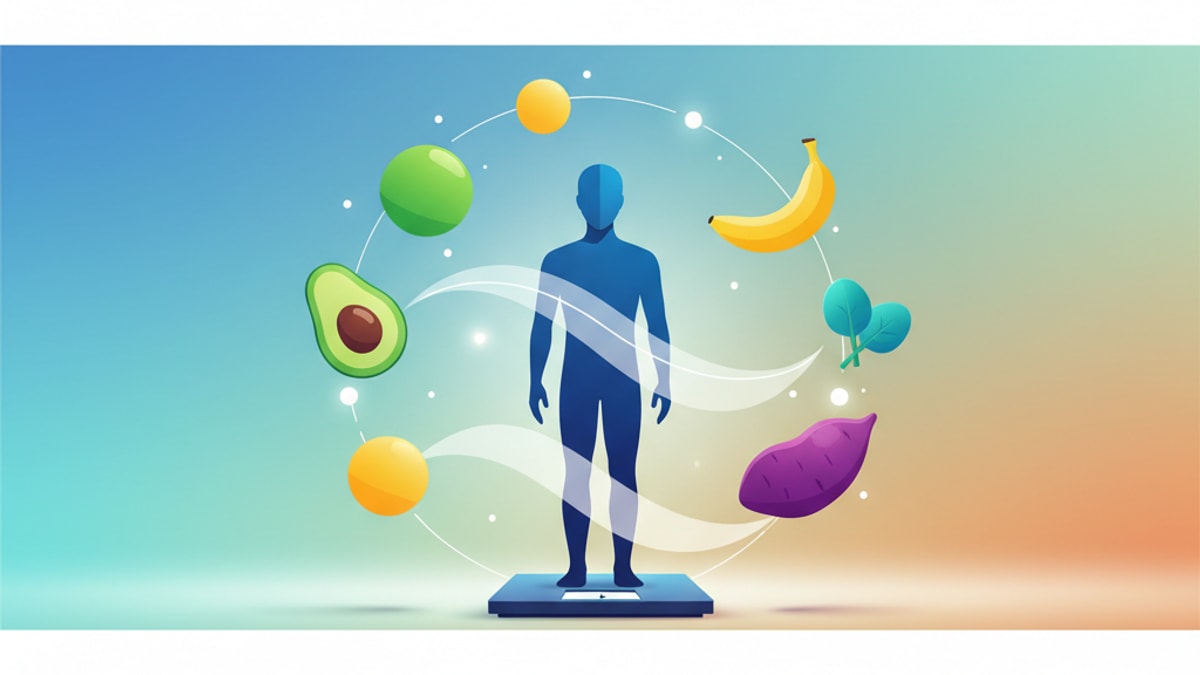
It’s a question that pops up everywhere, from fitness forums to late-night internet searches. Does potassium help with weight loss? The short answer is yes, but absolutely not in the way most people think. It’s not a thermogenic fat-burner or a magic pill that melts away pounds. Let’s be honest, if it were that simple, we’d all be loading up on bananas and avocados and calling it a day.
The reality is far more nuanced, and frankly, more interesting. Our team has worked with countless individuals on their health journeys, and we've seen firsthand how micronutrients fit into the bigger picture. Potassium is what we'd call a 'foundational supporter.' It doesn't drive the car, but it’s the high-quality oil that keeps the engine running smoothly, allowing the more powerful systems—like a healthy diet, consistent exercise, and for some, advanced medical treatments like GLP-1s—to do their job effectively. It creates the right internal environment for change to happen. That’s the key.
The Real Role of Potassium: Your Body's Chief Electrician
Before we can connect potassium to weight management, we have to respect what it actually does. Potassium is an electrolyte. Think of electrolytes as the electrical wiring of your body. They carry tiny electrical charges that activate all sorts of critical functions. Without them, nothing works right.
Potassium's primary responsibilities are formidable:
- Fluid Balance: It works in a delicate, constant dance with sodium to manage the amount of fluid inside and outside your cells. This is huge, and we’ll come back to it.
- Nerve Signals: Every single thought you have, every message from your brain to your muscles, relies on potassium to help conduct that nerve impulse.
- Muscle Contractions: This includes the most important muscle of all—your heart. Proper potassium levels are non-negotiable for a healthy, regular heartbeat. It's also essential for the voluntary muscle contractions you need to walk, lift, and exercise.
When you see this list, it becomes clear that potassium isn't a 'weight loss mineral.' It's a 'life-sustaining mineral' that just so happens to have profound, indirect effects on your body composition and the number you see on the scale. And that’s where the confusion—and the opportunity—lies.
The Water Weight Connection: A Deceptive Win
Here’s the most direct link between potassium and what people perceive as weight loss. It’s all about water retention.
Most modern diets are incredibly high in sodium. It's packed into processed foods, restaurant meals, and even seemingly healthy options like canned soups and sauces. When you have too much sodium in your system, your body holds onto water to dilute it, trying to maintain that crucial fluid balance. The result? You feel bloated, puffy, and the scale jumps up by several pounds literally overnight. It’s frustrating.
Potassium is sodium's natural antagonist. It signals to your kidneys to excrete more sodium through urine. As the excess sodium leaves your body, it takes that excess water with it. This flushing effect can lead to a significant, sometimes dramatic, shift on the scale in just a few days. We've seen it work. You might drop three, four, even five pounds.
But we can't stress this enough: this is not fat loss. It's the loss of excess water weight. While it's a fantastic motivator and can certainly make you feel lighter and more comfortable in your clothes, it's crucial to understand the difference. True, sustainable weight loss comes from reducing adipose tissue (fat), which is a much slower, more methodical process. Still, managing bloat is a worthy goal, and potassium is your number one ally in that fight.
Fueling the Fire: Potassium's Role in an Active Lifestyle
Now, let's talk about real, sustainable fat loss. The kind that comes from building a healthier metabolism through diet and exercise. This is where potassium's supportive role becomes even more critical.
Have you ever had a debilitating muscle cramp mid-workout? Or felt so weak and fatigued that you couldn't push through your last set? An electrolyte imbalance, specifically low potassium (a condition called hypokalemia), is often a primary culprit. Remember, potassium is essential for muscle contractions. Without enough of it, your muscles can't function optimally. They fatigue faster, they're more prone to cramping, and they can't generate the force needed for effective strength training or endurance exercise.
Our experience shows that clients who pay close attention to their electrolyte intake, especially potassium, have better workout quality and consistency. They can push harder, recover faster, and build more lean muscle mass. And why is lean muscle so important for weight loss? Because muscle is metabolically active tissue. The more muscle you have, the more calories your body burns at rest, 24/7. It's a long-term investment in a more efficient metabolism.
So, does potassium directly burn fat during a workout? No. But does it ensure your body is physiologically capable of performing the high-quality workouts necessary to burn fat and build muscle? Absolutely. It’s an indispensable part of the equation.
Potassium and Your Metabolism: The Unsung Hero
Beyond fluid balance and muscle function, potassium plays a subtle but vital role in your core metabolism. It helps your body process carbohydrates. When you eat carbs, your body breaks them down into glucose for energy. Potassium is required to help convert that glucose into glycogen, which is then stored in your muscles and liver as a readily available energy source. Without adequate potassium, this process is less efficient, which can impact your energy levels and how your body utilizes fuel.
Furthermore, potassium is involved in protein synthesis. This is the process of building and repairing tissues, including that precious, calorie-torching lean muscle we just talked about. If you’re not getting enough potassium, you’re short-changing your body's ability to recover from exercise and build a stronger, more metabolic frame.
It’s not a 'metabolism booster' in the way caffeine is, which temporarily revs your engine. Instead, think of it as a fundamental building block that allows your metabolic machinery to be built and run correctly in the first place.
Getting it Right: Food First, Always
So, how do you ensure you're getting enough potassium? The knee-jerk reaction for many is to reach for a supplement bottle. We strongly advise against this unless specifically directed by a healthcare professional. Why? Because it's incredibly easy to get too much potassium from supplements, which can lead to a dangerous condition called hyperkalemia that can cause serious heart problems. It's a delicate balance.
Our team's philosophy, which we've refined over years, is always food-first. Nature has packaged potassium perfectly in whole foods, often alongside fiber, vitamins, and other phytonutrients that work synergistically. You're getting the mineral in a format your body knows how to handle, and it's virtually impossible to reach toxic levels from food alone.
Here’s a look at how these two approaches stack up.
| Feature | Potassium from Whole Foods | Potassium from Supplements |
|---|---|---|
| Source | Fruits, vegetables, legumes, dairy (e.g., bananas, spinach, sweet potatoes, beans, yogurt) | Potassium chloride, potassium citrate, etc., in pill or powder form. |
| Absorption | Generally well-absorbed along with other nutrients. The presence of fiber can regulate uptake. | Can be absorbed very quickly, which increases the risk of blood levels spiking too high. |
| Safety | Extremely safe. It's nearly impossible to overdose on potassium from food sources alone. | High risk of overdose (hyperkalemia) without medical supervision. Can cause severe cardiac issues. |
| Nutritional Value | Comes packaged with fiber, vitamins, antioxidants, and other beneficial compounds. | Provides only isolated potassium, missing the synergistic benefits of whole foods. |
| Our Recommendation | Strongly Recommended. This should be the primary, if not sole, source for the vast majority of people. | Use With Extreme Caution. Only under the direct guidance of a physician for a diagnosed deficiency. |
Some potassium-rich powerhouses to add to your grocery list include:
- Leafy Greens: Spinach and Swiss chard are champions.
- Root Vegetables: Sweet potatoes and white potatoes (with the skin on!) are excellent sources.
- Fruits: Bananas are famous for it, but avocados, cantaloupe, and oranges are also fantastic.
- Legumes: Lentils, kidney beans, and soybeans are packed with potassium and fiber.
- Fish: Salmon and tuna provide a healthy dose of both potassium and omega-3 fatty acids.
The Role of Potassium in Modern Medical Weight Loss
This conversation becomes even more critical for individuals utilizing modern medical advancements for weight management, like the GLP-1 programs we specialize in at TrimrX. Medications like Semaglutide and Tirzepatide are revolutionary, but they work by fundamentally changing your body's hormonal signaling around appetite and digestion. This often leads to a significant reduction in food intake and changes in dietary choices.
When you're eating less overall, it's imperative that the food you do eat is as nutrient-dense as possible. You have fewer 'at-bats' to get the vitamins and minerals you need, and potassium is at the top of that list. Furthermore, changes in hydration and digestion can sometimes affect electrolyte levels. That's why medically-supervised programs are so important. We don't just provide a prescription; we provide comprehensive guidance. Our team ensures that as you successfully lose weight, you’re also nourishing your body and maintaining that critical electrolyte balance for optimal health and well-being.
This holistic view is everything. A powerful medication is just one tool. Supporting its function with foundational health principles—like ensuring adequate potassium intake—is what transforms a good outcome into a great, sustainable one. If you're tired of the frustrating cycle of weight loss and regain and are ready to explore a comprehensive, medically-guided path, we're here to help. You can see if you're a candidate when you Take Quiz on our site.
Putting It All Together: A Practical Approach
So, what's the final verdict? Does potassium help with weight loss?
Yes, it's a critical, non-negotiable element of the journey. It helps you shed excess water weight, which is motivating. It fuels your muscles for better, more effective workouts that build a faster metabolism. And it supports the basic metabolic processes that allow your body to use fuel efficiently. It does all of this without directly 'burning' a single fat cell.
Think of your weight loss journey as building a house. A calorie deficit is the foundation. Exercise is the framework. High-quality protein is the drywall. In this analogy, potassium is the electrical wiring and plumbing. You don't see it from the outside, and it doesn't make the house look pretty on its own, but without it, nothing inside works. The house is uninhabitable.
So, stop looking for potassium to be the star of the show. Instead, give it the respect it deserves as the indispensable supporting actor. Focus on building a diet rich in whole, unprocessed foods. Stay hydrated. Move your body consistently. And if you’re using advanced tools to help you on your way, make sure you’re doing it with a team that understands the entire picture. A team that knows the wiring is just as important as the walls. If you’re ready to build a lasting foundation for your health, you can Start Your Treatment now.
It’s not about finding one magic ingredient. It’s about understanding how all the pieces fit together to create a body that is not just leaner, but healthier, stronger, and more resilient from the inside out. That’s the real goal, and potassium is a quiet but powerful ally in helping you get there.
Frequently Asked Questions
Can potassium supplements directly cause weight loss?
▼
No, they can’t. Potassium supplements do not burn fat or increase metabolism in a way that causes direct weight loss. Their main benefit is in helping the body shed excess water weight by balancing sodium levels, which can result in a temporary drop on the scale.
How much potassium should I aim for daily for weight management?
▼
For most adults, the recommended daily intake is around 2,600 mg for women and 3,400 mg for men. Our team always recommends achieving this through potassium-rich foods like fruits, vegetables, and legumes rather than supplements, as a food-first approach is safer and more nutritionally complete.
Will eating a banana every day help me lose belly fat?
▼
While bananas are a great source of potassium, no single food can target belly fat. Losing belly fat requires a comprehensive approach, including a consistent calorie deficit, regular exercise, and a balanced diet. A banana can certainly be a healthy part of that diet.
Can low potassium (hypokalemia) make it harder to lose weight?
▼
Yes, indirectly. Low potassium can cause muscle weakness, fatigue, and cramping, making it much harder to exercise effectively. Since physical activity is a key component of sustainable weight loss, untreated hypokalemia can definitely hinder your progress.
Is it safe to take potassium pills for water retention?
▼
We strongly advise against this without a doctor’s supervision. Self-prescribing potassium supplements is risky and can lead to dangerously high levels in the blood (hyperkalemia), which can affect heart function. It’s much safer to manage water retention by increasing your intake of potassium-rich foods and reducing sodium.
Does potassium interact with weight loss medications like Semaglutide?
▼
Potassium itself doesn’t have a direct interaction, but the dietary changes and physiological effects of GLP-1 medications make maintaining electrolyte balance crucial. That’s why medically-supervised programs are so important—we monitor your overall health to ensure your body is well-supported during treatment.
What are the best food sources of potassium?
▼
Some of the best sources are sweet potatoes, spinach, avocados, white beans, bananas, and salmon. Focusing on a variety of whole, unprocessed foods is the best strategy to ensure you’re getting enough potassium along with other essential nutrients.
Can drinking coconut water help with weight loss because of its potassium?
▼
Coconut water is a good source of potassium and can help with hydration and electrolyte balance, which supports an active lifestyle. However, it also contains calories and sugar, so it should be consumed in moderation as part of a calorie-controlled diet.
How do I know if I’m getting enough potassium?
▼
A diet low in fresh fruits and vegetables and high in processed foods is a common reason for low intake. Symptoms of deficiency can include fatigue, muscle cramps, and weakness. The only definitive way to know is through a blood test ordered by your healthcare provider.
Does salt substitute (potassium chloride) help with weight loss?
▼
Using a potassium chloride-based salt substitute can help reduce your sodium intake while increasing potassium, which can aid in reducing water retention. However, it’s not a weight loss tool on its own and should be used cautiously, especially by individuals with kidney issues or those on certain medications.
Is there a link between potassium and insulin resistance?
▼
Some research suggests a correlation between lower potassium levels and a higher risk of developing insulin resistance and type 2 diabetes. Potassium is important for insulin secretion and carbohydrate metabolism, so maintaining adequate levels is part of a broader strategy for metabolic health.

Transforming Lives, One Step at a Time
Keep reading

Do You Need a Prescription for GLP-1s? The 2026 Answer
Wondering ‘do you need a prescription for glp 1’ in 2026? Yes. We explain why a doctor’s oversight is critical for safe, effective results.

How to Get GLP-1 Covered By Insurance: Our 2026 Playbook
Struggling with how to get glp-1 covered by insurance? Our 2026 guide breaks down prior authorizations, appeals, and documentation.

Traveling with GLP-1s in 2026: Your Essential Trip-Proof Plan
Don’t let travel disrupt your GLP-1 treatment. Learn how to travel with glp 1 medications safely and stress-free in our 2026 expert guide.


