Does Tirzepatide Need to Be Refrigerated? Storage and Safety Rules
Introduction
The moment your weight loss medication arrives on your doorstep, a sense of excitement usually follows. You have taken a major step toward your health goals, and you are ready to begin. However, that excitement is often quickly met with a practical question: did the package stay cold enough, and where exactly should you put it? At TrimRx, we believe that understanding the logistics of your treatment is just as important as the treatment itself. Properly storing your medication ensures that the active ingredients remain potent and effective throughout your journey. Tirzepatide is a sophisticated, temperature-sensitive peptide that requires specific care to maintain its structural integrity. In this guide, we will explore why refrigeration is the gold standard, how to handle travel, and what to do if your medication accidentally reaches room temperature. Knowing these rules helps you protect your progress and ensures every dose supports your metabolic health.
If you are considering a prescription weight loss program, you can take the free assessment quiz to see whether you may be eligible for personalized next steps.
Quick Answer: Yes, tirzepatide should be stored in the refrigerator between 36°F and 46°F (2°C to 8°C). While branded versions like Mounjaro® or Zepbound® can stay at room temperature for up to 21 days, the medication must never be frozen or exposed to temperatures above 86°F.
Why Temperature Matters for Peptides
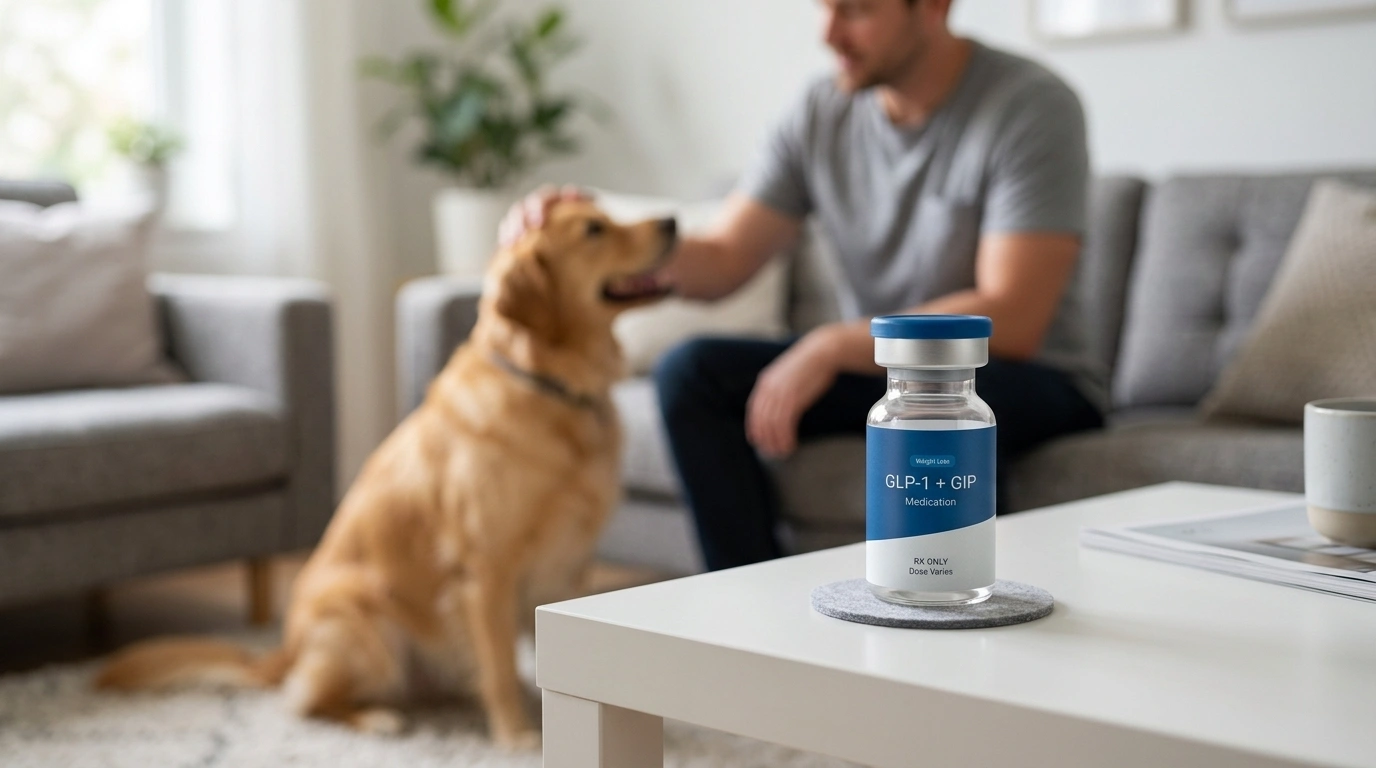
Tirzepatide is a dual-acting medication that mimics two naturally occurring hormones: glucagon-like peptide-1 (GLP-1) and glucose-dependent insulinotropic polypeptide (GIP). These hormones work together to regulate appetite and manage how your body processes blood sugar. Chemically, tirzepatide is a peptide—a chain of amino acids held together by delicate bonds.
These bonds are what give the medication its specific three-dimensional shape. This shape is critical because it allows the medication to “dock” into receptors in your body, much like a key fits into a lock. When the medication is exposed to extreme heat or freezing temperatures, these bonds can break or “unfold.” This process, known as denaturation, changes the shape of the molecule. Once a peptide is denatured, it can no longer interact correctly with your body’s receptors, rendering the medication less effective or even completely inactive.
For a broader explanation of how temperature affects tirzepatide, review this guide to tirzepatide storage, travel, and handling.
The Science of Denaturation
When a protein-based medication like tirzepatide gets too warm, the molecules begin to move more rapidly, increasing the likelihood of chemical reactions that break its structure. Conversely, when it freezes, the formation of ice crystals can physically tear the peptide strands apart. Unlike some substances that can be “fixed” after they melt or cool down, the damage to a peptide is usually permanent. This is why maintaining the “cold chain”—the consistent refrigerated environment from the pharmacy to your home—is vital for your results.
Standard Storage Guidelines for Tirzepatide
Whether you are using a branded medication or a compounded version prepared by an FDA-registered, inspected compounding pharmacy, the core storage principles remain the same. The primary goal is to keep the medication in a stable, cool, and dark environment.
The Ideal Refrigerator Range
The gold standard for tirzepatide storage is a temperature between 36°F and 46°F (2°C to 8°C). Most modern household refrigerators are designed to maintain this range, but where you place the medication within the unit makes a significant difference.
- The Middle Shelf: This is typically the most temperature-stable area.
- Avoid the Door: The temperature in the refrigerator door fluctuates significantly every time you open it to reach for milk or a snack. This constant “cycling” can stress the medication.
- Avoid the Back Wall: In many units, the area near the cooling element or the back wall can reach freezing temperatures.
- Keep it in the Box: The original packaging provides a layer of insulation and protects the liquid from light.
For additional guidance on how long tirzepatide can be stored safely, follow the instructions on your medication label and packaging.
Protection from Light
Light sensitivity is another factor that can lead to the degradation of tirzepatide. Ultraviolet (UV) light can trigger chemical reactions within the solution that break down the peptide bonds. This is why most pens are opaque and why compounded vials are often made of amber-colored glass. Keeping your medication in its original carton or a dedicated opaque container within your fridge provides an essential shield against the light that turns on every time the refrigerator door is opened.
Key Takeaway: Proper storage is about protecting the molecular shape of the medication. Keep it on the middle shelf of your fridge, inside its original box, and away from the cooling elements to ensure maximum potency.
Room Temperature Exceptions
While refrigeration is the best way to maintain the medication for the long term, tirzepatide is designed with some flexibility to accommodate daily life and travel.
The 21-Day Rule for Branded Medications
For branded medications like Mounjaro® and Zepbound®, the manufacturer provides specific guidance for room-temperature storage. If necessary, these medications can be kept at room temperature—defined as up to 86°F (30°C)—for a total of up to 21 days.
This window is cumulative. If you take a pen out for an hour and then put it back, you have used one hour of that 21-day “bank.” However, many providers recommend that once a pen or vial has reached room temperature, you should simply use it within that three-week window rather than returning it to the fridge. This prevents the medication from undergoing repeated temperature shifts, which can be just as damaging as heat itself.
For a product-specific look at refrigerated storage, read about how long Zepbound can be stored in the refrigerator.
Compounded Tirzepatide Considerations
Compounded tirzepatide, which we facilitate through our partner pharmacies, often requires even stricter adherence to refrigeration. Because these preparations are made to order and may include additives like Vitamin B12, their stability profiles can differ from mass-produced branded pens.
Most compounded versions should stay refrigerated at all times until you are ready to administer the dose. While they may survive short periods at room temperature (such as during the shipping process in an insulated box), they generally do not have the same 21-day “unrefrigerated” allowance unless specifically stated by the dispensing pharmacy. Always refer to the specific labeling on your vial or the paperwork provided with your shipment.
Learn more about compounded tirzepatide storage and shelf life before making assumptions about your vial’s stability.
The Dangers of Freezing
If you find that your medication has accidentally frozen—perhaps it was pushed too far back in the fridge or left in a car during a winter cold snap—the safest course of action is to discard it.
Why You Cannot Thaw and Use
When tirzepatide freezes, the structural integrity of the peptide is compromised. Even if the liquid looks perfectly clear and normal once it thaws, the molecular “keys” have likely been bent or broken. Injecting frozen and thawed medication will not necessarily make you sick in a toxic sense, but it will likely provide zero therapeutic benefit. This can lead to a return of hunger, a stall in your weight loss progress, and unnecessary frustration.
Signs your medication may have frozen:
- Visible ice crystals in the vial or pen.
- The liquid looks cloudy or hazy after thawing.
- The glass vial has a hairline fracture (caused by expanding ice).
- The mechanical parts of an auto-injector pen feel stuck or “gritty.”
Bottom line: If there is any evidence that your medication reached freezing temperatures, do not use it. Consistency is key to weight loss success, but using compromised medication can disrupt your metabolic steady state.
How to Inspect Your Medication Before Use
Before every injection, you should perform a “clarity check.” This simple habit is the best way to ensure your storage methods are working.
What to look for:
- Clarity: The liquid should be clear. If it looks milky, cloudy, or “foggy,” the proteins may have denatured or the solution may be contaminated.
- Color: Tirzepatide is typically colorless to slightly yellowish. If you notice a sudden shift to a brownish hue, it may have oxidized. (Note: Some compounded versions are naturally pink due to Vitamin B12 additives).
- Particulates: You should not see any flakes, strings, or solid specks floating in the liquid.
- Bubbles: A few small air bubbles are normal and safe, but the liquid itself should remain uniform.
If your medication fails any part of this visual inspection, do not inject it. Reach out to your healthcare team or the pharmacy to discuss a replacement. If you are a member of our platform, our support team can help you navigate these storage mishaps.
Traveling with Tirzepatide
A weight loss journey doesn’t stop when you go on vacation or a business trip. With a little preparation, you can safely transport your medication without risking its potency.
For more practical guidance, review these tips for traveling with GLP-1 medications.
Air Travel and Security
When flying, the most important rule is to never put your tirzepatide in checked luggage. The cargo hold of an airplane is not climate-controlled and can reach extreme temperatures—both freezing and excessively hot. Additionally, checked bags are more likely to be lost or delayed.
- Carry-on Only: Keep your medication in your carry-on bag or purse.
- TSA Guidelines: You are allowed to carry liquid medications and related supplies (like needles) through security. Inform the agent at the checkpoint that you have medical supplies.
- Original Packaging: Keep the medication in its original box with the prescription label attached. This makes the security process smoother and protects the pens from light.
Using Travel Coolers
For road trips or long flights, an insulated medical travel case is a wise investment. These small, portable coolers are designed specifically for GLP-1 and insulin pens.
Step-by-Step Travel Packing:
- Step 1: Freeze your gel packs for at least 24 hours before your trip.
- Step 2: Place the medication in its original box or wrap it in a small towel.
- Step 3: Place the box in the cooler, ensuring it does not touch the frozen gel pack directly. Direct contact can cause the medication to freeze.
- Step 4: Upon arrival, move the medication to a refrigerator immediately. Be wary of “dorm-style” hotel fridges, as they often have inconsistent temperatures and can accidentally freeze items in the back.
Note: If you cannot guarantee a refrigerator at your destination will stay above freezing, it is often safer to keep branded tirzepatide at a stable room temperature (under 86°F) for the duration of your trip rather than risking a malfunctioning hotel fridge.
Handling Power Outages and Emergencies
Power outages can be stressful when you have refrigerated medications. However, your refrigerator is essentially a giant insulated box. If the power goes out, the most important thing you can do is keep the door shut.
A closed refrigerator can usually maintain a safe temperature for about 4 hours. If the power is out longer, you may need to move your medication to a small cooler with ice or gel packs. Remember the “no-freeze” rule: wrap the medication so it doesn’t touch the ice directly. If the internal temperature of your fridge rose above 86°F during the outage, the medication should be discarded.
Compounded Tirzepatide: The Beyond-Use Date
Storage for compounded medication involves a specific term you might not see on branded products: the Beyond-Use Date (BUD). Because compounded tirzepatide is prepared in a pharmacy rather than mass-produced in a factory, its shelf life is different.
The BUD is the date after which the medication should not be used, even if it has been refrigerated perfectly. This date accounts for the stability of the ingredients and the effectiveness of the preservatives used to keep the vial sterile. Most compounded vials have a BUD ranging from 30 to 90 days.
Maintaining Sterility at Home
Since compounded tirzepatide often comes in a multi-dose vial, how you handle it affects its longevity.
- Always wash your hands before handling the vial.
- Wipe the rubber stopper with a fresh alcohol prep pad before every single draw.
- Store the vial upright to minimize contact between the liquid and the rubber seal.
- Never “double-dip” or reuse a needle.
The TrimRx Approach to Personalized Care
At TrimRx, we understand that managing a weight loss program is about more than just a weekly injection. It is about having the support and information you need to navigate every practical detail—from injection techniques to storage logistics. Our telehealth-first platform merges clinical expertise with modern convenience, ensuring you have access to specialized care without the need for in-person visits.
Our personalized programs are designed to fit your unique health profile and lifestyle. When you join us, you gain access to a team that understands the nuances of GLP-1 and GIP medications. We believe in transparency and empathy, helping you overcome the hurdles of weight loss with science-backed guidance. Whether you are curious about medication or looking for a more structured approach to your health, our platform is here to simplify the process.
If you are ready to explore whether prescription treatment may be appropriate for you, complete a free eligibility assessment.
Optimizing Your Treatment with Nutrient Support
While maintaining the potency of your medication is a top priority, supporting your body from the inside out is equally important. Many patients find that as their appetite decreases on tirzepatide, their intake of essential nutrients can also drop. This is where targeted supplementation can play a role in your overall wellness.
For those looking to bridge the nutritional gap, we offer GLP-1 Daily Support, formulated to provide vitamins and minerals that support nutritional needs during treatment.
Additionally, our Weight Loss Boost supplement can help maintain energy levels and metabolic health as your body adapts to a lower-calorie lifestyle. These tools, combined with a personalized medication plan, create a holistic environment for sustainable change.
Conclusion
Tirzepatide is a powerful tool for weight management, but its efficacy is inextricably linked to how it is handled. By prioritizing refrigeration between 36°F and 46°F, shielding the liquid from light, and avoiding the “danger zone” of the freezer, you ensure that every dose provides the maximum benefit. While life happens and room-temperature shifts occur, following the 21-day rule for branded products and adhering to the Beyond-Use Date for compounded versions will keep your journey on track.
Sustainable weight loss is a marathon, not a sprint. Protecting your medication is one of the many ways you show up for yourself during this process. We are dedicated to providing the clinical oversight and empathetic support needed to make this journey as smooth as possible.
If you are ready to take the next step toward a healthier version of yourself, we invite you to begin with our free assessment quiz. This is the first step in determining your eligibility for a program that is truly tailored to your needs. For those already on their way, exploring our supportive supplements can provide the extra foundation your body deserves.
FAQ
Can I use tirzepatide if it was left on the counter overnight?
If your home stayed below 86°F (30°C), branded tirzepatide (Mounjaro® or Zepbound®) is likely still safe to use. These medications can stay at room temperature for up to 21 days total. However, you should return it to the refrigerator as soon as possible and note the time it spent out to ensure you don’t exceed the three-week limit.
Why is freezing my medication so harmful?
Freezing causes the delicate protein-based molecules in tirzepatide to denature or break apart. Once the molecular structure is damaged by ice crystals, the medication cannot be repaired by thawing. Using frozen and thawed medication will likely result in a lack of appetite suppression and a stall in your weight loss progress.
How do I store my medication if I am staying in a hotel?
If the hotel room has a refrigerator, place your medication on the middle shelf. However, be cautious with small “dorm-style” fridges, as they are often prone to freezing items placed near the cooling plate at the back. If you cannot trust the hotel fridge, you can keep branded tirzepatide at room temperature for up to 21 days, provided the room remains below 86°F.
What should I do if my shipment arrives and the cold packs are melted?
When your shipment arrives, the medication should still feel cool to the touch, even if the gel packs have started to thaw. If the vial or pens feel warm or have been exposed to high heat for an extended period, do not use them. Contact our support team or the dispensing pharmacy immediately to discuss a replacement.
Disclaimer: This content is for informational purposes only and does not constitute medical advice. It is not intended to diagnose, treat, cure, or prevent any disease or condition. Individual results may vary. Always consult a qualified healthcare professional before starting any weight loss program or medication.

Transforming Lives, One Step at a Time
Keep reading

Starting Tirzepatide While on the Pill: The First Four Weeks
You have your first box and you take an oral contraceptive. There is a labeled instruction that applies to you, and the mistake almost…

Marathon Training on Tirzepatide When You Can’t Fuel
You have a plan on the fridge and a medication that has made eating feel optional. Those two things are in genuine conflict, and…

Paying Cash for Tirzepatide? Don’t Stretch Your Supply
When every vial comes out of your own pocket, the arithmetic is hard to ignore. If a month’s supply costs what it costs, and…


