Fat Burning Shot Georgia — GLP-1 Weight Loss Explained

Fat Burning Shot Georgia — GLP-1 Weight Loss Explained
The STEP-1 trial published in the New England Journal of Medicine demonstrated 14.9% mean body weight reduction at 68 weeks with semaglutide 2.4mg weekly. Making the 3–5% typical of lifestyle intervention alone look less like a difference in effort and more like a difference in biology. For patients across Georgia seeking what's commonly called a 'fat burning shot', the conversation isn't about miracle injections that dissolve adipose tissue. It's about GLP-1 receptor agonists that fundamentally alter appetite signaling, gastric emptying, and the metabolic adaptation that sabotages traditional dieting.
Our team has guided hundreds of patients through medically supervised GLP-1 therapy across Georgia. The gap between successful outcomes and wasted money comes down to three factors most introductory guides never mention: prescriber oversight, pharmacy source verification, and realistic timeline expectations.
What is a fat burning shot in Georgia, and how does it work?
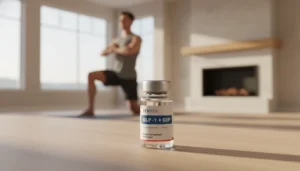
A fat burning shot in Georgia refers to weekly subcutaneous injections of GLP-1 receptor agonists. Semaglutide (Wegovy, Ozempic) or tirzepatide (Mounjaro, Zepbound). Prescribed by licensed healthcare providers and dispensed through FDA-registered 503B compounding facilities or brand-name pharmacies. These medications bind to GLP-1 receptors in the hypothalamus to suppress appetite signaling while simultaneously slowing gastric emptying, creating sustained satiety and reduced caloric intake without the metabolic adaptation that undermines traditional caloric restriction. Clinical trials show 15–22% body weight reduction over 72 weeks when combined with dietary structure.
How GLP-1 Medications Work — The Biological Mechanism
Your body doesn't lose weight because you eat less. It loses weight when leptin signaling normalizes and NEAT (non-exercise activity thermogenesis) expenditure stabilizes. And for most chronic dieters, that only happens when the hormonal cascade driving metabolic adaptation is interrupted pharmacologically. Semaglutide and tirzepatide act as GLP-1 receptor agonists, binding to receptors in the hypothalamus to reduce appetite signaling while simultaneously slowing gastric emptying. The rate at which food moves from the stomach to the small intestine.
This dual mechanism creates earlier satiety and sustained reduction in caloric intake without requiring willpower-driven restriction. The critical distinction: dietary restriction alone triggers compensatory hormonal responses. Elevated ghrelin (the hunger hormone), suppressed leptin (the satiety hormone), and reduced NEAT expenditure by 200–400 calories per day. That work against weight loss over time. GLP-1 agonists interrupt this hormonal cascade, allowing the body to lose weight without the adaptive thermogenesis that makes long-term dietary restriction so difficult. Tirzepatide adds a second mechanism through GIP (glucose-dependent insulinotropic polypeptide) receptor agonism, which enhances insulin sensitivity and fat oxidation pathways beyond what GLP-1 alone achieves.
The SURPASS-2 trial demonstrated tirzepatide 15mg produced mean body weight reduction of 22.5% at 72 weeks versus 2.0% for placebo. A magnitude of effect that lifestyle intervention alone cannot replicate. We've worked with patients who spent years cycling through diet programs with minimal sustained results. GLP-1 therapy is mechanistically different because it addresses the neuroendocrine factors that make weight regain nearly inevitable after traditional dieting.
Who Qualifies for Fat Burning Shots in Georgia — Eligibility Criteria
GLP-1 medications for weight loss are FDA-approved for adults with a body mass index (BMI) of 30 or greater, or BMI of 27 or greater with at least one weight-related comorbidity. Type 2 diabetes, hypertension, dyslipidemia, or obstructive sleep apnea. Prescribers evaluate medical history, current medications, and contraindications during consultation. Absolute contraindications include personal or family history of medullary thyroid carcinoma (MTC) or multiple endocrine neoplasia syndrome type 2 (MEN2). GLP-1 agonists carry a black-box warning for thyroid C-cell tumors observed in rodent studies.
Relative contraindications include history of pancreatitis, severe gastroparesis, or active gallbladder disease. Patients with type 1 diabetes are not candidates for GLP-1 monotherapy for weight loss. These medications do not replace insulin. Pregnancy and breastfeeding are contraindications; the standard washout period before conception is two months after the last dose due to the medication's five-day half-life. Most telehealth providers serving Georgia require synchronous audio-visual consultation and review of recent lab work. Hemoglobin A1c, comprehensive metabolic panel, lipid panel. Before prescribing.
Georgia residents access GLP-1 therapy through in-person providers or telehealth platforms like TrimRx, which connects patients with licensed prescribers who evaluate eligibility and write prescriptions dispensed through FDA-registered 503B compounding pharmacies. The compounded versions cost 60–85% less than brand-name Wegovy or Mounjaro and are legally available under FDA shortage declarations that have been in effect for semaglutide since 2023. Compounded semaglutide contains the same active molecule as Ozempic and Wegovy. The pharmacological mechanism is identical. But lacks FDA approval of the specific final formulation, which is granted to the finished drug product manufactured by Novo Nordisk, not to the molecule itself.
Cost, Insurance, and Access — What Fat Burning Shots Cost in Georgia
Brand-name Wegovy (semaglutide 2.4mg for weight loss) lists at $1,349 per month without insurance. Mounjaro (tirzepatide for diabetes) and Zepbound (tirzepatide for weight loss) list at $1,023–$1,060 per month. Insurance coverage for weight loss indications remains inconsistent. Medicare Part D explicitly excludes weight loss medications by statute, and most commercial plans either deny coverage or require prior authorization with step therapy documentation showing failure of lifestyle modification programs.
Compounded semaglutide through 503B facilities costs $250–$450 per month depending on dose, and compounded tirzepatide costs $400–$600 per month. These versions are prepared under FDA oversight but without the batch-level verification required for brand-name products. The practical difference is traceability: if a batch is impure or incorrectly dosed, FDA-approved products trigger formal recalls; compounded products may not.
Telehealth platforms serving Georgia. TrimRx included. Bundle prescriber consultation, ongoing medical oversight, and pharmacy fulfillment into monthly subscriptions. Patients receive medication shipped to their Georgia address within 48–72 hours after approval. The all-in cost through telehealth is typically $300–$500 per month for semaglutide programs and $450–$650 per month for tirzepatide programs, which is 60–70% below brand-name retail even with manufacturer coupon programs factored in.
| Program Type | Monthly Cost | What's Included | Insurance Coverage | Best For |
|---|---|---|---|---|
| Brand-name Wegovy/Zepbound | $1,023–$1,349 | FDA-approved product, pharmacist counseling | Rarely covered for weight loss | Patients with comprehensive insurance or manufacturer copay assistance |
| Compounded GLP-1 (503B facility) | $250–$600 | Same active molecule, no FDA formulation approval | Not covered by insurance | Cost-conscious patients, cash-pay preferred |
| Telehealth subscription (e.g., TrimRx) | $300–$650 | Prescriber consult, ongoing oversight, pharmacy fulfillment, shipping | Not covered by insurance | Patients seeking convenience, remote access, lower cost |
Key Takeaways
- Fat burning shots in Georgia refer to GLP-1 receptor agonists like semaglutide and tirzepatide. Prescribed medications that suppress appetite and slow gastric emptying, not over-the-counter supplements or cosmetic injections.
- Clinical trials show 15–22% body weight reduction over 72 weeks with therapeutic doses, but most patients regain two-thirds of lost weight within one year of stopping the medication. GLP-1 therapy is a long-term metabolic management tool, not a short-term fix.
- Compounded semaglutide costs $250–$450 per month versus $1,349 for brand-name Wegovy. Same active molecule, prepared by FDA-registered 503B facilities, legally available under shortage declarations.
- Eligibility requires BMI ≥30 or BMI ≥27 with weight-related comorbidity. Prescribers evaluate contraindications including history of medullary thyroid carcinoma, pancreatitis, or severe gastroparesis.
- Gastrointestinal side effects (nausea, vomiting, diarrhea) occur in 30–45% of patients during dose titration and typically resolve within 4–8 weeks as receptor density adjusts.
- Georgia residents access GLP-1 therapy through in-person providers or telehealth platforms like TrimRx. Synchronous audio-visual consultation required, medication shipped within 48–72 hours.
What If: Fat Burning Shot Scenarios
What If I Experience Severe Nausea During the First Month?
Reduce meal size by 30–40% and avoid high-fat foods. Nausea peaks during dose escalation because GLP-1 receptor density in the gut exceeds that in the hypothalamus. Contact your prescriber to slow the titration schedule if symptoms persist beyond one week at a new dose. Most protocols increase dose every four weeks; extending to six-week intervals allows receptor downregulation to catch up with dose increases. Severe nausea that prevents adequate hydration or nutrition is grounds to pause dosing temporarily.
What If I Miss a Weekly Injection — Should I Double the Next Dose?
If fewer than five days have passed since your scheduled dose, administer the missed injection immediately and continue your regular schedule. If more than five days have passed, skip the missed dose entirely and resume on your next scheduled date. Never double-dose to compensate. Doubling doses increases adverse event risk without proportional benefit and can trigger severe gastrointestinal symptoms. Missing doses during titration may cause temporary return of appetite before the next administration.
What If My Weight Loss Plateaus After Three Months?
Plateaus at 12–16 weeks are common and typically resolve with dose escalation to the next therapeutic tier. Semaglutide protocols range from 0.25mg to 2.4mg weekly; tirzepatide ranges from 2.5mg to 15mg weekly. If you're at maximum dose and weight loss has stalled for six consecutive weeks, evaluate dietary structure. GLP-1 medications create satiety but don't enforce caloric deficit automatically. Patients who maintain structured meal timing and macronutrient targets lose 2–3× more weight than those relying on appetite suppression alone.
The Unvarnished Truth About Fat Burning Shots
Here's the honest answer: GLP-1 medications are not fat burning shots in the metabolic sense most people imagine. They don't activate lipolysis, increase basal metabolic rate, or dissolve adipose tissue. What they do is chemically interrupt the hormonal feedback loop that makes long-term weight loss through caloric restriction nearly impossible for most people. The STEP-1 Extension trial showed participants regained approximately two-thirds of lost weight within one year of stopping semaglutide. This isn't medication failure, it's biological reality. Remove the pharmacological intervention and the neuroendocrine state that caused weight gain in the first place returns. For most patients, GLP-1 therapy is lifelong metabolic management, not a temporary course. If you're looking for a 12-week program that delivers permanent results after stopping, this isn't it.
Storage and Handling — Critical Compliance Details
Lyophilised (freeze-dried) semaglutide and tirzepatide must be stored at −20°C (−4°F) before reconstitution. Once mixed with bacteriostatic water, refrigerate at 2–8°C (36–46°F) and use within 28 days. Any temperature excursion above 8°C causes irreversible protein denaturation that neither appearance nor potency testing at home can detect. Pre-filled pens (brand-name Wegovy, Ozempic, Mounjaro, Zepbound) are shipped refrigerated and must remain at 2–8°C until first use; after first use, they can be stored at room temperature (up to 30°C or 86°F) for up to 28 days.
For travel, use a medical-grade cooler like the FRIO wallet, which maintains 2–8°C through evaporative cooling without ice or electricity for 36–48 hours. TSA permits syringes and injectable medications in carry-on luggage with a prescription label or physician's letter. Never check refrigerated medications in luggage. Cargo holds can drop below freezing or exceed 40°C depending on route and season. If a vial or pen is exposed to temperatures outside the 2–8°C range for more than two hours, assume potency is compromised and request a replacement from your pharmacy.
Most compounding pharmacies include temperature monitoring strips with shipments. If the strip indicates excursion, document it with photos and contact the pharmacy immediately. Properly stored GLP-1 medications are clear to slightly opalescent liquids; cloudiness, discoloration, or visible particulates indicate degradation and the product should not be injected.
A medication stored incorrectly isn't just less effective. It's potentially useless. One temperature excursion during shipping or at home can turn an effective compound into an expensive saline injection. If the pellets concern you, raise it before your first order. Specifying pharmacy source and verifying cold-chain logistics costs nothing upfront and matters across a year-long protocol.
Frequently Asked Questions
How long does it take for semaglutide to start working for weight loss?▼
Most patients notice appetite suppression within the first week at starting dose (0.25mg semaglutide weekly), but meaningful weight reduction — defined as 5% or more of body weight — typically takes 8–12 weeks at therapeutic dose (1.7–2.4mg weekly). The medication works by slowing gastric emptying and signaling satiety centers in the hypothalamus, so the effect scales with dose and dietary structure. Patients who maintain a caloric deficit alongside the medication consistently show 2–3× the weight loss of those relying on appetite suppression alone without structured meal planning.
Can I get fat burning shots in Georgia without seeing a doctor in person?▼
Yes — telehealth platforms like TrimRx connect Georgia residents with licensed prescribers who conduct synchronous audio-visual consultations and write prescriptions for GLP-1 medications dispensed through FDA-registered 503B compounding pharmacies. Georgia telemedicine regulations permit remote prescribing of non-controlled substances after real-time evaluation, and GLP-1 agonists are not scheduled drugs. You’ll complete a medical intake form, provide recent lab work if available, and meet with a prescriber via video call before receiving a prescription shipped to your Georgia address within 48–72 hours.
What is the difference between compounded semaglutide and brand-name Wegovy?▼
Compounded semaglutide contains the same active molecule as brand-name Wegovy, prepared by FDA-registered 503B outsourcing facilities under USP <797> sterile compounding standards. It is not ‘fake Ozempic’ — the pharmacological mechanism and active ingredient are identical. What it lacks is FDA approval of the specific final formulation, which is granted to the finished drug product manufactured by Novo Nordisk, not to the molecule itself. The practical difference is traceability: if a batch is impure or incorrectly dosed, FDA-approved products trigger formal recalls; compounded products may not. Compounded versions are typically 60–85% less expensive and are legally available when the FDA has confirmed a shortage of the branded product.
Will I regain weight if I stop taking GLP-1 medications?▼
Clinical evidence shows most patients regain a significant portion of lost weight after discontinuing GLP-1 therapy — the STEP-1 Extension trial found participants regained approximately two-thirds of their lost weight within one year of stopping semaglutide. This reflects the fact that GLP-1 agonists correct a neuroendocrine state (impaired satiety signaling, elevated ghrelin) that returns when the medication is removed. For patients who achieve goal weight and wish to stop, transition planning with their prescriber — including dietary adjustments and potentially a lower maintenance dose — can reduce rebound. GLP-1 medications are increasingly considered long-term metabolic management tools rather than short-term weight loss courses.
What side effects should I expect when starting a fat burning shot in Georgia?▼
Gastrointestinal adverse events — nausea, vomiting, diarrhea, constipation — occur in 30–45% of patients during dose titration and are the primary reason for discontinuation. These effects are most pronounced in the first 4–8 weeks at each dose increase and typically resolve as the body adjusts. Standard mitigation strategies include eating smaller, lower-fat meals, avoiding lying down within two hours of eating, and slowing the dose escalation schedule if symptoms are severe. Serious adverse events, including pancreatitis and gallbladder disease, are rare but documented; patients with personal or family history of medullary thyroid carcinoma or MEN2 syndrome should not use GLP-1 agonists.
How much weight can I expect to lose on semaglutide or tirzepatide?▼
The STEP-1 trial demonstrated 14.9% mean body weight reduction at 68 weeks on semaglutide 2.4mg weekly versus 2.4% placebo. The SURMOUNT-1 trial showed tirzepatide 15mg produced mean body weight reduction of 20.9% at 72 weeks versus 3.1% placebo. Individual results vary based on starting weight, dietary adherence, and metabolic factors — patients who combine GLP-1 therapy with structured meal timing and resistance training lose more weight and preserve lean mass better than those relying on medication alone. Most weight loss occurs in the first 16–20 weeks; continued gradual loss occurs through week 60–72 in clinical trials.
Can I travel with my fat burning shot medication?▼
Yes, but temperature management is the critical constraint. Unreconstituted lyophilized peptides can tolerate short-term ambient temperature (up to 25°C for 24–48 hours), but pre-mixed pens and reconstituted vials must be kept between 2–8°C. Most travel medical kits include an insulin cooler that maintains this range for 36–48 hours — purpose-built medication coolers like the FRIO wallet use evaporative cooling and don’t require ice or electricity. TSA permits syringes and injectable medications in carry-on luggage with prescription label. Never check refrigerated medications in luggage — cargo holds can drop below freezing or exceed 40°C.
Are fat burning shots covered by insurance in Georgia?▼
Insurance coverage for GLP-1 medications prescribed for weight loss is inconsistent — Medicare Part D explicitly excludes weight loss medications by federal statute, and most commercial plans either deny coverage or require prior authorization with documentation showing failure of lifestyle modification programs. Semaglutide prescribed for type 2 diabetes (Ozempic) is more commonly covered than the weight loss formulation (Wegovy), leading some prescribers to use diabetes indication off-label for weight management. Compounded versions are not covered by insurance but cost 60–85% less than brand-name retail, making them more affordable for most cash-pay patients.
Who should not take GLP-1 medications for weight loss?▼
Absolute contraindications include personal or family history of medullary thyroid carcinoma (MTC) or multiple endocrine neoplasia syndrome type 2 (MEN2) — GLP-1 agonists carry a black-box warning for thyroid C-cell tumors observed in rodent studies. Relative contraindications include history of pancreatitis, severe gastroparesis, active gallbladder disease, or diabetic retinopathy. Patients with type 1 diabetes should not use GLP-1 monotherapy for weight loss as these medications do not replace insulin. Pregnancy and breastfeeding are contraindications; the standard washout period before conception is two months after the last dose due to semaglutide’s five-day half-life.
How do I know if my compounded semaglutide is legitimate?▼
Verify your pharmacy is FDA-registered as a 503B outsourcing facility — you can search the FDA’s database at fda.gov/drugs/human-drug-compounding/registered-outsourcing-facilities. Legitimate compounded GLP-1 medications are dispensed with a prescription label showing the pharmacy name, address, and registration number. The product should arrive refrigerated with temperature monitoring and include reconstitution instructions if applicable. Properly stored semaglutide and tirzepatide are clear to slightly opalescent liquids; cloudiness, discoloration, or visible particulates indicate degradation. If the pharmacy cannot provide 503B registration proof or the product arrives at room temperature without cold-chain documentation, do not use it.

Transforming Lives, One Step at a Time
Keep reading
Does Your Shoe Size Change With GLP-1 Weight Loss?
Frequently, and usually in width rather than length. Your foot bones do not change, so the underlying structure stays the same. What changes is…

Do Skin Tags Go Away With GLP-1 Weight Loss?
Existing skin tags generally do not disappear on their own. What may change is how many new ones form, because skin tags are associated…
Does Dramamine Help With GLP-1 Nausea?
Probably not very well, and it is worth asking your provider or pharmacist before trying it. Dramamine contains dimenhydrinate, an antihistamine that works primarily…


