GLP-1 and Bodybuilding: How to Preserve Muscle Mass While Losing Fat
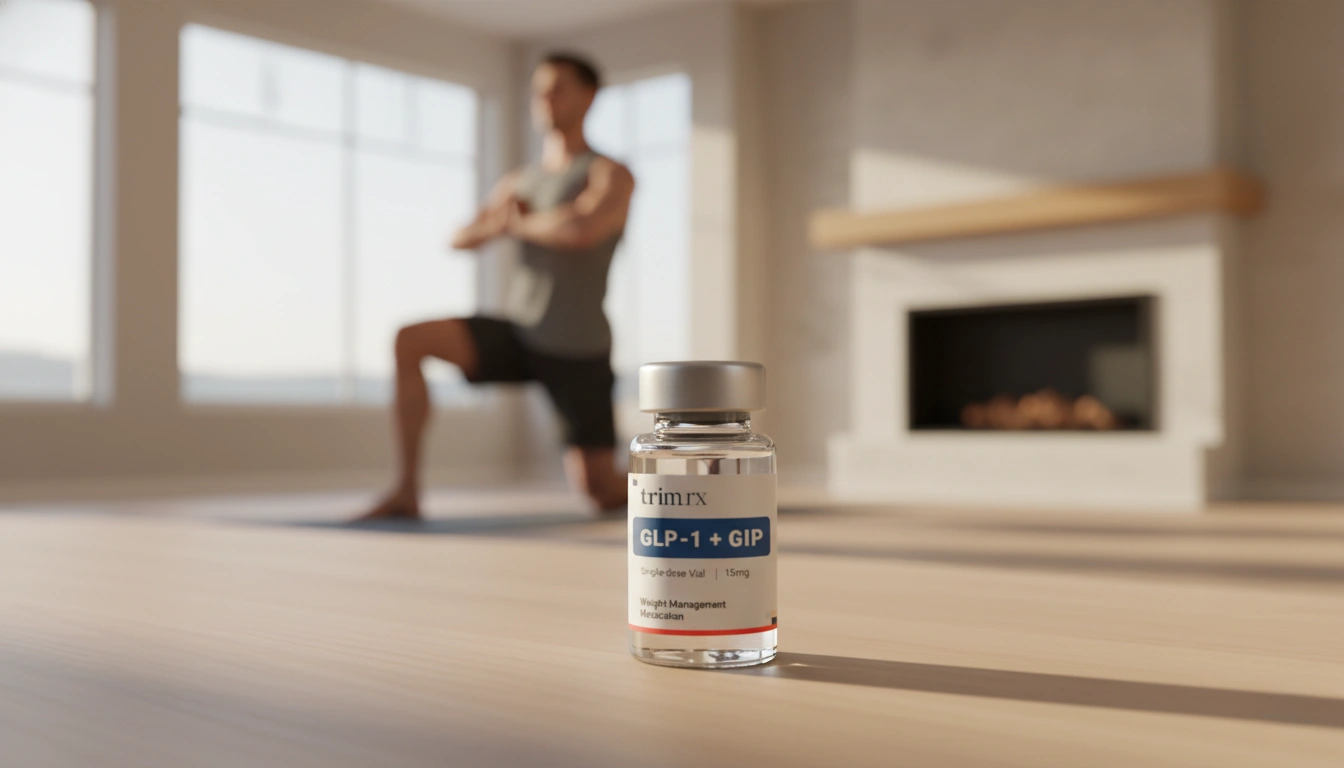
Bodybuilders and serious lifters approach weight loss differently than most people. Where a general patient might be satisfied losing 20 pounds regardless of composition, a bodybuilder wants to know exactly how much of that was fat versus muscle. They want to protect their training investment. They want to come out of a cut leaner, not just lighter. So when GLP-1 medications entered the mainstream conversation about weight loss, the bodybuilding community had sharper, more specific questions than most. Can you use semaglutide or tirzepatide during a cut without sacrificing muscle? What does the research actually show about lean mass loss? And what does smart protocol design look like for someone who trains seriously?
The Muscle Loss Problem With GLP-1 Medications
Let’s start with the honest version of this. GLP-1 medications are not muscle-sparing medications by design. They produce weight loss through appetite suppression and caloric reduction, and any significant caloric deficit carries some risk of lean mass loss alongside fat loss.
The clinical trial data on semaglutide (the STEP trials) showed that participants lost approximately 33 to 40 percent of their total weight loss from lean mass rather than fat mass. That’s meaningful. For someone losing 30 pounds, that could represent 10 to 12 pounds of muscle alongside 18 to 20 pounds of fat. For a general patient, that ratio may be acceptable. For a bodybuilder who has spent years building that muscle, it’s a significant concern.
The critical context, however, is that the STEP trials were conducted in sedentary or minimally active participants eating standard diets without specific protein targets. These conditions are about as far from a structured bodybuilder’s approach as possible. When protein intake is optimized and resistance training is maintained, the lean mass loss picture looks considerably different.
What Actually Determines Lean Mass Retention
Two variables dominate the lean mass retention equation during GLP-1-assisted weight loss: protein intake and resistance training stimulus. Neither is surprising to anyone with a serious training background, but both require active management when appetite is pharmacologically suppressed.
Resistance training sends a direct anabolic signal to muscle tissue that instructs the body to preserve it even during caloric restriction. This signal is mediated through mTOR pathway activation, mechanical tension on muscle fibers, and metabolic stress. Maintaining training frequency, volume, and intensity during a GLP-1 cut is the single most important thing a bodybuilder can do to protect lean mass. Reducing training because appetite suppression makes energy feel lower is a common mistake that accelerates the muscle loss it’s meant to prevent.
Protein intake is the nutritional counterpart. Muscle protein synthesis requires amino acid availability, and a caloric deficit created by GLP-1 appetite suppression that also reduces protein intake creates a double threat to lean mass. The research on protein requirements during caloric restriction consistently points to higher intakes than standard recommendations, in the range of 1.8 to 2.4 grams per kilogram of body weight for active individuals trying to preserve muscle.
A 2021 study published in Obesity found that adding structured resistance training to GLP-1 receptor agonist treatment significantly attenuated lean mass loss compared to medication alone, with the exercise group preserving approximately 93 percent of their lean mass versus 78 percent in the medication-only group (Lundgren JR et al., Obesity, 2021, https://onlinelibrary.wiley.com/doi/10.1002/oby.23374).
Designing a GLP-1 Cut for Bodybuilders
If you’re going to use compounded semaglutide or a similar medication during a cutting phase, the protocol needs to reflect your training goals, not just generic weight loss guidance.
Protein Targets Are Non-Negotiable
When GLP-1 appetite suppression reduces your desire to eat, protein is the last thing to cut. Build every meal around a protein anchor first, fill in fats and carbohydrates around it, and use protein-dense lower-volume foods when appetite is limited. Eggs, Greek yogurt, cottage cheese, lean meats, fish, and casein protein are all efficient ways to hit high protein targets without requiring large food volumes.
Many bodybuilders find that protein shakes become more useful during GLP-1 treatment not because they’re special but because liquid calories are easier to consume when appetite is blunted. A shake with 40-50 grams of protein is achievable even when solid food feels unappealing.
Caloric Deficit Depth Matters
Aggressive caloric deficits accelerate lean mass loss regardless of medication status. On GLP-1 medications, appetite suppression can easily push intake far lower than intended. A deficit of 300-500 calories per day produces steady fat loss with manageable lean mass impact. A deficit of 800-1,000 calories or more, which can happen unintentionally when medication crushes appetite, shifts the composition of weight loss unfavorably toward muscle.
Tracking food intake, at least during the early months of GLP-1 treatment, gives bodybuilders the data they need to ensure the deficit is controlled rather than inadvertent.
Training Volume and Intensity
The temptation during a pharmacologically assisted cut is to reduce training volume because energy feels lower. Resist this. The training stimulus is what signals muscle preservation. If anything, maintaining or slightly increasing training frequency while modestly reducing volume per session (to manage recovery on lower calories) is a more muscle-protective approach than reducing frequency.
Compound movements that recruit large muscle groups (squats, deadlifts, rows, presses) produce the strongest anabolic stimulus and should remain the foundation of training during a GLP-1 cut. Isolation work can be reduced if necessary, but compound movements deserve priority.
Creatine Supplementation
Creatine monohydrate is one of the most well-researched supplements available, and its benefits for strength and lean mass preservation during caloric restriction are well-established. It’s inexpensive, safe, and directly relevant to the goal of preserving muscle during a GLP-1-assisted cut. If you’re not already using it, a GLP-1 cutting phase is a reasonable time to add it.
Tirzepatide vs. Semaglutide for Bodybuilders
The choice between medications matters for bodybuilders in a specific way. Compounded tirzepatide produces greater average weight loss than semaglutide, which sounds appealing from a fat loss perspective. But greater appetite suppression also means a higher risk of inadvertent severe caloric restriction and lean mass loss if intake isn’t carefully managed.
Bodybuilders who are meticulous about nutrition tracking may find tirzepatide’s superior fat loss worth the more demanding nutritional management it requires. Those who prefer a more moderate approach may find semaglutide’s somewhat less aggressive appetite suppression easier to work with while maintaining training quality.
If you’ve been on semaglutide and are considering whether tirzepatide might offer better body composition results, the semaglutide to tirzepatide switching guide covers what the transition looks like and what to expect.
Recomposition vs. Pure Cutting
One question bodybuilders raise is whether GLP-1 medications can support body recomposition (simultaneous fat loss and muscle gain) rather than a traditional cut. True recomposition is possible but generally limited to specific populations, primarily those who are newer to training, returning after a layoff, or carrying significant excess fat alongside meaningful muscle.
For advanced trainees at or near their genetic ceiling for muscle mass, GLP-1 medications are better framed as fat loss tools during a cut rather than recomposition tools. The caloric deficit they create isn’t conducive to net muscle gain, even with optimal protein and training. Using them to get leaner, then transitioning to a maintenance or slight surplus for muscle building, is a more realistic framework.
The Longer Arc: Maintenance After a GLP-1 Cut
What happens after you’ve used GLP-1 medication to reach your target body composition? For bodybuilders, the transition to maintenance requires deliberate attention. As appetite suppression eases (either because the medication is discontinued or because a maintenance dose is established), caloric intake needs to be managed to avoid rapid regain while also providing enough energy to support training adaptation.
For patients thinking through long-term use, tirzepatide long-term use research and how long you can take semaglutide both address what extended treatment looks like beyond the initial cutting phase.
Starting the Conversation With a Provider
GLP-1 medications require a prescription, and the consultation process is an opportunity to be specific about your training goals and body composition priorities. A provider who understands your context can help with appropriate dosing, timing, and monitoring that accounts for your activity level and nutritional demands.
Start your assessment here to explore whether GLP-1 treatment through TrimRx fits your goals.
This information is for educational purposes and is not medical advice. Consult with a healthcare provider before starting any medication. Individual results may vary.

Transforming Lives, One Step at a Time
Keep reading
Vegan and GLP-1: Meeting Your Protein Needs Without Animal Products
Going vegan while on a GLP-1 medication is entirely doable, but it requires more nutritional intentionality than either approach demands on its own. Semaglutide…
GLP-1 and Intermittent Fasting: Does the Double Approach Work?
Intermittent fasting has spent the better part of a decade as one of the more popular dietary strategies for weight loss, and for good…

Chronic Fatigue and Weight: What GLP-1 Medications Can (and Can’t) Do
Fatigue is one of the most common complaints providers hear from patients carrying excess weight, and one of the most frustrating to address. It’s…


