GLP-1 Medications After Menopause: What Ozempic Does To A Postmenopausal Body
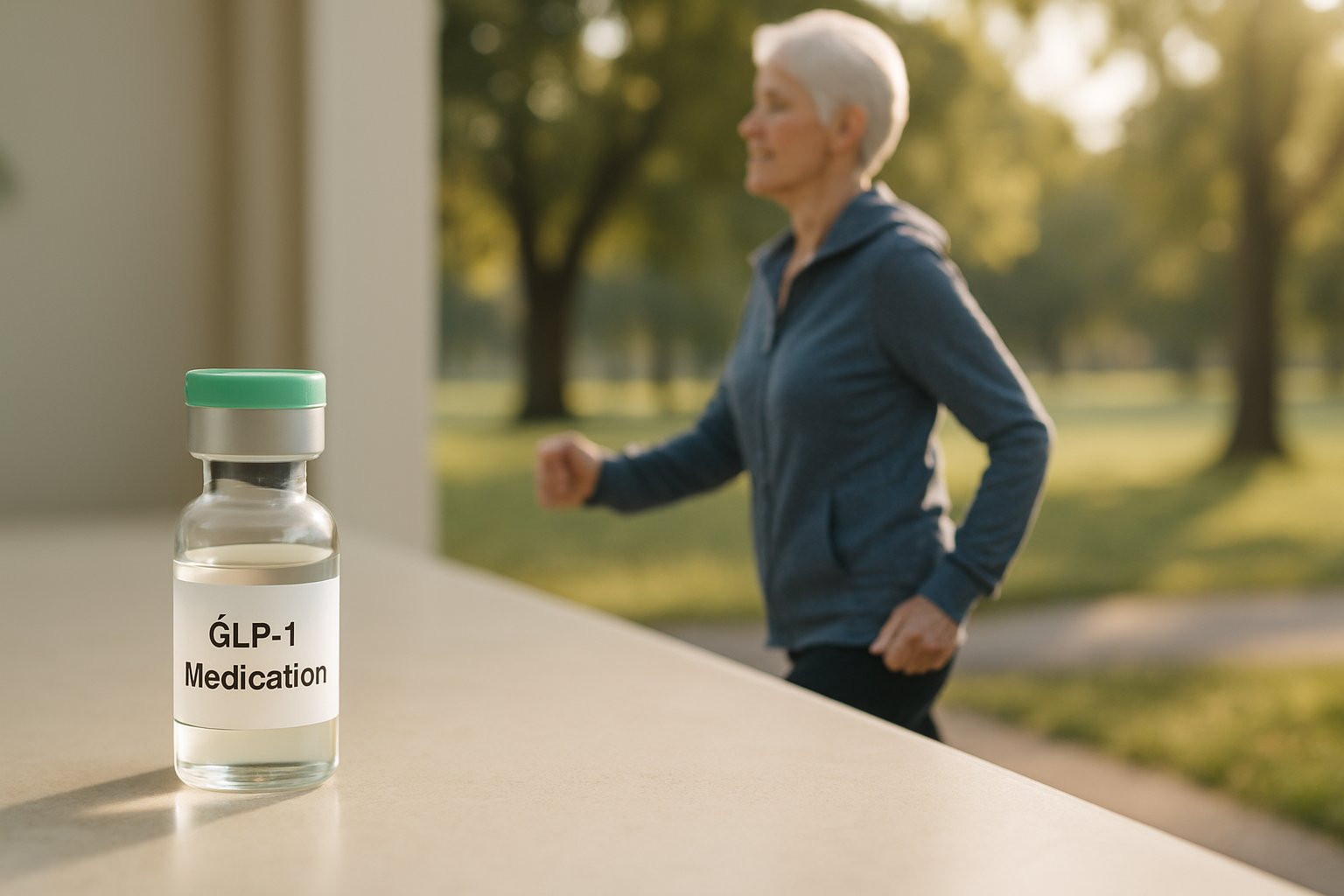
Postmenopause represents a distinct metabolic state, not simply an extension of perimenopause or a continuation of premenopausal biology at a lower hormone level. Once the menstrual cycle has stopped for 12 consecutive months and estrogen production from the ovaries has largely ceased, the body settles into a new hormonal baseline that has specific and predictable effects on weight regulation, fat distribution, insulin sensitivity, and cardiovascular risk. GLP-1 medications enter this context as powerful tools, but understanding what they’re working with and against after menopause makes treatment outcomes more predictable and less frustrating.
The Postmenopausal Metabolic Environment
The hormonal changes of menopause don’t stop after the transition is complete. They settle into a new steady state that differs from both premenopausal and perimenopausal biology in important ways.
Estrogen levels after menopause are not zero, but they are dramatically lower than during reproductive years, and what estrogen remains is produced primarily by adipose tissue through aromatase conversion rather than by the ovaries. This creates an interesting dynamic: postmenopausal women with more body fat actually produce slightly more estrogen through this peripheral pathway than those with less, which has implications for how the body resists fat loss and for hormone-sensitive health considerations.
The absence of ovarian estrogen production removes the metabolic protection that estrogen provided during reproductive years. Insulin sensitivity is lower in postmenopausal women than in premenopausal women of the same weight, which means blood sugar regulation is less efficient and fat storage is more readily triggered by the same dietary inputs. Resting metabolic rate is lower, driven by the muscle loss that accelerates without estrogen’s mild anabolic support and by age-related changes in cellular energy use. Visceral fat accumulation continues and often accelerates in the years immediately following menopause, even in women whose total weight has been relatively stable.
Cardiovascular risk increases meaningfully after menopause as estrogen’s protective effects on lipid profiles, blood vessel function, and inflammatory markers are removed. LDL cholesterol tends to rise, HDL may fall, triglycerides often increase, and blood pressure tends to worsen in the postmenopausal years. These changes make the cardiovascular benefits of GLP-1 medications more directly relevant in this population than at earlier life stages.
What GLP-1 Medications Do in a Postmenopausal Body
The mechanisms of semaglutide and tirzepatide don’t change after menopause. What changes is the environment those mechanisms are working within, and that environmental shift affects both the magnitude and the character of treatment outcomes.
GLP-1 receptor activation suppresses appetite and slows gastric emptying regardless of hormonal status. Tirzepatide’s additional GIP receptor activation improves insulin sensitivity through a complementary pathway. Both of these mechanisms address core features of the postmenopausal metabolic environment: the worsened insulin sensitivity, the tendency toward visceral fat accumulation, and the increased cardiovascular risk markers.
The appetite suppression from GLP-1 medications is particularly valuable in postmenopausal women because lower resting metabolic rate means that maintaining or achieving a healthy weight requires eating less, and eating less without appetite suppression is genuinely harder than it sounds. The medication creates the physiological conditions under which eating less feels manageable rather than a constant battle against hunger.
Visceral fat reduction, which both semaglutide and tirzepatide produce preferentially, directly addresses the postmenopausal fat redistribution pattern. As visceral fat decreases, insulin sensitivity often improves, inflammatory markers tend to normalize, and cardiovascular risk markers frequently improve alongside the weight loss. For postmenopausal women whose health concerns extend well beyond aesthetics to genuine metabolic disease risk, these secondary benefits of GLP-1 treatment are often as meaningful as the weight loss itself.
How Results Differ From Perimenopause
The previous article on GLP-1 medications and perimenopause covered the specific challenges of treating weight during the hormonal volatility of the menopause transition. Postmenopause presents a different clinical picture in several respects.
The erratic hormonal fluctuations that cause such confusing weight variability during perimenopause are largely absent after menopause. Estrogen levels are low and relatively stable rather than unpredictably surging and falling. This means the day-to-day and week-to-week weight fluctuations driven by hormonal water retention are significantly less pronounced after menopause than during the transition. Weight loss trajectories on GLP-1 medications tend to be more linear and predictable for postmenopausal women than for those in perimenopause, which makes monitoring and progress assessment more straightforward.
What postmenopausal women do face is a lower ceiling on metabolic rate than perimenopausal women, meaning the absolute pace of weight loss may be somewhat slower even though the trajectory is more consistent. Lower resting energy expenditure means the caloric deficit created by appetite suppression produces fewer pounds lost per week than the same deficit would in a younger or perimenopausal patient. Expecting the weight loss rate of a 45-year-old in active perimenopause when you’re a 62-year-old five years past menopause sets up unnecessary disappointment. The clinically meaningful comparison is to your own metabolic baseline, not to younger patients.
The Muscle and Bone Priority After Menopause
Muscle loss and bone density loss are both more significant concerns after menopause than before, and both deserve more deliberate attention during GLP-1 treatment than standard guidance typically emphasizes.
Sarcopenia, the age-related loss of muscle mass and strength, accelerates after menopause without estrogen’s contribution to muscle protein synthesis. GLP-1 medications drive meaningful caloric restriction, which creates additional pressure on muscle mass in a body that is already losing muscle at an accelerated rate. The combination, if not actively countered, can produce weight loss that is disproportionately muscle rather than fat, with consequences for resting metabolic rate, functional capacity, and long-term weight maintenance.
Resistance training is the most effective available countermeasure and should be treated as a clinical priority rather than an optional add-on to GLP-1 treatment for postmenopausal women. Two to three sessions per week targeting major muscle groups, at whatever intensity is appropriate for individual health status and physical capacity, preserves lean mass during weight loss in a way that no dietary strategy alone can replicate. The article on strength training on ozempic covers the relevant principles in detail.
Bone density loss accompanies both the postmenopausal hormonal shift and rapid weight loss of any cause. Postmenopausal women on GLP-1 medications are therefore at compounding risk for bone mineral density reduction. Adequate calcium and vitamin D intake is essential throughout treatment, and for women who were not already taking these supplements, starting them at the beginning of GLP-1 treatment rather than waiting is the appropriate approach. Weight-bearing exercise, including both resistance training and walking, supports bone density through mechanical loading in ways that non-weight-bearing activities don’t.
For women with established osteoporosis or significantly reduced bone density at baseline, a conversation with a provider about bone density monitoring during GLP-1 treatment is warranted rather than assumed to be covered by standard monitoring protocols.
Cardiovascular Benefits as a Primary Treatment Goal
For many postmenopausal women, the cardiovascular benefits of GLP-1 treatment are as important clinically as the weight loss, and framing treatment this way changes the success metrics in a useful direction.
The SELECT trial’s demonstration that semaglutide reduces major adverse cardiovascular events by 20 percent in patients with established cardiovascular disease and overweight or obesity is directly applicable to postmenopausal women, who face meaningfully higher cardiovascular risk than premenopausal women regardless of weight. The article on the SELECT trial covers this landmark finding in detail.
Improvements in LDL cholesterol, triglycerides, blood pressure, and inflammatory markers that accompany GLP-1 treatment represent real reductions in cardiovascular risk that are measurable through lab work and clinical monitoring. Tracking these markers alongside weight gives a more complete picture of treatment benefit than scale weight alone, and for postmenopausal women whose cardiovascular risk has genuinely increased with hormone loss, these improvements are clinically meaningful outcomes in their own right.
HRT and GLP-1: Managing Both Simultaneously
Many postmenopausal women are on hormone replacement therapy when they start GLP-1 treatment, and the interaction between these two therapeutic approaches is worth understanding.
HRT partially replaces the estrogen lost at menopause, which restores some degree of insulin sensitivity improvement, reduces visceral fat accumulation somewhat, and provides cardiovascular and bone protective effects. Women on HRT at the time they start GLP-1 treatment have a somewhat more favorable metabolic baseline than those not on HRT, which can translate into modestly better treatment outcomes.
There is no established direct pharmacokinetic interaction between HRT formulations and semaglutide or tirzepatide. The medications work through different mechanisms and don’t interfere with each other’s efficacy in ways that current evidence supports as clinically significant. The combination is generally considered safe, though as always, your prescribing provider should be aware of your full medication list before starting any new treatment.
For women considering starting HRT at the same time as GLP-1 treatment, a coordinated approach with both a menopause specialist and a GLP-1 provider produces more coherent clinical management than treating each separately. The timing of HRT initiation relative to GLP-1 treatment is less important than ensuring both decisions are made with full awareness of the other.
Mood, Cognition, and the Postmenopausal Brain
Postmenopause is associated with mood changes, cognitive shifts, and memory concerns that have biological roots in estrogen’s effects on neurotransmitter function and brain metabolism. GLP-1 medications have their own effects on mood and potentially on cognitive health, and the two intersect in ways worth knowing about.
On the mood side, weight loss and reduced food preoccupation from GLP-1 treatment tend to produce positive mood effects for most patients. The self-image improvements that accompany significant weight loss, combined with the energy improvements from reduced metabolic burden, often produce psychological uplift that partially offsets the mood challenges of postmenopause. Some patients describe GLP-1 treatment as improving their emotional relationship with food in ways that reduce the anxiety and guilt associated with eating, which has particular resonance for women who have been managing weight for decades.
On the cognitive side, the emerging research on GLP-1 medications and brain health is discussed in the article on ozempic for alzheimer’s prevention. While the evidence is early, the possibility that GLP-1 receptor activation may offer neuroprotective effects is particularly relevant for postmenopausal women who are entering the age range where dementia risk begins to increase meaningfully. This is not a reason to start GLP-1 medications for cognitive protection alone, but for women who are already clinically eligible based on weight and metabolic criteria, it adds meaningful context to the overall benefit picture.
Practical Guidance for Starting GLP-1 Treatment After Menopause
A few practical emphases are worth making for postmenopausal women specifically.
Set expectations around pace rather than absolute numbers. Weight loss after menopause on GLP-1 medications is meaningful and real, but it is generally somewhat slower than in younger patients. Using monthly waist circumference measurements alongside weekly weight tracking gives a more complete picture of fat loss that the scale alone may underrepresent.
Prioritize labs at baseline and follow-up. Lipid panel, fasting glucose, HbA1c, bone density if not recently assessed, kidney function, and thyroid function are all relevant baseline assessments for postmenopausal women starting GLP-1 treatment. Hypothyroidism is more common in postmenopausal women than in younger populations and significantly worsens weight management if untreated. The article on ozempic and hypothyroidism covers this interaction in detail.
Approach exercise with muscle and bone in mind from the beginning. Establishing resistance training early in treatment, while motivation is high and appetite suppression makes the physical demands of exercise more manageable, is significantly easier than trying to establish it after weight loss has plateaued or after muscle loss has already occurred.
If you’re postmenopausal and considering GLP-1 treatment, take the TrimRx intake quiz to find out whether you’re a candidate for compounded semaglutide or tirzepatide. Clinical support is available throughout your treatment to help you navigate the specific metabolic context of postmenopause.
This information is for educational purposes and is not medical advice. Consult with a healthcare provider before starting any medication. Individual results may vary.

Transforming Lives, One Step at a Time
Keep reading

How Long Should You Wait to Exercise After a Semaglutide Injection?
A few minutes, and only so the puncture closes. There is no meaningful waiting period, and the question people should be asking is not…

Can You Inject Semaglutide Before a Workout?
Yes, and there is one small habit that removes the only genuine consideration: inject into your abdomen rather than into a limb you are…

Can You Use a Sauna After a Semaglutide Injection?
Yes. The concern you may have read about comes from research on insulin, and specifically on the fast-acting kind, which behaves very differently from…


