GLP-1 Medications and Sleep Quality: What Patients Report
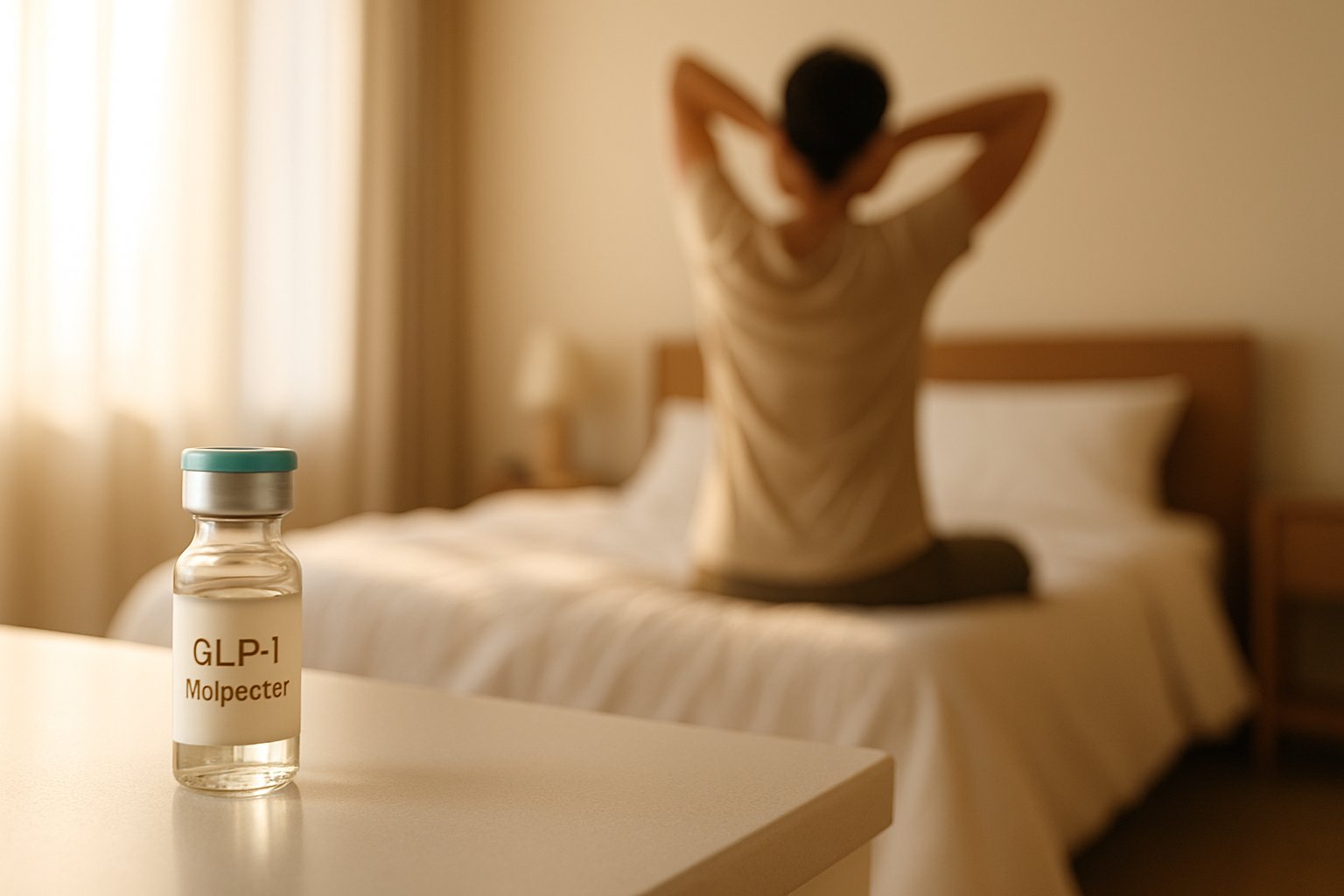
Sleep and weight are deeply connected, and most people starting a GLP-1 medication are already dealing with some degree of sleep disruption. Whether that’s sleep apnea, poor sleep from carrying extra weight, or the fatigue that comes with metabolic dysregulation, the baseline isn’t always great. So when patients ask how semaglutide or tirzepatide affects sleep, the answer is genuinely layered: it depends on where you’re starting from, what’s driving your sleep issues, and how far into treatment you are.
Here’s what the research shows and what patients actually report.
The Weight-Sleep Connection
Before getting into medication-specific effects, it’s worth understanding how weight itself disrupts sleep. Excess weight, particularly around the neck and abdomen, increases the likelihood of obstructive sleep apnea, a condition where the airway partially collapses during sleep, causing repeated arousals that fragment sleep architecture without the person always waking fully. It also increases the physical discomfort of lying down, raises core body temperature, and contributes to acid reflux, all of which reduce sleep quality.
Metabolic dysregulation associated with obesity also affects hormones that govern sleep. Leptin resistance, elevated cortisol, and insulin dysregulation all interfere with the normal hormonal rhythms that promote deep, restorative sleep. So patients with obesity are often dealing with multiple simultaneous sleep disruptors before they ever take a GLP-1 medication.
This context matters because a significant portion of the sleep improvements patients report on GLP-1 medications are downstream effects of weight loss rather than direct effects of the medication on sleep architecture.
What Patients Report: The Improvements
The most consistently reported sleep change on GLP-1 medications is improvement, particularly in patients who had weight-related sleep disruption before treatment.
Patients with obstructive sleep apnea frequently report fewer nighttime arousals, less snoring, and more refreshing sleep as weight comes off. This is well-supported by clinical data. The SURMOUNT-OSA trial, which examined tirzepatide in patients with obesity and obstructive sleep apnea, found significant reductions in apnea-hypopnea index scores, the standard measure of sleep apnea severity, with meaningful improvements in sleep quality reported by patients alongside the objective improvements.
The article on tirzepatide and sleep apnea covers that trial data in detail. The short version is that for patients whose sleep apnea is driven primarily by weight, GLP-1 medications can produce meaningful improvements in sleep quality that show up relatively early in treatment.
Beyond sleep apnea, patients report improvements in sleep comfort as weight comes off. Less pressure on joints during sleep, reduced acid reflux, and lower nighttime body temperature all contribute to a better sleep environment that many patients describe as feeling qualitatively different from how they slept before treatment.
What Patients Report: The Disruptions
Not all sleep-related reports on GLP-1 medications are positive, particularly in the early weeks of treatment.
Nausea is the most common culprit. Patients who experience significant GI symptoms in the first four to eight weeks frequently report difficulty sleeping on injection nights or the night after. Lying down when nauseated worsens symptoms, and the discomfort can make it hard to fall or stay asleep. This tends to resolve as the body adjusts and as the dose escalation period stabilizes.
Vivid dreams are another commonly reported experience. A subset of patients on semaglutide and tirzepatide describe unusually vivid, sometimes unsettling dreams that they didn’t experience before starting treatment. The mechanism isn’t fully understood. GLP-1 receptors in the brain may influence REM sleep dynamics, or the change in eating patterns and caloric intake may affect neurotransmitter availability in ways that alter dream content and intensity. For most patients, this is more strange than distressing, and it tends to diminish over time.
Some patients also report initial difficulty falling asleep in the early weeks, which may connect to changes in appetite hormones that affect the circadian rhythm. Ghrelin, the hunger hormone that GLP-1 medications suppress, also plays a role in sleep-wake regulation. Disrupting its normal pattern can temporarily affect sleep onset for some patients.
The Caloric Intake Factor
Here’s a sleep disruptor that often goes unrecognized: eating too little. When appetite suppression is aggressive in the early months of GLP-1 treatment, some patients significantly undershoot their caloric needs without intending to. Inadequate caloric and carbohydrate intake can disrupt sleep by affecting serotonin and melatonin production, both of which depend on dietary tryptophan.
Consider this scenario: a patient four weeks into compounded semaglutide is sleeping worse than before they started, despite losing weight. They’re waking at 3am and can’t fall back to sleep. A review of their food log shows they’ve been eating fewer than 800 calories daily, with minimal carbohydrates. Their provider recommends increasing overall intake and ensuring some complex carbohydrates are included with dinner. Within ten days, the early morning waking resolves.
That pattern is more common than most patients expect. If sleep is worsening on GLP-1 treatment rather than improving, inadequate nutrition is one of the first variables worth examining. The article on GLP-1 medications and energy levels covers the overlapping effects of under-eating on both energy and recovery.
GLP-1 Medications and Sleep Apnea: The Direct Evidence
A 2024 study published in the New England Journal of Medicine examined tirzepatide’s effects on obstructive sleep apnea in adults with obesity and found that patients receiving tirzepatide experienced significantly greater reductions in apnea-hypopnea index scores compared to placebo, with roughly half of patients in the tirzepatide group achieving disease remission criteria at 52 weeks. Patient-reported sleep quality scores improved in parallel with the objective measurements.
(Malhotra A, et al. “Tirzepatide for the Treatment of Obstructive Sleep Apnea and Obesity.” New England Journal of Medicine, 2024. https://pubmed.ncbi.nlm.nih.gov/38912654/)
This is some of the strongest direct evidence that GLP-1 class medications can meaningfully improve sleep outcomes, at least for patients whose sleep disruption is driven by weight-related apnea. Whether similar effects extend to patients without sleep apnea is less clear from current data.
Practical Strategies for Sleep During GLP-1 Treatment
A few approaches that help patients navigate sleep changes during treatment:
Timing your injection thoughtfully matters if GI symptoms are affecting sleep. Many patients find that injecting on a day when sleep disruption is more tolerable, or injecting in the morning rather than the evening, reduces the impact of nausea on nighttime rest. Discuss any changes to your injection schedule with your provider before adjusting.
Keeping dinner light but not absent helps. Skipping dinner entirely because appetite is low can backfire on sleep quality. A small, protein-focused meal with some complex carbohydrates a few hours before bed supports the neurotransmitter pathways involved in sleep without overloading a slowed digestive system.
Managing the vivid dream experience is partly about expectation. Patients who know vivid dreams are a possibility on GLP-1 medications report finding them less distressing than those who are caught off guard. If dreams are genuinely disturbing your sleep rather than just being strange, mention it to your provider.
Tracking sleep alongside other treatment metrics gives you data to work with. If sleep is getting worse rather than better after the first two months of treatment, that’s a signal worth investigating with your clinical team rather than pushing through.
The Long-Term Picture
For most patients, sleep quality trends upward over the course of GLP-1 treatment as weight loss accumulates, GI symptoms resolve, and metabolic markers improve. The early weeks are the most variable period, with nausea, dose adjustment, and rapid dietary change all in play simultaneously.
Patients who enter treatment with significant sleep apnea often see the most dramatic improvements. Those without weight-related sleep disruption may notice subtler changes, or primarily just the resolution of the GI-related sleep disruptions from early treatment.
Either way, sleep is worth paying attention to as an outcome during GLP-1 treatment, not just as a side note. Poor sleep drives hunger, undermines metabolic health, and makes the behavioral side of weight management harder. Supporting sleep quality during treatment isn’t separate from supporting weight loss. It’s part of the same picture.
If you’re ready to explore GLP-1 treatment with a clinical team that considers your full health picture, the intake assessment is where to start.
This information is for educational purposes and is not medical advice. Consult with a healthcare provider before starting any medication. Individual results may vary.

Transforming Lives, One Step at a Time
Keep reading
A History of Disordered Eating and Starting a GLP-1: Building Support
The honest answer to what you should watch for is that self-monitoring is not the right tool here, and this article is not going…
What Labs Should Your Doctor Run Now That You’re on a GLP-1?
There is no universal panel, and anyone handing you a fixed list is guessing about your situation. What gets checked depends on what conditions…

Can’t Eat Enough Protein on a GLP-1? Why It Matters and What Helps
This is one of the most common difficulties on these medications, and the tension in your question is real: protein is the thing most…


