GLP-1 for Empty Nesters: Recalibrating Meals for Two
Introduction
The empty nest is one of the most underrated windows for weight loss, and GLP-1 medication fits it unusually well. Your appetite shrinks on the medication at the same moment your household shrinks, your schedule frees up, and decades of kid-driven food habits (bulk cooking, snack cabinets, finishing plates) finally become optional. Most people in this stage are between 45 and 60, which is also when age-related muscle loss and hormonal shifts make weight harder to manage alone.
The catch is that nobody teaches you to cook for two again. After 18 or 25 years of family-scale grocery runs, most couples keep buying and cooking like the kids still live there. The food doesn’t disappear. It gets eaten, usually by you.
This guide covers how to use a GLP-1 program during the empty nest transition: recalibrating portions, protecting muscle through midlife, handling the emotional side of a quieter kitchen, and making the new routine stick.
At TrimRx, we think this stage of life deserves a plan built around you, not what’s left of the family schedule. Take the free assessment quiz if you’d like to see whether a personalized program is a fit.
At TrimRx, we believe that understanding your options is the first step toward a more manageable health journey. You can take the free assessment quiz if you’re ready to see whether a personalized program is a fit for you.
Why Is the Empty Nest a Smart Time to Start a GLP-1?
Because the timing lines up on three fronts. First, biology: adults gain an average of 1 to 2 pounds per year through midlife, and muscle mass declines roughly 3 to 8% per decade after 30, accelerating after 60. Intervening in your 50s beats intervening in your 70s. Second, logistics: no school schedules, fewer giant grocery hauls, more control over what enters the house. Third, motivation: many empty nesters describe this as the first time in decades they’ve had bandwidth for their own health.
Quick Answer: The empty nest years (typically ages 45 to 60) overlap with the life stage where metabolism-related weight gain peaks, making this a common and sensible time to start GLP-1 treatment.
The clinical data supports the demographic too. STEP 1 (Wilding 2021, NEJM) enrolled participants with a mean age of 46 and produced 14.9% average weight loss on semaglutide 2.4 mg at 68 weeks. These trials were largely run on people in exactly this life stage.
What Happens to Eating Habits When the Kids Leave?
Three patterns show up again and again. Portion inertia: you keep cooking six servings and eat the extras across the week. Snack ghost towns: the pantry still holds kid food you now eat yourself. And schedule collapse: without a family dinner time, meals drift into grazing.
There’s an emotional layer too. For a lot of parents, feeding people was love made visible for two decades. A quiet table can push people toward comfort eating or, in some cases, toward skipping meals entirely because “it’s just us.”
A GLP-1 interrupts the grazing and comfort-eating loops chemically. But the household systems (shopping lists, recipe sizes, meal times) still need a manual reset, and that’s where most of this article lives.
How Do You Actually Recalibrate Cooking for Two?
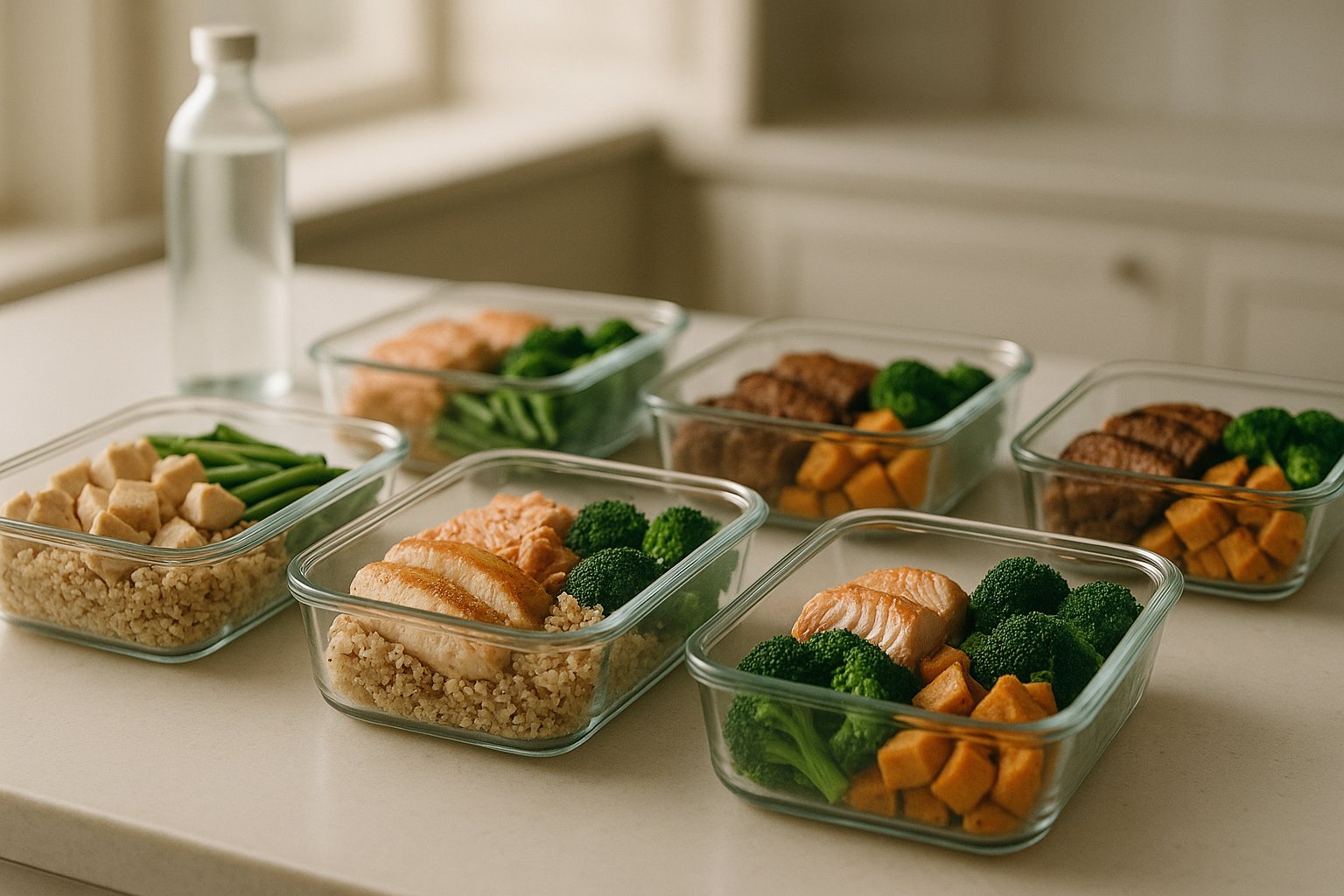
Start with the math. A family of four or five recipe serves 4 to 6. On a GLP-1, two adults often eat what one teenager used to. So either halve recipes or deliberately cook once for two dinners, portioned and refrigerated immediately so leftovers are planned, not lying around.
Practical resets that work:
- Buy a food scale and re-learn what 4 oz of chicken looks like. Portion creep from the family years is real.
- Shop from a two-person list, twice a week, instead of one giant weekly haul. Less food in the house means less food eaten by default.
- Downsize the cookware. A 10-inch skillet instead of a 14-inch one quietly fixes recipe scale.
- Retire the “kid shelf” in the pantry. Donate the unopened stuff.
On GLP-1 medication, your stomach empties more slowly and fullness arrives early. Smaller cooking quantities stop feeling like deprivation and start feeling accurate.
How Much Protein Do Empty Nesters Need on a GLP-1?
More than you think: about 25 to 30 g per meal, or roughly 1.2 to 1.6 g per kg of body weight daily for adults over 50 who are losing weight. Research on sarcopenia consistently shows older adults need more protein per meal than younger adults to trigger the same muscle-building response, a phenomenon called anabolic resistance.
This matters because rapid weight loss without enough protein and resistance exercise costs you lean mass, and in your 50s that lean mass is harder to rebuild. In GLP-1 trials, roughly 25 to 40% of weight lost can be lean mass when no countermeasures are taken.
The fix is boring and effective: protein anchors each meal (eggs, Greek yogurt, fish, chicken, cottage cheese, tofu), plus two or three strength sessions a week. Even bodyweight work counts.
What About Date Nights and Eating Out More Often?
Empty nesters eat out more. Restaurant spending typically rises once the kids leave, and on a GLP-1 that creates a specific problem: restaurant portions are built for pre-medication appetites. A typical entree runs 1,000 to 1,500 calories, two to three times what a GLP-1 user comfortably eats in a sitting.
The playbook is simple. Order an appetizer as your main, or split an entree, which also halves the bill. Eat the protein first, since fullness will arrive before you finish. Box half the meal before you start eating, not after. And skip the “we’re celebrating” dessert default; on these medications, heavy desserts late at night are the most common trigger for reflux and nausea.
None of this requires willpower in the old sense. The medication did the appetite work. You’re just matching the order to the new appetite.
Key Takeaway: In SURMOUNT-1 (Jastreboff 2022, NEJM), the average participant age was 45, right at the front edge of the empty nest window, and tirzepatide produced up to 20.9% weight loss at 72 weeks.
Does Menopause or Midlife Hormone Change Affect Results?
It affects the starting point more than the outcome. Menopause shifts fat storage toward the abdomen and costs roughly 0.5% of lean mass per year through the transition, which is part of why midlife weight feels different. The good news: GLP-1 trials included large numbers of postmenopausal women, and weight loss results were strong across age groups in both STEP and SURMOUNT programs.
For men, gradual testosterone decline through the 50s nudges body composition the same direction. Same answer: the medication works, and resistance training plus protein protects what matters.
If sleep disruption from menopause is wrecking your appetite signals, say so during your telehealth visits. Sleep is the quiet variable in midlife weight loss, and it’s treatable.
How Do Couples Handle It When Only One Partner Is on a GLP-1?
This comes up constantly. One partner’s appetite drops by half; the other still wants the Sunday roast. The friction is real but manageable.
What works: cook one protein and build different plates around it, with the non-medicated partner adding starch and larger portions. Keep shared meals but drop the expectation of matched portions. And talk about the grocery list openly, because the medicated partner often stops wanting foods the other still loves, and silent resentment over a changed kitchen is a genuinely common complaint in GLP-1 communities.
When both partners qualify and both want treatment, some couples do start together. Adherence data on couples programs in other health areas (smoking cessation, for example) shows quitting together roughly doubles success rates, and the same household-alignment logic applies here.
What Side Effects Should This Age Group Watch?
The usual GLP-1 side effects (nausea, constipation, fatigue during titration) apply at any age, but a few deserve extra attention after 50. Constipation is more common in midlife and worsens with low food volume, so fiber and fluids need deliberate attention. Muscle loss matters more, as covered above. And if you’re on blood pressure or diabetes medications, losing 15% of body weight often means those doses need adjusting downward, sometimes within months.
Bone density also deserves a mention. Significant weight loss can reduce bone mineral density modestly, so weight-bearing exercise pulls double duty here.
None of these are reasons to avoid treatment. They’re reasons to have a prescriber who checks in, adjusts doses, and coordinates with your other medications.
The Path Forward
The empty nest hands you something rare: a schedule, a kitchen, and a grocery cart that finally answer to you. A GLP-1 program matches your appetite to that smaller, simpler household, and the habits you set in the first six months tend to be the ones that hold.
TrimRx offers compounded semaglutide and tirzepatide programs with licensed providers, home delivery, and ongoing support, which suits this stage of life well. Start with the free assessment quiz, and build the next chapter around two plates instead of five.
Bottom line: Protein needs go up, not down, after 50. Aim for 25 to 30 g per meal to protect muscle while losing weight.
FAQ
Is It Too Late to Start a GLP-1 in Your 50s or 60s?
No. Major trials enrolled adults across this range, and SELECT (Lincoff 2023, NEJM) showed a 20% reduction in major cardiovascular events with semaglutide in adults with a mean age of 62. Older adults should pair treatment with protein and strength training to protect muscle, but age alone isn’t a barrier.
Will I Lose Weight Slower Than Someone Younger?
Slightly slower on average, mostly because of lower lean mass and activity levels, but the difference is modest. Trial subgroup analyses show meaningful weight loss across age bands. Consistency with dosing, protein, and movement predicts results far better than birth year does.
How Do I Stop Cooking Too Much Food Out of Habit?
Halve your recipes for one month and shop from a written two-person list. Downsizing cookware and containers helps more than willpower. Most couples report the habit resets within 4 to 6 weeks, especially once GLP-1 appetite suppression makes the old quantities feel obviously wrong.
Can My Spouse and I Both Use the Same Telehealth Program?
Yes, though each person needs their own evaluation, prescription, and account, since dosing is individualized. Couples starting together often find adherence easier because the household food environment changes once instead of twice.
What Should Empty Nesters Eat First at Meals on a GLP-1?
Protein first, vegetables second, starches last. Fullness arrives early on these medications, so sequencing makes sure the most important nutrients are eaten before the appetite shuts the meal down. This single habit protects muscle better than almost any supplement.
Does Drinking Wine with Dinner Interfere with the Medication?
There’s no direct interaction, but alcohol adds calories, worsens reflux and nausea for some users, and hits harder on a smaller stomach load. Many users naturally want less alcohol on GLP-1s. If you keep wine, keep it to one glass with food rather than on an empty stomach.
Disclaimer: This content is for informational purposes only and does not constitute medical advice. It is not intended to diagnose, treat, cure, or prevent any disease or condition. Individual results may vary. Always consult a qualified healthcare professional before starting any weight loss program or medication.

Transforming Lives, One Step at a Time
Keep reading

A History of Disordered Eating and Starting a GLP-1: Building Support
The honest answer to what you should watch for is that self-monitoring is not the right tool here, and this article is not going…
What Labs Should Your Doctor Run Now That You’re on a GLP-1?
There is no universal panel, and anyone handing you a fixed list is guessing about your situation. What gets checked depends on what conditions…
Can’t Eat Enough Protein on a GLP-1? Why It Matters and What Helps
This is one of the most common difficulties on these medications, and the tension in your question is real: protein is the thing most…


