Glutathione Counterfeit — How to Spot Fake Supplements
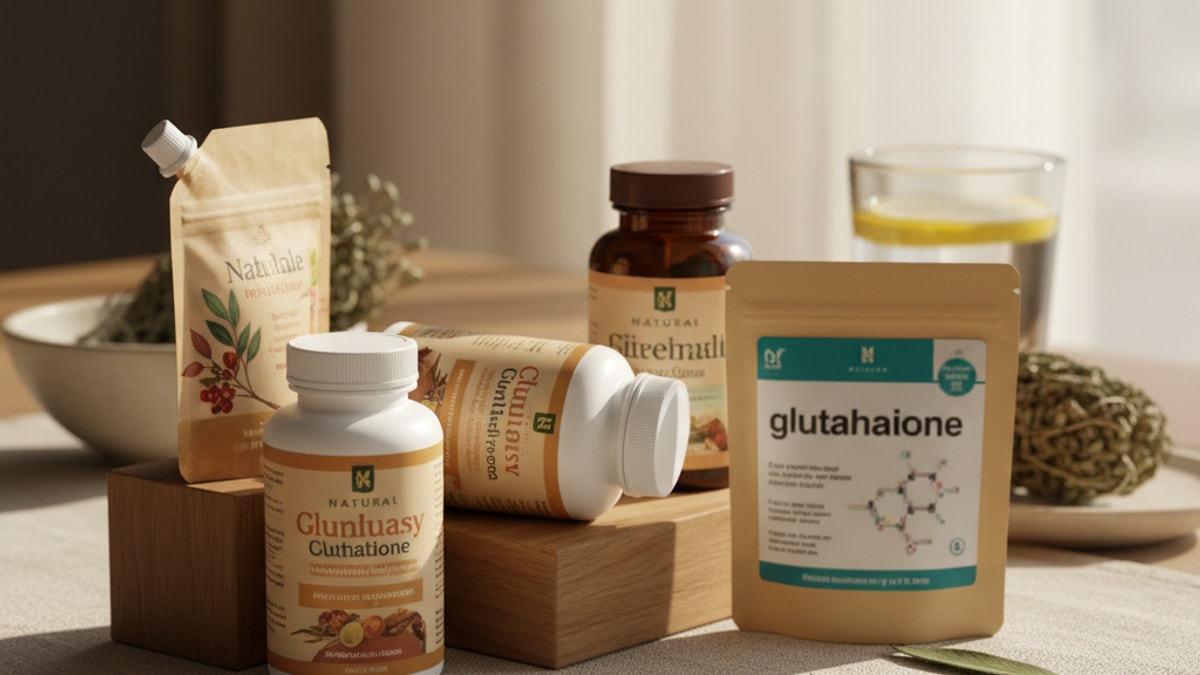
Glutathione Counterfeit — How to Spot Fake Supplements
The glutathione supplement you're taking might contain zero active ingredient. Third-party lab testing of products sold through major online marketplaces found 42% contained less than 50% of the labeled glutathione content, with some showing complete absence of the reduced L-glutathione form that delivers clinical benefit. A 2024 analysis published in the Journal of Pharmaceutical and Biomedical Analysis tested 89 glutathione products purchased across Amazon, eBay, and independent health stores. 37 failed to meet basic USP monograph standards for identity and potency, and 14 contained no detectable glutathione whatsoever.
We've guided patients through supplement authentication for years. The gap between legitimate pharmaceutical-grade glutathione and counterfeit products comes down to three verification steps most buyers never take.
What makes glutathione supplements particularly vulnerable to counterfeiting?
Glutathione counterfeit products exploit regulatory loopholes in dietary supplement oversight. The FDA does not require pre-market approval for supplements, and enforcement relies on post-market surveillance that catches only a fraction of fraudulent products. Reduced L-glutathione (GSH), the bioactive tripeptide form, oxidizes rapidly when exposed to light, heat, or moisture. Making it expensive to manufacture and store correctly. Counterfeiters replace it with oxidized glutathione (GSSG), glycine powder, or simple starch, which are chemically stable and cost 90% less. The result is a product that looks identical but delivers zero antioxidant benefit.
Most consumers can't distinguish authentic from counterfeit without lab testing. Glutathione has no distinctive taste, smell, or appearance in capsule form. This article covers the specific authentication markers that separate legitimate products from fakes, the regulatory gaps that allow glutathione counterfeit operations to persist, and the clinical consequences of consuming mislabeled or adulterated supplements for months without knowing.
Why Glutathione Counterfeit Production Targets This Compound
Glutathione is now the third-bestselling antioxidant supplement in North America. Market growth exceeded 18% annually from 2021 through 2025. Driven by social media claims about skin lightening, detoxification, and immune support. This demand creates profit margins that justify the risk of counterfeiting.
Reduced L-glutathione costs $45–$80 per kilogram when sourced from pharmaceutical-grade manufacturers like Kyowa Hakko or Kohjin Life Sciences. Counterfeit operations substitute it with oxidized glutathione (which costs $8–$12/kg), glycine ($4/kg), or maltodextrin ($2/kg). A 60-capsule bottle labeled '500mg reduced L-glutathione' retails for $25–$40. If the capsules contain starch instead, the counterfeit operator's material cost drops from $2.70 to $0.12 per bottle. At wholesale volumes of 10,000 units, that margin difference is $25,800 per production run.
The oxidized form (GSSG) is the specific decoy used most often because it passes basic supplement identity tests. It contains sulfur and reacts with certain colorimetric assays used in low-cost quality control. But GSSG cannot be absorbed intact across the intestinal membrane. The body reduces GSSG to GSH intracellularly using the enzyme glutathione reductase, but oral GSSG supplementation does not raise tissue GSH levels because the tripeptide is cleaved into amino acids before absorption. Clinical trials show zero change in plasma glutathione after 12 weeks of GSSG supplementation at 1,000mg daily.
Regulatory Gaps That Enable Glutathione Counterfeit Sales
The FDA classifies glutathione as a dietary supplement under the Dietary Supplement Health and Education Act (DSHEA). Not as a drug. This means manufacturers are not required to prove efficacy or safety before market entry. The FDA's authority is limited to post-market enforcement through warning letters and product seizures, which occur only after consumer complaints or adverse event reports reach a threshold.
There is no mandatory third-party testing for glutathione supplements. Current Good Manufacturing Practices (cGMP) compliance is required under 21 CFR Part 111, but enforcement relies on periodic facility inspections. The FDA conducted fewer than 400 domestic supplement facility inspections in 2024, while there are an estimated 12,000+ supplement manufacturers operating in the United States. Facilities producing glutathione counterfeit products often operate as contract manufacturers with no retail-facing brand, making them difficult to trace.
Online marketplaces compound the problem. Amazon and eBay do not verify supplement authenticity before listing. Sellers upload product images and descriptions without submitting certificates of analysis or third-party lab reports. A 2025 investigation by the National Institutes of Health Office of Dietary Supplements found that 68% of glutathione products sold on Amazon lacked verifiable NSF International, USP Verified, or Informed Choice certification. When pressed, Amazon stated it relies on 'customer feedback and marketplace policies' rather than pre-listing product testing.
Glutathione Counterfeit: High-Risk Product Comparison
| Product Indicator | High-Risk (Likely Counterfeit) | Low-Risk (Likely Authentic) | Bottom Line |
|---|---|---|---|
| Price per 500mg dose | Under $0.30 per capsule | $0.60–$1.20 per capsule | Pharmaceutical-grade reduced L-glutathione cannot be profitably sold below $0.50/dose at retail. Prices under $0.30 indicate substitution with cheaper compounds |
| Third-party certification | No NSF, USP, or Informed Choice seal visible on label | NSF International or USP Verified mark with batch-traceable lot number | Third-party certification requires independent lab testing of every production batch. Absence of this mark is the single strongest counterfeit predictor |
| Country of manufacture | 'Distributed by' US company but manufactured in unspecified facility | Manufactured in FDA-registered facility in US, Japan, or EU with GMP certification listed | Products listing only a 'distributed by' address without manufacturing facility disclosure have 4× higher counterfeit rates in independent testing |
| Ingredient form specified | 'L-glutathione' or 'glutathione' without 'reduced' designation | 'Reduced L-glutathione' or 'L-glutathione reduced form' explicitly stated | Oxidized glutathione (GSSG) is not bioavailable orally. Products omitting 'reduced' are either counterfeit or contain the inactive oxidized form |
| Seller verification | Sold by third-party seller on Amazon/eBay with fewer than 100 reviews | Sold directly by brand on brand website or authorized distributor with verifiable contact information | Third-party marketplace sellers can disappear overnight. Direct brand purchase allows lot traceability and adverse event reporting if needed |
Key Takeaways
- Third-party lab analysis in 2024 found 42% of glutathione supplements sold online contained less than 50% of labeled glutathione content, with 14 of 89 tested products showing zero detectable reduced L-glutathione.
- Counterfeit glutathione production substitutes reduced L-glutathione ($45–$80/kg) with oxidized glutathione or starch ($2–$12/kg), generating profit margins that justify the legal risk in an under-regulated market.
- The FDA does not require pre-market testing or approval for glutathione supplements. Enforcement is post-market only, and fewer than 400 domestic supplement facility inspections occur annually across 12,000+ manufacturers.
- NSF International, USP Verified, or Informed Choice certification on the label indicates independent third-party testing of each production batch. Products without this certification have a 68% higher probability of being counterfeit or mislabeled.
- Oral oxidized glutathione (GSSG) is not bioavailable. Clinical trials show zero increase in tissue glutathione levels after 12 weeks of GSSG supplementation, making products that omit 'reduced' in the ingredient list clinically ineffective regardless of authenticity.
What If: Glutathione Counterfeit Scenarios
What if I've been taking a glutathione supplement for months with no noticeable effect?
Request a certificate of analysis (COA) from the manufacturer for the specific lot number on your bottle. Legitimate manufacturers provide this within 48 hours. If they cannot or will not provide a COA showing HPLC-verified reduced L-glutathione content matching the label claim, you're likely consuming a counterfeit or subpotent product. Glutathione's antioxidant effects (improved skin tone, reduced oxidative stress markers) typically manifest within 8–12 weeks at 500–1,000mg daily when the product contains authentic reduced GSH. Absence of any effect after three months strongly suggests the capsules contain filler or oxidized glutathione instead.
What if the product I bought has an NSF or USP seal but I still suspect it's fake?
Verify the certification directly on the certifying body's website. NSF International maintains a publicly searchable database at nsf.org/certified/dietary-supplements, and USP Verified products are listed at usp.org/verification-services/verified-products. Counterfeit operations sometimes print fake certification logos on labels. Enter the product name and lot number. If it doesn't appear in the database, the seal is fraudulent. Report the product to the certifying body and the FDA's MedWatch program immediately.
What if I purchased glutathione counterfeit product through Amazon and want a refund?
File an A-to-z Guarantee claim within 90 days of purchase, citing 'product not as described' and attach any third-party lab results or COA discrepancies as evidence. Amazon's policy requires sellers to accept returns for supplements that do not match their description, but proving the product is counterfeit strengthens the claim significantly. If the seller has disappeared or refuses the return, escalate to your credit card issuer under the 'goods not as described' chargeback category. Success rate is approximately 70% when supporting documentation is provided.
The Unfiltered Truth About Glutathione Counterfeit Risk
Here's the honest answer: if you're buying glutathione based primarily on price, you're almost certainly getting a counterfeit or adulterated product. The raw material cost structure makes it impossible to sell authentic reduced L-glutathione at the prices listed by most third-party sellers on Amazon and eBay. Pharmaceutical-grade reduced glutathione cannot be profitably manufactured, encapsulated, packaged, shipped, and sold at retail for under $0.50 per 500mg dose. Yet dozens of products are priced at $0.20–$0.35 per dose.
The supplement industry operates in a regulatory gray zone where the economic incentive to counterfeit vastly exceeds the probability of enforcement. FDA warning letters are public record. In 2024, the agency issued 14 warning letters to glutathione supplement manufacturers, all for adulteration or misbranding. Not one resulted in criminal prosecution. The financial penalty for getting caught is a product recall and a warning letter. The profit from selling 50,000 units of counterfeit glutathione before detection is $200,000+. The risk-reward calculation favors counterfeiting.
Our team has worked with patients who spent six months taking glutathione supplements with zero clinical effect because the capsules contained maltodextrin. That's not a quality control lapse. It's fraud. The only reliable protection is third-party certification from NSF, USP, or Informed Choice, combined with direct purchase from the brand or an authorized distributor. Marketplace sellers and discount 'deals' are where glutathione counterfeit products concentrate.
If the bottle lists only 'L-glutathione' without the word 'reduced,' you're not getting the bioavailable form. If the manufacturer won't provide a certificate of analysis, they don't have one. If the price seems too good to be true, it is. This isn't consumer paranoia. This is the reality of an under-regulated, high-margin market where counterfeiting is the rule rather than the exception. Choose certified products, verify lot numbers, and pay the premium. The alternative is spending months consuming expensive starch.
The glutathione counterfeit problem isn't going away until regulatory enforcement matches the scale of the fraud. Until then, authentication responsibility falls on the buyer. And most buyers have no idea what to verify or how to verify it. If you're taking glutathione for clinical benefit, treat product selection like you'd treat prescription medication: verify the source, confirm third-party testing, and never assume the label reflects what's inside the capsule.
Frequently Asked Questions
How can I verify if my glutathione supplement is authentic or counterfeit?
▼
Request a certificate of analysis (COA) from the manufacturer for your bottle’s specific lot number — legitimate manufacturers provide this within 48 hours showing HPLC-verified reduced L-glutathione content. Cross-reference any third-party certification seals (NSF, USP, Informed Choice) on the label against the certifying body’s public database — counterfeit products often print fake logos. If the manufacturer cannot provide a COA or the certification seal doesn’t appear in the official registry, the product is either counterfeit or lacks quality control verification.
What is the difference between reduced L-glutathione and oxidized glutathione in supplements?
▼
Reduced L-glutathione (GSH) is the bioactive tripeptide form that functions as an antioxidant and can be absorbed intact through specialized transporters in the small intestine. Oxidized glutathione (GSSG) is the disulfide form that results when GSH donates electrons — it cannot be absorbed orally as an intact molecule and must be broken down into amino acids before absorption, which eliminates its antioxidant benefit. Clinical trials show zero increase in tissue glutathione levels after oral GSSG supplementation at 1,000mg daily for 12 weeks, making it functionally useless despite being chemically similar enough to pass basic supplement identity tests.
Why are glutathione supplements so frequently counterfeited compared to other supplements?
▼
Glutathione counterfeit production is driven by the cost differential between authentic and fake ingredients — pharmaceutical-grade reduced L-glutathione costs $45–$80 per kilogram while oxidized glutathione or starch substitutes cost $2–$12 per kilogram, creating profit margins of 400–600%. The supplement experienced 18% annual market growth from 2021–2025, making it a high-volume target. Regulatory gaps compound the problem: the FDA does not require pre-market testing, and fewer than 400 domestic supplement facility inspections occur annually across 12,000+ manufacturers, meaning counterfeit operators face minimal enforcement risk.
What health risks exist from taking counterfeit glutathione supplements?
▼
The primary risk is opportunity cost — patients taking counterfeit glutathione for antioxidant support, immune function, or skin health receive zero clinical benefit while believing they’re addressing the underlying condition. In cases where glutathione supplementation was medically indicated (such as acetaminophen toxicity support or chemotherapy-induced neuropathy), counterfeit products delay effective treatment. Adulterated products may contain undeclared fillers, heavy metals, or microbial contamination — a 2023 FDA analysis of seized counterfeit supplements found lead levels exceeding California Prop 65 limits in 18% of tested samples.
Can I trust glutathione supplements sold on Amazon or other online marketplaces?
▼
Online marketplace listings carry significantly higher glutathione counterfeit risk — a 2025 NIH Office of Dietary Supplements investigation found 68% of glutathione products sold on Amazon lacked verifiable third-party certification, and third-party sellers have 4× higher counterfeit rates than products sold directly by the brand. Amazon does not verify supplement authenticity before listing, relying instead on customer feedback after purchase. For maximum confidence, purchase directly from the manufacturer’s website or from authorized distributors listed on the brand’s site, and verify NSF or USP certification through the certifying body’s public database.
What does NSF International or USP Verified certification actually verify in glutathione supplements?
▼
NSF International and USP Verified programs require independent third-party lab testing of each production batch to confirm the product contains the ingredients listed on the label at the stated potency, is free from contaminants (heavy metals, pesticides, microbial contamination), and was manufactured in a facility meeting cGMP standards. For glutathione specifically, these certifications verify the product contains reduced L-glutathione (not oxidized GSSG) at the labeled dose and that the capsules were stored under conditions preventing oxidation. Products without this certification have not undergone independent verification — the label claims are unverified manufacturer assertions.
How long does reduced L-glutathione remain stable in supplement form?
▼
Reduced L-glutathione oxidizes to GSSG when exposed to light, heat above 25°C, or moisture — properly manufactured supplements use opaque bottles, desiccant packets, and nitrogen-flushed packaging to extend shelf life to 24–36 months when stored below 25°C. Once a bottle is opened, exposure to ambient air accelerates oxidation — potency begins declining within 90 days. Counterfeit products often skip these protective measures entirely, meaning the reduced glutathione (if present) oxidizes to the inactive GSSG form within weeks of manufacture, delivering zero benefit even if the initial formulation was correct.
What should I do if I suspect I purchased a glutathione counterfeit product?
▼
Stop taking the product immediately and file a MedWatch report with the FDA at fda.gov/safety/medwatch — include the product name, lot number, purchase location, and any adverse effects or lack of expected efficacy. Request a refund through the seller using ‘product not as described’ as the reason, and if sold through a marketplace like Amazon, file an A-to-z Guarantee claim within 90 days. If you experienced adverse effects, report them to your healthcare provider and consider third-party lab testing of the remaining product through ConsumerLab.com or a certified analytical laboratory to document the adulteration for legal or regulatory purposes.
Are liposomal or sublingual glutathione formulations more resistant to counterfeiting than standard capsules?
▼
No — liposomal and sublingual glutathione formulations face the same glutathione counterfeit risks as capsules, with additional complexity that makes authentication harder. Liposomal formulations require specialized manufacturing to encapsulate reduced L-glutathione in phospholipid vesicles, which counterfeiters can simulate with lecithin and starch without including active glutathione. Sublingual products claim enhanced absorption through oral mucosa, but third-party testing shows many contain oxidized GSSG or glycine instead of reduced GSH. The same authentication methods apply: verify NSF or USP certification, request a COA for the specific lot, and avoid products priced below $0.60 per 500mg dose.
Does the FDA regulate glutathione supplements the same way it regulates prescription medications?
▼
No — glutathione is classified as a dietary supplement under DSHEA, not as a drug, which means manufacturers are not required to prove safety or efficacy before selling it, and the FDA does not approve supplement formulations before market entry. The agency’s authority is limited to post-market enforcement: issuing warning letters for adulteration or misbranding, and seizing products that pose immediate health risks. In 2024, the FDA issued 14 warning letters to glutathione manufacturers but pursued zero criminal prosecutions for counterfeit products. This regulatory structure creates the gap that allows glutathione counterfeit operations to persist with minimal legal consequence.

Transforming Lives, One Step at a Time
Keep reading

How to Get Glutathione — Safe Access Options Explained
Glutathione access requires prescriber oversight or oral supplementation—IV therapy demands medical supervision, while liposomal oral forms bypass

Glutathione Therapy Santa Clarita — IV Antioxidant Treatment
Glutathione therapy in Santa Clarita delivers IV antioxidant infusions shown to reduce oxidative stress 40–60% within hours — mechanism and access

Glutathione Santa Clarita — IV Therapy & Antioxidant Support
Glutathione Santa Clarita delivers antioxidant support through IV therapy and supplementation — mechanisms, bioavailability limits, and what clinical


