Glutathione Injection South Carolina — What to Know
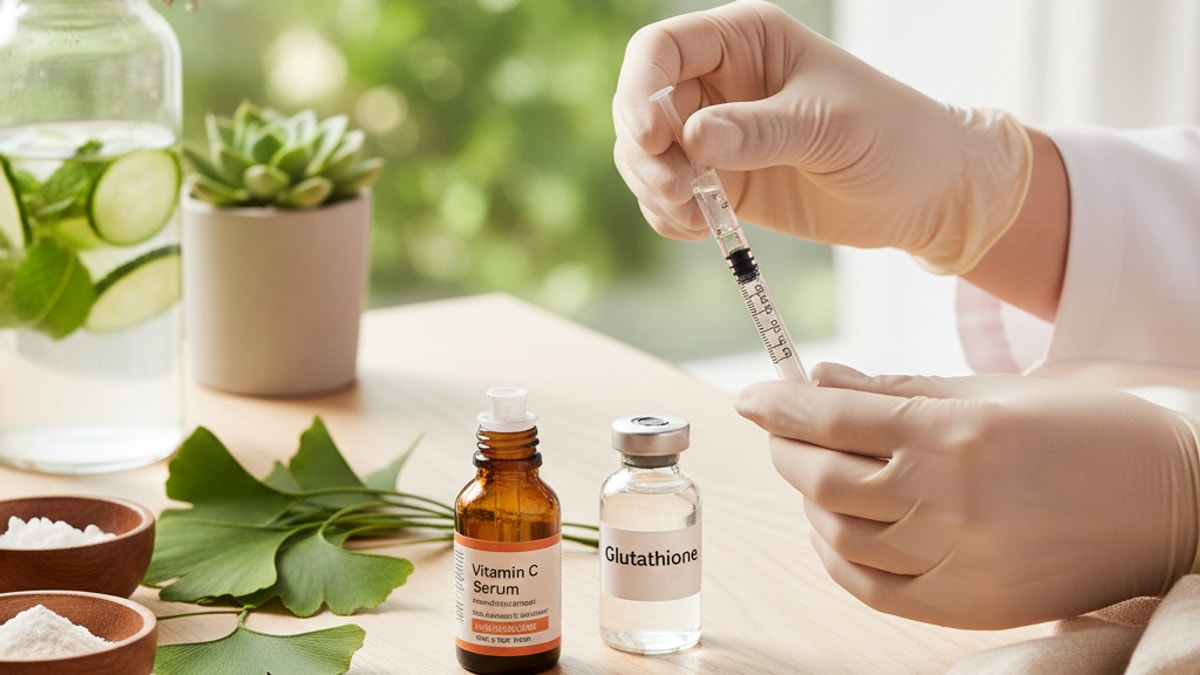
Glutathione Injection South Carolina — What to Know
A 2019 study published in the Journal of Clinical and Aesthetic Dermatology found that IV glutathione reduced melanin index scores by an average of 27% across a 12-week trial. But the same study noted that plasma glutathione levels returned to baseline within 90 minutes post-infusion, raising questions about whether the mechanism driving skin lightening is actually systemic antioxidant activity or something else entirely. South Carolina residents considering glutathione injection south carolina protocols are navigating a market where medical spas, wellness clinics, and even some dermatology practices offer injectable glutathione without standardized dosing, sourcing transparency, or clear evidence that the IV or IM route outperforms oral delivery.
Our team has reviewed glutathione protocols across hundreds of clients seeking medically supervised wellness therapies. The gap between what the marketing promises and what the pharmacokinetics actually support is significant. And that gap matters when you're paying $150–$300 per infusion.
What is glutathione injection south carolina and how does it work in the body?
Glutathione injection south carolina refers to intramuscular or intravenous administration of reduced L-glutathione, a tripeptide antioxidant composed of glutamine, cysteine, and glycine, delivered at doses ranging from 600mg to 2000mg per session. The compound acts as a cofactor for glutathione peroxidase, the enzyme that neutralizes hydrogen peroxide and lipid peroxides inside cells, and it inhibits tyrosinase, the enzyme that catalyzes melanin synthesis in melanocytes. Proponents claim injections bypass first-pass hepatic metabolism, delivering higher systemic concentrations than oral supplementation. But the evidence for sustained elevation is weak, with most studies showing plasma clearance within two hours.
The Pharmacokinetics Gap Most Clinics Don't Mention
Here's what sets glutathione apart from most injectable wellness compounds: it doesn't stay in circulation long enough to produce the sustained systemic effects most patients expect. Research conducted at Kyushu University demonstrated that IV glutathione at 1200mg elevated plasma levels to 3–4× baseline within 15 minutes. But those levels dropped back to baseline by the 90-minute mark. The implications are significant: if the antioxidant effect is dependent on maintaining elevated plasma glutathione, you'd need continuous infusion or multiple daily injections to sustain it, which no clinic in South Carolina is offering.
The skin-lightening effect, which is the primary reason most patients seek glutathione injection south carolina protocols, appears to work through a different mechanism than systemic antioxidant activity. Tyrosinase inhibition occurs even when plasma glutathione returns to baseline, suggesting the effect may be driven by transient receptor-level interaction rather than sustained circulating levels. That's the nuance most marketing materials skip: the injection delivers a temporary spike, the spike may inhibit melanin production during that window, but it's not creating a reservoir of antioxidant activity that persists for days.
Patients across Charleston, Columbia, and Greenville report spending $200–$300 per session for weekly or biweekly injections without clear benchmarks for how long treatment should continue or what endpoint defines success. If tyrosinase inhibition is the mechanism, lower-dose oral liposomal glutathione taken daily might achieve the same cumulative effect at a fraction of the cost. But that conversation rarely happens at the point of sale.
Compounded vs Pharmaceutical-Grade: The Regulatory Reality
Glutathione is not FDA-approved as an injectable drug product for skin lightening, detoxification, or antioxidant therapy. What South Carolina clinics are administering is compounded glutathione. Prepared by compounding pharmacies under state pharmacy board oversight but without the batch-level potency verification and stability testing required for FDA-approved injectables. This isn't inherently unsafe, but it does mean there's no standardized formulation.
Compounded glutathione sourced from FDA-registered 503B facilities undergoes sterility and endotoxin testing, which is the baseline safety standard for injectable preparations. What it doesn't undergo is longitudinal stability testing. Meaning there's limited data on how potency degrades over time in solution, especially when stored at room temperature. Some South Carolina providers prepare glutathione in multi-dose vials that patients take home for self-injection, which introduces another variable: how stable is the compound across 30 days of repeated punctures and potential temperature excursions?
Pharmaceutical-grade reduced glutathione, when available through clinical trials, is manufactured under cGMP with validated potency at time of use. The compounded version used in most wellness clinics may contain the same active molecule, but without the manufacturing oversight that guarantees 95–105% of labeled potency. That variability is why two patients receiving 'the same' 1200mg dose from different clinics may report entirely different outcomes. One batch may deliver 1100mg, another may deliver 900mg, and neither patient knows which they received.
Glutathione Injection South Carolina: Provider Types and Cost Structure
Glutathione injections in South Carolina are offered by medical spas, integrative medicine clinics, dermatology practices, and some family medicine providers with aesthetic services. Pricing varies by delivery method: intramuscular injections typically cost $100–$150 per session, while IV infusions range from $200–$350 depending on dose and infusion time. Most providers recommend weekly sessions for 8–12 weeks, which translates to $1600–$4200 for a full treatment course.
IV glutathione is usually delivered as a slow push over 15–30 minutes, either standalone or mixed with saline and vitamin C to stabilize the solution and enhance absorption. Some clinics in Charleston and Greenville add alpha-lipoic acid or N-acetylcysteine to the infusion, claiming synergistic antioxidant effects, though published evidence for additive benefit is limited. Intramuscular glutathione is administered as a single injection into the deltoid or gluteal muscle, with patients reporting localized soreness that resolves within 24–48 hours.
Insurance does not cover glutathione injection south carolina protocols for cosmetic or wellness indications. The American Academy of Dermatology has not established clinical guidelines for glutathione use in skin lightening, and the FDA has issued warning letters to clinics marketing IV glutathione for 'detoxification' without substantiating efficacy claims. Patients are paying out-of-pocket for an off-label use of a non-approved formulation. Which is legal under compounding exemptions but exists in a regulatory gray zone.
Glutathione Injection South Carolina: Provider Types and Cost Breakdown
| Provider Type | Delivery Method | Cost per Session | Typical Protocol | Sourcing Transparency |
|---|---|---|---|---|
| Medical Spa | IV infusion (1200mg) | $200–$300 | Weekly × 10–12 weeks | Rarely discloses compounding pharmacy source |
| Integrative Medicine Clinic | IM injection (600mg) | $100–$150 | Twice weekly × 8 weeks | May provide batch testing certificates on request |
| Dermatology Practice | IV infusion (1000–1500mg) | $250–$350 | Biweekly × 12 weeks | Typically uses 503B-registered pharmacy |
| Direct-to-Consumer Telehealth | Self-administered IM (600mg kits) | $80–$120 per dose | Patient-determined frequency | Ships from licensed compounding pharmacy |
Key Takeaways
- Glutathione injection south carolina protocols use compounded formulations that are not FDA-approved as injectable drug products. Quality and potency vary by pharmacy source.
- IV glutathione elevates plasma levels to 3–4× baseline within 15 minutes, but concentrations return to baseline by 90 minutes, limiting sustained systemic antioxidant effects.
- Skin-lightening effects appear to result from transient tyrosinase inhibition rather than sustained circulating glutathione, suggesting the injection timeline matters more than total dose.
- A typical 12-week IV protocol in South Carolina costs $2400–$4200 out-of-pocket. Insurance does not cover wellness or cosmetic glutathione use.
- Oral liposomal glutathione taken daily may achieve cumulative tyrosinase inhibition at significantly lower cost, though comparative efficacy data is limited.
- Providers in Charleston, Columbia, and Greenville rarely disclose compounding pharmacy sources or batch testing certificates. Patients should ask before committing to treatment.
What If: Glutathione Injection South Carolina Scenarios
What If I Don't See Results After Six Weeks of Weekly Injections?
Request a melanin index measurement before continuing. Most South Carolina clinics rely on patient self-assessment, which is subjective. A dermatology-grade melanin meter provides objective baseline and follow-up readings. If melanin index hasn't decreased by at least 10% after six weekly 1200mg IV sessions, the formulation may be underdosed or degraded. Ask your provider to confirm the compounding pharmacy source, request batch potency testing if available, and consider switching to a clinic that uses 503B-registered facilities with documented stability data.
What If My Provider Offers Glutathione Injections But Won't Disclose the Pharmacy Source?
That's a red flag. South Carolina law requires healthcare providers to disclose compounding pharmacy sources upon patient request. A provider unwilling to name the pharmacy or provide batch testing certificates may be sourcing glutathione from unverified suppliers or preparing it in-house without proper sterility controls. Compounded injectables prepared outside licensed pharmacies carry contamination and infection risk. The 2012 fungal meningitis outbreak traced to contaminated methylprednisolone from a compounding facility killed 64 patients. Don't inject anything without knowing where it came from.
What If I Experience Nausea or Flushing During an IV Glutathione Infusion?
Slow the infusion rate immediately. Rapid IV push can cause vasodilation, leading to facial flushing, lightheadedness, or nausea. Symptoms that resolve when infusion slows to 20–30 minutes instead of 10–15 minutes. If symptoms persist after slowing the rate, stop the infusion and notify your provider. Severe reactions are rare but documented: one case series published in Clinical Toxicology reported anaphylaxis-like reactions in three patients receiving IV glutathione, likely due to preservative sensitivity rather than the glutathione itself. Most clinics use bacteriostatic water with benzyl alcohol as a preservative. If you have known preservative allergies, request preservative-free sterile water instead.
The Uncomfortable Truth About Glutathione Injection Efficacy
Here's the honest answer: the evidence for sustained benefit from glutathione injection south carolina protocols is weak. The pharmacokinetics don't support the marketing claims. Yes, IV glutathione spikes plasma levels temporarily. Yes, that spike may inhibit tyrosinase during the two-hour window. But the idea that injecting glutathione once or twice a week creates a reservoir of antioxidant activity that detoxifies your liver, brightens your skin, and reverses oxidative damage for days afterward. That's not what the data shows.
Every reputable pharmacokinetic study shows the same pattern: rapid clearance, baseline return within 90–120 minutes, no sustained elevation. If the mechanism worked the way clinics claim it works, you'd need continuous infusion or multiple daily doses to maintain therapeutic plasma levels. The fact that weekly injections produce any observable skin-lightening effect at all suggests the mechanism is transient receptor inhibition, not systemic antioxidant saturation. And if that's true, oral liposomal glutathione taken daily might work just as well.
We're not saying glutathione injections don't work. We're saying the mechanism probably isn't what you're being told, and the cost-to-benefit ratio compared to oral formulations hasn't been rigorously tested. Most patients in South Carolina are spending $2000–$4000 on a 12-week injection protocol without anyone explaining that an $80/month oral supplement might achieve the same cumulative effect.
The reality is that if sustained circulating glutathione were the requirement for melanin reduction, we'd see a clear dose-response relationship where higher doses produced proportionally better outcomes. We don't. Some patients respond to 600mg IM injections, others see no change at 1500mg IV. Which suggests individual variation in tyrosinase sensitivity or melanocyte receptor density matters more than absolute glutathione dose. That variability makes glutathione injection south carolina protocols a gamble, not a guaranteed outcome.
Frequently Asked Questions
How does glutathione injection work for skin lightening?▼
Glutathione inhibits tyrosinase, the enzyme that catalyzes melanin synthesis in melanocytes, shifting melanin production from darker eumelanin to lighter pheomelanin. This effect appears to occur during transient plasma elevation rather than through sustained systemic antioxidant activity — most studies show plasma glutathione returns to baseline within 90 minutes post-injection. Clinical trials using 1200mg IV glutathione twice weekly for 12 weeks reported mean melanin index reductions of 20–30%, though individual response varies significantly.
Can I get glutathione injections in South Carolina without a prescription?▼
No. Glutathione injection south carolina protocols require a prescribing physician or nurse practitioner to order the compounded formulation and administer or supervise the injection. Medical spas and wellness clinics offering glutathione must operate under physician oversight per South Carolina Board of Medical Examiners regulations. Direct-to-consumer telehealth providers can prescribe self-administered IM glutathione, but a licensed prescriber must review your medical history and issue a prescription before the compounded medication ships.
What is the cost of glutathione injections in South Carolina?▼
Intramuscular glutathione injections cost $100–$150 per session, while IV infusions range from $200–$350 depending on dose and clinic location. Most providers recommend 8–12 weeks of weekly or biweekly sessions, totaling $1600–$4200 for a full course. Insurance does not cover glutathione for cosmetic or wellness indications — all costs are out-of-pocket. Some telehealth providers offer self-administered IM kits at $80–$120 per dose, which lowers total protocol cost but requires patient comfort with self-injection.
What are the risks and side effects of glutathione injections?▼
Common side effects include injection site soreness (IM) and transient flushing or lightheadedness (IV) when infused too rapidly. Serious adverse events are rare but include allergic reactions to preservatives (benzyl alcohol in bacteriostatic water) and, in extremely rare cases, anaphylaxis-like reactions documented in clinical case reports. Glutathione may interfere with chemotherapy efficacy in cancer patients by protecting malignant cells from oxidative stress — patients undergoing cancer treatment should not use glutathione without oncologist approval. Long-term safety data beyond 12 weeks is limited.
How long does it take to see results from glutathione injections?▼
Most patients report subjective skin brightening after 4–6 weeks of weekly injections, with objective melanin index reductions measurable by 8–10 weeks. Response time varies based on baseline melanin levels, injection frequency, and individual tyrosinase sensitivity. South Carolina dermatology practices using standardized protocols typically assess progress at the 6-week mark using melanin meters — if no measurable change has occurred by week 6, continued treatment may not produce additional benefit.
Is IV glutathione better than oral glutathione supplements?▼
IV glutathione bypasses first-pass hepatic metabolism and achieves higher peak plasma levels than oral formulations — but those levels drop to baseline within 90 minutes, limiting sustained systemic effects. Oral liposomal glutathione, taken daily at 500–1000mg, maintains lower but more consistent circulating levels throughout the day. No head-to-head trial has compared IV glutathione twice weekly versus oral liposomal glutathione daily for skin lightening, so the claim that IV is definitively superior lacks direct evidence. Cost difference is substantial: a 12-week IV protocol costs $2400–$4200 versus $240–$480 for oral liposomal glutathione.
What should I ask a South Carolina provider before starting glutathione injections?▼
Ask which compounding pharmacy supplies the glutathione and whether it’s a 503B-registered facility. Request batch testing certificates showing sterility and potency verification. Confirm the dose per injection (600mg, 1200mg, or higher) and the recommended protocol duration. Ask whether they use melanin index measurements to track progress or rely on subjective self-assessment. Verify that the provider is licensed in South Carolina and operating under proper medical oversight — medical spas offering injections must have a supervising physician per state law.
Can glutathione injections interfere with other medications or treatments?▼
Yes. Glutathione may reduce the efficacy of certain chemotherapy agents by protecting cancer cells from oxidative damage — patients with active malignancies should avoid glutathione unless specifically approved by their oncologist. It may also interact with immunosuppressants and anticoagulants, though clinical evidence is limited. Patients on warfarin, methotrexate, or biologic immunotherapies should disclose glutathione use to their prescribing physician. No major interactions with common medications like statins, antihypertensives, or oral contraceptives have been documented.
Are there alternatives to glutathione injections for skin brightening?▼
Yes. Topical treatments like hydroquinone (2–4%), tretinoin, kojic acid, and azelaic acid inhibit melanin synthesis through different mechanisms and are FDA-approved for hyperpigmentation. Oral tranexamic acid at 250mg twice daily has shown comparable efficacy to IV glutathione in clinical trials for melasma, with the advantage of sustained plasma levels rather than transient spikes. Chemical peels, laser therapy, and microneedling with brightening serums are also evidence-based alternatives. Some South Carolina dermatologists recommend combining topical retinoids with oral liposomal glutathione as a cost-effective first-line approach before escalating to injections.
What happens if I stop glutathione injections after completing a protocol?▼
Melanin production gradually returns to baseline over 3–6 months after stopping glutathione injections, as tyrosinase inhibition fades and melanocytes resume normal eumelanin synthesis. The skin-lightening effect is not permanent — maintaining results requires ongoing treatment, either through continued injections at reduced frequency (monthly maintenance) or transitioning to daily oral liposomal glutathione. No clinical data exists on optimal maintenance protocols, so most South Carolina providers recommend individualized schedules based on patient goals and response.

Transforming Lives, One Step at a Time
Keep reading

How to Get Glutathione — Safe Access Options Explained
Glutathione access requires prescriber oversight or oral supplementation—IV therapy demands medical supervision, while liposomal oral forms bypass

Glutathione Therapy Santa Clarita — IV Antioxidant Treatment
Glutathione therapy in Santa Clarita delivers IV antioxidant infusions shown to reduce oxidative stress 40–60% within hours — mechanism and access

Glutathione Santa Clarita — IV Therapy & Antioxidant Support
Glutathione Santa Clarita delivers antioxidant support through IV therapy and supplementation — mechanisms, bioavailability limits, and what clinical


