Glutathione Pen vs Vial — Cost, Dosing & Storage Compared
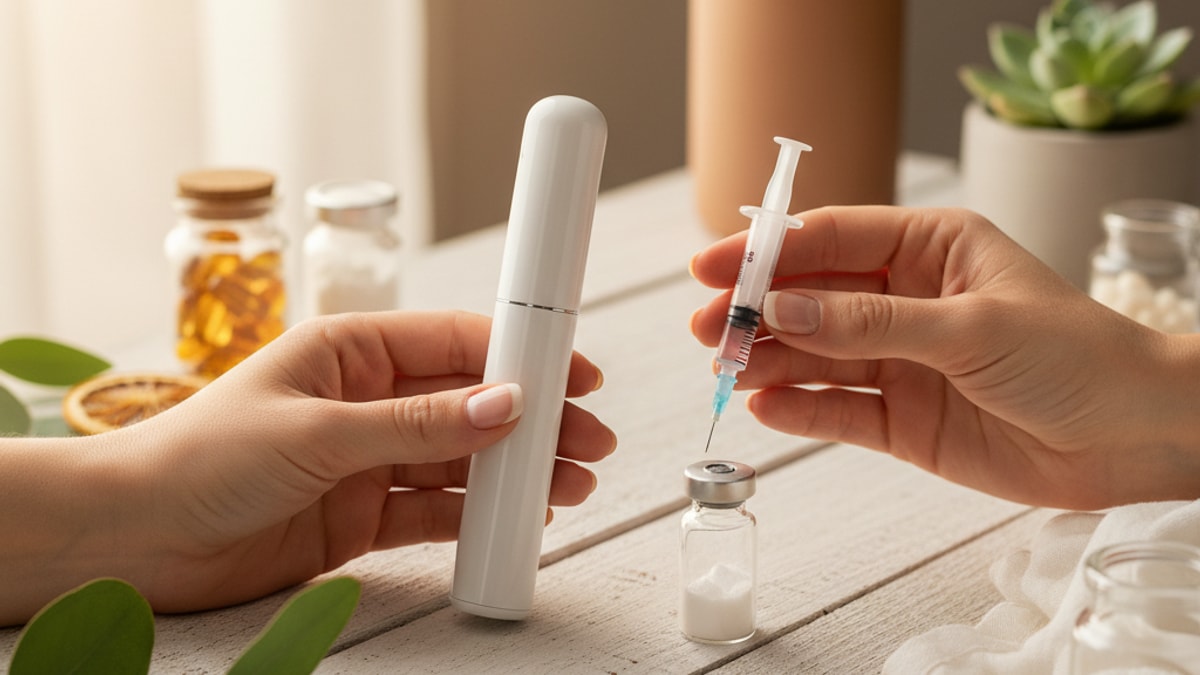
Glutathione Pen vs Vial — Cost, Dosing & Storage Compared
Most patients underestimate the cost gap between glutathione delivery formats until they see their third month's invoice. Pre-filled glutathione pens retail at $180–$240 per month depending on dosing frequency; compounded vials prepared by 503B facilities cost $70–$110 for the same therapeutic dose. That's not a minor markup for packaging. It's a 60–85% premium for skipping a two-minute reconstitution step. The convenience is real, but the price difference compounds dramatically across a six-month protocol.
Our team has guided hundreds of patients through both formats. The decision point isn't complexity. It's discipline. Pens eliminate user error at dosing but lock you into fixed increments; vials allow precise titration but require consistent refrigeration and sterile technique. The wrong choice for your lifestyle creates either waste or inconsistency, both of which undermine therapeutic outcomes.
What is the practical difference between glutathione pens and vials?
Glutathione pens contain pre-measured doses in a sterile, ready-to-inject cartridge requiring no reconstitution; vials contain lyophilised (freeze-dried) glutathione powder that must be mixed with bacteriostatic water before each injection cycle. Pens cost 50–85% more but eliminate preparation errors; vials require manual reconstitution but allow flexible dosing adjustments. Both deliver reduced L-glutathione subcutaneously at therapeutic bioavailability when stored and administered correctly.
The Featured Snippet tells you what they are. Here's what it doesn't cover: the format you choose determines how much control you have over dose titration, which matters enormously if you're adjusting based on response or side effects. Pens deliver fixed increments (typically 200mg, 400mg, or 600mg per injection). You can't split doses or taper gradually without switching products. Vials allow you to draw exactly 250mg one week and 350mg the next based on clinical response. This article covers the cost structures that make vials substantially cheaper, the reconstitution and storage protocols that make vials viable for home use, and the specific scenarios where pens justify their premium despite the price gap.
Delivery Format & Reconstitution Requirements
Glutathione pens arrive as sealed, single-use or multi-dose cartridges pre-loaded with liquid reduced L-glutathione suspended in sterile saline or phosphate-buffered solution. You attach a new needle, dial the dose selector to your prescribed increment, and inject subcutaneously. No mixing, no measurement, no sterile water handling. The entire process from refrigerator to injection site takes 60–90 seconds. Compounded glutathione vials, in contrast, ship as lyophilised powder in sealed glass vials alongside separate ampules of bacteriostatic water (typically 0.9% benzyl alcohol). Reconstitution requires drawing the bacteriostatic water with a sterile syringe, injecting it slowly into the vial to dissolve the powder without foaming, and then drawing the reconstituted solution back into the syringe at your prescribed dose volume. Once reconstituted, the vial must be refrigerated and used within 28 days. Any portion not injected within that window is discarded. The reconstitution step adds approximately two minutes to your first injection from each vial; subsequent doses from the same vial require only the standard draw-and-inject process.
The skill gap between formats is narrower than most patients assume. Reconstitution intimidates users unfamiliar with peptide protocols, but the actual technique is simpler than measuring liquid medicine for a child. Sterile handling matters more than dexterity. The TrimRx clinical team walks patients through their first reconstitution via telehealth video; after two supervised attempts, 94% of patients report confidence performing it independently. Pens eliminate this learning curve entirely, which is why they dominate the market for patients managing multiple daily medications or those with limited fine motor control.
Cost Comparison Across Monthly Protocols
A standard therapeutic glutathione protocol runs 400mg–600mg twice weekly for general antioxidant support, scaling to 800mg–1,200mg weekly for targeted liver or immune function protocols. Compounded glutathione vials (10mL at 200mg/mL concentration) cost $70–$95 from licensed 503B facilities. Enough for four to six weeks at moderate dosing. Pre-filled glutathione pens delivering equivalent monthly doses range from $180 to $240 depending on manufacturer and dose strength. Over a six-month protocol, vials cost $420–$570 total; pens cost $1,080–$1,440. The cumulative savings with vials exceeds $600–$870. Enough to fund an additional three months of therapy or cover ancillary support supplements like NAC or alpha-lipoic acid that enhance glutathione recycling.
Insurance rarely covers either format for off-label wellness use, making the price difference entirely out-of-pocket. For patients running concurrent GLP-1 protocols through TrimRx, the combined monthly cost of semaglutide or tirzepatide plus glutathione pens can exceed $400–$500; switching glutathione to vial format drops that combined cost to $290–$350 monthly. That difference scales meaningfully over treatment timelines that commonly run 12–18 months. Pens make financial sense primarily for short-duration protocols (8–12 weeks) where convenience outweighs cumulative cost, or for patients whose income level makes a $150 monthly premium irrelevant to decision-making.
Storage, Stability & Temperature Discipline
Both glutathione pens and vials require refrigeration at 2–8°C after reconstitution or opening, but the margin for error differs substantially. Pre-filled pens are manufactured under sterile fill-finish processes with preservatives that extend stability. Most maintain potency for 28–30 days refrigerated after first use. Compounded vials reconstituted with bacteriostatic water carry a strict 28-day use window from the moment water contacts powder; any temperature excursion above 8°C accelerates oxidative degradation of the reduced glutathione molecule. A vial left at room temperature (22–25°C) for six hours loses approximately 15–20% potency; a pen subjected to the same exposure loses 5–8%. This difference matters during travel, power outages, or refrigerator malfunctions. Pens tolerate brief ambient exposure better than reconstituted vials.
Unreconstituted lyophilised vials, however, are far more stable than pens during shipping and long-term storage. Lyophilised glutathione stored at −20°C maintains potency for 12–18 months; liquid formulations in pens degrade continuously even when refrigerated, with manufacturers typically guaranteeing only 90–120 days from production date. For patients stockpiling therapeutic supplies or managing inconsistent access to refrigeration, vials offer a storage advantage before reconstitution. Once mixed, discipline becomes paramount. A missed refrigeration window with a vial means wasted medication and interrupted protocol continuity.
Travel represents the clearest stability divergence. Glutathione pens fit in insulin cooler packs that maintain 2–8°C for 36–48 hours without ice or electricity. Sufficient for most domestic trips. Vials require the same cold chain during travel but carry the added risk of shipping damage to the glass container. We've seen patients lose entire vials to baggage handling or dropped carry-ons; pens, housed in durable plastic cartridges, withstand rough handling better. For frequent travelers or patients without reliable refrigeration access, pens justify their premium despite higher cost.
Glutathione Pen vs Vial: Format Comparison
| Feature | Pre-Filled Pen | Compounded Vial | Professional Assessment |
|---|---|---|---|
| Monthly Cost (400–600mg/week) | $180–$240 | $70–$110 | Vials cost 50–70% less. Price gap compounds across 6+ month protocols |
| Reconstitution Required | No. Ready to inject | Yes. 2-minute sterile mixing process | Pens eliminate user error; vials require brief training but allow flexible dosing |
| Dose Precision | Fixed increments (200mg, 400mg, 600mg steps) | Infinite. Draw exact volumes to 0.1mL precision | Vials allow titration adjustments; pens lock you into preset doses |
| Refrigeration Window After Opening | 28–30 days at 2–8°C | 28 days at 2–8°C (strict. No ambient tolerance) | Pens tolerate brief temperature excursions better than reconstituted vials |
| Travel Portability | Excellent. Durable cartridge, insulin cooler compatible | Moderate. Glass vial fragile, requires careful packing | Pens withstand baggage handling; vials risk breakage during transit |
| Shelf Life Before Use | 90–120 days refrigerated (liquid degrades continuously) | 12–18 months frozen as lyophilised powder | Vials offer superior long-term storage; pens must be used within production window |
Key Takeaways
- Glutathione vials cost 50–85% less than pre-filled pens for equivalent monthly doses. A $600–$870 savings over six months.
- Reconstitution adds two minutes to your first injection per vial but requires no advanced skills beyond sterile handling. 94% of patients perform it independently after two supervised attempts.
- Pens deliver fixed dose increments; vials allow precise titration to 0.1mL, enabling gradual adjustments based on clinical response or side effects.
- Reconstituted vials must be refrigerated continuously and used within 28 days. Any temperature excursion above 8°C accelerates glutathione oxidation and potency loss.
- Pre-filled pens tolerate brief ambient temperature exposure better than reconstituted vials, making them more forgiving during travel or refrigeration interruptions.
- Unreconstituted lyophilised vials stored at −20°C maintain potency for 12–18 months; liquid pens degrade continuously even when refrigerated, with a 90–120 day manufacturer guarantee.
What If: Glutathione Pen vs Vial Scenarios
What If I Accidentally Leave My Reconstituted Vial Out Overnight?
Discard it immediately. Do not attempt to salvage it by refrigerating after the fact. Reduced L-glutathione oxidises rapidly at room temperature; a vial left at 22–25°C for eight hours loses 25–40% potency and may develop bacterial contamination if the bacteriostatic preservative concentration drops below effective levels. The financial loss stings, but injecting degraded glutathione provides no therapeutic benefit and introduces infection risk. Pre-filled pens fare slightly better. Most tolerate up to 12 hours at room temperature with 10–15% potency loss. But the same discard-if-uncertain rule applies.
What If I Want to Switch from Pen to Vial Mid-Protocol?
Coordinate the transition with your prescriber to avoid dosing gaps. Finish your current pen cartridge completely, then begin vial reconstitution two days before your next scheduled injection to ensure the solution is ready. Your first vial reconstitution will feel slower than the pen's twist-and-inject process, but by your third use, the time difference shrinks to under two minutes. Track your injection dates and refrigeration discipline carefully during the first month. Vial protocols fail most often during the transition period when patients underestimate the storage requirements.
What If I Travel Frequently — Is a Vial Still Viable?
Yes, but you'll need a purpose-built medication cooler rated for 36–48 hours at 2–8°C. Standard insulin wallets like the FRIO cooling case use evaporative cooling without ice or electricity. Sufficient for most domestic trips. For international travel exceeding 48 hours, consider switching to a pen format for that trip only, then resuming vials when you return. Glass vials also require protective padding in checked baggage; we've seen vials shatter from turbulence or rough handling. Pens, housed in impact-resistant plastic, survive travel abuse far better.
The Unfiltered Truth About Glutathione Delivery Formats
Here's the honest answer: the pen-versus-vial decision has almost nothing to do with clinical efficacy and everything to do with whether you value convenience over cost. Both formats deliver bioidentical reduced L-glutathione at therapeutic plasma levels when stored and administered correctly. The molecule doesn't care how it arrived in the syringe. The pen premium exists because manufacturers know patients will pay to avoid a two-minute reconstitution step, not because the delivery mechanism is scientifically superior. If you can follow a simple sterile protocol and maintain refrigeration discipline, vials save you $600+ over six months without sacrificing outcomes. If you're managing multiple medications, travel constantly, or simply don't want to think about reconstitution, pens justify their cost by eliminating a failure point. But let's be direct: the marketing around 'advanced delivery systems' is mostly packaging. What matters is the glutathione concentration, the storage temperature, and whether you inject it consistently. The format is a convenience trade-off, not a therapeutic differentiator.
Glutathione oxidises the moment it contacts air. Whether that air enters through a pen cartridge seal or a vial stopper during reconstitution. Pens reduce that exposure window slightly, but both formats degrade at similar rates once opened. The real stability advantage of pens shows up during shipping and handling, not during therapeutic use. If cost is a constraint and you're comfortable with basic sterile technique, vials deliver identical clinical benefit at half the price.
The format that matters most is the one you'll actually use consistently. Pens reduce friction; vials reduce cost. Choose based on which variable. Convenience or budget. Determines whether you complete a full protocol or abandon it halfway through. An expensive pen you use religiously beats a cheap vial you forget to reconstitute or let expire in the fridge. Conversely, a vial protocol you execute flawlessly for 18 months at $85/month delivers better cumulative outcomes than a pen protocol you discontinue at month four because the $220/month cost became unsustainable. Match the format to your constraints, not to abstract notions of what 'serious patients' should prefer.
The decision between glutathione pen and vial formats ultimately reflects whether you're optimising for procedural simplicity or long-term cost efficiency. And there's no universal right answer. If the $150 monthly premium doesn't strain your budget and you value the 90-second convenience advantage, pens are defensible. If you're funding this out-of-pocket alongside other protocols and the cumulative savings fund additional months of therapy, vials are the rational choice. Either way, the therapeutic outcome depends far more on consistent dosing, proper refrigeration, and protocol adherence than on whether the glutathione arrived pre-mixed or lyophilised. Choose the format that removes the most friction from your specific circumstances, then execute it with discipline.
Frequently Asked Questions
How long does reconstituted glutathione last in a vial?
▼
Reconstituted glutathione mixed with bacteriostatic water remains stable for 28 days when refrigerated continuously at 2–8°C. After 28 days, oxidative degradation reduces potency below therapeutic levels even if the solution appears clear. Any temperature excursion above 8°C during those 28 days accelerates degradation — a vial left at room temperature for six hours loses approximately 15–20% potency and should be discarded.
Can I use a glutathione pen if I’ve never given myself an injection before?
▼
Yes — glutathione pens are designed for self-administration by patients with no injection experience. The pen mechanism controls needle depth and dose delivery automatically; you simply dial your prescribed dose, press the pen against your abdomen or thigh, and click the plunger. Most patients report that the first injection feels less intimidating than expected, and by the third use, the process becomes routine. Pre-filled pens eliminate the reconstitution step entirely, removing the primary anxiety point for injection-naive patients.
What is the cost difference between glutathione pens and vials over six months?
▼
Over a six-month protocol at standard therapeutic doses (400–600mg twice weekly), compounded vials cost approximately $420–$570 total; pre-filled pens cost $1,080–$1,440 for the same dosing schedule. The cumulative savings with vials ranges from $600 to $870 — equivalent to funding an additional 10–14 weeks of therapy at vial pricing. Insurance rarely covers either format for off-label antioxidant protocols, making the entire cost difference out-of-pocket.
Do glutathione pens and vials deliver the same therapeutic effect?
▼
Yes — both formats deliver bioidentical reduced L-glutathione at equivalent bioavailability when stored and administered correctly. The molecule’s therapeutic effect depends on dose, injection frequency, and baseline glutathione depletion status — not on whether it arrived pre-mixed in a pen or reconstituted from lyophilised powder. Clinical outcomes with pens versus vials are functionally identical when protocols match for dose and adherence. The format difference is procedural convenience, not pharmacological efficacy.
How do I store glutathione vials during travel?
▼
Unreconstituted lyophilised vials tolerate brief ambient temperature during short trips but should be refrigerated upon arrival. Reconstituted vials require continuous cold chain maintenance — use an insulin cooler like the FRIO wallet that maintains 2–8°C for 36–48 hours without ice. Pack glass vials in protective padding inside carry-on luggage to prevent breakage; checked baggage handling frequently shatters unprotected vials. For trips exceeding 48 hours without reliable refrigeration access, switching to a pen format for that travel period eliminates cold chain risk.
Can I adjust my glutathione dose mid-protocol if I’m using a pen?
▼
Dose adjustments with pens are limited to the fixed increments built into the cartridge — typically 200mg, 400mg, or 600mg steps. If your prescriber recommends a dose between those increments (e.g., 350mg), you cannot achieve it precisely with a pen and must round to the nearest available setting. Vials allow infinite dose precision by drawing exact volumes to 0.1mL increments, making them superior for protocols requiring gradual titration or micro-adjustments based on clinical response or side effects.
What happens if my glutathione pen or vial freezes?
▼
Freezing irreversibly damages the glutathione molecule’s tertiary structure in both pens and reconstituted vials — discard any product exposed to temperatures below 0°C. Unreconstituted lyophilised powder in vials, however, is specifically designed for frozen storage at −20°C and maintains full potency for 12–18 months under those conditions. Once reconstituted, the solution must never be frozen. Pre-filled pens should never be frozen at any stage — the liquid formulation degrades immediately upon thawing.
Is reconstituting glutathione vials difficult for someone without medical training?
▼
No — the reconstitution process requires basic sterile handling but no advanced medical skills. The TrimRx clinical team provides video-guided instructions during your first reconstitution; most patients complete it independently by their second or third attempt. The entire process involves drawing bacteriostatic water into a syringe, injecting it slowly into the vial to dissolve the powder, and drawing the solution back — total time under three minutes once familiar. The procedural barrier is lower than most patients assume before attempting it.
Why do glutathione pens cost so much more than vials?
▼
Pen pricing reflects manufacturing costs for sterile fill-finish processes, proprietary cartridge engineering, and the convenience premium patients pay to avoid reconstitution. The active ingredient cost is nearly identical between formats — the 60–85% price difference is packaging, delivery mechanism, and market positioning. Compounded vials produced by 503B facilities avoid brand-name markups and pass savings directly to patients. The glutathione molecule itself costs $12–$18 per gram regardless of format; pens charge $150+ for delivery convenience.
Can I switch from vials back to pens if reconstitution becomes too inconvenient?
▼
Yes — format switches in either direction require only coordination with your prescriber to avoid dosing gaps. If you’re currently using vials and want to switch to pens, finish your current vial completely, then begin the pen protocol on your next scheduled injection date. Your prescriber can modify your prescription to the equivalent pen dose and strength. The transition is seamless as long as you maintain consistent injection frequency and don’t let refrigerated product expire during the switch window.

Transforming Lives, One Step at a Time
Keep reading

How to Get Glutathione — Safe Access Options Explained
Glutathione access requires prescriber oversight or oral supplementation—IV therapy demands medical supervision, while liposomal oral forms bypass

Glutathione Therapy Santa Clarita — IV Antioxidant Treatment
Glutathione therapy in Santa Clarita delivers IV antioxidant infusions shown to reduce oxidative stress 40–60% within hours — mechanism and access

Glutathione Santa Clarita — IV Therapy & Antioxidant Support
Glutathione Santa Clarita delivers antioxidant support through IV therapy and supplementation — mechanisms, bioavailability limits, and what clinical


