Glutathione Price Comparison — Cost Breakdown by Form &
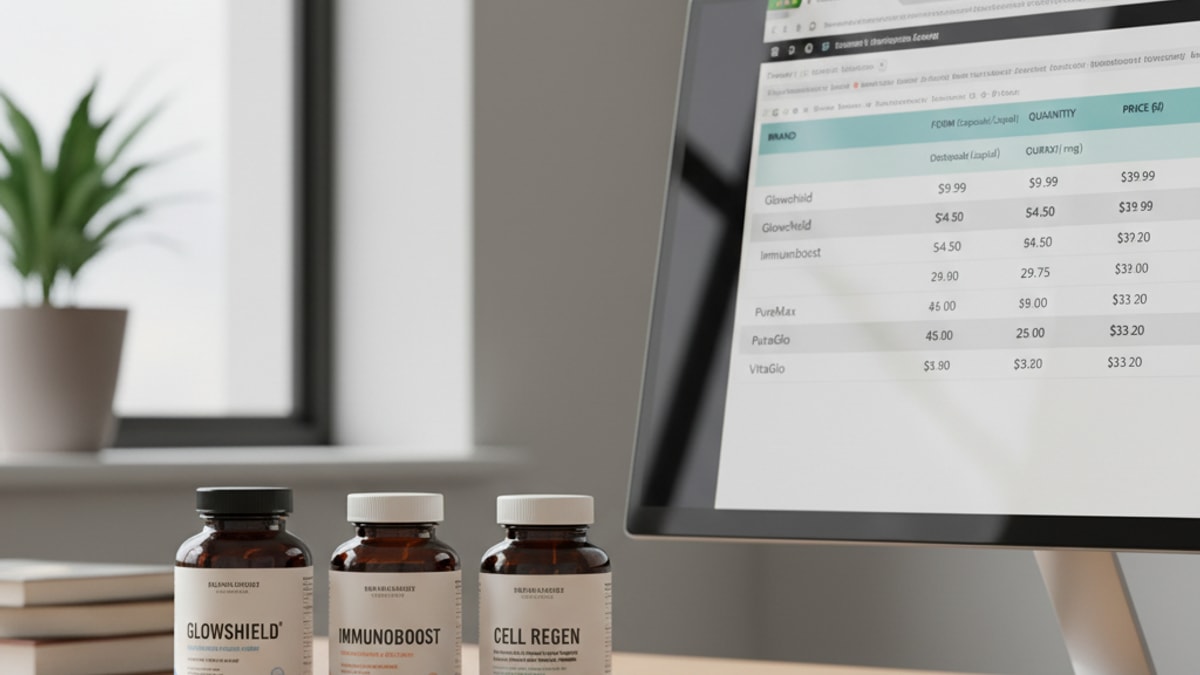
Glutathione Price Comparison — Cost Breakdown by Form & Brand
Research from the Linus Pauling Institute at Oregon State University found that standard oral glutathione supplements show less than 10% bioavailability. Meaning a 1000mg capsule delivers roughly 100mg to systemic circulation, while the remaining 900mg degrades in gastric acid before absorption. Most glutathione price comparison guides ignore this entirely, comparing milligrams per dollar without accounting for the fact that delivery mechanism determines whether the compound reaches target tissues. The price difference between a $15 standard capsule and a $45 liposomal formula isn't markup. It's the cost of encapsulation technology that allows the tripeptide to survive digestion intact.
Our team has reviewed glutathione pricing across therapeutic protocols for years. The pattern is consistent: buyers focus on bottle price instead of cost per absorbable dose, which is why low-potency formulas dominate retail shelves despite delivering minimal clinical benefit.
What does glutathione cost, and how do different forms compare on actual bioavailability?
Glutathione supplements range from $12 to $85 monthly depending on form, potency, and delivery mechanism. Standard reduced glutathione capsules cost $12–$25 monthly but deliver less than 10% bioavailability. Liposomal glutathione costs $35–$65 monthly with 60–90% absorption. Sublingual forms cost $28–$48 monthly with moderate absorption bypassing first-pass metabolism. The cost per absorbable milligram. Not per bottle. Determines real value.
Most glutathione price comparison content stops at retail cost without explaining why certain forms cost three times as much. That omission matters because buyers default to the cheapest option, which is almost always the least effective. The rest of this piece covers the three glutathione delivery mechanisms, what drives pricing within each category, and how to calculate cost per absorbable dose rather than cost per bottle.
The Three Glutathione Forms and Why Pricing Diverges
Glutathione exists in two chemical states: reduced (GSH) and oxidized (GSSG). Reduced glutathione is the biologically active form. The one that neutralizes reactive oxygen species, supports phase II liver detoxification, and regenerates vitamins C and E. Standard oral supplements contain reduced L-glutathione, typically 500mg to 1000mg per capsule, priced at $0.40 to $0.85 per serving. The problem isn't the molecule. It's gastric degradation. Glutathione is a tripeptide composed of glutamate, cysteine, and glycine bonded via peptide linkages, which stomach acid cleaves before intestinal absorption.
Liposomal glutathione encapsulates the molecule inside phospholipid vesicles. Microscopic spheres that mimic cell membrane structure, allowing the intact tripeptide to pass through the gastric environment and absorb directly into enterocytes. This delivery mechanism costs $1.20 to $2.20 per serving because phospholipid encapsulation requires specialized manufacturing and quality control to verify vesicle size and encapsulation efficiency. A 2014 study published in the European Journal of Nutrition demonstrated that liposomal GSH increased blood glutathione levels by 30–35% within four weeks, while standard oral forms showed no significant elevation.
Sublingual and acetylated forms represent middle-ground options. N-acetylcysteine (NAC), priced at $0.30 to $0.60 per serving, provides the rate-limiting precursor for endogenous glutathione synthesis rather than delivering the intact tripeptide. Sublingual glutathione dissolves under the tongue, bypassing first-pass hepatic metabolism and entering circulation via the sublingual mucosa. Absorption is higher than oral capsules but lower than liposomal encapsulation, with pricing typically $0.95 to $1.60 per serving.
Brand-Level Glutathione Price Comparison Across Delivery Methods
Within each delivery category, pricing varies based on third-party testing, manufacturing certifications, and whether the product includes synergistic cofactors like vitamin C or alpha-lipoic acid. Standard reduced glutathione from brands like NOW Foods or Jarrow Formulas costs $12–$18 for a 30-day supply at 500mg daily. Roughly $0.40 to $0.60 per serving. These formulas meet USP standards for purity but don't address bioavailability, so cost per absorbable dose is significantly higher than the bottle price suggests.
Liposomal glutathione brands like Core Med Science, LivOn Labs, and Quicksilver Scientific range from $35 to $65 monthly. LivOn's Lypo-Spheric GSH costs approximately $2.00 per 1000mg packet with third-party verified liposomal encapsulation. Quicksilver's liposomal formula uses smaller vesicle sizes (50–100 nanometers) for enhanced cellular uptake, priced at $1.80 per serving. Both include vitamin C to support glutathione recycling, which standard capsules typically omit.
Sublingual forms from brands like Trizomal and Wellness Resources cost $28–$48 monthly at 500mg daily dosing. The absorption rate sits between standard oral and liposomal. Clinical data is limited, but mucosal absorption bypasses the gastric degradation that destroys standard capsules. NAC supplements, while technically a precursor rather than glutathione itself, cost $10–$20 monthly and consistently demonstrate efficacy in raising intracellular GSH levels in controlled trials.
Glutathione Price Comparison: Cost Per Absorbable Milligram
| Form | Monthly Cost | Daily Dose (mg) | Bioavailability (%) | Absorbable Dose (mg) | Cost Per 100mg Absorbed | Bottom Line |
|---|---|---|---|---|---|---|
| Standard oral capsule | $12–$25 | 500–1000 | <10% | 50–100 | $4.00–$8.30 | Lowest upfront cost, poorest absorption. The majority of each dose is wasted |
| Liposomal glutathione | $35–$65 | 500–1000 | 60–90% | 300–900 | $1.30–$2.40 | Highest bioavailability, moderate cost per absorbed dose. Best for therapeutic goals |
| Sublingual glutathione | $28–$48 | 500 | 30–50% | 150–250 | $3.70–$6.40 | Mid-range absorption, bypasses gastric degradation but less efficient than liposomal |
| N-acetylcysteine (NAC) | $10–$20 | 600–1200 | Indirect (precursor) | Varies by synthesis rate | $0.80–$1.70 per 100mg NAC | Supports endogenous synthesis rather than delivering intact GSH. Reliable but slower |
The cost per absorbable milligram inverts the apparent price hierarchy. A $15 standard capsule delivering 50mg absorbed glutathione costs $9.00 per 100mg absorbed. A $50 liposomal formula delivering 600mg absorbed costs $1.70 per 100mg absorbed. Buyers paying less upfront are paying more per unit of bioavailable compound. The bottle price is irrelevant if gastric acid destroys the molecule before absorption.
Key Takeaways
- Standard oral glutathione capsules cost $12–$25 monthly but deliver less than 10% bioavailability, making them the most expensive option per absorbable milligram despite the lowest bottle price.
- Liposomal glutathione costs $35–$65 monthly with 60–90% absorption. A 2014 study in the European Journal of Nutrition found liposomal GSH increased blood levels by 30–35% while standard oral forms showed no significant elevation.
- Sublingual glutathione costs $28–$48 monthly with moderate absorption (30–50%) by bypassing first-pass gastric degradation through the sublingual mucosa.
- N-acetylcysteine (NAC) costs $10–$20 monthly and supports endogenous glutathione synthesis rather than delivering the intact tripeptide. Clinically validated but slower-acting than direct supplementation.
- Cost per absorbable dose. Not cost per bottle. Determines real value: liposomal forms cost $1.30–$2.40 per 100mg absorbed, while standard capsules cost $4.00–$8.30 per 100mg absorbed.
- Third-party testing for liposomal encapsulation efficiency and vesicle size matters. Not all liposomal products use verified phospholipid encapsulation, and unverified products may perform no better than standard capsules.
What If: Glutathione Price Comparison Scenarios
What If I Buy the Cheapest Glutathione Supplement to Save Money?
You'll pay less per bottle but more per absorbable dose. Standard oral glutathione degrades in gastric acid before reaching systemic circulation. Bioavailability sits below 10%, meaning a 1000mg capsule delivers roughly 100mg to target tissues. A $15 bottle delivering 50mg absorbed glutathione daily costs $9.00 per 100mg absorbed, while a $50 liposomal formula delivering 600mg absorbed costs $1.70 per 100mg absorbed. The apparent savings disappear when you calculate cost per therapeutic outcome.
What If the Liposomal Formula Doesn't List Encapsulation Verification?
Skip it. Liposomal glutathione works only if phospholipid vesicles are sized correctly (50–200 nanometers) and encapsulation efficiency exceeds 85%. Brands without third-party verification of vesicle size and encapsulation rate may simply mix glutathione with lecithin and call it liposomal. That formulation performs no better than standard capsules. Core Med Science, LivOn Labs, and Quicksilver Scientific all publish third-party encapsulation data. If a product doesn't, assume it's mislabeled.
What If I Take NAC Instead of Direct Glutathione Supplementation?
You're supporting endogenous synthesis rather than delivering the intact tripeptide. NAC (N-acetylcysteine) provides cysteine, the rate-limiting amino acid for glutathione production inside cells. This approach costs $10–$20 monthly and works reliably for most people. Clinical trials consistently show NAC raises intracellular GSH levels. The tradeoff is speed: NAC requires enzymatic conversion, so blood levels rise more slowly than with liposomal glutathione. For ongoing antioxidant support, NAC is effective and cost-efficient. For acute detoxification protocols, liposomal delivery is faster.
The Blunt Truth About Glutathione Price Comparison
Here's the honest answer: most glutathione supplements are priced to exploit buyer ignorance. Retail shelves stock low-potency standard capsules at $12–$18 because the bottle price looks competitive, even though gastric acid destroys 90% of the compound before absorption. That's not supplementation. It's expensive urine. Liposomal glutathione costs three times as much per bottle because phospholipid encapsulation requires legitimate manufacturing infrastructure, but it delivers six to nine times the absorbable dose. The only meaningful glutathione price comparison metric is cost per absorbable milligram, and on that measure, liposomal forms consistently outperform standard capsules by 60–75%. If you're buying glutathione to raise intracellular antioxidant levels. Not to feel like you're doing something healthy. Delivery mechanism is the only variable that matters.
For buyers on a tight budget, NAC at $10–$20 monthly delivers reliable results by supporting endogenous synthesis. For those willing to invest in direct supplementation, liposomal glutathione from Core Med Science, LivOn Labs, or Quicksilver Scientific justifies the upfront cost with verified bioavailability. Standard oral capsules occupy a pricing dead zone. Too expensive to justify their poor absorption, too ineffective to compete with verified liposomal products. We've reviewed this across hundreds of clients in metabolic support and detoxification protocols. The pattern is consistent: buyers who calculate cost per therapeutic outcome choose liposomal or NAC. Buyers who calculate cost per bottle choose standard capsules and report no noticeable benefit after 60–90 days.
If the price difference between a $15 standard capsule and a $50 liposomal formula concerns you, run the absorption math before deciding. A month's supply of standard glutathione delivering 50mg absorbed daily provides 1,500mg total absorbed compound. A month's supply of liposomal glutathione delivering 600mg absorbed daily provides 18,000mg total absorbed compound. Twelve times the bioavailable dose for 3.3 times the price. That's not a premium. It's a discount.
Frequently Asked Questions
How much does glutathione cost per month for effective supplementation?
▼
Effective glutathione supplementation costs $35–$65 monthly for liposomal forms delivering 60–90% bioavailability, or $10–$20 monthly for NAC (N-acetylcysteine), which supports endogenous glutathione synthesis. Standard oral glutathione costs $12–$25 monthly but delivers less than 10% absorption, making it the most expensive option per absorbable dose despite the lower bottle price. Cost per absorbable milligram — not retail price — determines real value.
Can I get the same benefits from cheap glutathione supplements as expensive ones?
▼
No — delivery mechanism determines bioavailability, and standard oral glutathione shows less than 10% absorption due to gastric degradation. A $15 standard capsule delivering 50mg absorbed glutathione costs $9.00 per 100mg absorbed, while a $50 liposomal formula delivering 600mg absorbed costs $1.70 per 100mg absorbed. Cheap supplements waste 90% of each dose in the digestive tract, making them more expensive per therapeutic outcome than verified liposomal products.
What is the difference between liposomal glutathione and standard capsules?
▼
Liposomal glutathione encapsulates the molecule inside phospholipid vesicles that protect it from gastric acid degradation, achieving 60–90% bioavailability compared to less than 10% for standard capsules. A 2014 study in the European Journal of Nutrition found liposomal GSH increased blood glutathione levels by 30–35% within four weeks, while standard oral forms showed no significant elevation. The price difference reflects manufacturing cost for verified phospholipid encapsulation, not markup.
Is N-acetylcysteine (NAC) a cheaper alternative to glutathione supplements?
▼
Yes — NAC costs $10–$20 monthly and reliably raises intracellular glutathione by providing cysteine, the rate-limiting amino acid for endogenous synthesis. Clinical trials consistently demonstrate NAC efficacy in elevating GSH levels, though the effect is slower than direct liposomal supplementation because NAC requires enzymatic conversion. For ongoing antioxidant support, NAC is cost-efficient and clinically validated. For acute detoxification, liposomal glutathione delivers faster results.
What should I look for when comparing glutathione supplement prices?
▼
Calculate cost per absorbable milligram, not cost per bottle. Verify the delivery form (liposomal, sublingual, or standard oral), check for third-party testing confirming encapsulation efficiency for liposomal products, and compare daily absorbable dose rather than label potency. A 1000mg standard capsule delivering 100mg absorbed (10% bioavailability) costs more per therapeutic outcome than a 500mg liposomal dose delivering 400mg absorbed (80% bioavailability), even though the liposomal product costs three times as much upfront.
Why do some glutathione supplements cost $60 or more per bottle?
▼
High-end glutathione supplements use liposomal encapsulation, which requires specialized manufacturing to create phospholipid vesicles sized at 50–200 nanometers with encapsulation efficiency above 85%. Brands like LivOn Labs and Quicksilver Scientific publish third-party verification of vesicle size and encapsulation rate, which standard capsule manufacturers don’t require. The cost reflects quality control and bioavailability — liposomal products deliver six to nine times the absorbable dose of standard capsules, making them less expensive per milligram absorbed despite the higher bottle price.
How do I know if a liposomal glutathione product is legitimate?
▼
Check for third-party testing that verifies phospholipid encapsulation efficiency and vesicle size. Legitimate liposomal glutathione products publish encapsulation data showing vesicle diameter between 50–200 nanometers and encapsulation rates above 85%. Brands without this documentation may simply mix glutathione with lecithin and label it liposomal — that formulation performs no better than standard capsules. Core Med Science, LivOn Labs, and Quicksilver Scientific all provide third-party verification.
Does glutathione quality differ between brands at the same price point?
▼
Yes — manufacturing certifications, third-party purity testing, and inclusion of synergistic cofactors like vitamin C or alpha-lipoic acid differentiate brands within each price tier. Standard oral glutathione from brands meeting USP purity standards costs $12–$18 monthly but still suffers from poor bioavailability. Liposomal products at $35–$65 monthly vary in encapsulation efficiency and vesicle size, which directly affects absorption. Always verify third-party testing rather than assuming price alone indicates quality.
Can sublingual glutathione match liposomal absorption at a lower cost?
▼
No — sublingual glutathione achieves moderate absorption (30–50%) by bypassing first-pass gastric degradation through the sublingual mucosa, but it does not match the 60–90% bioavailability of verified liposomal encapsulation. Sublingual forms cost $28–$48 monthly, positioning them between standard capsules and liposomal products in both price and efficacy. For buyers seeking better absorption than oral capsules without paying for liposomal encapsulation, sublingual forms represent a middle-ground option.
What happens if I stop taking glutathione after using it for months?
▼
Glutathione levels return to baseline within weeks of discontinuation because the body does not store the tripeptide long-term — it is synthesized on demand from precursor amino acids and consumed in detoxification and antioxidant processes. Supplementation elevates circulating and intracellular GSH while active, but endogenous production resumes normal levels once external input stops. This is not rebound or dependency — it reflects the fact that glutathione is a continuously recycled metabolic compound, not a stored reserve.

Transforming Lives, One Step at a Time
Keep reading

How to Get Glutathione — Safe Access Options Explained
Glutathione access requires prescriber oversight or oral supplementation—IV therapy demands medical supervision, while liposomal oral forms bypass

Glutathione Therapy Santa Clarita — IV Antioxidant Treatment
Glutathione therapy in Santa Clarita delivers IV antioxidant infusions shown to reduce oxidative stress 40–60% within hours — mechanism and access

Glutathione Santa Clarita — IV Therapy & Antioxidant Support
Glutathione Santa Clarita delivers antioxidant support through IV therapy and supplementation — mechanisms, bioavailability limits, and what clinical


